Artwork
La Maman - Est-il gentil a manger son sucre d'orge!...
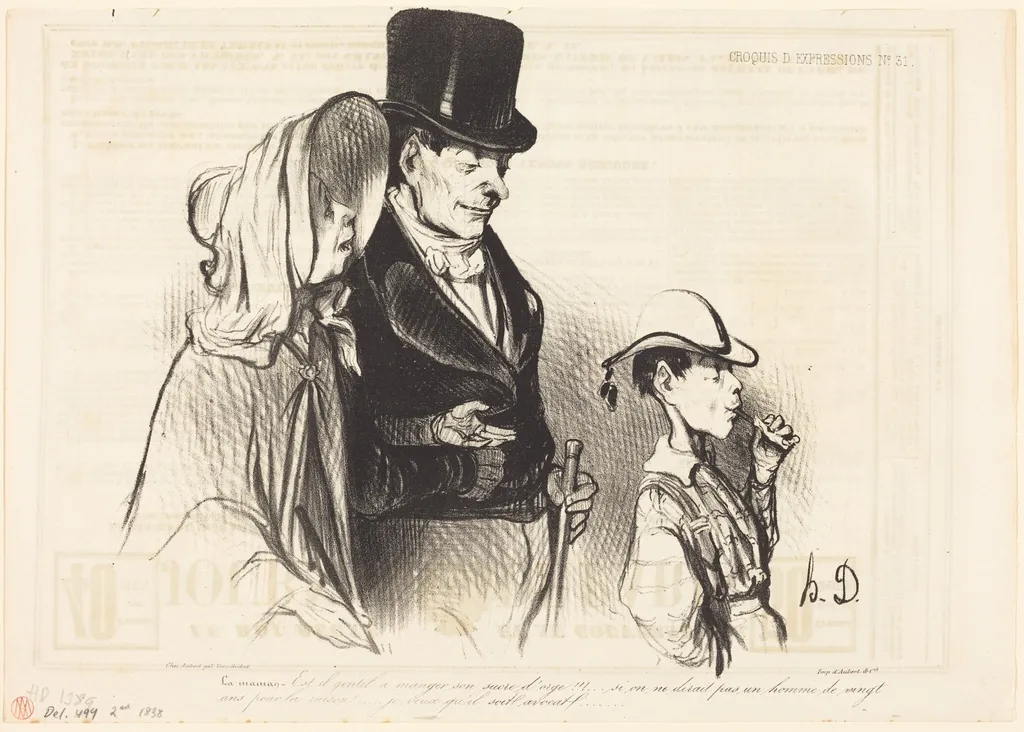
La Maman - Est-il gentil a manger son sucre d'orge!... is an ink print by the Romanticist artist Honoré Daumier. It dates from 1838 and is held in the collection of the National Gallery of Art. La Maman - Est-il gentil a manger son sucre d'orge!
About this work
Overview
La Maman - Est-il gentil a manger son sucre d'orge!... is a lithograph on newsprint created by Honoré Daumier in 1838. Characteristic of his satirical body of work, this print critiques aspects of French society through a everyday scene.
Subject & Meaning
The lithograph depicts a quintessential family scene: a mother, a child, and presumably the father, walking together. The title's humorous tone juxtaposes with the subjects' somber expressions, hinting at a satirical commentary on middle-class virtues or the facade of kindness.
Technique & Style
Executed in Daumier's signature rough, sketchy style, the piece features bold, pencil-like lines. This aesthetic choice emphasizes the immediacy of the satirical message and the everyday nature of the depicted scene.
History & Provenance
Created during Daumier's prolific period with *La Caricature* and *Le Charivari*, this lithograph aligns with his republican democratic views, using satire to critique contemporary French social structures.
Context
Part of a broader theme of mother-child relationships in Daumier's work, *La Maman* reflects his interest in portraying the human condition amidst societal commentary, appealing to a burgeoning middle-class audience through publications.
Legacy
As part of Daumier's extensive satirical oeuvre, *La Maman* contributes to his lasting impact on 19th-century French art and social commentary, influencing future generations of artists in using art as a vehicle for critique.
Artist & collection
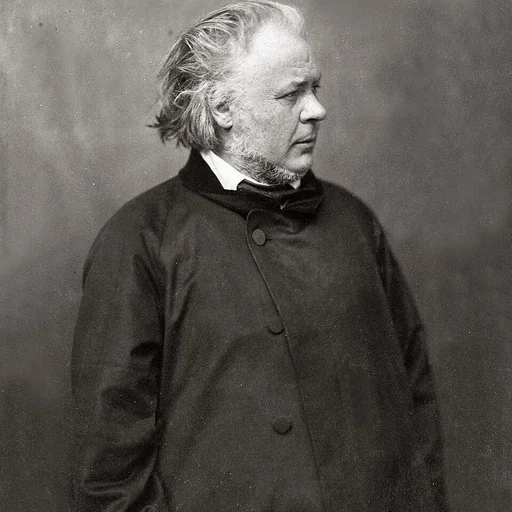
Artist
Honoré-Victorin Daumier was a French painter, sculptor, and printmaker, whose many works offer commentary on the social and political life in France, from the Revolution of 1830 to the fall of the Second French Empire in 1870.

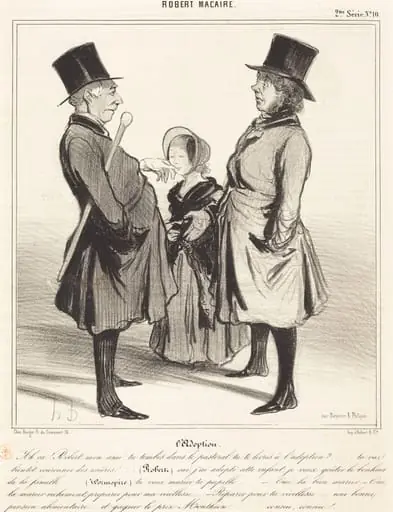 L'Adoption - Ah ça! Robert, mon ami...
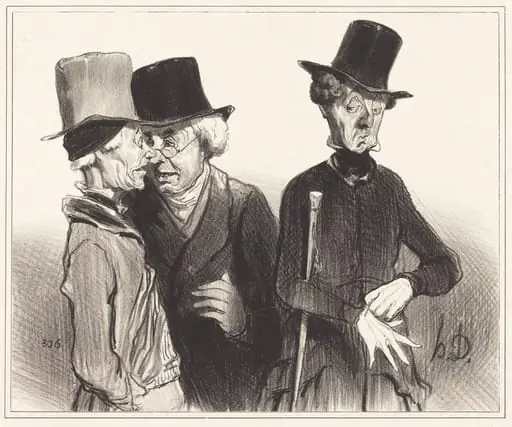 Voila! t'es devenu rentier, moi médecin, lui...
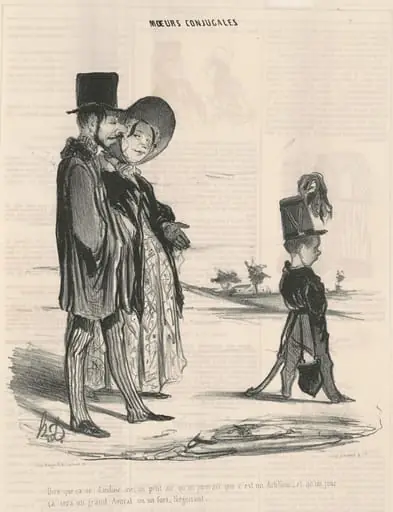 Dire que ça si dandine avec un petit air...
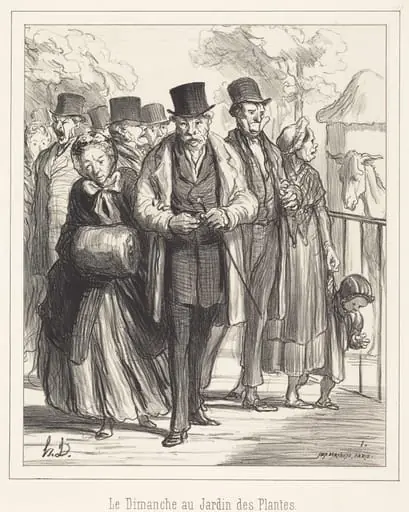 Le Dimanche au Jardin des Plantes
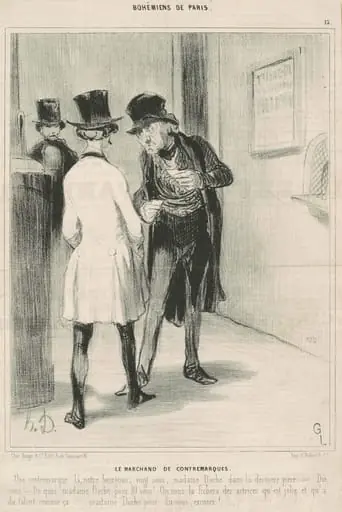 Le marchand de contremarques
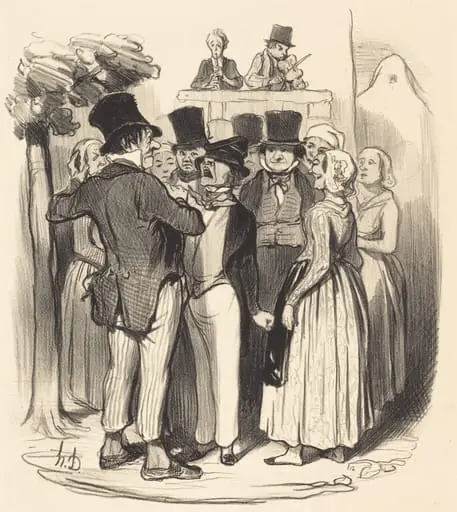 Ah! Gringalet d'Paris... tu viendras faire danser...
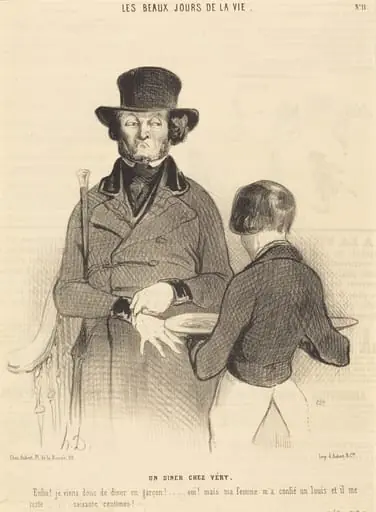 Un Diner chez Véry
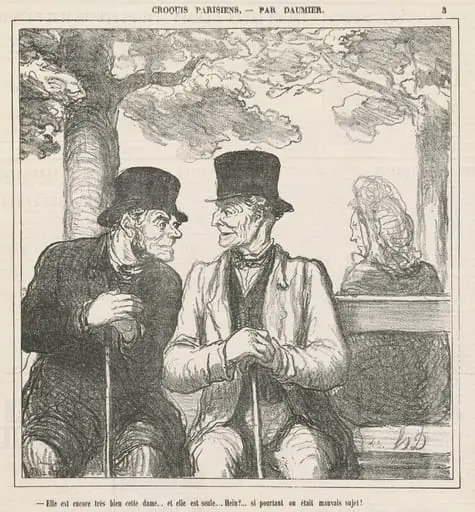 Elle est encore très bien, cette dame ...
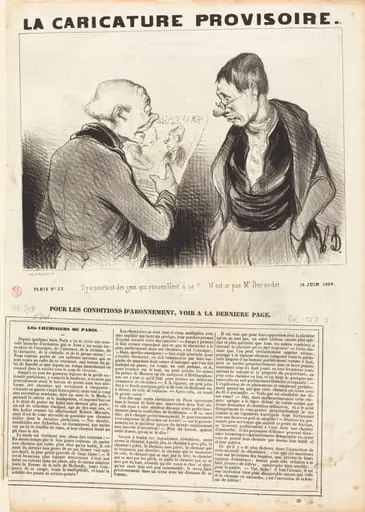 Il y a pourtant des gens qui ressemblent a ça!