Artwork
Il n'ya pas pourtant qu'une heure que je tire!
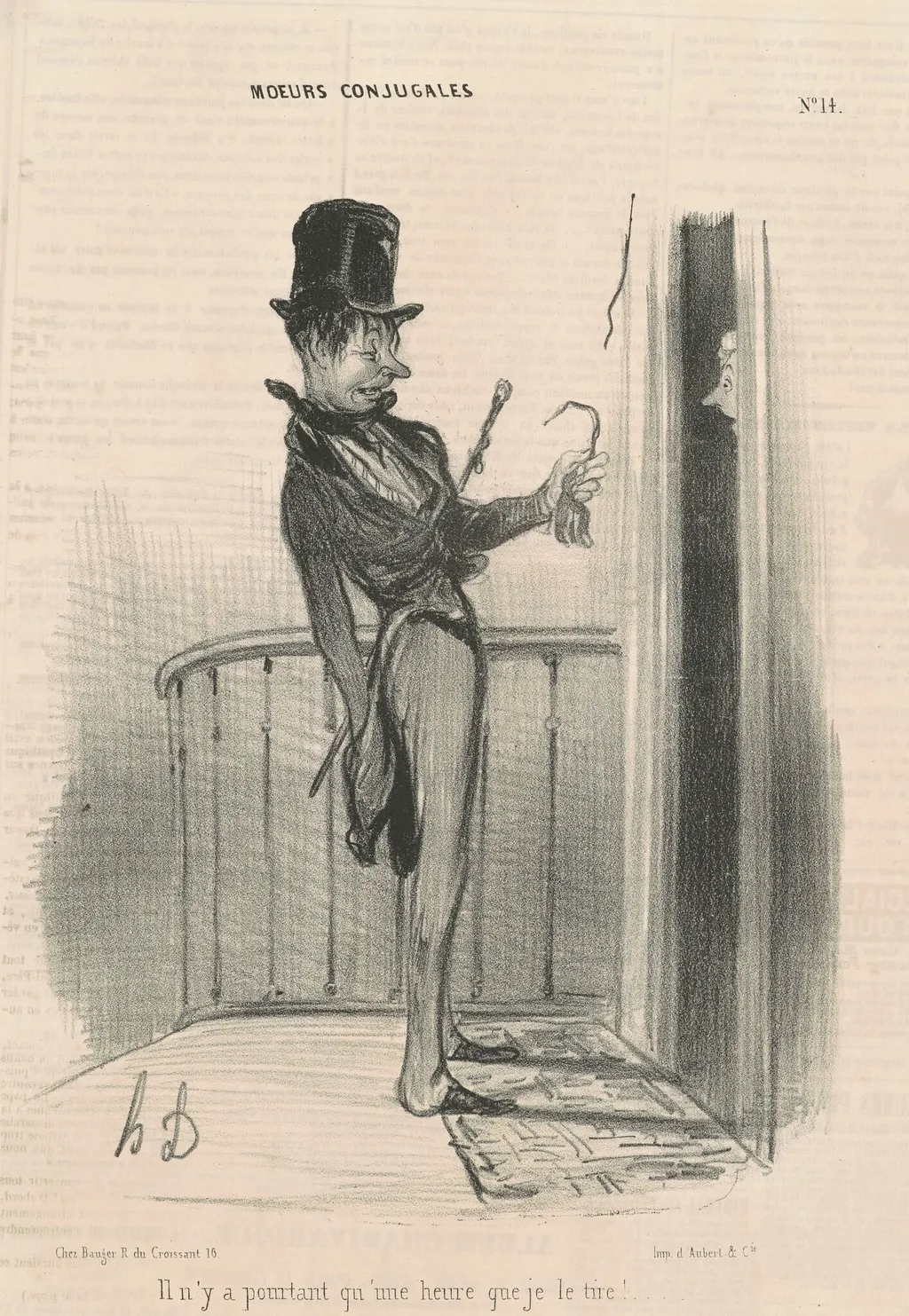
Il n'ya pas pourtant qu'une heure que je tire! is an ink print by the Romanticist artist Honoré Daumier. It dates from 1839 and is held in the collection of the National Gallery of Art.
About this work
Overview
The work belongs to Daumier’s series of social satires, using the print medium to comment on urban life and human behavior with sharp economy.
This lithograph by Honoré Daumier captures a moment of public spectacle and private distress. The scene is rendered with rapid, uneven lines that convey immediacy and emotional tension. A disheveled man stands on a balcony, clutching a broken parasol, while a woman observes him from behind a nearby wall. The work belongs to Daumier’s series of social satires, using the print medium to comment on urban life and human behavior with sharp economy.
Subject & Meaning
The figure on the balcony appears disoriented, his posture and attire suggesting personal collapse amid public exposure. The broken parasol may symbolize failed social pretense, while the hidden observer introduces an element of voyeurism. Together, they evoke themes of isolation and the performative nature of public identity. Daumier does not offer moral judgment but presents the scene as an unvarnished slice of contemporary life.
Technique & Style
Daumier employed lithography to achieve a spontaneous, sketch-like quality. His use of loose, expressive lines and stark contrasts creates a sense of motion and psychological urgency. The rough texture and minimal detail focus attention on gesture and expression rather than realism. The woman’s partial emergence from the wall adds compositional tension, reinforcing the theme of unseen observation.
History & Provenance
Created in the mid-19th century, this print was likely produced for publication in a periodical, as was common for Daumier’s work. It circulated among Parisian audiences familiar with his critiques of bourgeois behavior. Though exact provenance details are sparse, it aligns with his broader output for journals like La Caricature and Le Charivari, where his images reached a wide, literate public.
Context
Daumier worked during a period of political upheaval and rapid urbanization in France. His prints responded to the growing middle class and its anxieties, often highlighting the gap between public decorum and private chaos. This image reflects the era’s fascination with visibility and social performance, as well as the artist’s role as an unflinching chronicler of everyday absurdities.
Legacy
Daumier’s lithographs influenced later generations of satirical artists and modern illustrators through their emotional directness and formal economy. This work exemplifies his ability to distill complex social dynamics into a single, potent image. Though not widely exhibited in his lifetime, his prints gained recognition in the 20th century as foundational to the development of narrative graphic art.
Artist & collection
Artist
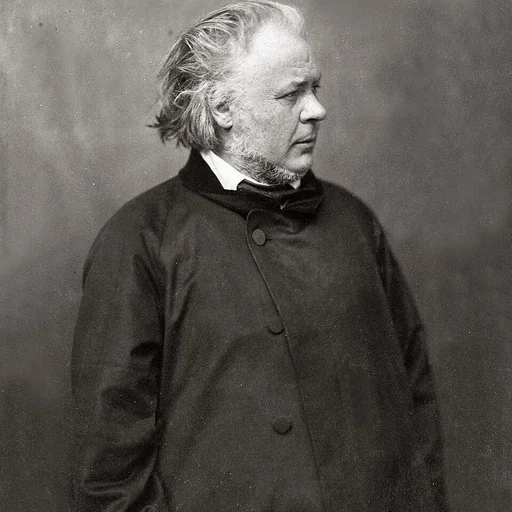
Honoré-Victorin Daumier was a French painter, sculptor, and printmaker, whose many works offer commentary on the social and political life in France, from the Revolution of 1830 to the fall of the Second French Empire in 1870.









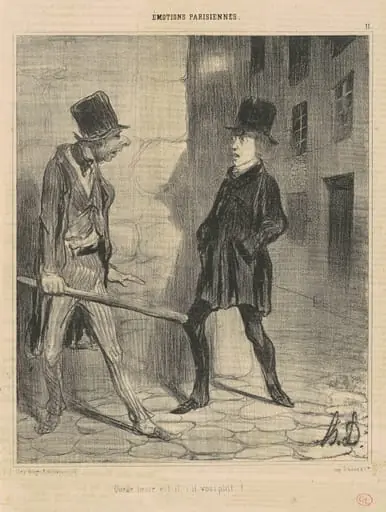 Quelle heure est'il, s'il vous plait?...
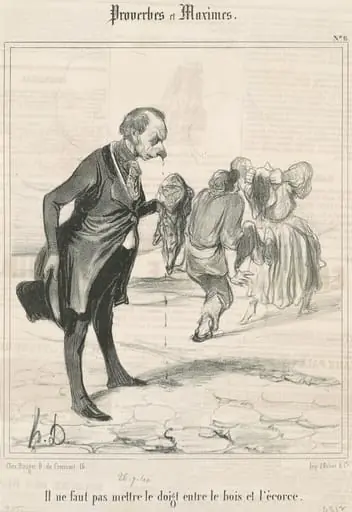 Il ne faut pas mettre le doigt ...
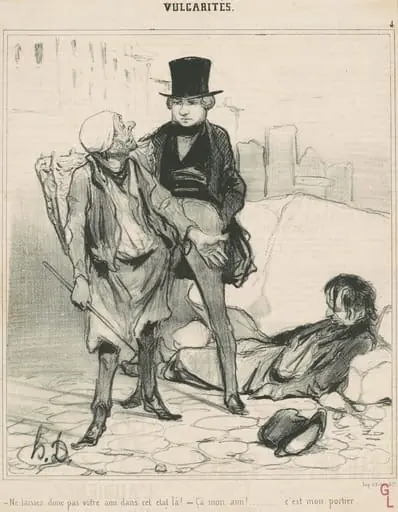 Ne laissez donc pas votre ami dans cet état la!
![Aux Champs-Elysées, Ratapoil. Par suite d'une délibération philantropique [sic] du Comité du dix Décembre...à deux sous à club...deux sous..., by Honoré Daumier](https://artifactworldgallery.com/img/honore-daumier--aux-champs-elysees-ratapoil-par-suite-d-une-deliberation-phi--62ca0cc774af3945-w320.webp) Aux Champs-Elysées, Ratapoil. Par suite d'une délibération philantropique [sic] du Comité du dix Décembre...à deux sous à club...deux sous...
Aux Champs-Elysées, Ratapoil. Par suite d'une délibération philantropique [sic] du Comité du dix Décembre...à deux sous à club...deux sous...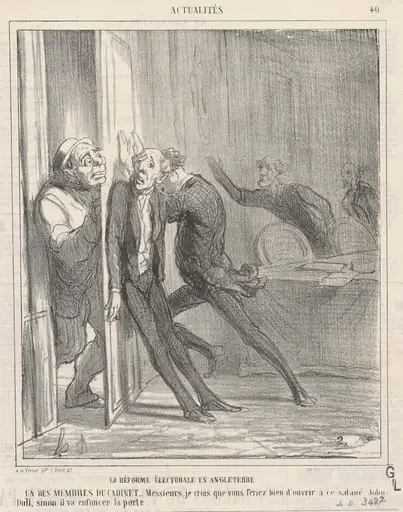 La rèforme électorale en angleterre
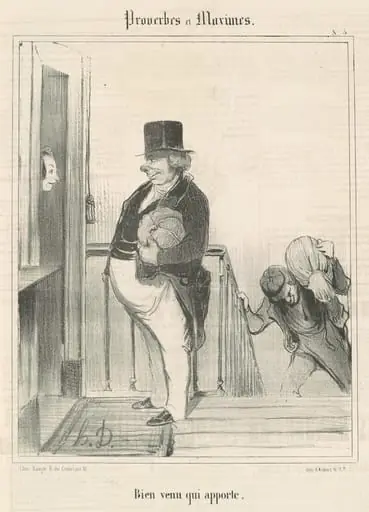 Bien venu qui apporte