Artwork
Un pierrot déplumé
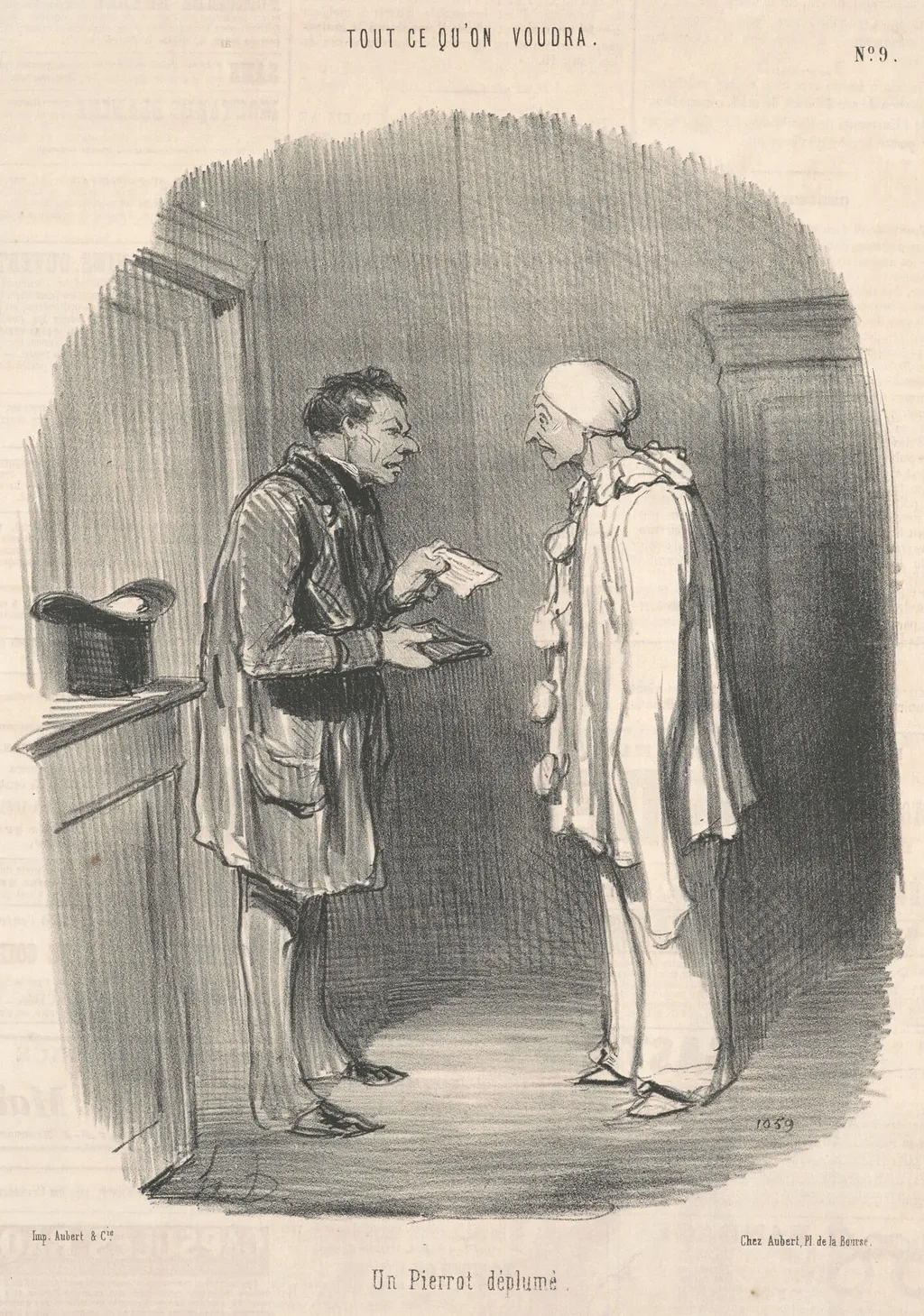
Un pierrot déplumé is an ink print by the Romanticist artist Honoré Daumier. It dates from 1847 and is held in the collection of the National Gallery of Art.
About this work
Overview
Honoré Daumier’s lithograph 'Un pierrot déplumé' portrays a moment of quiet tension between two figures: one in a formal dark coat, gesturing energetically, the other in a pale Pierrot costume, still and withdrawn. Rendered in the lithographic medium, the work captures the subtle interplay of body language and social role, reflecting Daumier’s interest in the theater of everyday life in mid-19th-century Paris.
Subject & Meaning
The Pierrot, traditionally a symbol of melancholy in French theater, appears stripped of his usual grandeur, suggesting vulnerability.
The two figures represent contrasting social identities—one a figure of authority or intellect, the other a marginalized performer. The Pierrot, traditionally a symbol of melancholy in French theater, appears stripped of his usual grandeur, suggesting vulnerability. Their dynamic suggests a dialogue between societal power and artistic marginalization, without overt narrative, leaving interpretation open to the viewer’s perception of class and performance.
Technique & Style
Daumier employed lithography to achieve rapid, expressive lines and tonal contrasts. The dark coat of the standing figure is rendered with dense, heavy strokes, while the Pierrot’s costume is defined by lighter, more fragmented marks, emphasizing texture and fragility. The composition avoids detail, relying on posture and silhouette to convey emotion, characteristic of Daumier’s economical yet potent graphic style.
History & Provenance
Created around 1860, the print was likely produced for publication in a periodical, as was common for Daumier’s social commentary. It circulated among Parisian intellectuals and artists, reflecting the era’s fascination with theatrical archetypes. The work remained in private collections before entering public museum holdings, where it is now recognized as part of Daumier’s broader critique of urban life.
Context
In mid-19th-century France, the Pierrot figure was a recurring symbol in literature and theater, embodying the bittersweet nature of the artist’s existence. Daumier, himself a satirist under political censorship, used such imagery to subtly critique social hierarchies. The lithograph reflects a cultural moment when popular entertainment and artistic identity were increasingly scrutinized amid industrialization and shifting class structures.
Legacy
Daumier’s depiction of the Pierrot influenced later artists exploring themes of alienation and performance, including Expressionists and modern illustrators. The work’s understated emotional depth and focus on the dignity of the marginalized helped redefine the potential of printmaking as a vehicle for psychological insight, moving beyond mere caricature into nuanced human observation.
Artist & collection

Artist
Honoré-Victorin Daumier was a French painter, sculptor, and printmaker, whose many works offer commentary on the social and political life in France, from the Revolution of 1830 to the fall of the Second French Empire in 1870.









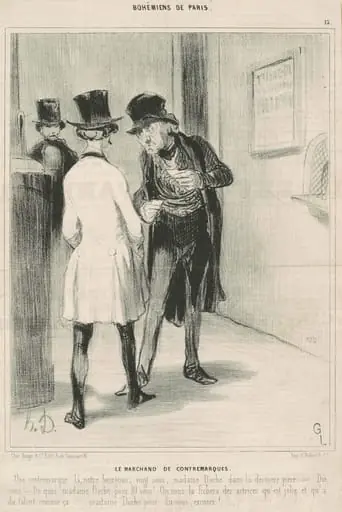 Le marchand de contremarques
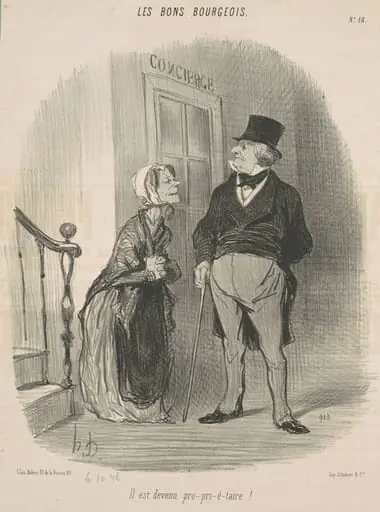 Il est devenu pro-pri-é-taire!
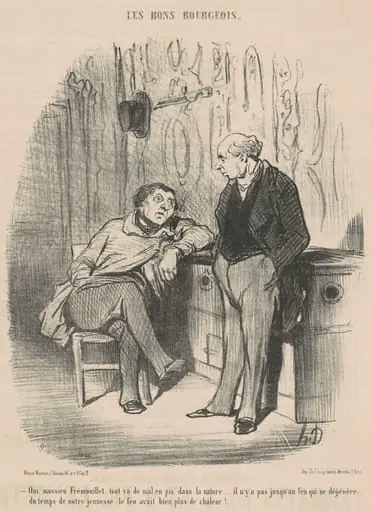 Oui, Mossieu Fremouillet, tout va de mal en pis ...
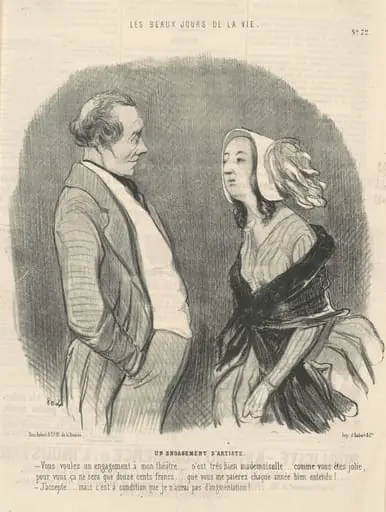 Un engagement d'artiste
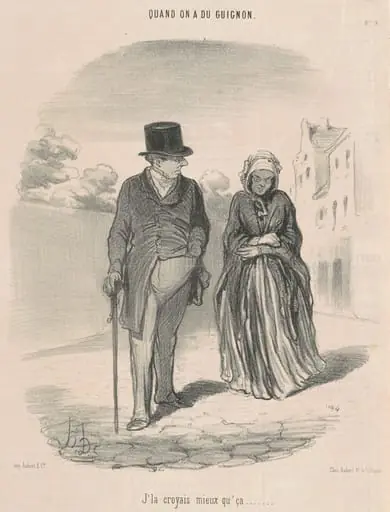 J'la croyais mieux qu'ça ...
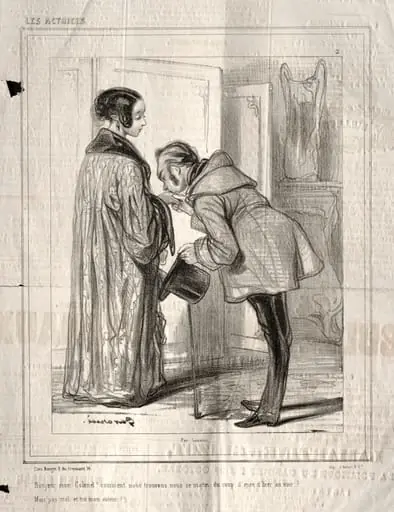 Les Actrices: Bonjour mon Colonel!
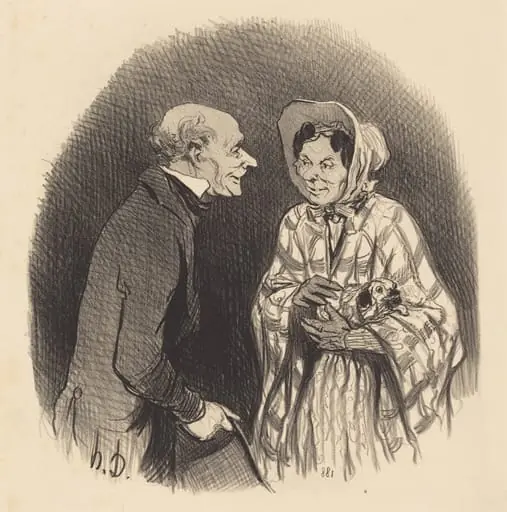 Une Nouvelle connaissance
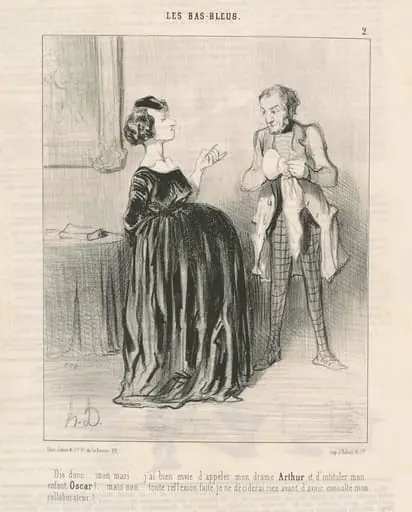 Dis donc ... mon mari ...j'ai bien envie d'appeler mon drama ...
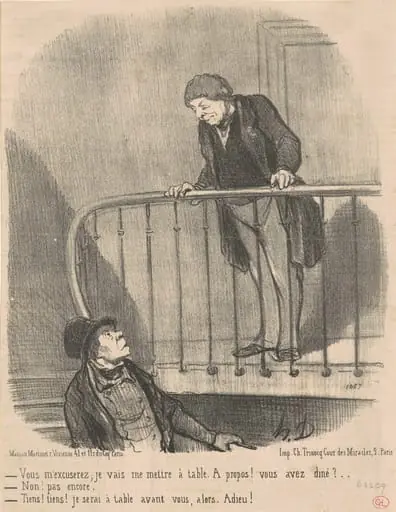 Vous m'excuserez: je vais me mettre a table ...
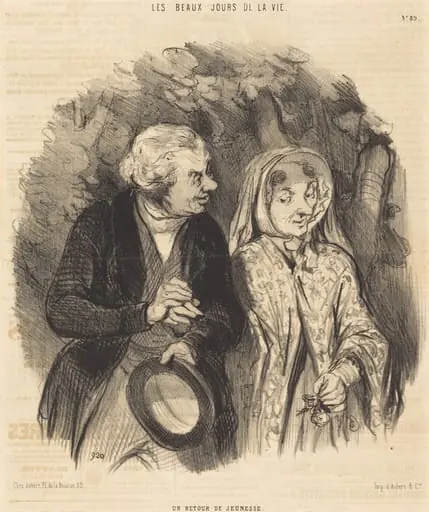 Un Retour de jeunesse
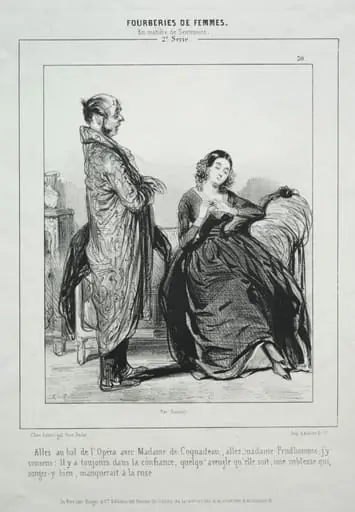 Fourberies de Femmes En Matière de Sentiment
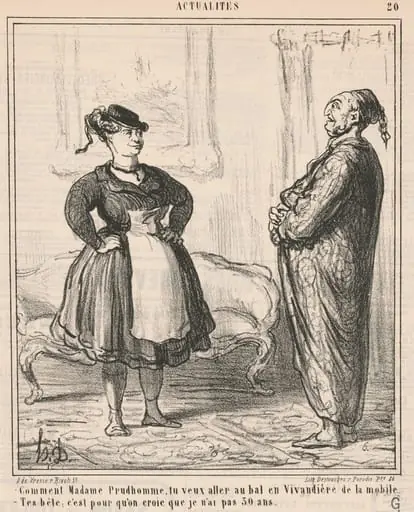 Comment Madame Prudhomme ... En vivandière ...