Artwork
J. Martial Bineau (2nd Plate)
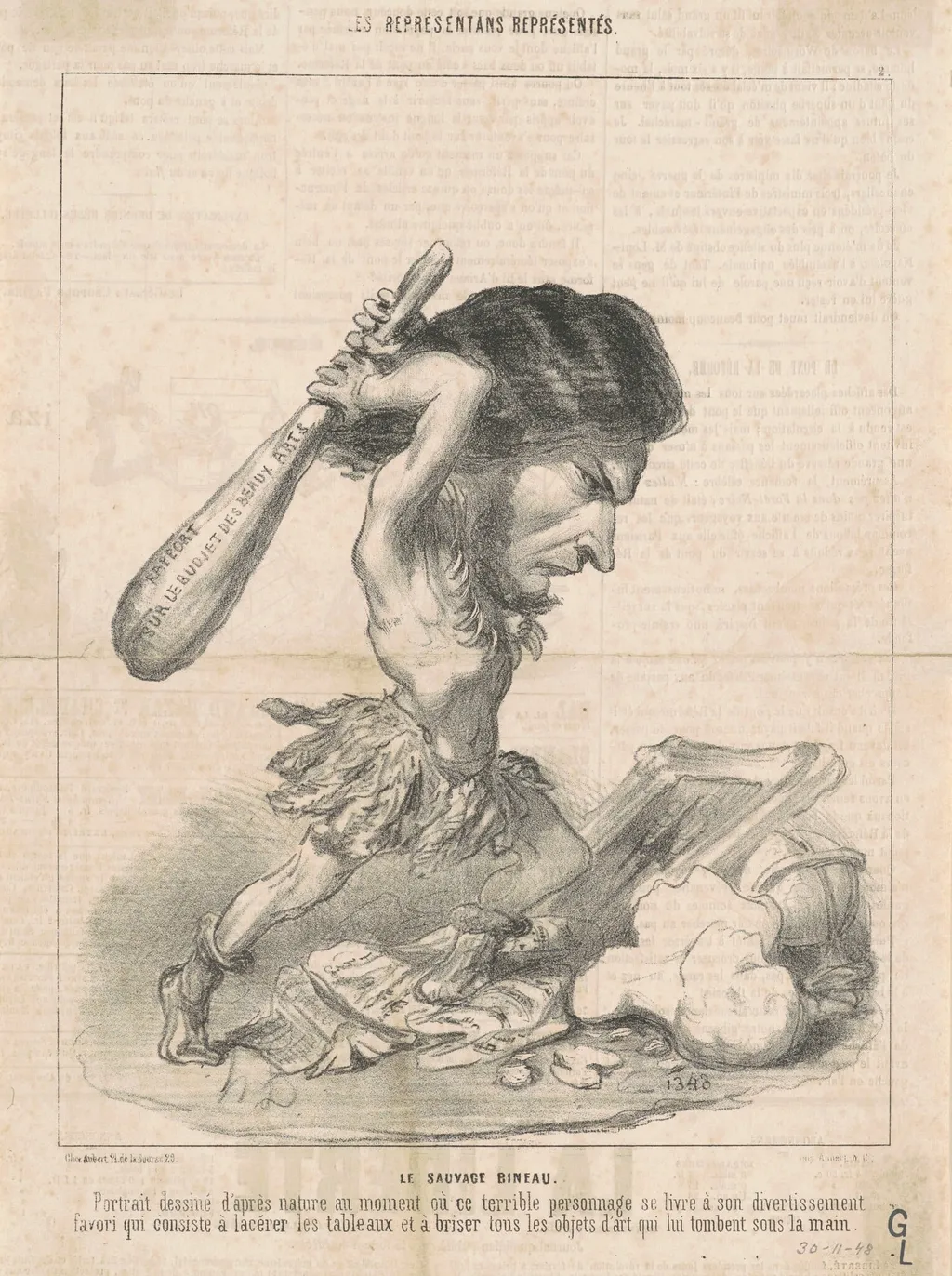
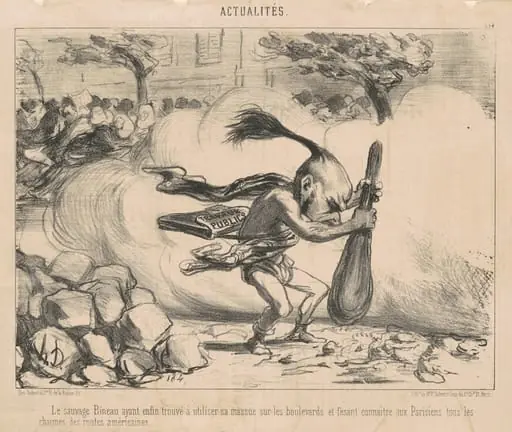
J. Martial Bineau (2nd Plate) is an ink print by the Romanticist artist Honoré Daumier. It dates from 1848 and is held in the collection of the National Gallery of Art. J.
About this work
Notice the way the club looks too small for his oversized hands—funny and scary at once.
The image shows a big, burly man in rags striding forward. One hand grips a thick club; the other clutches his tattered coat. Behind him, broken furniture and splintered wood litter the floor.
Daumier made this in 1848, the year of Paris street fights. The print mocks politicians who whipped up chaos for their own gain. Notice the way the club looks too small for his oversized hands—funny and scary at once.
See the real thing at the National Gallery of Art, Washington.
Overview
J. Martial Bineau (2nd Plate) is a lithograph by Honoré Daumier, created in 1848. It depicts a caricatured figure in a dynamic pose, embodying the artist's satirical style.
Subject & Meaning
The print shows a muscular man in tattered clothing, holding a club and striding forward amidst a scene of destruction. The image is a commentary on the politicians of Daumier's time, who incited violence for personal gain.
Technique & Style
The lithograph features exaggerated facial features and a cluttered background, characteristic of Daumier's expressive and satirical style. The contrast between the man's oversized hands and the relatively small club adds to the comedic effect.
History & Provenance
Created in 1848, a year marked by Paris street fights, the print is a reflection of the tumultuous period. An example is held at the National Gallery of Art, Washington.
Context
The artwork is a product of the turbulent year 1848, when street fights broke out in Paris. Daumier's work mocks the politicians who exploited the situation for their own benefit.
Artist & collection

Artist
Honoré-Victorin Daumier was a French painter, sculptor, and printmaker, whose many works offer commentary on the social and political life in France, from the Revolution of 1830 to the fall of the Second French Empire in 1870.