Artwork
Molé apportant des étrennes au petit thiers
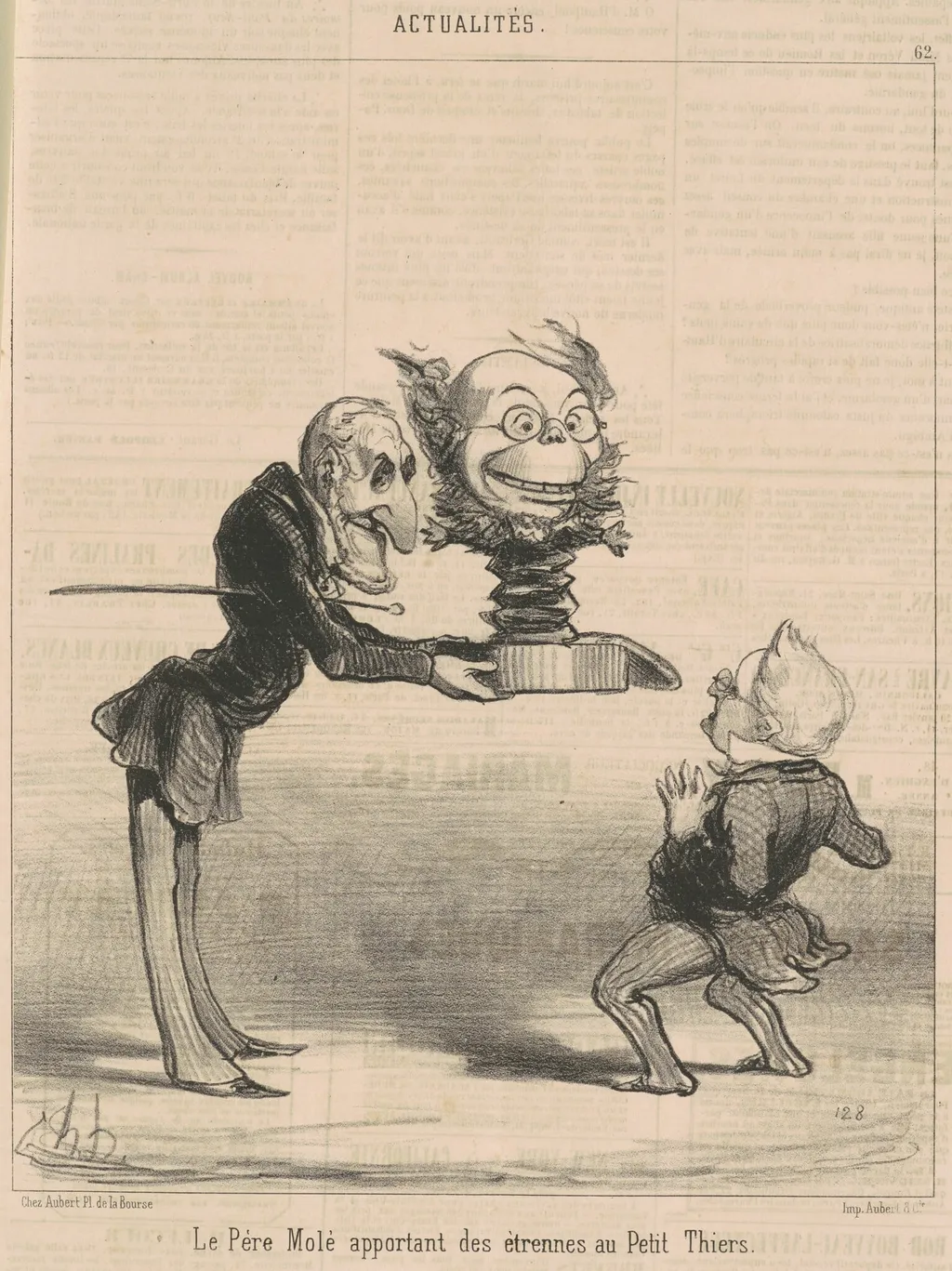
Molé apportant des étrennes au petit thiers is an ink print by the Impressionist artist Honoré Daumier. It dates from 1850 and is held in the collection of the National Gallery of Art.
About this work
Overview
Honoré Daumier’s lithograph titled *Molé apportant des étrennes au petit Thiers* presents a brief, comic scene in which a formally dressed man offers a jack‑in‑the‑box to a startled young boy. The print captures a fleeting moment of surprise, rendered in Daumier’s characteristic satirical tone that turns an ordinary act of gift‑giving into a humorous tableau.
Subject & Meaning
The central figures—a stiff, coat‑clad adult and a round‑faced child—are exaggerated for comic effect. The adult’s oversized coat and the boy’s exaggerated leap suggest a playful critique of social rituals, implying that even formal gestures can be reduced to absurdity when stripped of pretension.
Technique & Style
Executed in lithography, the work relies on bold, rapid lines that convey movement and immediacy. Daumier’s sketch‑like strokes give the figures a twisted, almost caricatured quality, while the rough texture of the print underscores its spontaneous, almost journalistic quality, typical of his mid‑19th‑century approach.
Context
Created during the 1850s, a period when Daumier frequently lampooned Parisian life, the print reflects his interest in everyday scenes. By focusing on a modest exchange between a man and a child, Daumier extends his social commentary beyond the political sphere to the mundane rituals of the city’s inhabitants.
Legacy
While not among Daumier’s most widely reproduced works, this lithograph exemplifies his skill in merging social observation with humor. It continues to be referenced as an illustration of how the artist used simple, everyday moments to expose the underlying silliness of contemporary customs.
Artist & collection
Artist
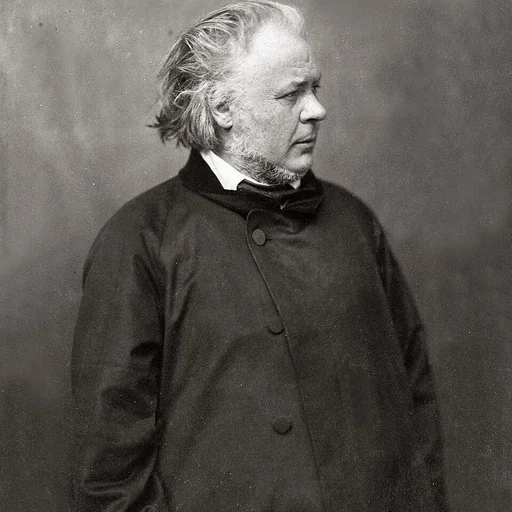
Honoré-Victorin Daumier was a French painter, sculptor, and printmaker, whose many works offer commentary on the social and political life in France, from the Revolution of 1830 to the fall of the Second French Empire in 1870.