Artwork
Je crois qu'on bat le rappel ...
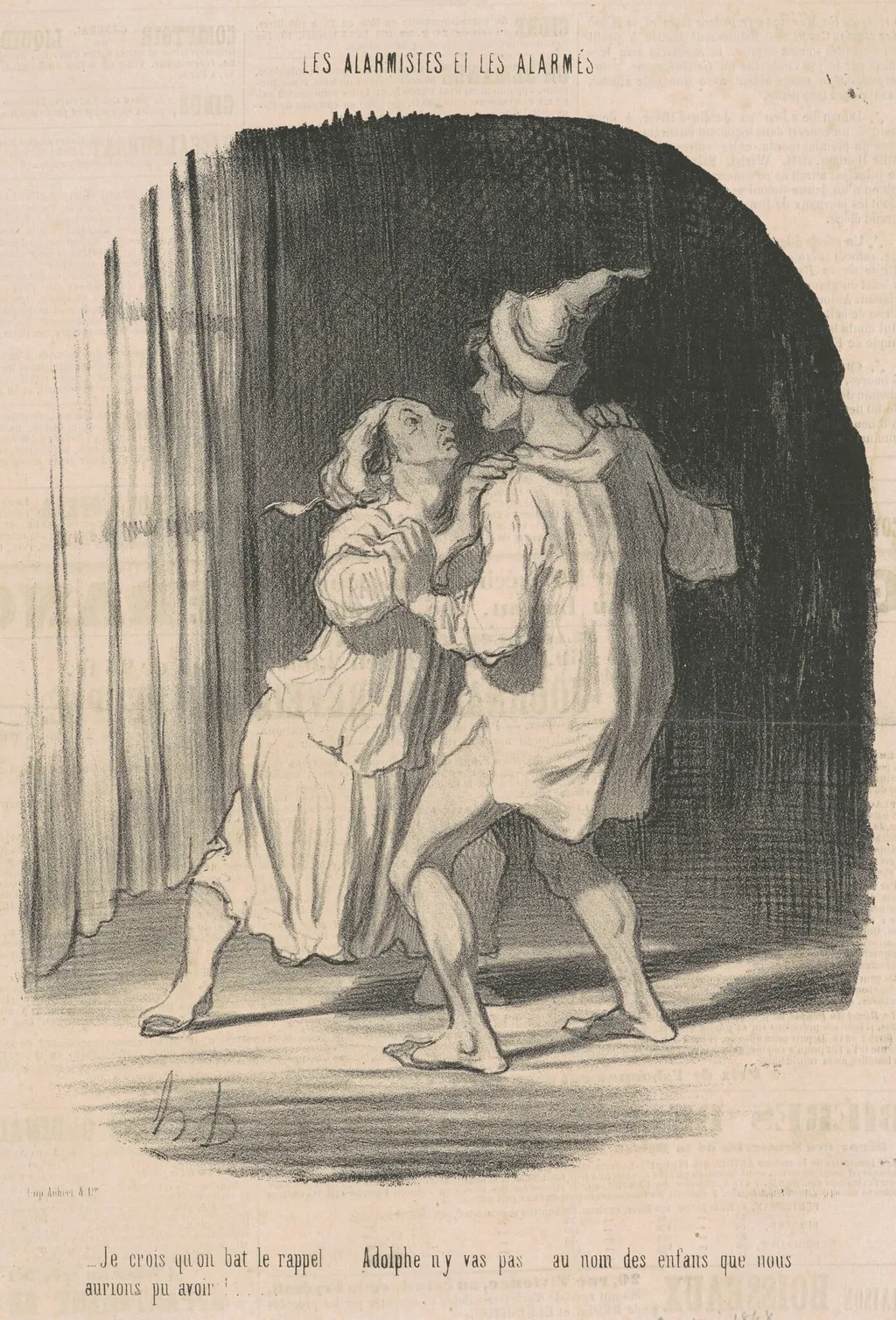
Je crois qu'on bat le rappel ... is an ink print by the Romanticist artist Honoré Daumier. It dates from 1848 and is held in the collection of the National Gallery of Art.
About this work
You see two men in a dark room. One stands tall in a suit. The other bends forward in work clothes. Their faces almost touch.
Daumier made this as a lithograph in 1848. It’s not a painting—he drew on stone, then inked it. That lets him show rough edges fast. His work often mocked politics and class.
This isn’t just a picture. It’s a quick jab at power. Look up lithography if you want to see how it works.
Overview
Honoré Daumier’s 1848 lithograph titled “Je crois qu’on bat le rappel” presents a compact scene in a dim interior where two men stand in close proximity. The taller figure, dressed in a formal suit, leans toward a shorter, labor‑clothed counterpart, their faces nearly touching, creating a moment of intimate, yet ambiguous, exchange.
Subject & Meaning
The juxtaposition of attire—formal versus workwear—highlights class distinctions, while the near‑contact of the figures suggests a fleeting negotiation or confrontation. Daumier’s typical focus on social critique is evident, as the composition invites viewers to consider power dynamics and the everyday tensions between different social strata.
Technique & Style
Executed as a lithograph, Daumier drew directly onto a limestone plate, which was then inked and pressed onto paper. This method allows for bold, textured lines and a slightly rough surface, reinforcing the work’s immediacy and the stark contrast between the dark background and the illuminated figures.
History & Provenance
Created in the revolutionary climate of 1848, the print reflects Daumier’s engagement with contemporary political and social issues. As a print, it could be reproduced and circulated widely, aligning with his practice of using lithography to disseminate satirical commentary to a broad audience.
Artist & collection
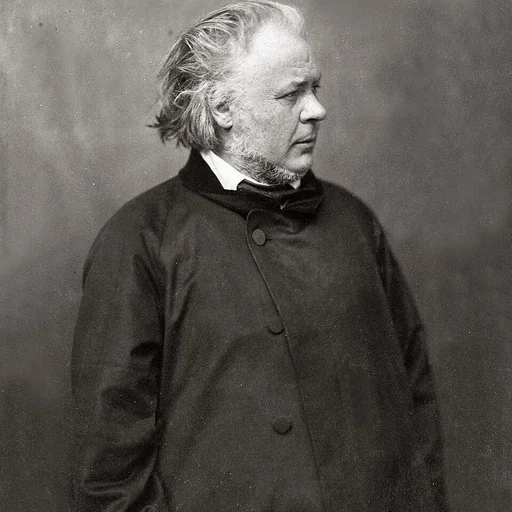
Artist
Honoré-Victorin Daumier was a French painter, sculptor, and printmaker, whose many works offer commentary on the social and political life in France, from the Revolution of 1830 to the fall of the Second French Empire in 1870.

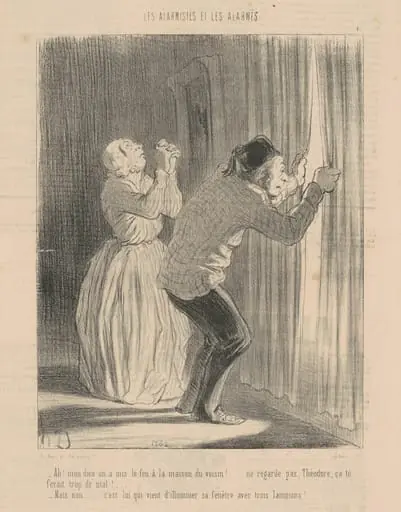 Ah! Mon dieu on a mis le feu a la maison du voisin ...
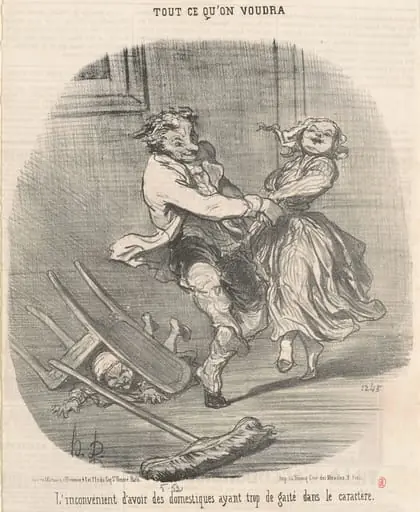 L'inconvénient d'avoir des domestiques ...
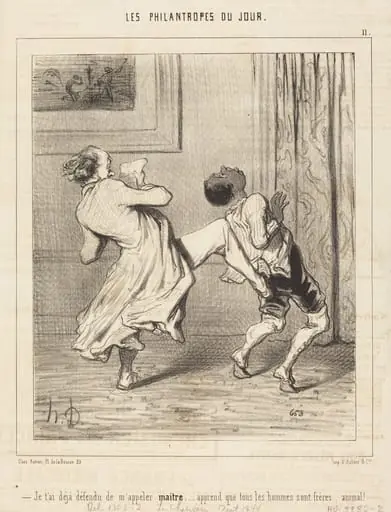 Je t'ai déjà défendu de m'appeler maitre...
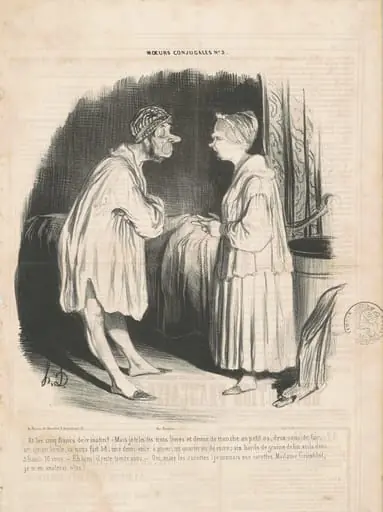 Et les cinq francs de ce matin?
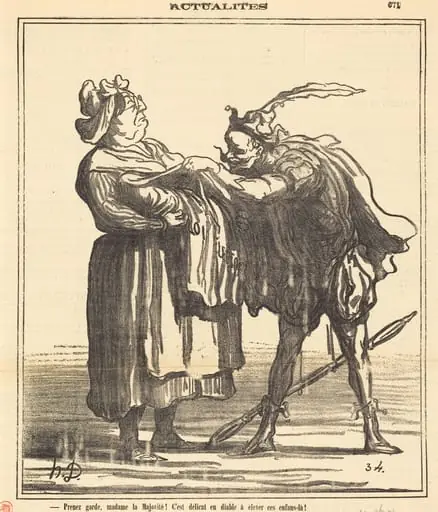 Prenez garde, madame la Majorité!
![Mascaras crueles (Cruel Masks) [recto], by Francisco Goya](https://artifactworldgallery.com/img/francisco-goya--mascaras-crueles-cruel-masks-recto--c8ed74cbe3eadfd0-w320.webp) Mascaras crueles (Cruel Masks) [recto]
Mascaras crueles (Cruel Masks) [recto]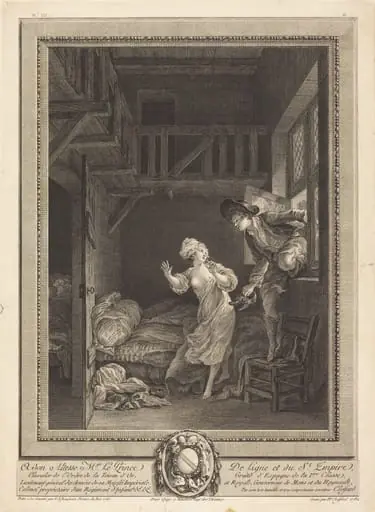 Marchez tout doux, parlez tout bas
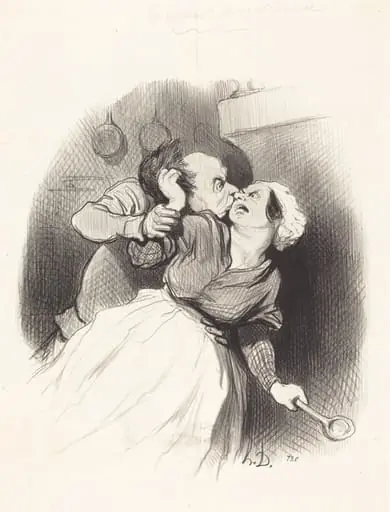 Un Retour de jeunesse
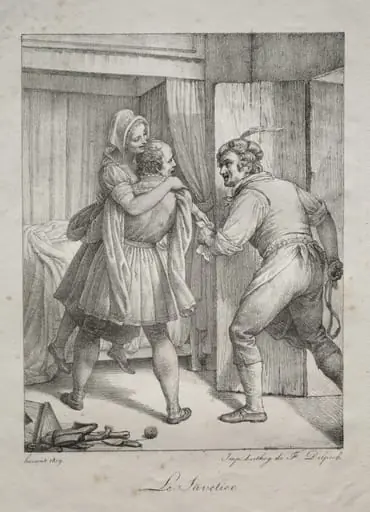 The Cobbler
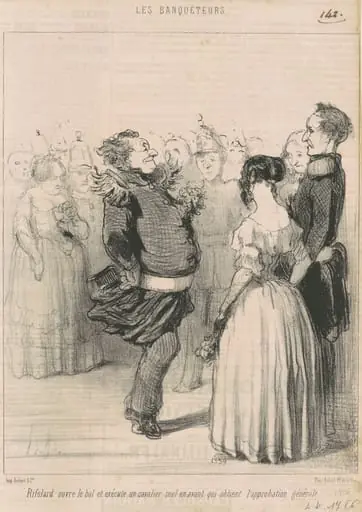 Rifolard ouvre le bal ...