Artwork
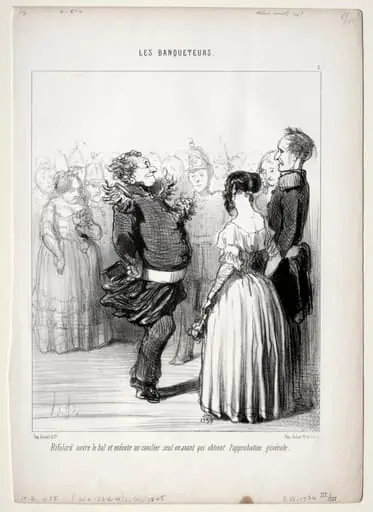
Rifolard ouvre le bal ...
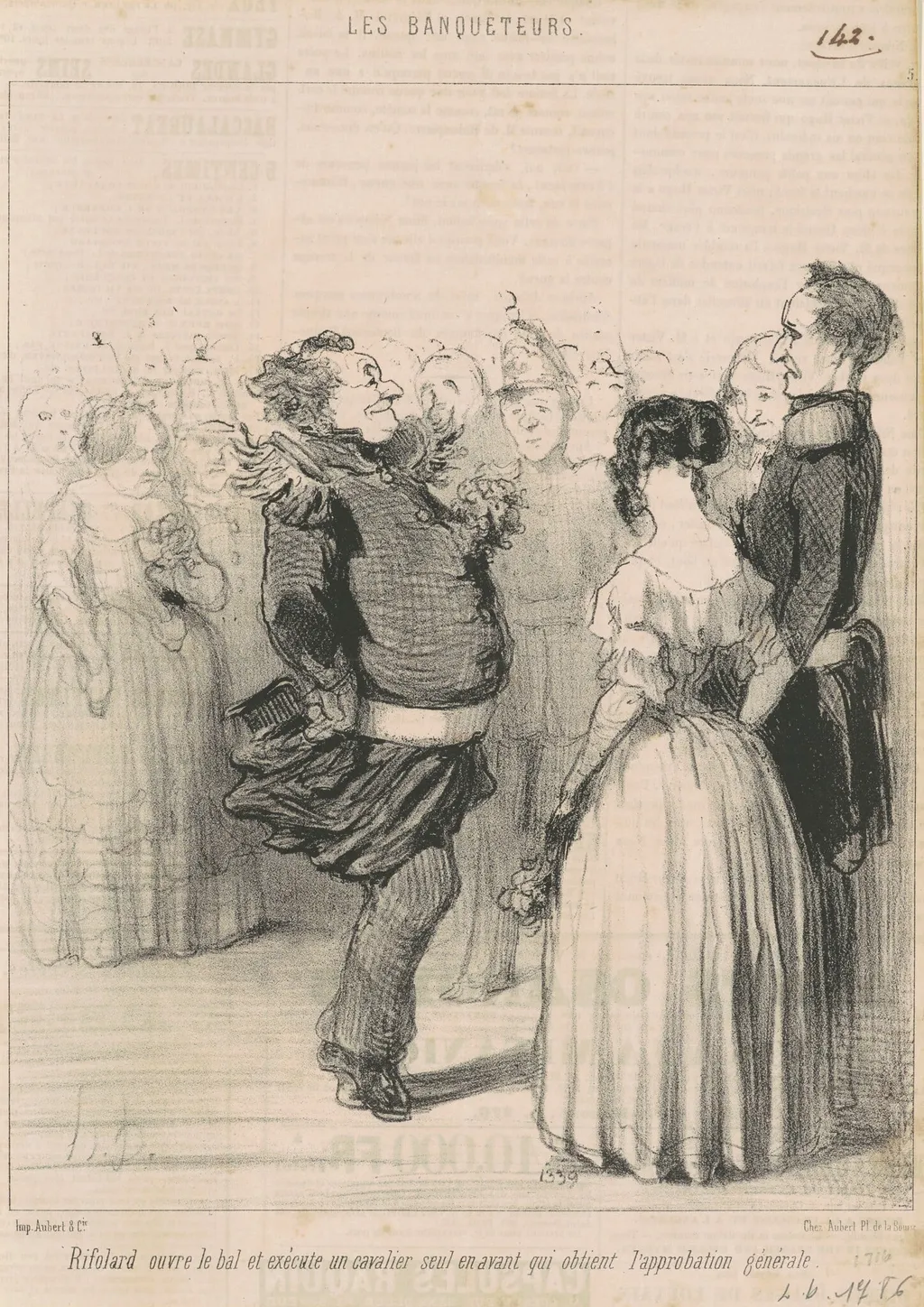
Rifolard ouvre le bal ... is an ink print by the Romanticist artist Honoré Daumier. It dates from 1848 and is held in the collection of the National Gallery of Art.
About this work
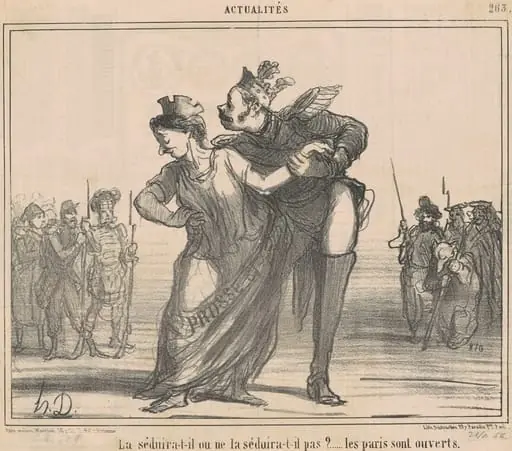
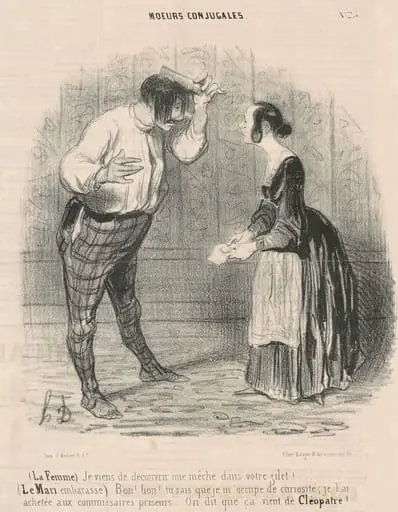
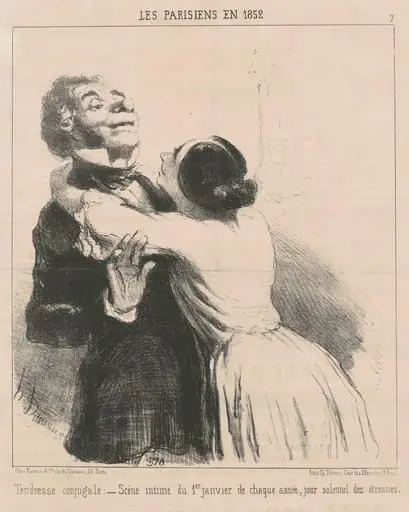
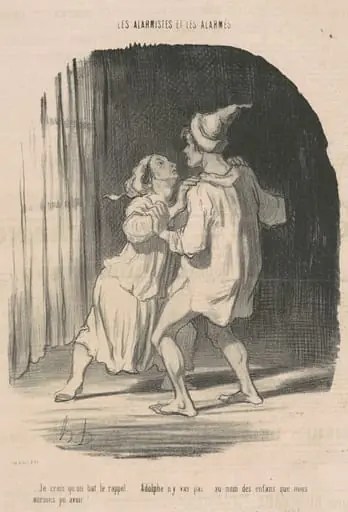
This lithograph shows a fancy party in 1848. A man in a big hat dances in the center while others watch. Their faces look silly and stretched on purpose.
Daumier loved poking fun at rich people. He used lithography to make bold, fast lines that feel alive. Newspapers printed these images to mock politicians and social climbers.
Check out more by Daumier, Honoré.
Overview
Rifolard ouvre le bal is a lithograph created by Honoré Daumier in 1848, portraying a lively social gathering. A central figure, distinguished by an elaborate hat, performs for a refined audience, setting the tone for a commentary on the social elite.
Subject & Meaning
The scene satirizes the upper class, with Daumier employing caricature to highlight the unique, often comical, characteristics of each attendee. The central dancer, with his ostentatious attire, embodies the subject of this social critique.
Technique & Style
Daumier utilized lithography to produce bold, expressive lines, capturing the dynamic atmosphere of the gathering. The intentional distortion of facial features and postures is characteristic of his satirical approach.
History & Provenance
Originally published in a newspaper, this lithograph was part of a series critiquing 19th-century French political and social figures, leveraging the medium's accessibility for widespread commentary.
Context
Created amidst the social upheaval of 1848, the work reflects Daumier's penchant for ridiculing the bourgeoisie and political establishment, aligning with the era's revolutionary sentiments.
Legacy
Rifolard ouvre le bal contributes to Daumier's legacy as a pioneering caricaturist, influencing future satirical artists with its blend of social commentary and expressive lithographic technique.
Artist & collection
Artist
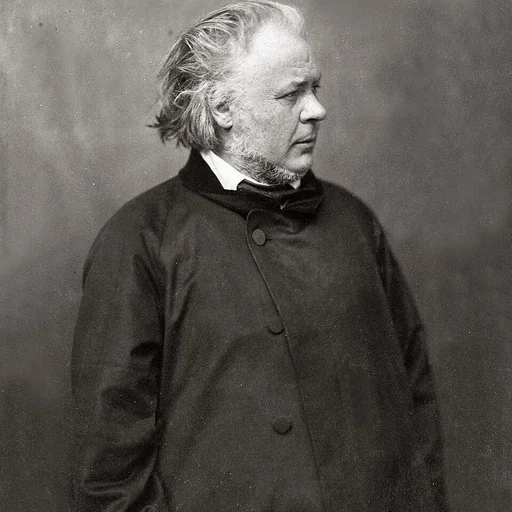
Honoré-Victorin Daumier was a French painter, sculptor, and printmaker, whose many works offer commentary on the social and political life in France, from the Revolution of 1830 to the fall of the Second French Empire in 1870.