Artwork
Je vous dis que ... il nous faut M. Molé ...
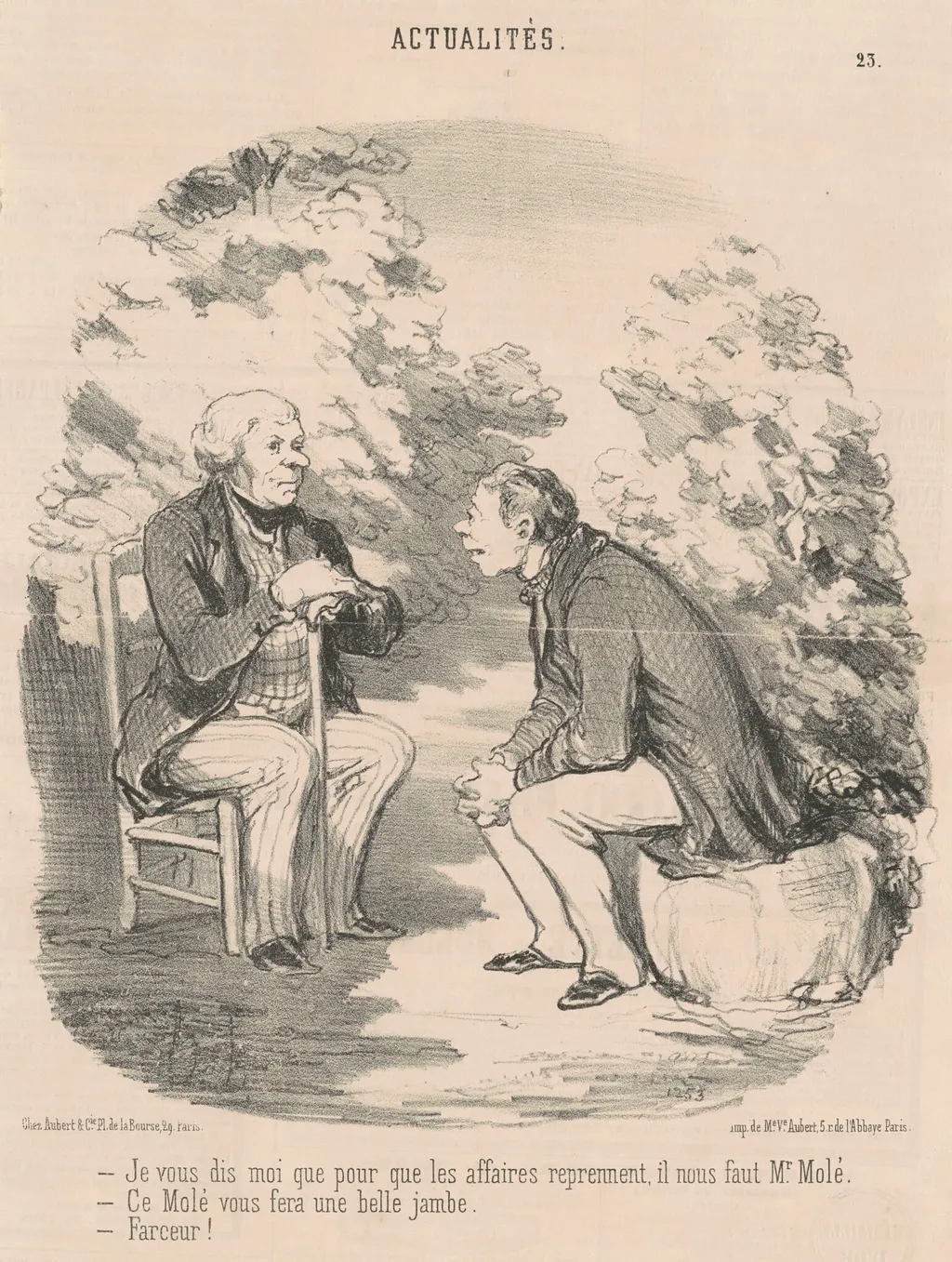
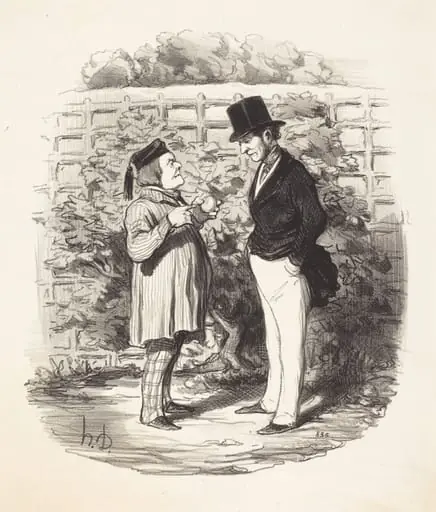
Je vous dis que ... il nous faut M. Molé ... is an ink print by the Impressionist artist Honoré Daumier. It dates from 1850 and is held in the collection of the National Gallery of Art.
About this work
Overview
It belongs to a series of prints Daumier produced during the 1830s and 1840s, when lithography served as a rapid medium for social commentary in France.
This lithograph by Honoré Daumier captures a moment of public debate between two men in an outdoor setting. Rendered with swift, expressive lines, the image conveys the energy of political discourse through gesture and posture rather than detailed realism. It belongs to a series of prints Daumier produced during the 1830s and 1840s, when lithography served as a rapid medium for social commentary in France.
Subject & Meaning
The figures represent opposing political voices: one gestures emphatically, invoking the name of Molé, a prominent moderate statesman, while the other listens with arms crossed, suggesting skepticism or deliberation. The scene reflects public sentiment during a period of political instability, when citizens debated leadership and reform. The title, a direct quotation, ties the image to real political rhetoric of the time.
Technique & Style
Daumier employed bold, fluid lines and minimal shading to define form and motion, characteristic of his lithographic approach. The background is simplified into loose strokes of greenery, framing the figures like a stage without distracting detail. His economy of line conveys emotion and character with striking immediacy, prioritizing expressive impact over naturalistic accuracy.
History & Provenance
Created around 1835–1837, the print was likely published in a periodical such as La Caricature or Le Charivari, where Daumier regularly contributed satirical images. These prints circulated widely among urban readers, functioning as both news and political critique. The work survives in multiple institutional collections, testament to its role in documenting public discourse of the July Monarchy.
Context
During the 1830s, France’s press laws allowed for sharp political satire, and lithography enabled quick reproduction of images that could reach a broad audience. Daumier’s work responded to the tensions between liberal reformers and conservative authorities. His depictions of politicians and citizens alike revealed the anxieties and humor of a society navigating shifting power structures.
Legacy
Daumier’s lithographs, including this one, helped redefine printmaking as a vehicle for social observation. His ability to distill complex political moods into simple, dynamic compositions influenced later generations of cartoonists and realist artists. The work remains a key example of how visual art could engage directly with contemporary civic life.
Artist & collection
Artist
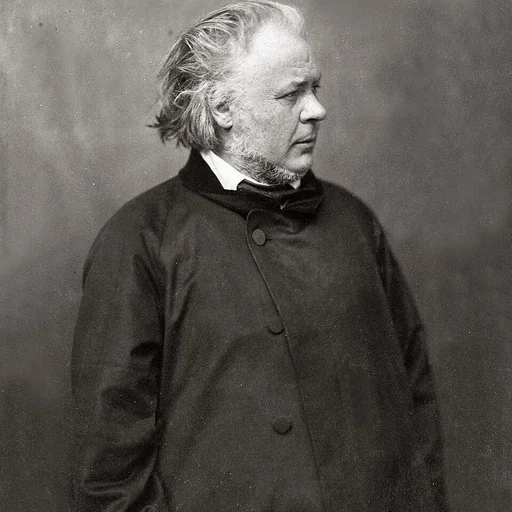
Honoré-Victorin Daumier was a French painter, sculptor, and printmaker, whose many works offer commentary on the social and political life in France, from the Revolution of 1830 to the fall of the Second French Empire in 1870.









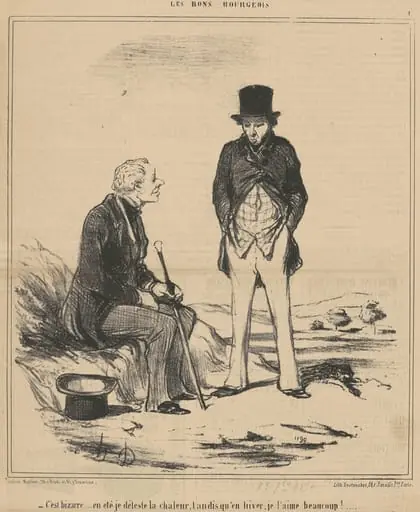 C'est bizarre ... été
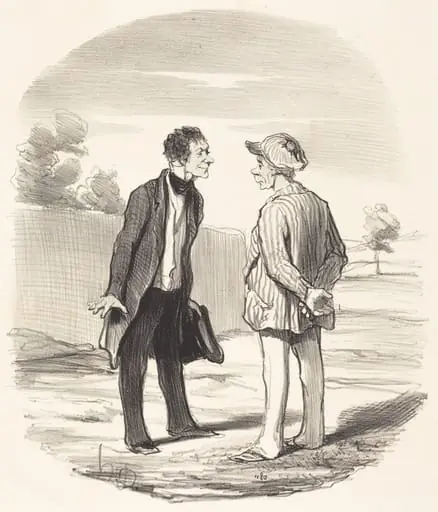 Oui, monsieur Gimblet, l'ordre ne sera... rétabli...
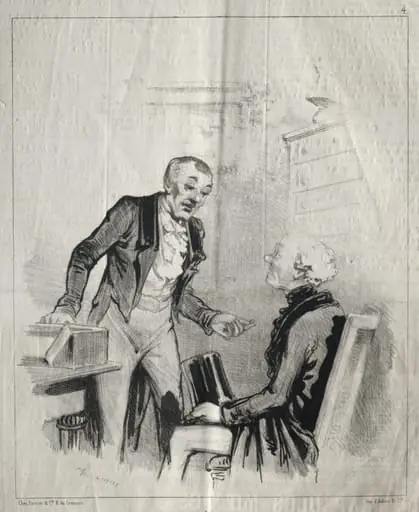 Les Malades et les medicins: No. 4, Lew Homéopathes
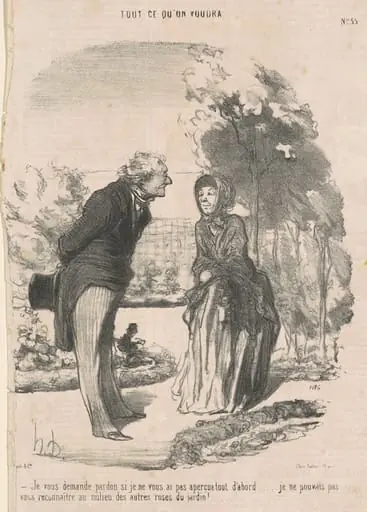 Je vous demande pardo si je ne vous ai pas apercue ...
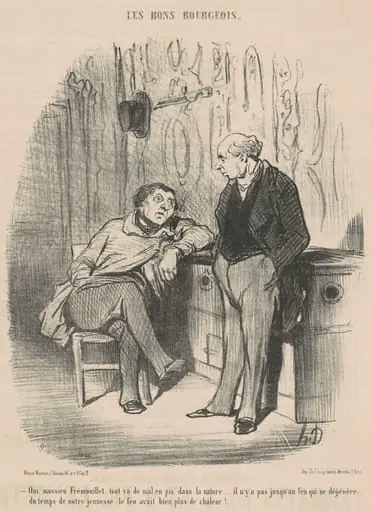 Oui, Mossieu Fremouillet, tout va de mal en pis ...
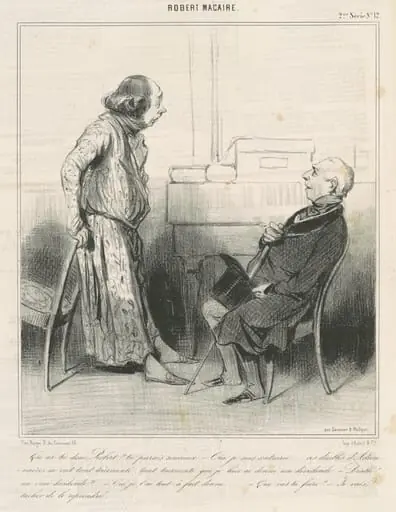 Qu'as-tu donc, Robert? ...
 Monsieur voila vingt ans que je poursuis l'union de...