Artwork
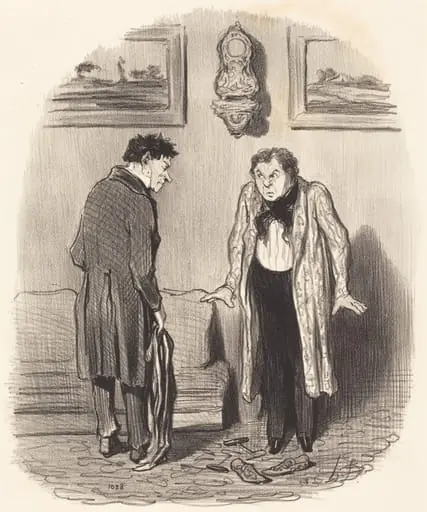
Oui, monsieur Gimblet, l'ordre ne sera... rétabli...
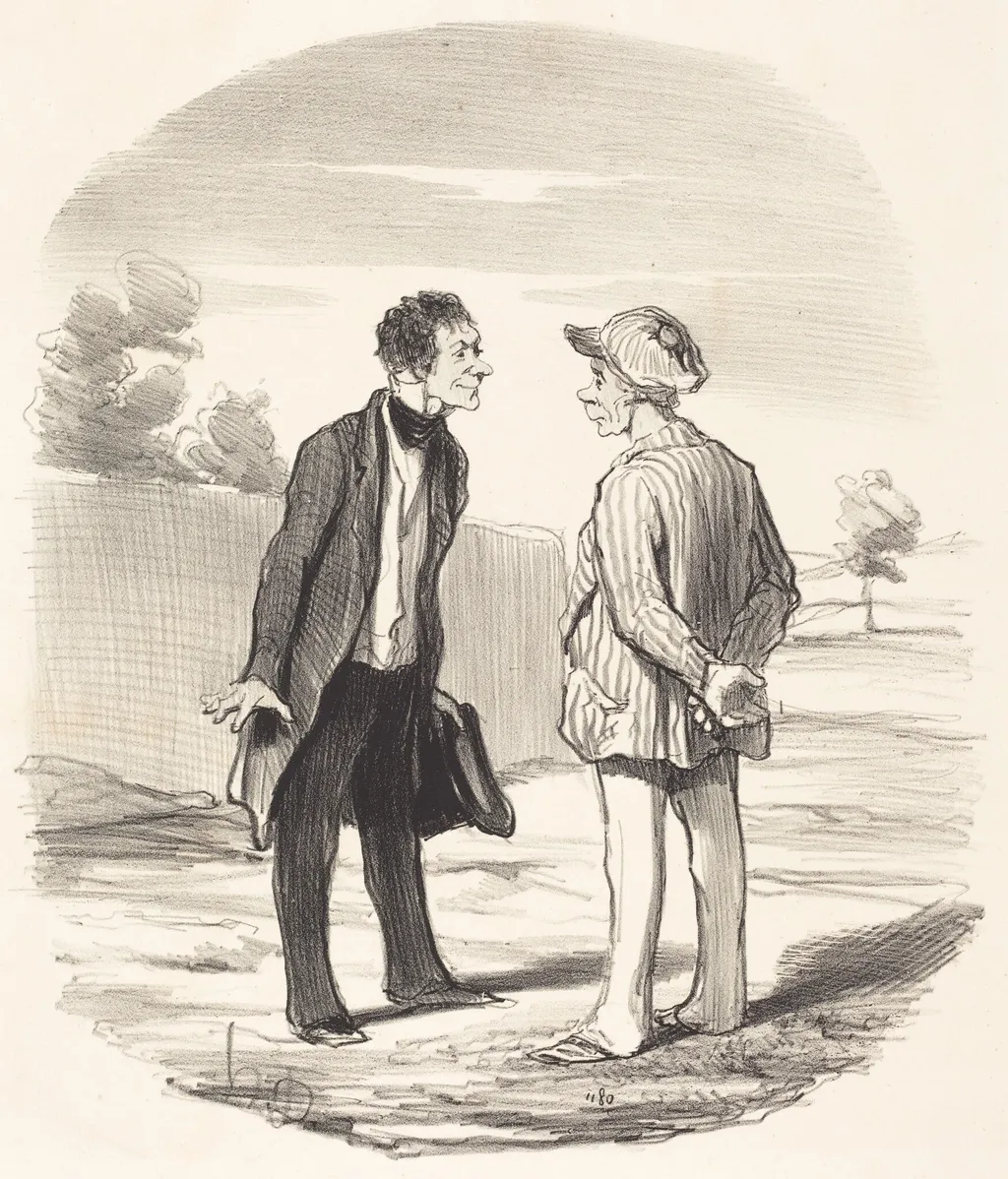
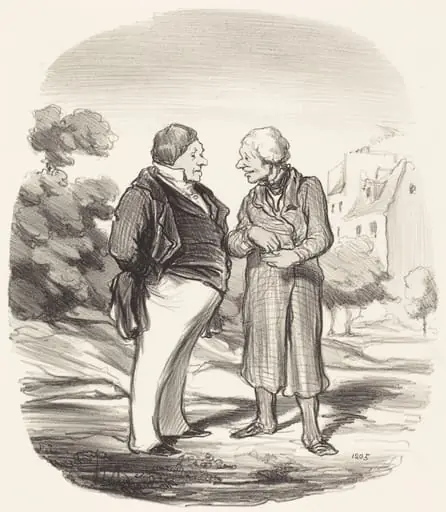
Oui, monsieur Gimblet, l'ordre ne sera... rétabli... is an ink print by the Impressionist artist Honoré Daumier. It dates from 1851 and is held in the collection of the National Gallery of Art.
About this work
Overview
Created in 1851, this lithograph by Honoré Daumier is one of many political satires produced during his tenure with French illustrated newspapers.
Created in 1851, this lithograph by Honoré Daumier is one of many political satires produced during his tenure with French illustrated newspapers. Executed in the medium of lithography, it captures a quiet moment of bureaucratic exchange, using minimal detail to imply deeper social tensions. Daumier’s work from this period consistently challenged authority through understated visual wit rather than overt caricature.
Subject & Meaning
The scene depicts two men in a modest interior, one in a striped shirt and hat, the other in formal attire holding a cane. Their exchange, suggested by the title, implies a reluctant acquiescence to institutional authority. The phrase 'l'ordre ne sera... rétabli...' hints at the fragile restoration of order under Louis-Napoléon Bonaparte’s rising power, subtly mocking the hollow assurances of political elites during the turbulent transition from Republic to Empire.
Technique & Style
Daumier employed lithography’s capacity for rapid, expressive line work to convey nuance with economy. The figures are rendered in loose, suggestive strokes, with minimal background detail—just a window and plain wall—that focuses attention on their interaction. Shading is restrained, and facial expressions are implied rather than exaggerated, reflecting his shift from broad satire toward psychological realism in his later prints.
History & Provenance
The print was likely published in *Le Charivari*, where Daumier regularly contributed between 1830 and 1860. Though the original publication context is unconfirmed, its date aligns with the aftermath of the 1851 coup d’état, when Daumier’s political commentary drew official scrutiny. The work survived due to its circulation among private collectors and later institutional acquisitions, preserving its role as a document of political unease.
Context
In 1851, France stood on the brink of imperial restoration as Louis-Napoléon Bonaparte dismantled the Second Republic. Daumier, a committed republican, used his art to observe—not just attack—the mechanisms of power. This print reflects the atmosphere of quiet compliance and bureaucratic theater that characterized the period, where public order was proclaimed even as civil liberties eroded.
Legacy
Daumier’s lithographs, including this one, influenced later generations of social commentators in visual art, from political cartoonists to modern illustrators. His ability to convey complex social dynamics through restrained imagery set a precedent for using everyday scenes as vehicles for critique. The work remains a quiet but potent record of resistance through observation rather than outrage.
Artist & collection
Artist
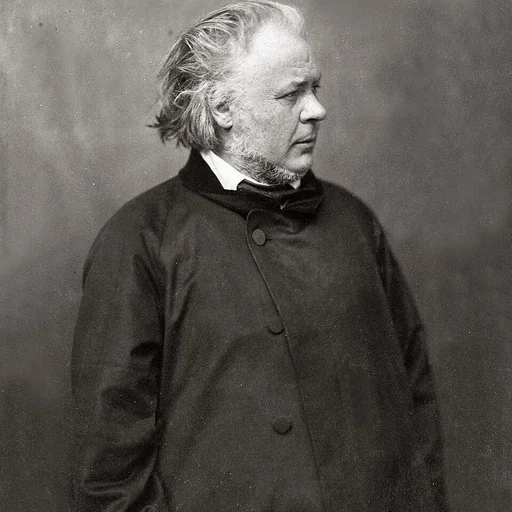
Honoré-Victorin Daumier was a French painter, sculptor, and printmaker, whose many works offer commentary on the social and political life in France, from the Revolution of 1830 to the fall of the Second French Empire in 1870.

 Actionnaires Californiens
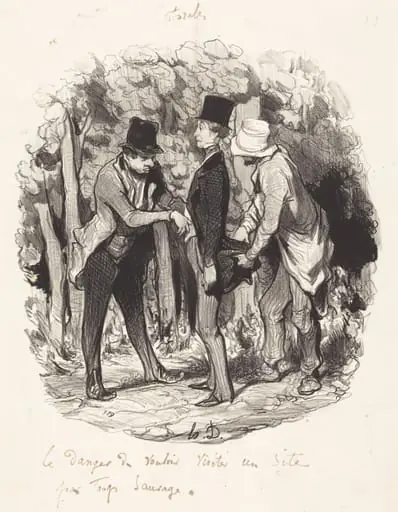 Le Danger de... visiter un site par trop sauvage
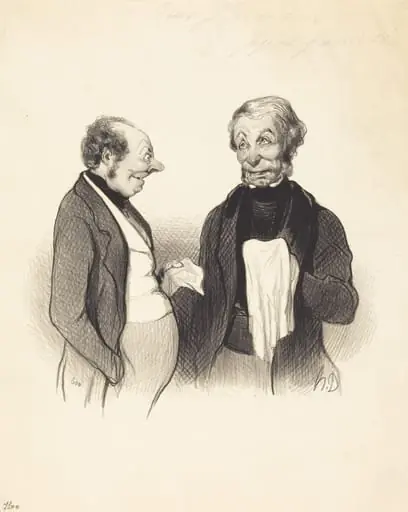 Une Heureuse nouvelle
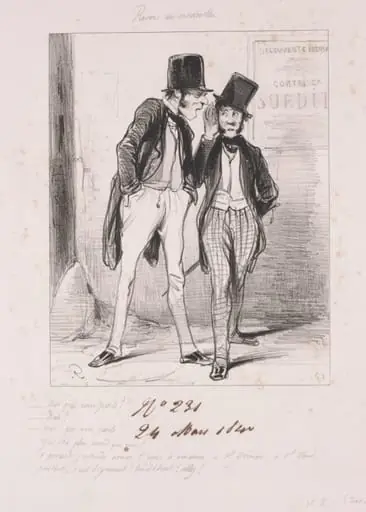 Revers des médailles: Moi qui vous parle
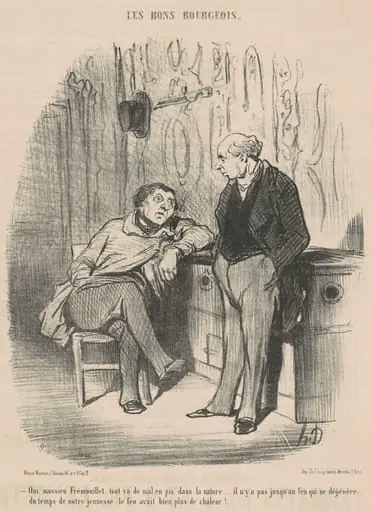 Oui, Mossieu Fremouillet, tout va de mal en pis ...
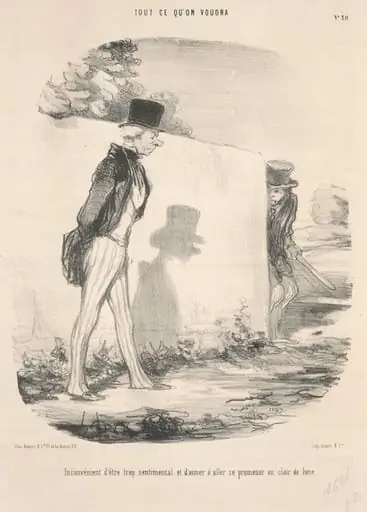 Inconvènient d'être trop sentimental ...
 Mais quand je vous dis que je ne peux pas remuer les pieds...
 Saperlotte!... que je voudrais... que ma femme ait fini...