Artwork
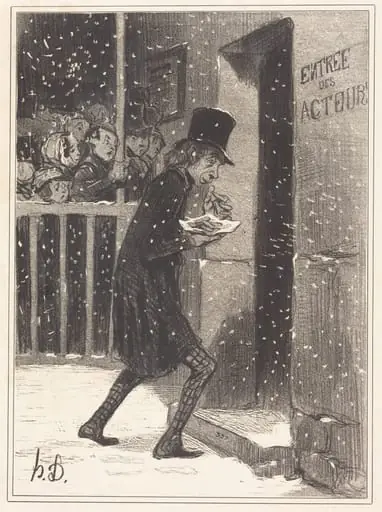
L'Acteur des Funambules
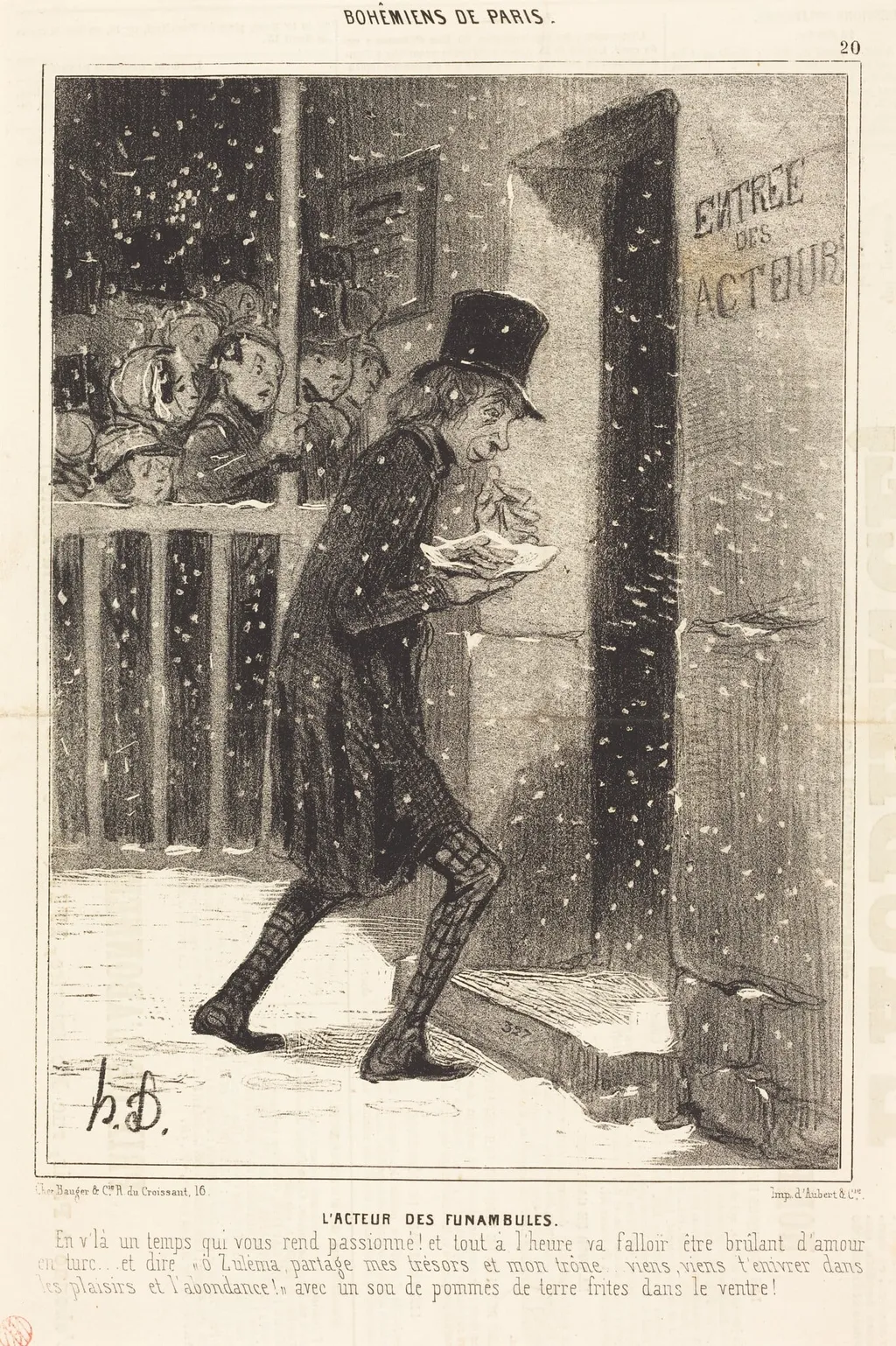
L'Acteur des Funambules is an ink print by the Romanticist artist Honoré Daumier. It dates from 1842 and is held in the collection of the National Gallery of Art.
About this work
Overview
Honoré Daumier’s 1842 lithograph *L’Acteur des Funambules* portrays a solitary performer navigating a snowy urban scene. Executed on newsprint, the work exemplifies Daumier’s engagement with transient, everyday moments. As both a printmaker and social observer, he frequently turned to lithography to capture the fragility and resilience of individuals within a politically charged environment.
Subject & Meaning
The scene evokes the tension between public performance and private vulnerability, a recurring motif in Daumier’s work amid France’s unstable social climate.
The image depicts an actor hurrying through snow, clutching a document—possibly a script or notice—while glancing toward a dimly lit theater entrance. The sign reading *Entrée des Acteurs* underscores his profession, yet his harried expression suggests precariousness. The scene evokes the tension between public performance and private vulnerability, a recurring motif in Daumier’s work amid France’s unstable social climate.
Technique & Style
Daumier’s lithograph employs loose, energetic lines to convey movement, with rapid strokes defining the actor’s coat and the swirling snow. The snowfall is rendered through sparse, staccato dots, creating texture without overpowering the composition. This economical approach aligns with his broader practice of distilling scenes into their essential gestures, favoring immediacy over detail.
History & Provenance
Created during a period of strict press censorship under the July Monarchy, *L’Acteur des Funambules* appeared in satirical journals such as *Le Charivari*, where Daumier regularly contributed. The lithograph’s survival on newsprint reflects its origins as ephemeral print media, later preserved as part of his broader oeuvre. Its precise circulation remains undocumented, though it aligns with his output from the early 1840s.
Context
Daumier’s work emerged against a backdrop of political repression and social unrest in 19th-century France. Satirical publications provided a rare outlet for dissent, though censorship often forced artists to encode criticism in seemingly innocuous scenes. The actor’s isolation in *L’Acteur des Funambules* mirrors the precarious position of performers—and artists—operating under shifting power structures.
Legacy
The lithograph exemplifies Daumier’s ability to merge social observation with formal economy, influencing later generations of printmakers and caricaturists. Its depiction of urban life and performative labor resonates with themes explored by artists from the Impressionists to modern graphic novelists. Preserved in collections such as the Musée d’Orsay, it remains a study in balancing critique with visual restraint.
Artist & collection
Artist
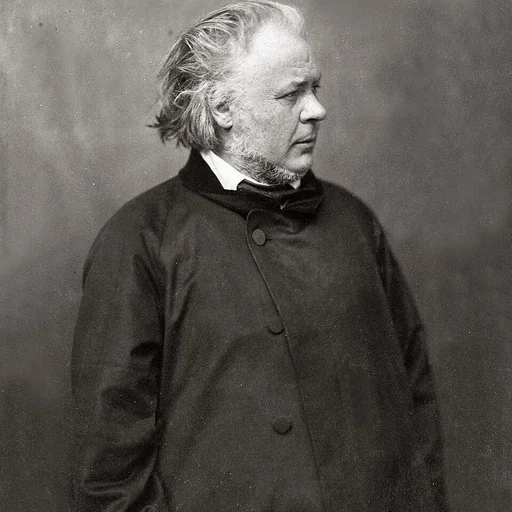
Honoré-Victorin Daumier was a French painter, sculptor, and printmaker, whose many works offer commentary on the social and political life in France, from the Revolution of 1830 to the fall of the Second French Empire in 1870.

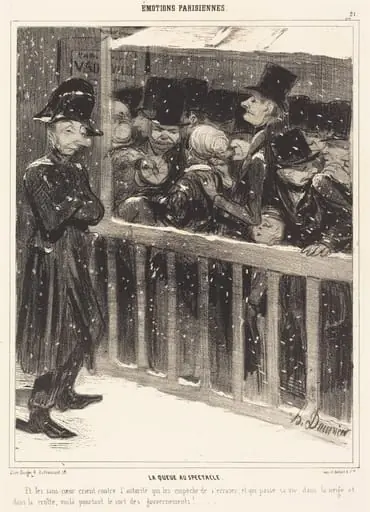 La Queue au Spectacle
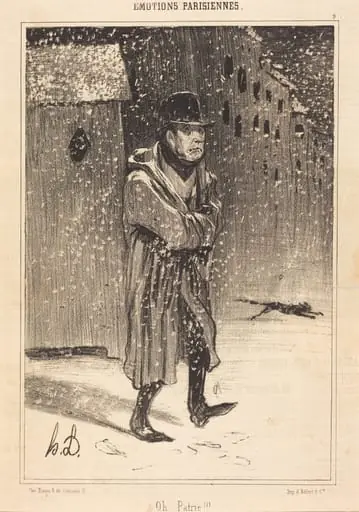 Oh Patrie!!!
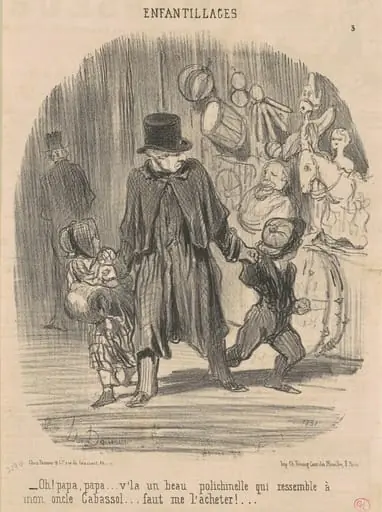 Oh! Papa, papa ...v'la un beau ...
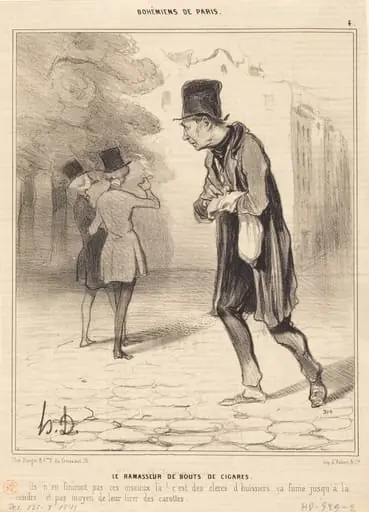 Le Ramasseur de bouts de cigares
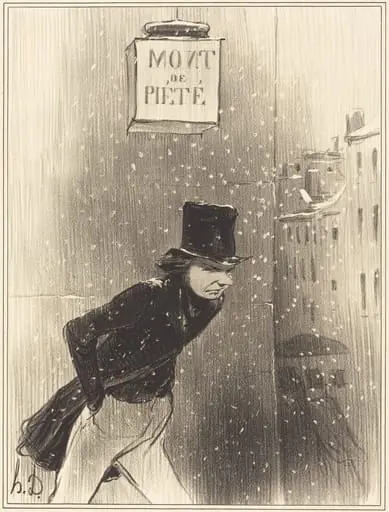 Un Monsieur au dessous de ses affaires
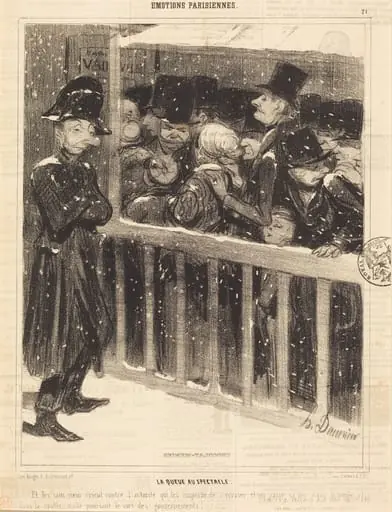 La Queue au spectacle
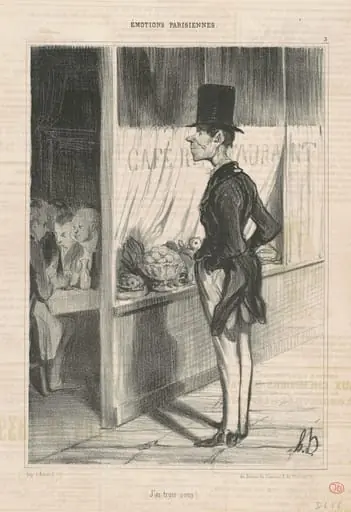 J'ai trois sous
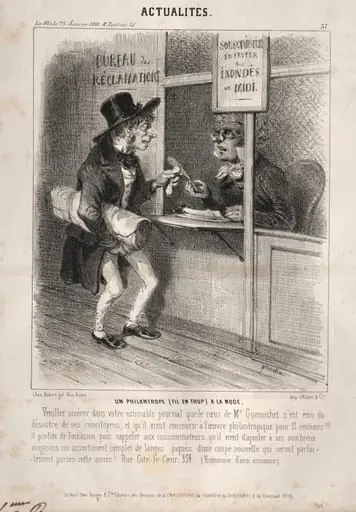 Actualités: Un Philantrope à la mode
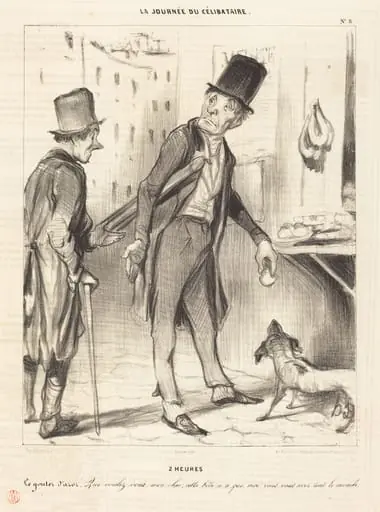 2 heures - Le gouter d'Azor
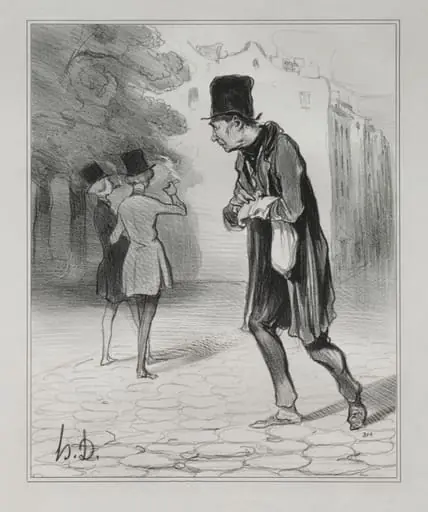 The Collector of Cigar Stubs
 L'Acteur des Funambules
 Inconvénient d'acheter un journal...