Artwork
Faut de la prudence père Balivot, vot petite a seize ans...
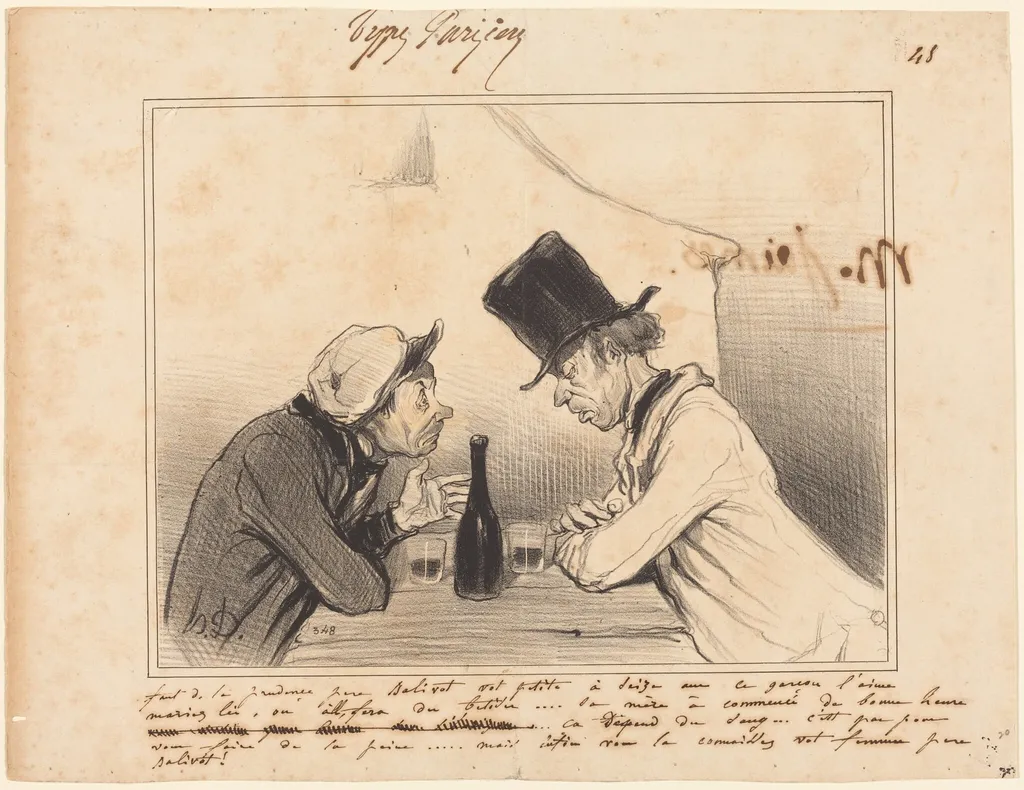
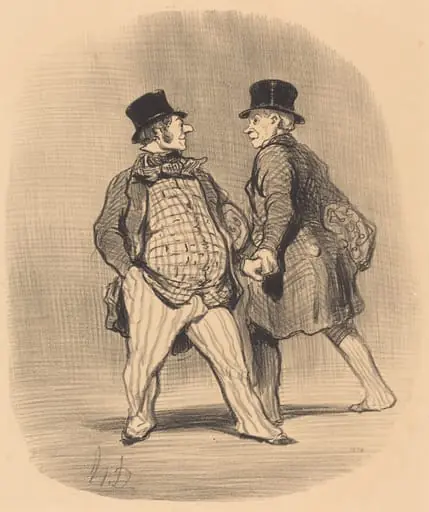
Faut de la prudence père Balivot, vot petite a seize ans... is an ink print by the Romanticist artist Honoré Daumier. It dates from 1842 and is held in the collection of the National Gallery of Art.
About this work
Overview
Created in 1842, this lithograph by Honoré Daumier is one of many political satires produced during a period of intense social unrest in France.
Created in 1842, this lithograph by Honoré Daumier is one of many political satires produced during a period of intense social unrest in France. Executed in the medium of lithography, it was likely published in a liberal periodical such as *Le Charivari*, where Daumier regularly targeted institutional hypocrisy. The image captures a moment of quiet unease, using minimal detail to convey a complex moral critique.
Subject & Meaning
The scene portrays an elderly clergyman gripping the hand of a young girl, their postures suggesting discomfort rather than affection. The title, referencing paternal authority and the girl’s tender age, underscores the absurdity of age-disparate unions sanctioned by social norms. Daumier does not depict overt violence but instead highlights the power imbalance and moral compromise embedded in such arrangements, particularly within religious circles.
Technique & Style
Daumier employed lithography to achieve rapid, expressive lines with strong tonal contrasts. His figures are rendered with loose, gestural strokes, emphasizing emotional tension over anatomical precision. The background is left largely empty, focusing attention on the unsettling interaction between the two figures. This economy of form amplifies the satire, allowing the viewer to infer the broader social critique without explicit detail.
History & Provenance
Produced during the July Monarchy, the print was part of Daumier’s sustained campaign against corruption in the church and state. It was likely distributed widely through illustrated journals, reaching a broad urban audience. Though Daumier faced legal repercussions for his caricatures, this work survived as part of a larger archive of political prints, later collected by institutions interested in 19th-century social critique.
Context
In 1840s France, child betrothals and marriages involving minors were not uncommon, often arranged for economic or social advantage. The clergy, expected to uphold moral standards, were frequently implicated in these arrangements. Daumier’s work responded to public debates about morality, law, and the role of religion in private life, using humor to expose contradictions between doctrine and practice.
Legacy
Daumier’s lithographs, including this one, helped redefine printmaking as a vehicle for social criticism. His unflinching portrayal of institutional power influenced later generations of artists and cartoonists. Though initially dismissed as polemical, these works are now recognized for their psychological insight and formal innovation, offering a raw record of everyday injustice in mid-19th-century France.
Artist & collection
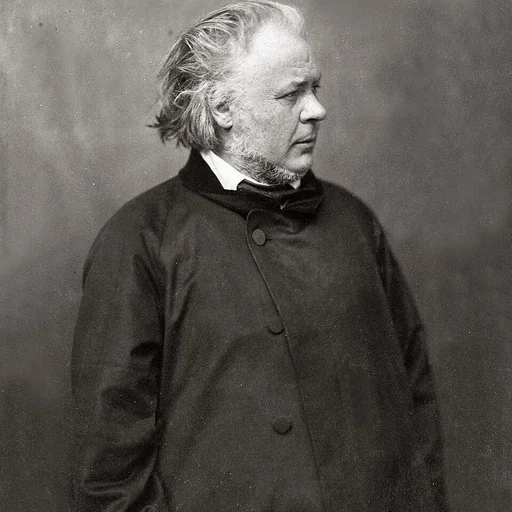
Artist
Honoré-Victorin Daumier was a French painter, sculptor, and printmaker, whose many works offer commentary on the social and political life in France, from the Revolution of 1830 to the fall of the Second French Empire in 1870.









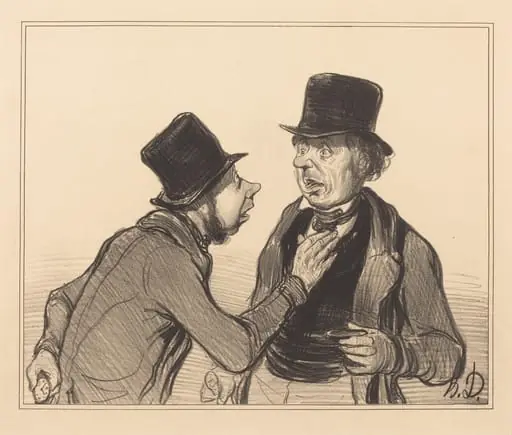 Oui Monsieur vous n'êtes pas de Paris...
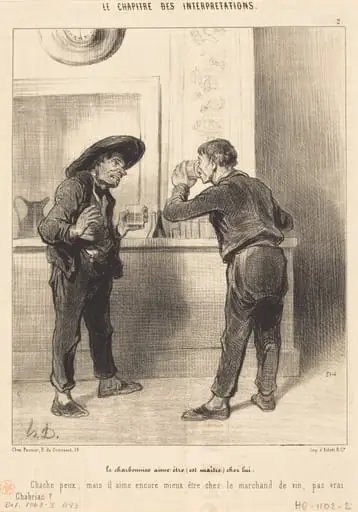 Le Charbonnier aime être (est maitre)...
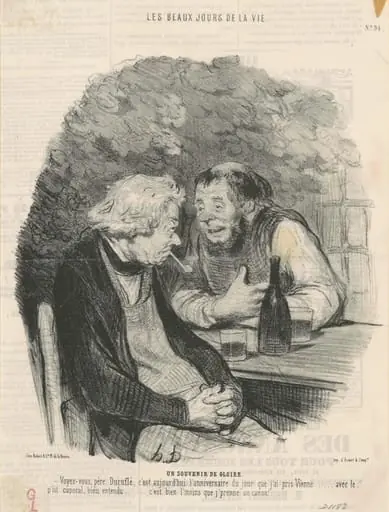 Un souvenir de gloire
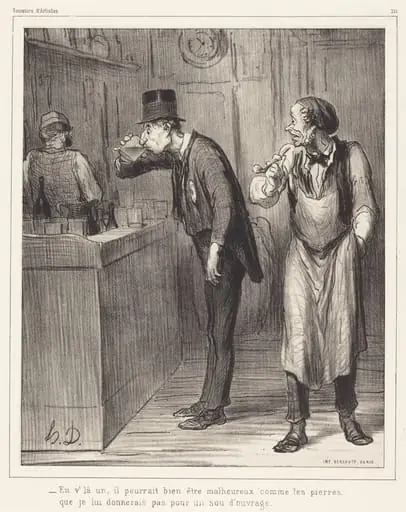 En v'la un, il pourrait bien être malheureux...
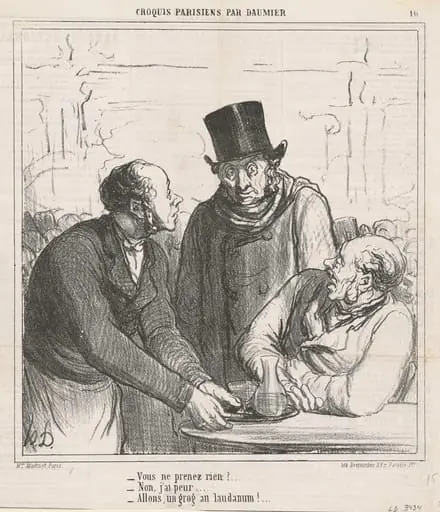 Vous ne prenez rien?
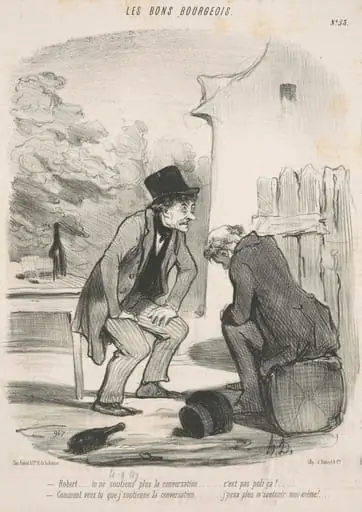 Robert ... tu ne soutiens plus la conversation ...
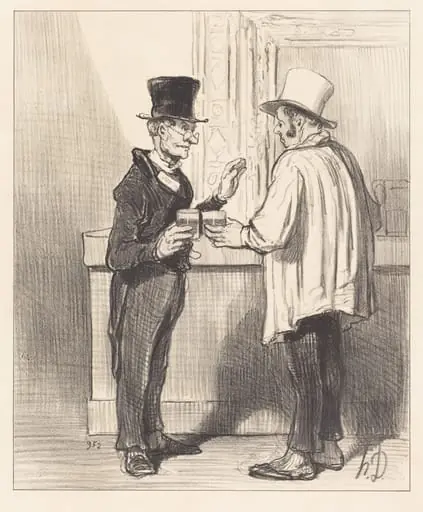 Un Défenseur... causant... dans son cabinet habituel
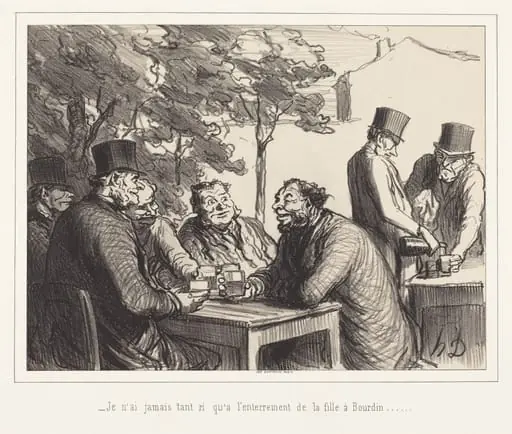 Je n'ai jamais tant ri qu'a l'enterrement de la fille a Bourdin...
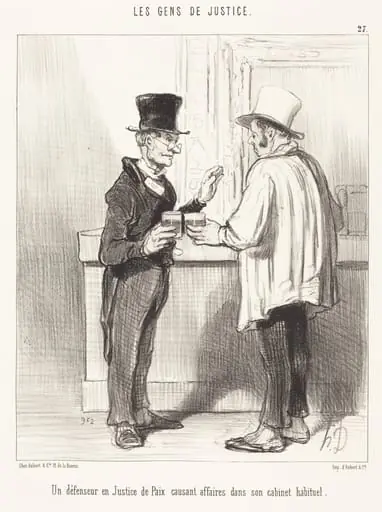 Un Défenseur... causant... dans son cabinet habituel
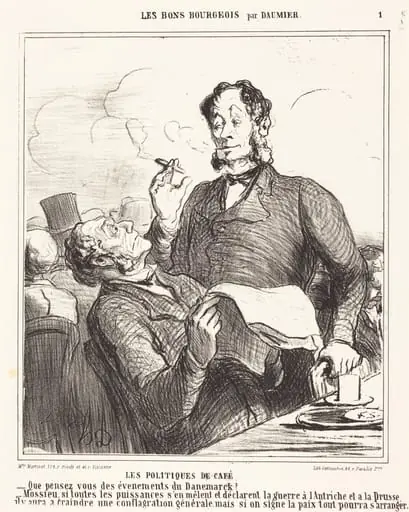 Les Politiques de café
 Confrère, méfiez-vous du petit baron...
 A tous les coeurs bien nés que la patrie est chère!!!