Artwork
L'enlevement d'Hélène
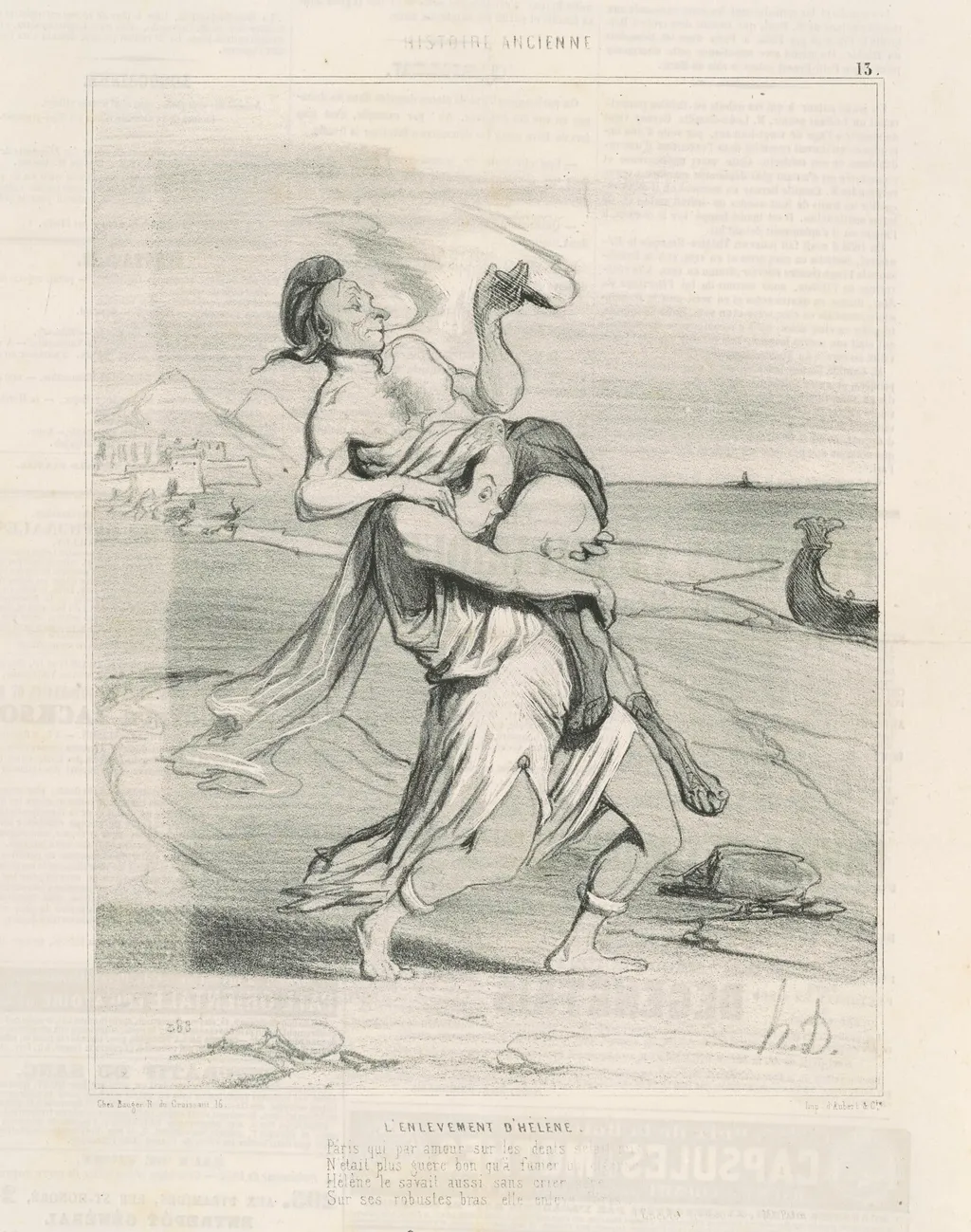
L'enlevement d'Hélène is an ink print by the Romanticist artist Honoré Daumier. It dates from 1842 and is held in the collection of the National Gallery of Art.
About this work
Daumier’s 1842 lithograph shows a man carrying a woman over his shoulder in a rocky coastal spot.
Daumier’s 1842 lithograph shows a man carrying a woman over his shoulder in a rocky coastal spot. The lines are bold and scratchy, like quick pencil marks. The rough style makes the struggle feel real, not smooth or pretty.
Daumier made this for a French newspaper. It’s a joke about kidnapping myths—he turns a big drama into a silly, heavy lift.
See how he scratches the stone to print this? Look up lithography next.
Overview
L'enlevement d'Hélène is a 1842 lithograph by Honoré Daumier, portraying a man carrying a woman over his shoulder in a rugged coastal landscape.
Subject & Meaning
The work satirically reinterprets the mythological theme of Helen's abduction, reducing it to a physically strained, everyday struggle, highlighting the contrast between mythic grandeur and mundane effort.
Technique & Style
Characterized by bold, scratchy lines reminiscent of quick pencil marks, the lithograph's rough texture amplifies the sense of physical exertion, reflecting Daumier's expressive use of the medium.
History & Provenance
Originally created for publication in a French newspaper, the piece exemplifies Daumier's engagement with contemporary media and his use of art for social commentary.
Context
As a lithograph in a newspaper, it reached a broad audience, leveraging the accessibility of the medium to offer a humorous critique of romanticized mythological narratives.
Artist & collection
Artist
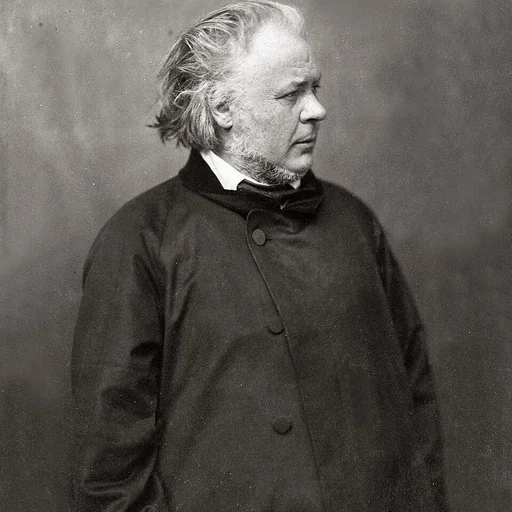
Honoré-Victorin Daumier was a French painter, sculptor, and printmaker, whose many works offer commentary on the social and political life in France, from the Revolution of 1830 to the fall of the Second French Empire in 1870.