Artwork
Ménélas vainqueur
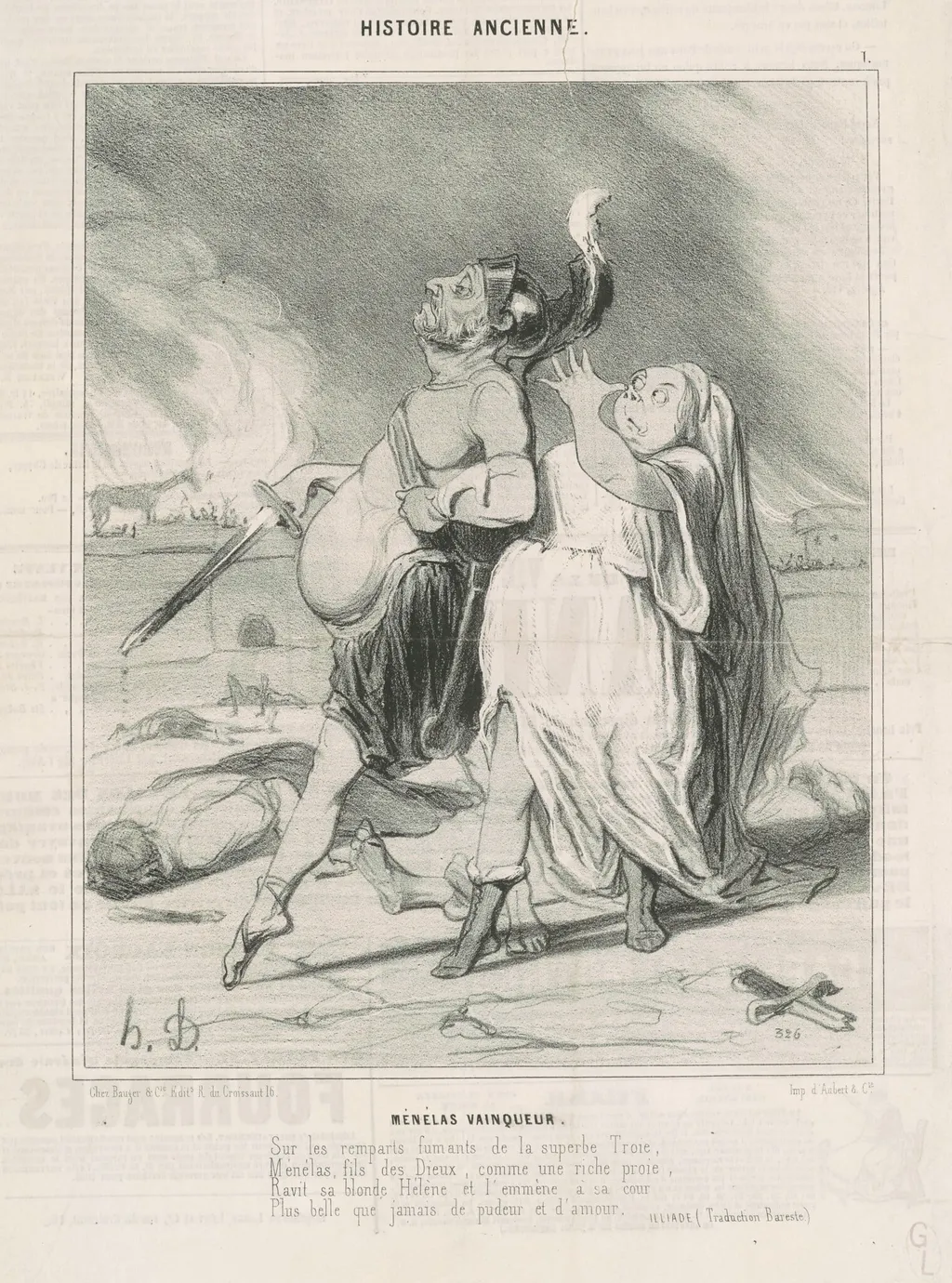
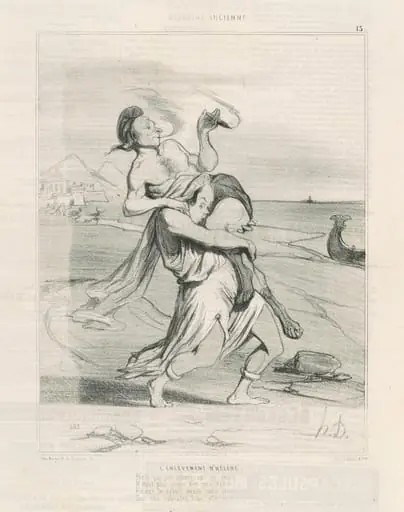
Ménélas vainqueur is an ink print by the Romanticist artist Honoré Daumier. It dates from 1841 and is held in the collection of the National Gallery of Art.
About this work
Overview
The composition centers on a standing warrior with a drawn sword, flanked by a second figure, both set against a backdrop of scattered ruins and swirling smoke.
Created in 1841 by Honoré Daumier, Ménélas vainqueur is a lithograph that captures a moment of grim triumph after battle. The composition centers on a standing warrior with a drawn sword, flanked by a second figure, both set against a backdrop of scattered ruins and swirling smoke. The image avoids ornate detail, relying instead on stark contrasts and simplified forms to evoke the weight of conflict.
Subject & Meaning
The scene references the mythological figure Menelaus, yet its focus is not on heroism but on the hollow aftermath of victory. The figures stand amid destruction, their postures heavy with exhaustion rather than celebration. The absence of clear narrative detail invites interpretation, suggesting that triumph here is inseparable from ruin, loss, and silence.
Technique & Style
Daumier employed lithography to achieve sharp, expressive lines with minimal tonal variation. His use of bold, unmodulated shapes and sparse shading heightens the emotional tension. The technique allowed rapid reproduction, aligning with his practice of using print media to convey social and political commentary through distilled visual language.
History & Provenance
Produced during Daumier’s early career in Paris, the work emerged from a period of intense political satire and visual experimentation. Though not part of a known series, it reflects his engagement with classical themes filtered through contemporary disillusionment. The print was likely circulated among literary and artistic circles, where its stark imagery resonated with critiques of power and war.
Context
In 1841, France was under the July Monarchy, a time of rising censorship and public unrest. Daumier, known for his caricatures, turned occasionally to mythological subjects to veil his critiques. Ménélas vainqueur mirrors the era’s ambivalence toward glory, using ancient allusion to question the cost of authority and conquest without direct political reference.
Legacy
The print exemplifies Daumier’s ability to distill complex emotions into minimal forms. Though less famous than his satirical works, Ménélas vainqueur influenced later artists seeking to convey trauma through abstraction and restraint. Its enduring power lies in its refusal to glorify violence, instead presenting victory as a quiet, somber condition.
Artist & collection
Artist
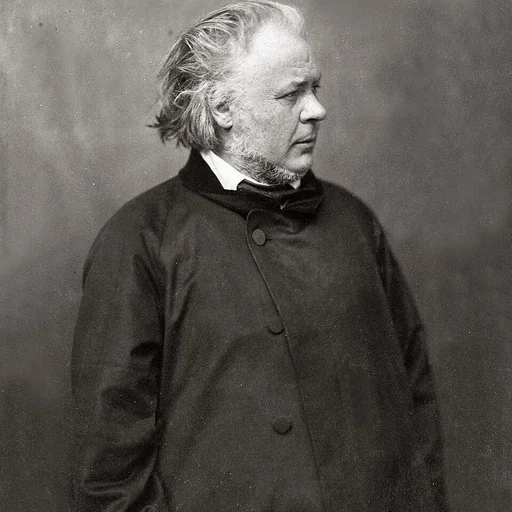
Honoré-Victorin Daumier was a French painter, sculptor, and printmaker, whose many works offer commentary on the social and political life in France, from the Revolution of 1830 to the fall of the Second French Empire in 1870.