Artwork
L'Entrée du Grand tunnel d'un chemin de fer
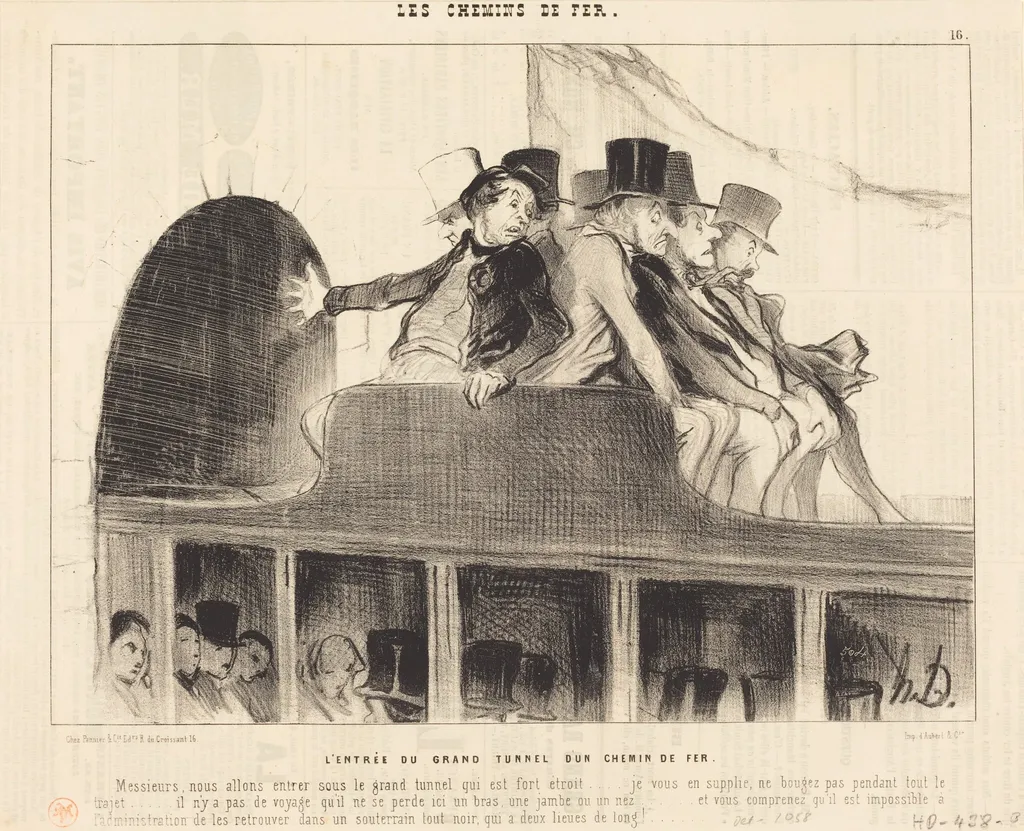
L'Entrée du Grand tunnel d'un chemin de fer is an ink print by the Romanticist artist Honoré Daumier. It dates from 1843 and is held in the collection of the National Gallery of Art.
About this work
Overview
Honoré Daumier’s 1843 lithograph titled *L’Entrée du Grand tunnel d’un chemin de fer* presents a railway tunnel’s mouth as seen from the interior of a train car. Rendered on newsprint, the print captures a moment of travel, with a group of formally dressed men observing the tunnel’s arched opening.
Subject & Meaning
The composition focuses on several gentlemen in top hats and coats seated inside the carriage, one of whom leans forward to peer back toward the viewer. Their faces convey curiosity and anticipation, suggesting a fascination with the new speed and scale of railway travel that was reshaping everyday experience.
Technique & Style
Executed as a lithograph on cheap newspaper paper, the work employs bold line work and stark contrasts typical of Daumier’s printmaking. The medium allowed rapid production for mass‑circulation, while the Romantic emphasis on emotion is evident in the dramatic lighting of the dim interior and the expressive gestures of the figures.
History & Provenance
Daumier produced the image during his regular contributions to satirical journals such as *La Caricature* and *Le Charivari*. The print was intended for a newspaper audience, reflecting his practice of commenting on contemporary developments—here, the expansion of rail infrastructure—through accessible visual satire.
Context
Created at a time when France was undergoing rapid industrialization, the lithograph documents the societal impact of railways, a symbol of modernity and progress. By depicting well‑dressed passengers, Daumier highlights how new technology intersected with everyday life across social classes, aligning the work with broader Romantic interests in the awe of technological change.
Artist & collection
Artist
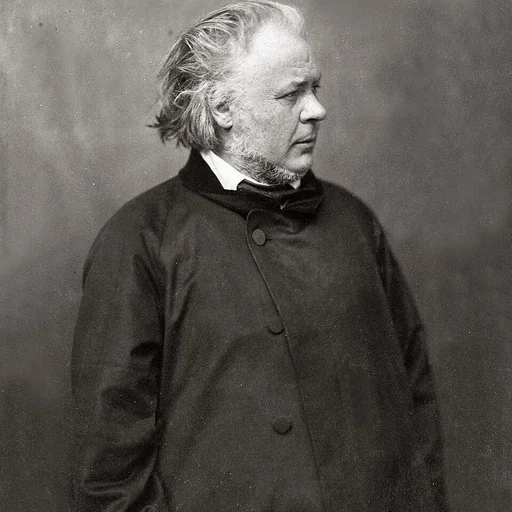
Honoré-Victorin Daumier was a French painter, sculptor, and printmaker, whose many works offer commentary on the social and political life in France, from the Revolution of 1830 to the fall of the Second French Empire in 1870.

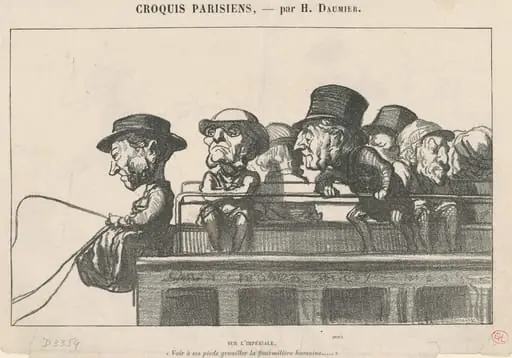 Sur l'Impériale
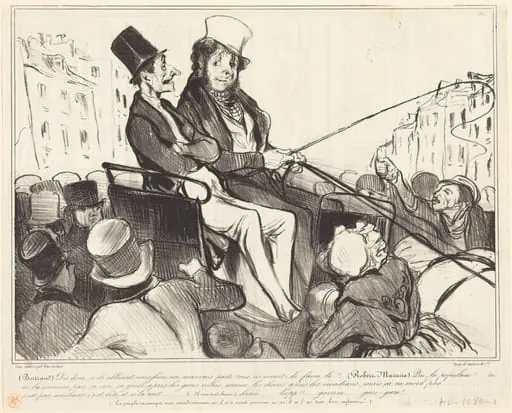 Bertrand, dis donc, s'ils allaient nous faire...
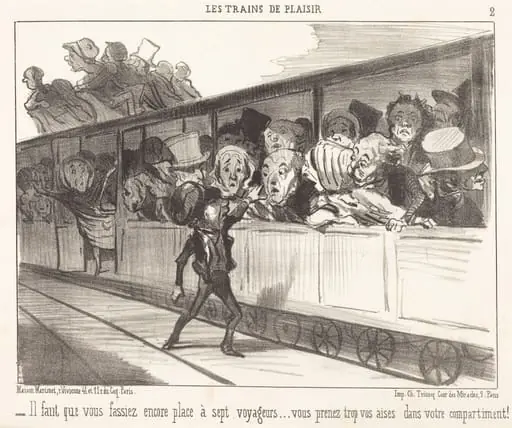 Il faut que vous fassiez encore place...
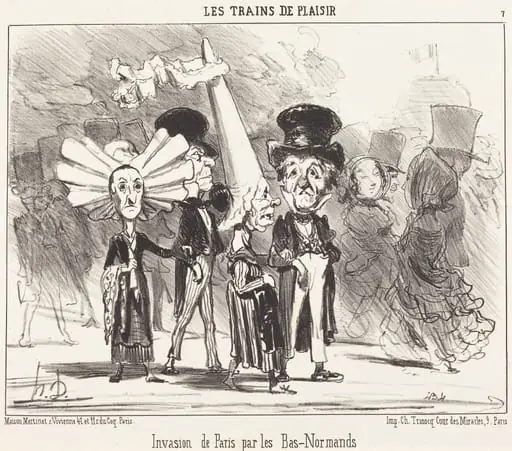 Invasion de Paris par les Bas-Normands
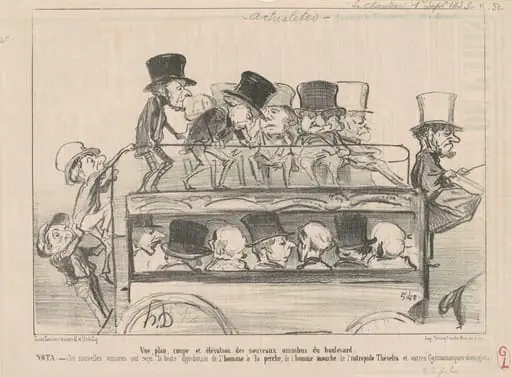 Vue ... et elévation des ... omnibus du boulevard ...
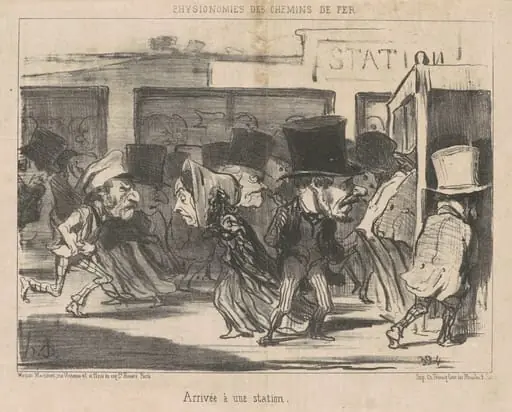 Arrivée a une station
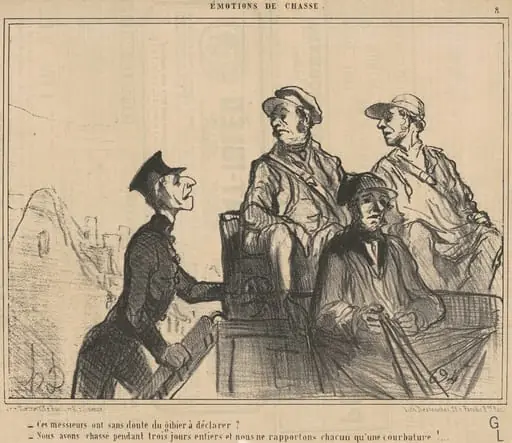 Ce messieurs ont ... du gibier a déclarer? ...
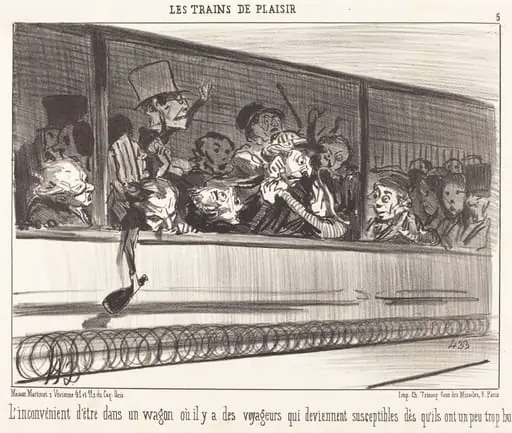 L'Inconvénient d'être dans un wagon...
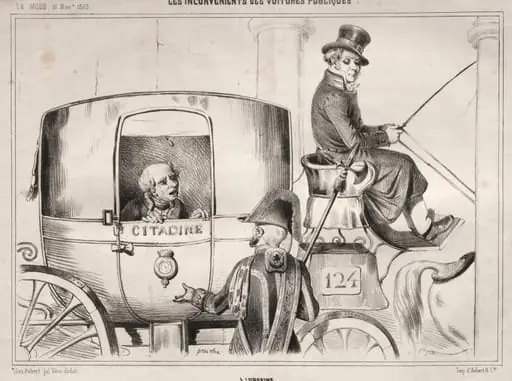 Actualités: Les Inconvénients des voitures publique: L'Urbaine
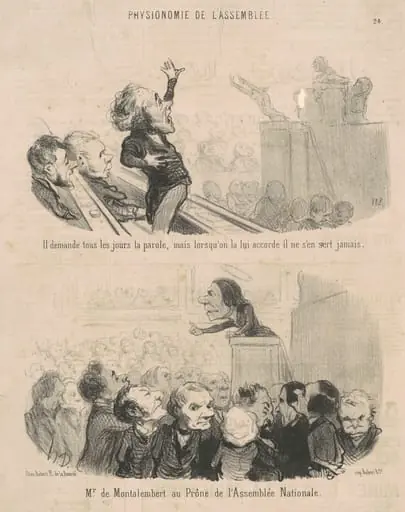 Il demande tous les jours la parole ...