Artwork
Il faut que vous fassiez encore place...
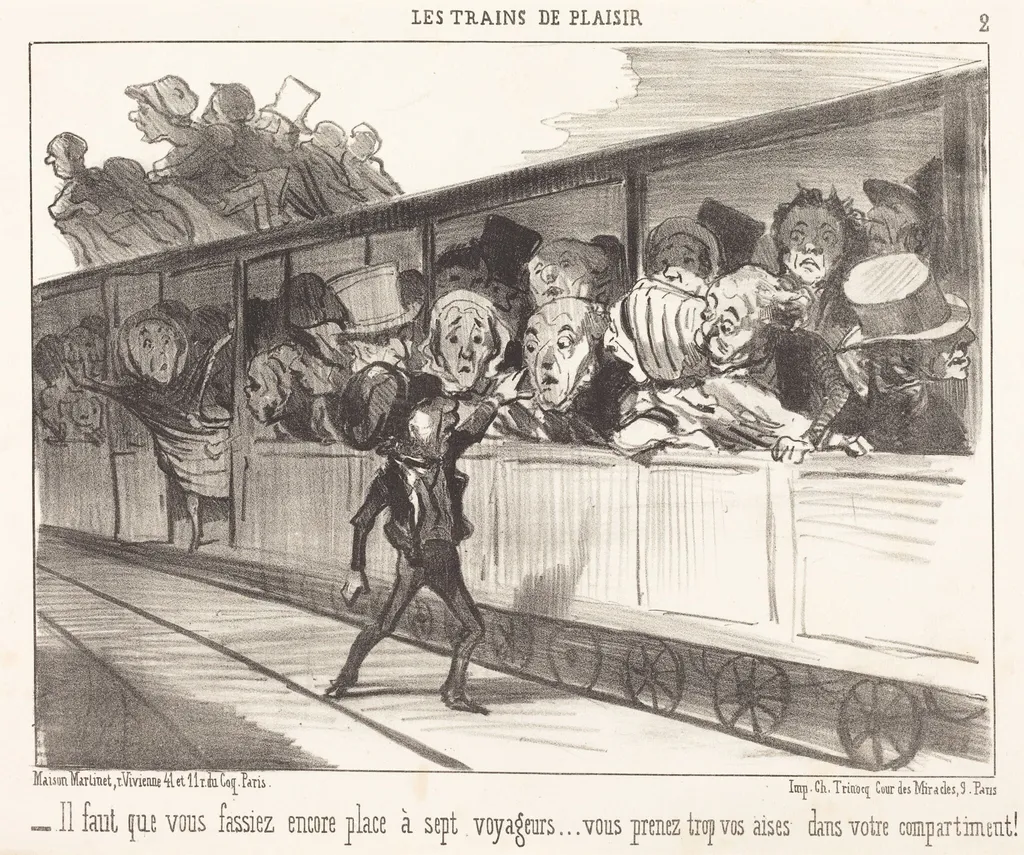
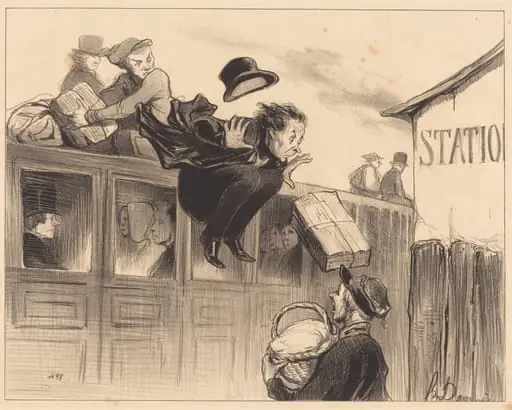
Il faut que vous fassiez encore place... is an ink print by the Impressionist artist Honoré Daumier. It dates from 1852 and is held in the collection of the National Gallery of Art. Created in 1852, this lithograph titled *Il faut que vous fassiez encore place.
About this work
Overview
Created in 1852, this lithograph titled *Il faut que vous fassiez encore place...* portrays a cramped railway carriage filled with passengers. The composition captures a moment of congestion, with figures pressed together and displaying a range of uneasy expressions, illustrating the everyday pressures of mid‑century French travel.
Subject & Meaning
The work satirically comments on the social conditions of the time, highlighting the discomfort and impatience of a diverse crowd forced into close proximity. By emphasizing the chaotic crowd and the determined figure pushing forward, Daumier underscores the tensions inherent in a rapidly modernizing society.
Technique & Style
Executed in lithography, the image relies on bold contour lines and varied shading to convey depth and texture. The contrast between sharply rendered foreground figures and the more blurred background creates a sense of movement and density, characteristic of Daumier’s graphic approach.
History & Provenance
Honoré Daumier, a prolific caricaturist for periodicals such as *La Caricature* and *Le Charivari*, produced this print during his active engagement with political satire. The lithograph reflects his republican sympathies and his frequent critiques of the monarchy, aristocracy, and clergy in the press of the 1850s.
Context
Mid‑19th‑century France experienced rapid expansion of railway networks, which transformed daily life and social interaction. Daumier’s depiction of an overcrowded train car captures the anxieties and class mingling that accompanied this technological shift, aligning with broader contemporary concerns about urbanization and mobility.
Artist & collection
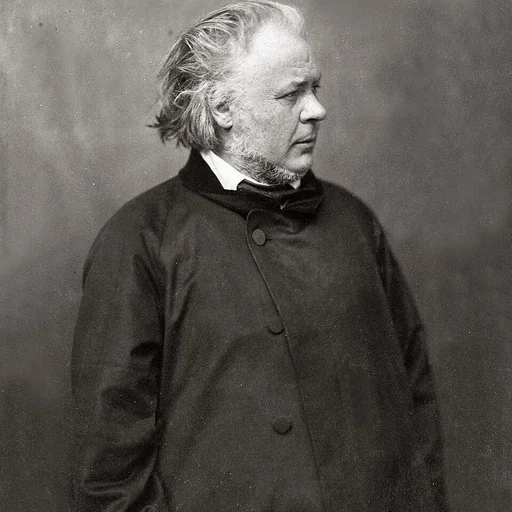
Artist
Honoré-Victorin Daumier was a French painter, sculptor, and printmaker, whose many works offer commentary on the social and political life in France, from the Revolution of 1830 to the fall of the Second French Empire in 1870.

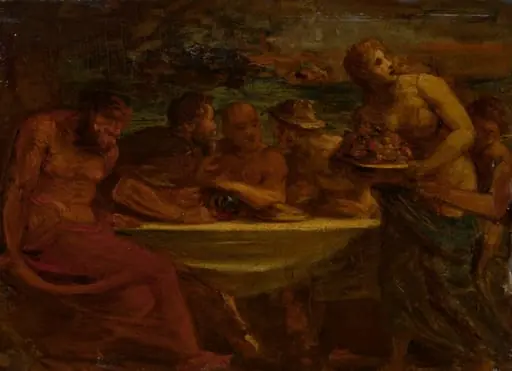
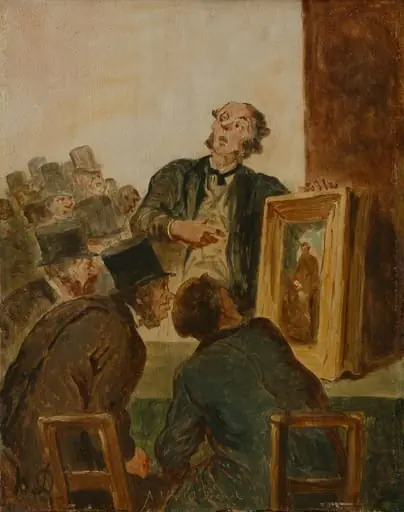
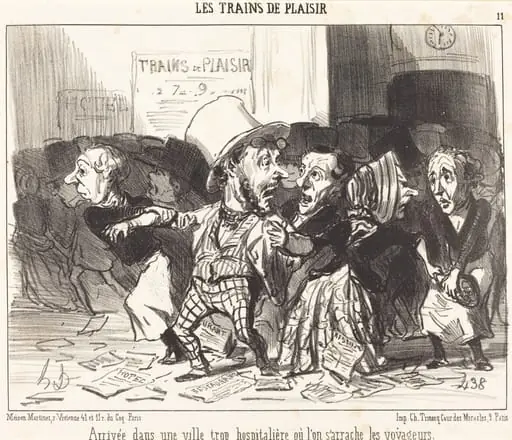 Arrivée dans une ville trop hospitalière...
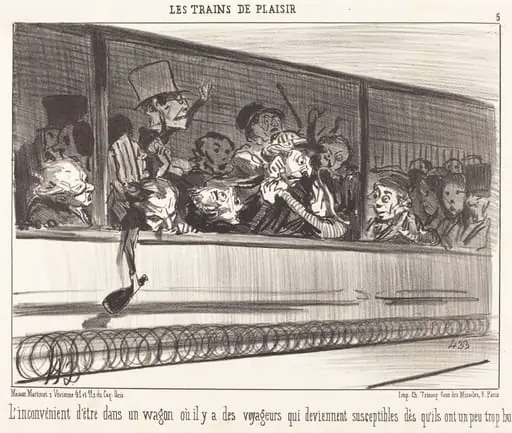 L'Inconvénient d'être dans un wagon...
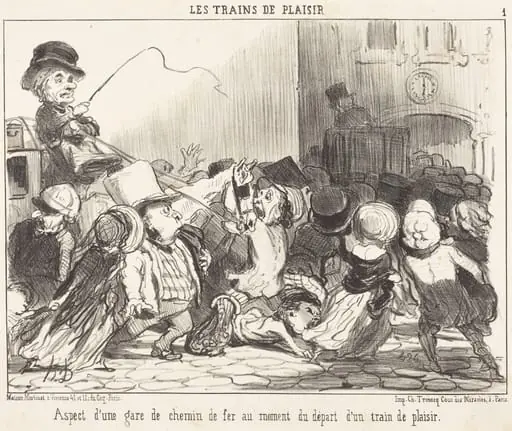 Aspect d'une gare de chemin de fer...
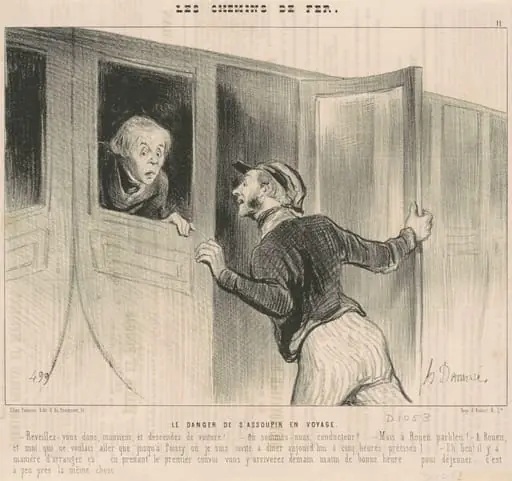 Le danger de s'assoupir en voyage
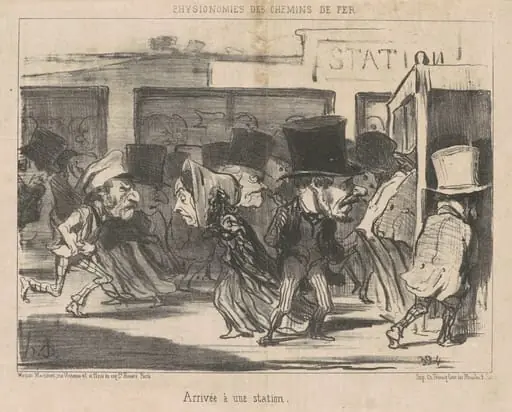 Arrivée a une station
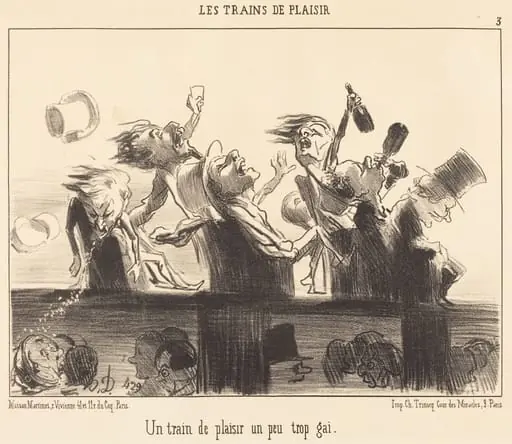 Un Train de plaisir un peu trop gai
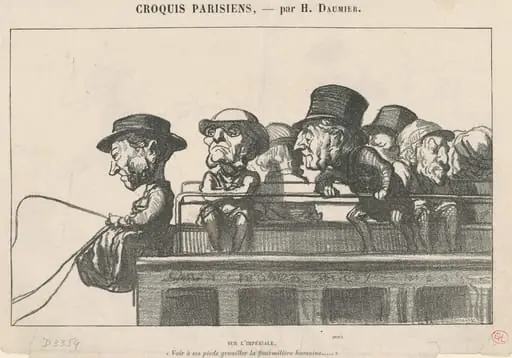 Sur l'Impériale
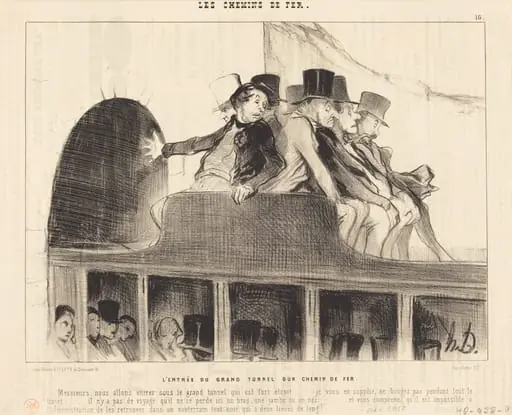 L'Entrée du Grand tunnel d'un chemin de fer
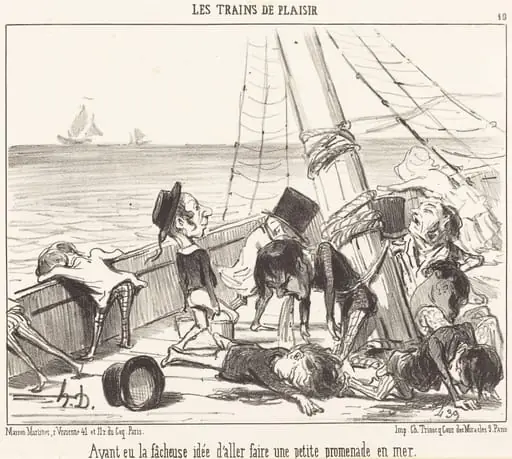 Ayant eu la facheuse idée d'aller... en mer
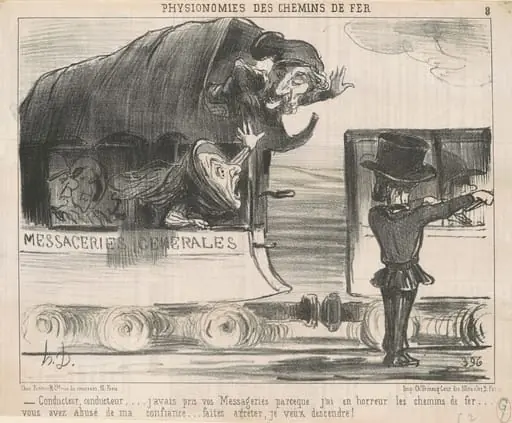 Conducteur ... j'avais pris vos messageries ...
 Trente secondes de station
 Invasion de Paris par les Bas-Normands