Artwork
L'Hercule des Champs-Elysées
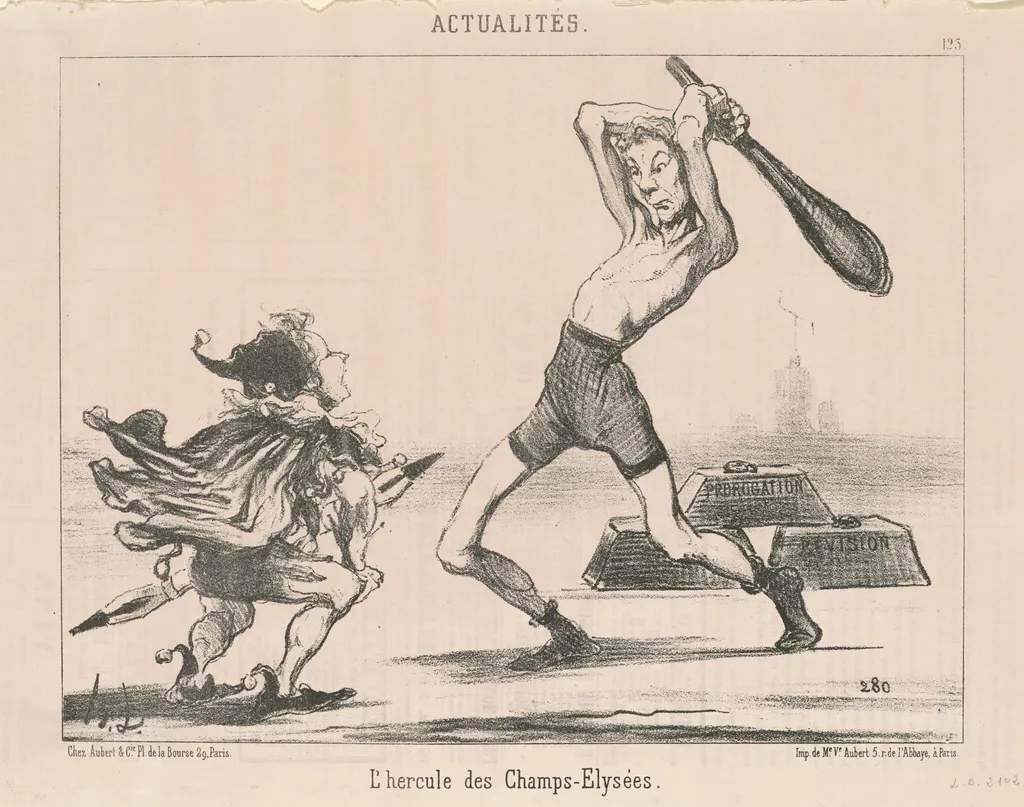
L'Hercule des Champs-Elysées is an ink print by the Impressionist artist Honoré Daumier. It dates from 1851 and is held in the collection of the National Gallery of Art.
About this work
Overview
Honoré Daumier’s 1851 lithograph, titled L’Hercule des Champs‑Élysées, presents a robust, almost caricatured figure clutching a massive club. The scene is set against an urban backdrop that evokes the famous Parisian avenue and the silhouette of the Arc de Triomphe, situating the image within a recognizable public space.
Subject & Meaning
The central character, rendered with exaggerated musculature, embodies a contemporary notion of heroic strength, while a diminutive, animated figure nearby introduces a comic tension. This juxtaposition of static power and fleeting movement serves Daumier’s satirical aim, critiquing societal preoccupations with status and the ostentatious display of force.
Technique & Style
Executed as a lithograph, the work relies on bold line work and stark contrasts to emphasize the hulking hero’s form and the lively posture of the smaller companion. Daumier’s characteristic exaggeration and keen observation of human gestures are evident, reinforcing the piece’s humorous yet incisive tone.
Context
Created during the mid‑nineteenth century, a period of rapid urban development in Paris, the image reflects the artist’s engagement with public life and contemporary politics. By placing a mythic strongman within the modern Champs‑Élysées, Daumier links classical symbolism to the everyday realities of a transforming French capital.
Artist & collection

Artist
Honoré-Victorin Daumier was a French painter, sculptor, and printmaker, whose many works offer commentary on the social and political life in France, from the Revolution of 1830 to the fall of the Second French Empire in 1870.









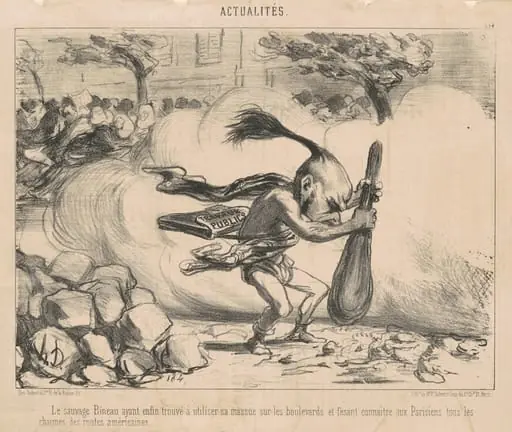 Le sauvage bineau ayant ...
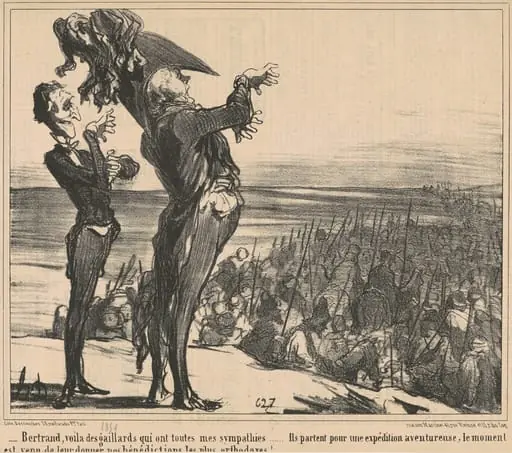 Bertrand, voila des gaillards ...
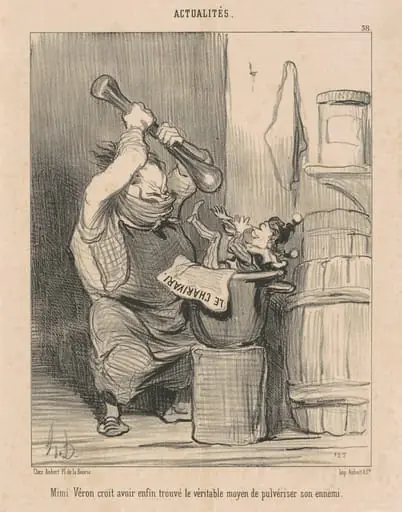 Mimi Vèron croit avoir ... trouvé le ...
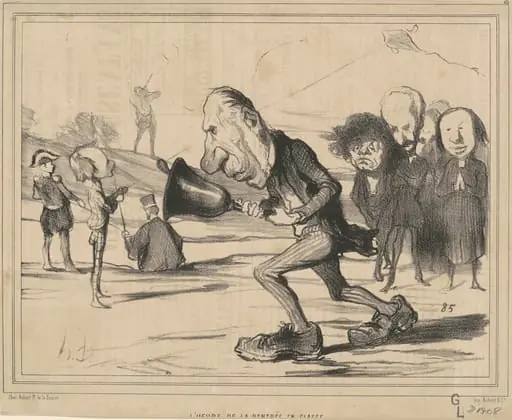 L'heure de la rentrée en classe
![Mac-Adam [sic] et Bineau aux enfers. Par suite d'une punition terrible, mais méritée, ils sont condamnés à repaver les Champs Elysées., by Honoré Daumier](https://artifactworldgallery.com/img/honore-daumier--mac-adam-sic-et-bineau-aux-enfers-par-suite-d-une-punition-t--172799d6f631077a-w320.webp) Mac-Adam [sic] et Bineau aux enfers. Par suite d'une punition terrible, mais méritée, ils sont condamnés à repaver les Champs Elysées.
Mac-Adam [sic] et Bineau aux enfers. Par suite d'une punition terrible, mais méritée, ils sont condamnés à repaver les Champs Elysées.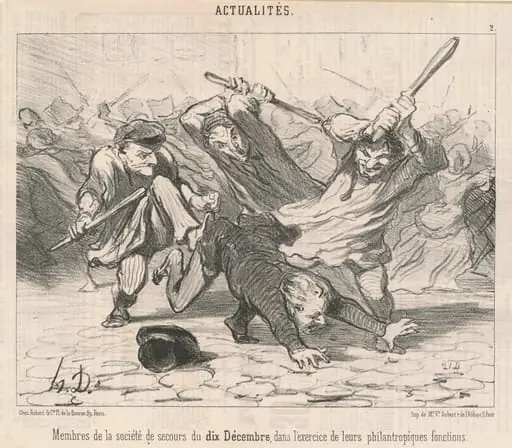 Membres de la société de secours du Dix-Décembre ...
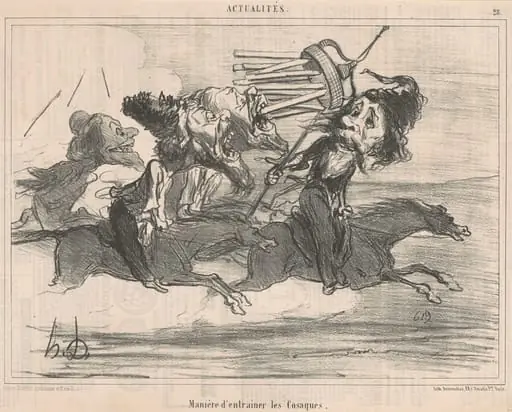 Maniére d'entrainer les cosaques