Artwork
Maniére d'entrainer les cosaques
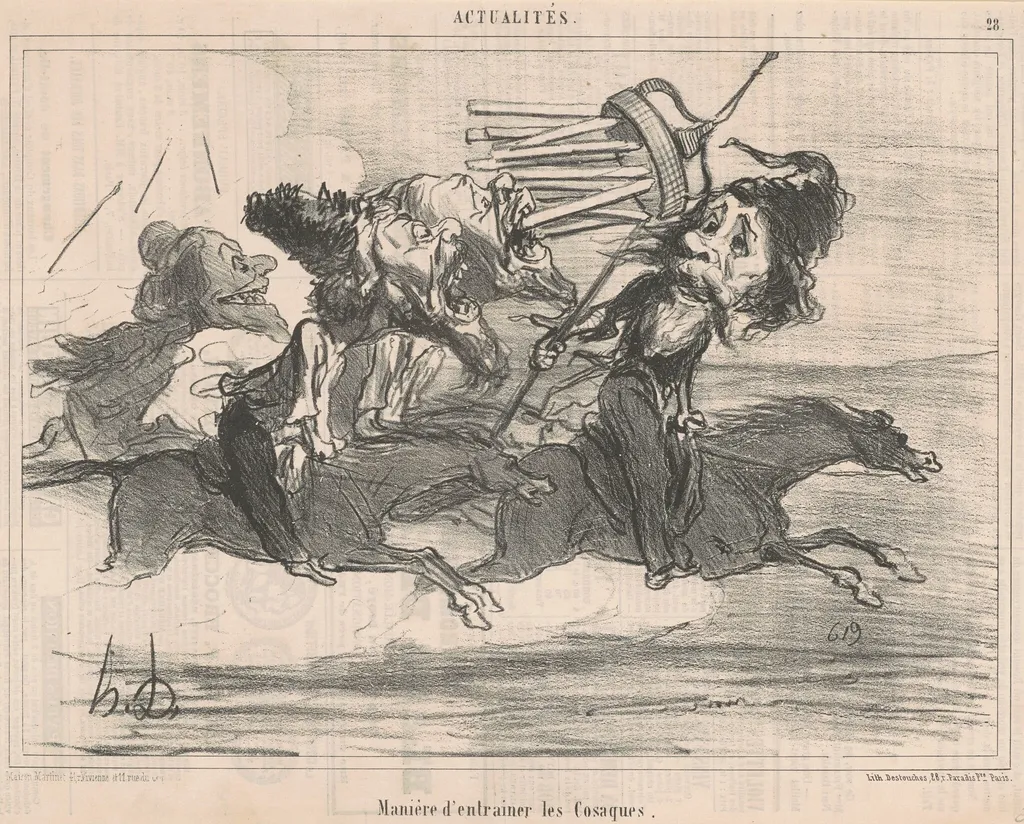
Maniére d'entrainer les cosaques is an ink print by the Impressionist artist Honoré Daumier. It dates from 1854 and is held in the collection of the National Gallery of Art.
About this work
Overview
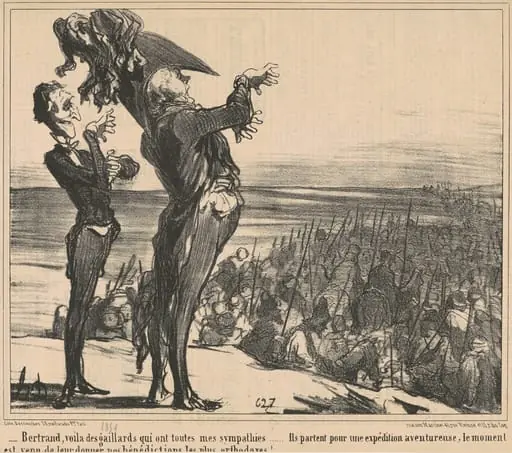
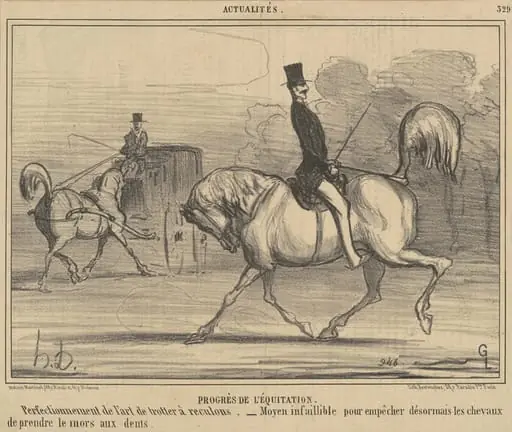
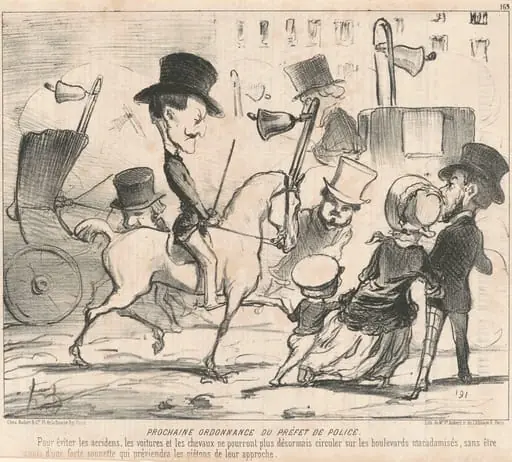
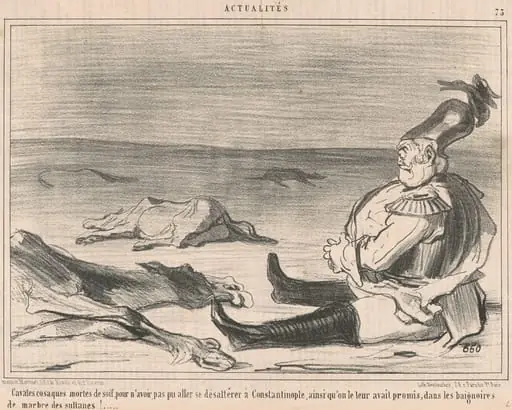
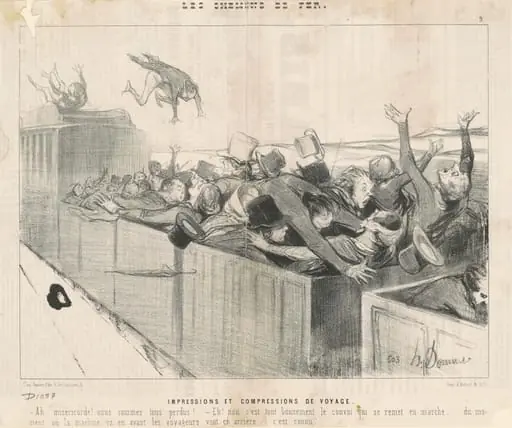
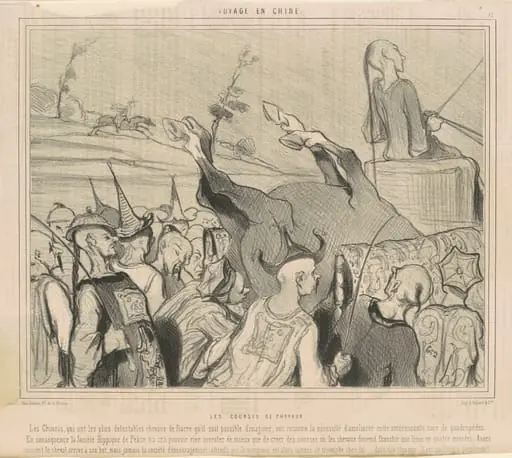
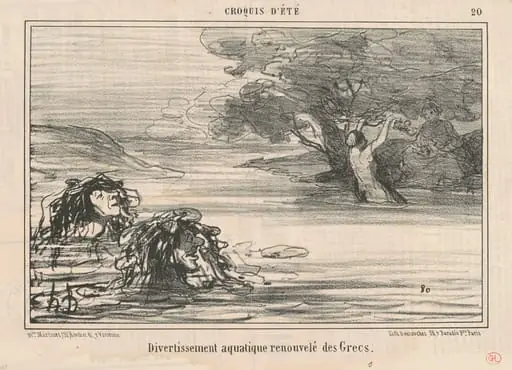
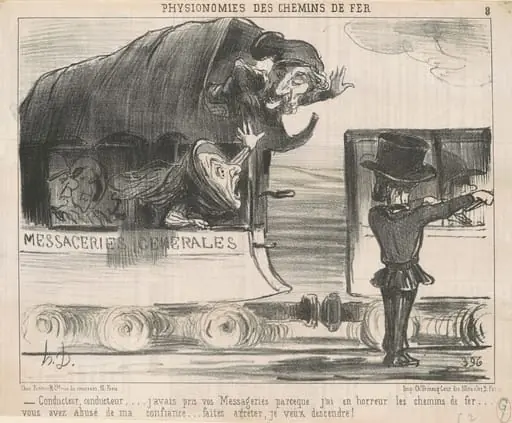
Created in 1854, this lithograph by Honoré Daumier captures three mounted figures in chaotic motion. Executed in the medium of lithography, it belongs to a vast body of over four thousand prints the artist produced, many of which critiqued social and political life. The image conveys urgency through loose, energetic lines, suggesting a spontaneous sketch rather than a polished composition.
Subject & Meaning
The figures depict exaggerated, almost caricatured cavalrymen, their limbs flailing and faces contorted in absurdity.
The figures depict exaggerated, almost caricatured cavalrymen, their limbs flailing and faces contorted in absurdity. Daumier uses this absurdity to satirize the French military’s ineptitude, particularly the poorly trained cavalry. The riders appear uncontrolled, more like amateurs than disciplined soldiers, reflecting broader public skepticism toward institutional authority during the Second French Empire.
Technique & Style
Daumier employed lithography to achieve rapid, fluid lines that mimic the motion of galloping horses and flailing riders. His use of bold, irregular strokes and minimal detail emphasizes movement over realism. The rough texture and asymmetrical composition enhance the sense of disorder, aligning with his preference for expressive immediacy over formal precision.
History & Provenance
Produced during the reign of Napoleon III, the print circulated among Parisian audiences familiar with Daumier’s political satire. Though not part of a named series, it aligns with his broader critique of state power and military pretension. The work was likely published in periodicals or sold as a standalone print, common for his lithographs during this period.
Context
Daumier’s work emerged amid rising tensions between the French state and its citizens, following the 1848 revolution and the consolidation of authoritarian rule. His prints often targeted the hypocrisy and incompetence of officials, using humor to undermine their authority. This image fits within a tradition of satirical printmaking that flourished in 19th-century France as a form of public commentary.
Legacy
Daumier’s approach to lithography influenced later generations of illustrators and expressionist artists who valued emotional intensity over technical polish. His ability to distill complex social critiques into dynamic, single-image compositions established a model for visual satire. Though not widely exhibited in his lifetime, his prints gained recognition in the 20th century as pivotal works in the evolution of modern graphic art.
Artist & collection
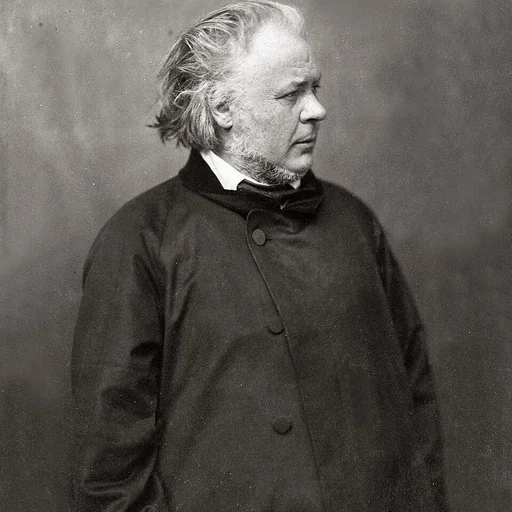
Artist
Honoré-Victorin Daumier was a French painter, sculptor, and printmaker, whose many works offer commentary on the social and political life in France, from the Revolution of 1830 to the fall of the Second French Empire in 1870.