Artwork
L'homme in naturalibus
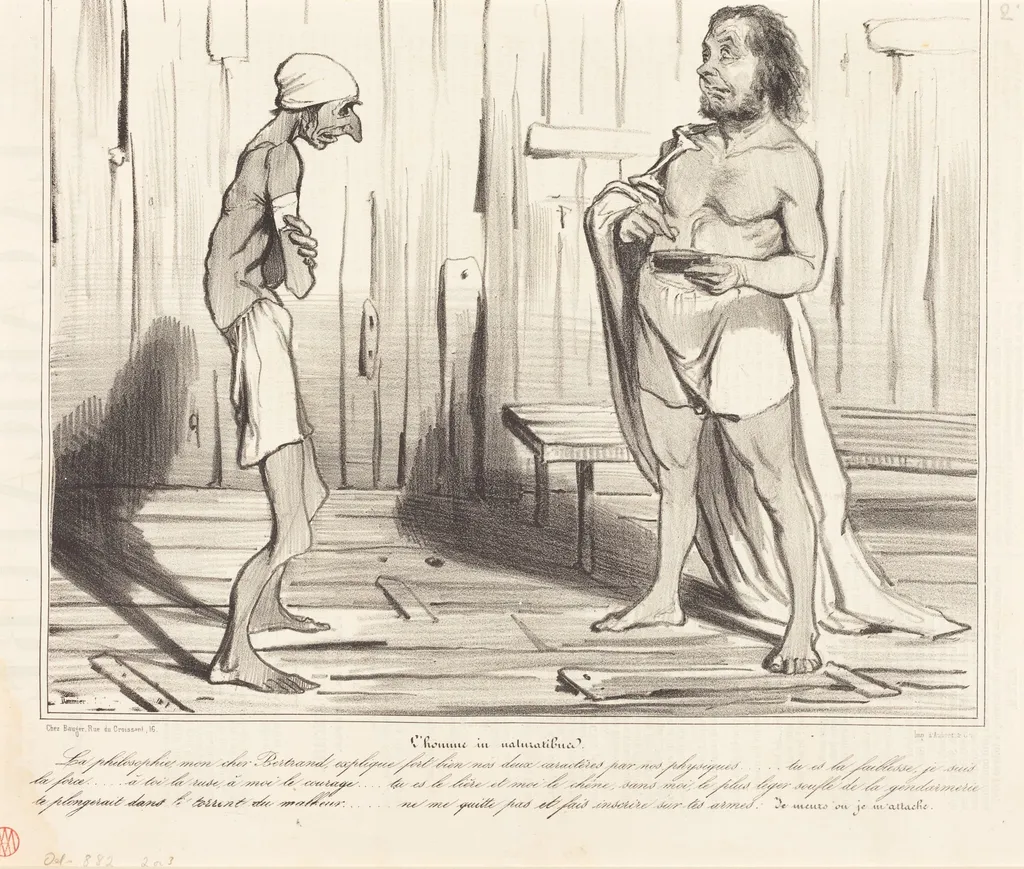
L'homme in naturalibus is an ink print by the Romanticist artist Honoré Daumier. It dates from 1841 and is held in the collection of the National Gallery of Art.
About this work
Overview
L'homme in naturalibus is a 1841 lithograph on newsprint by Honoré Daumier, created during his tenure as a caricaturist for French newspapers. The work exemplifies his use of satire to address contemporary social issues.
Subject & Meaning
The lithograph depicts two minimally clothed men in a humble setting, contrasting simplicity with the opulence of the social hierarchies Daumier critiqued, such as the monarchy, aristocracy, and clergy, reflecting his republican views.
Technique & Style
Executed in lithograph on newsprint, the piece demonstrates Daumier's strategic use of accessible print media to reach a broad audience, characteristic of his practice as a political caricaturist.
History & Provenance
Produced in 1841, amidst France's political turmoil, the work is part of Daumier's prolific output for publications like La Caricature and Le Charivari, though specific provenance details are not provided.
Context
Created during a period of political upheaval in France, the lithograph aligns with Daumier's broader critique of social structures, using subtle, everyday scenes to convey political commentary.
Legacy
As part of Daumier's satirical oeuvre, L'homme in naturalibus contributes to his legacy as a vocal critic of 19th-century French society through accessible, politically charged art.
Artist & collection
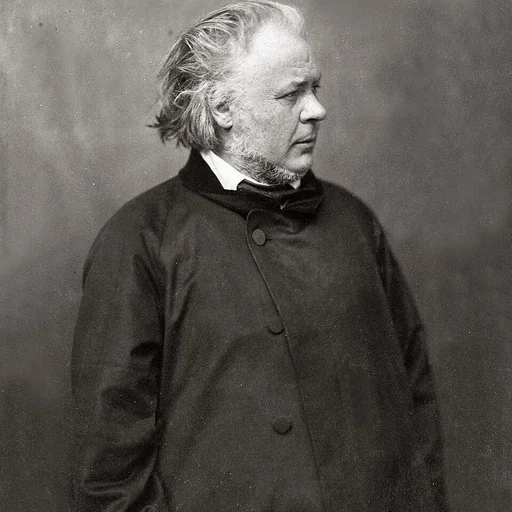
Artist
Honoré-Victorin Daumier was a French painter, sculptor, and printmaker, whose many works offer commentary on the social and political life in France, from the Revolution of 1830 to the fall of the Second French Empire in 1870.









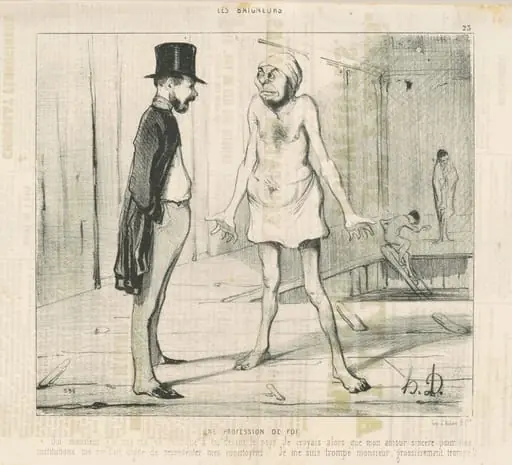 Une profession de foi
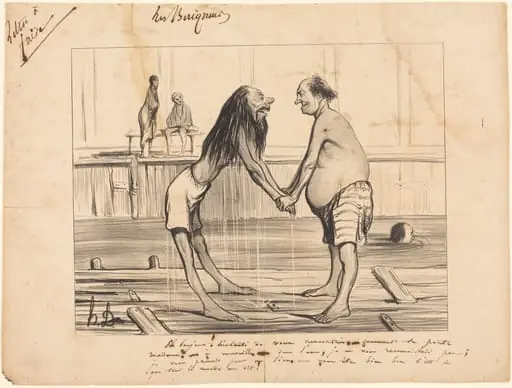 Eh bonjour! enchanté de vous rencontrer...
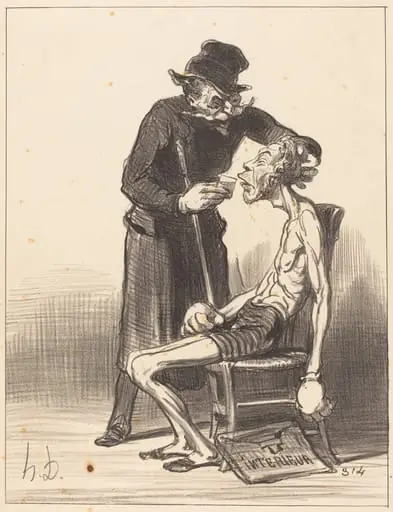 Un Lutteur malheureux
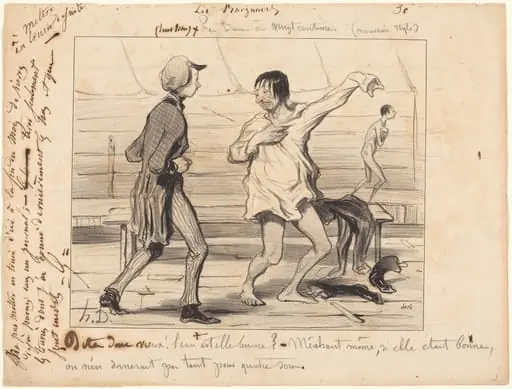 Les Bains a vingt centimes, nouveau style
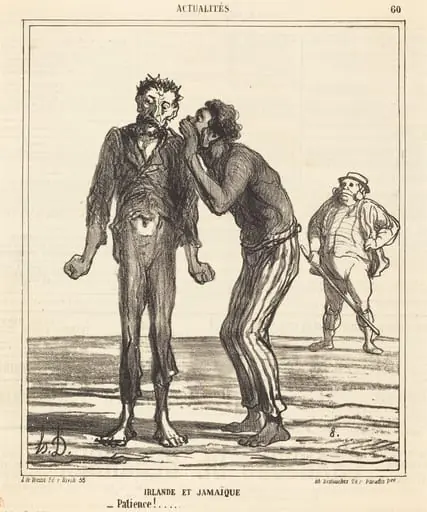 Irlande et Jamaique - Patience!...
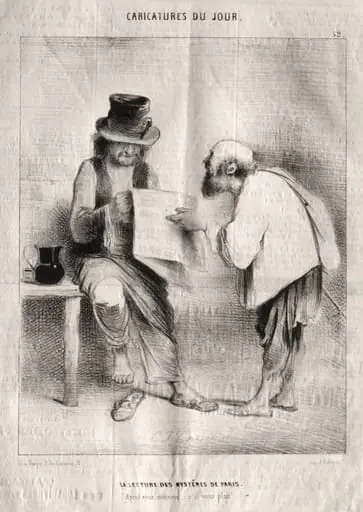 Caricatures du jour: La Lecture des mystères de Paris
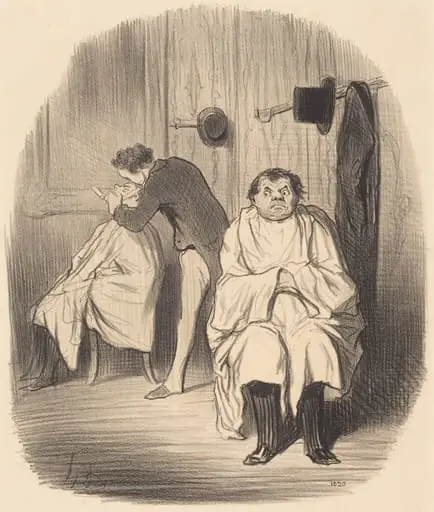 Diable!... il parait que le rasoir n'est guère bon...
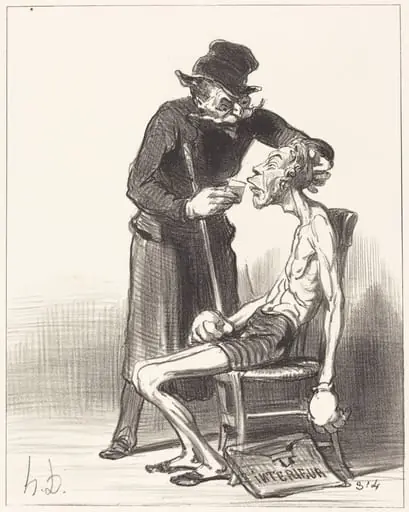 Un Lutteur malheureux
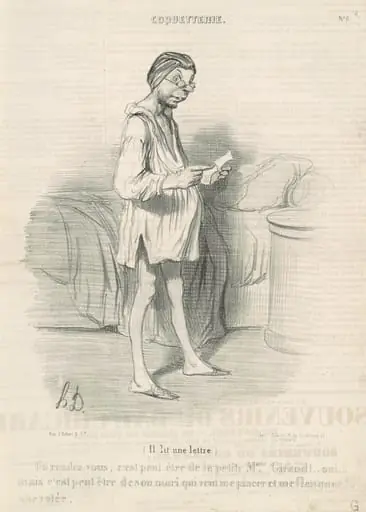 Un rendez vous, c'est peut-être de la...
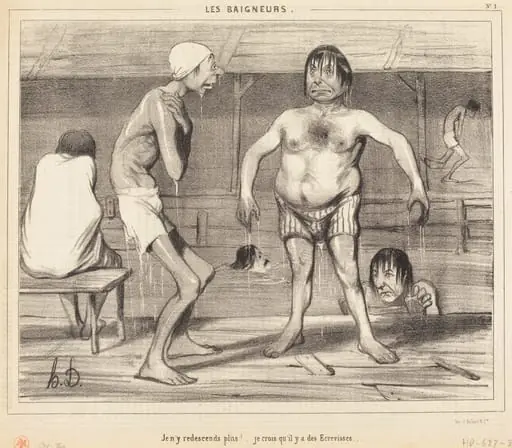 Je n'y redescends plus!... je crois...
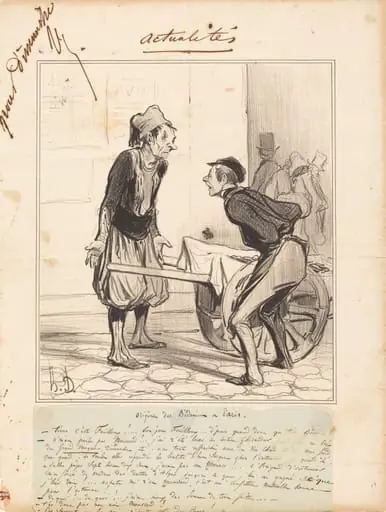 Origine des Bédoins a Paris
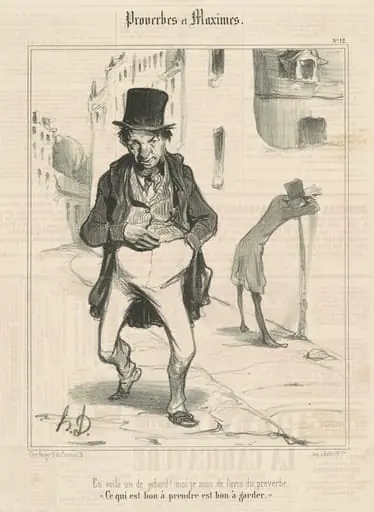 En voila un de jobard! ...