Artwork
Origine des Bédoins a Paris
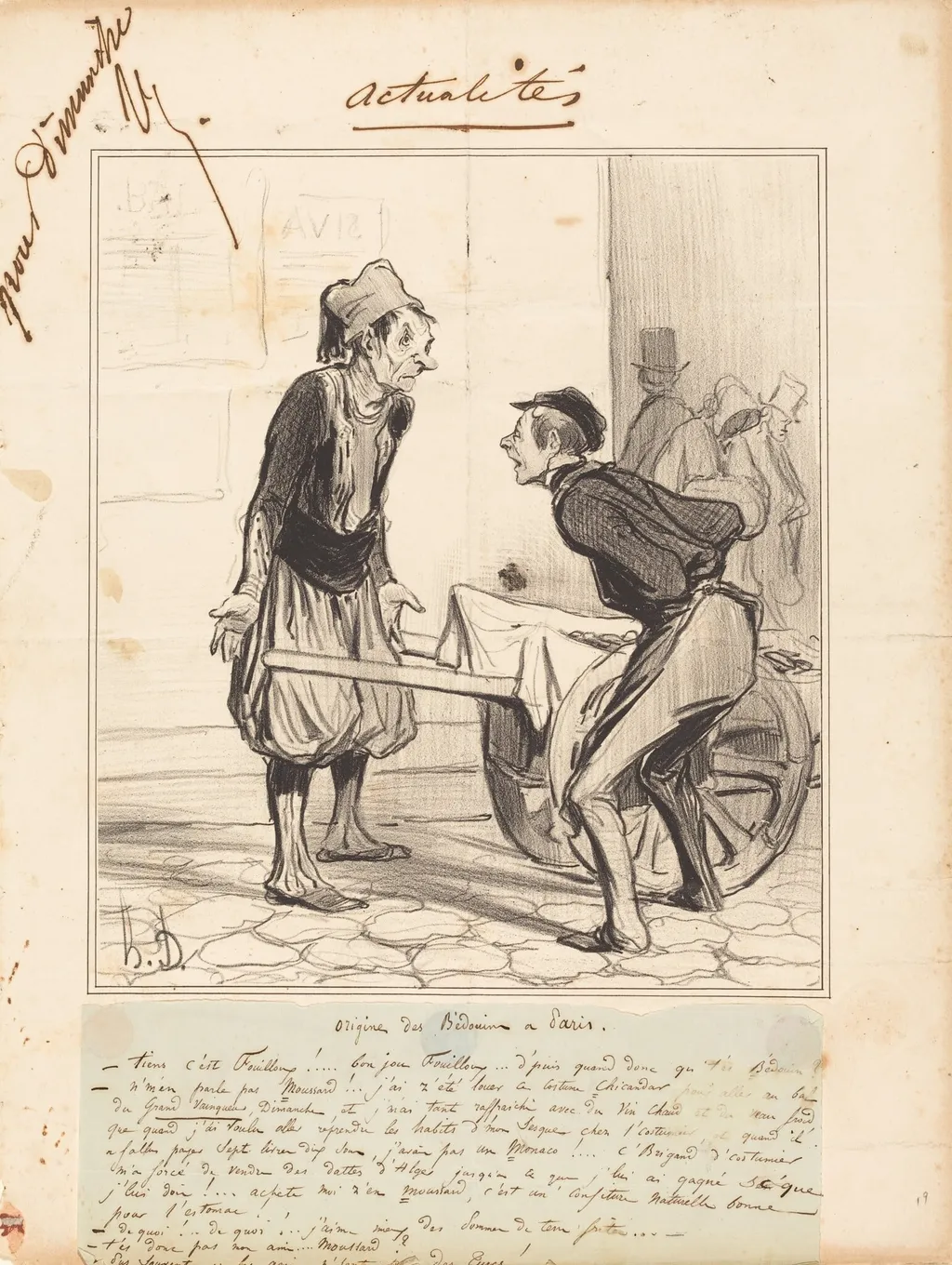
Origine des Bédoins a Paris is an ink print by the Romanticist artist Honoré Daumier. It dates from 1841 and is held in the collection of the National Gallery of Art.
About this work
The lithograph is rendered in a range of grays, with darker tones used to define the figures and lighter tones used to suggest the background.
This image shows a lithograph titled "Origine des Bédoins a Paris" by Honoré Daumier, created between 1865 and 1868. The scene depicts a man in a hat and dark clothing, possibly a street vendor, standing on a cobblestone street. He is shown in profile, looking at another man who is seated on a large wheelbarrow or cart. The background is not clearly defined, but it appears to be a city street.
The lithograph is rendered in a range of grays, with darker tones used to define the figures and lighter tones used to suggest the background. The overall effect is one of simplicity and elegance, with clean lines and minimal detail.
For more information on this style of art, you might want to look into Romanticism.
Overview
Honoré Daumier’s lithograph *Origine des Bédoins à Paris* is a black‑and‑white print that portrays a street scene with two figures—a man in a hat and dark attire standing in profile, and another seated on a large wheelbarrow. Rendered in a limited tonal range, the image relies on stark contrasts and clean line work to convey its composition.
Subject & Meaning
The work presents a modest urban encounter, likely referencing the everyday labor of street vendors or cart‑pullers in mid‑19th‑century Paris. Daumier’s choice of ordinary characters aligns with his broader interest in exposing the social conditions of the lower classes, offering a subtle critique of the economic disparities of his time.
Technique & Style
Executed as a lithograph, the piece employs a restrained palette of grays, with darker inks defining the figures and lighter washes suggesting depth. Daumier’s handling of line is economical, emphasizing silhouette over detail, a hallmark of his satirical prints that favored immediacy and visual impact.
History & Provenance
The print was produced sometime between the 1860s, a period when Daumier was actively contributing to satirical journals such as *La Caricature* and *Le Charivari*. While the exact date remains uncertain, the work reflects the artist’s mature phase, when his political engagement and interest in the lives of Parisian workers were well established.
Context
Created during a turbulent era of French politics—marked by the fall of the July Monarchy, the 1848 Revolution, and the establishment of the Second Empire—Daumier’s prints often served as visual commentary on republican ideals. This lithograph fits within that tradition, using a seemingly simple street tableau to allude to broader social tensions.
Artist & collection

Artist
Honoré-Victorin Daumier was a French painter, sculptor, and printmaker, whose many works offer commentary on the social and political life in France, from the Revolution of 1830 to the fall of the Second French Empire in 1870.









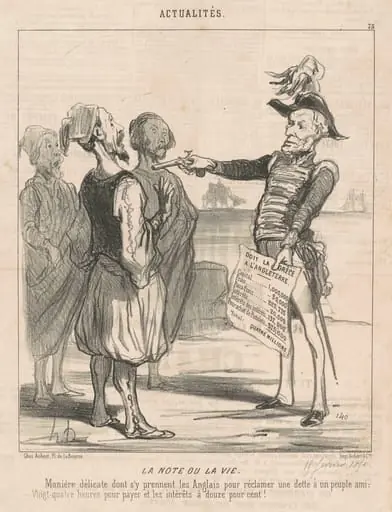 La note ou la vie
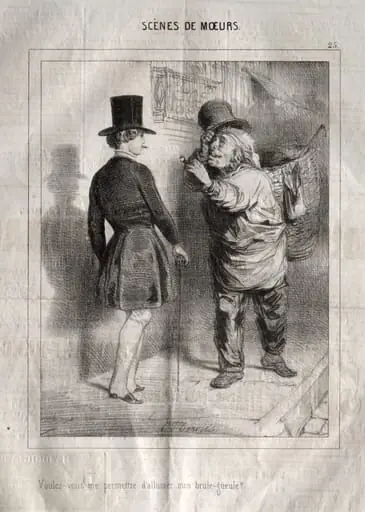 Scènes de Moeurs: Voulez-vous me permettre d'allumer mon brule-gueule?
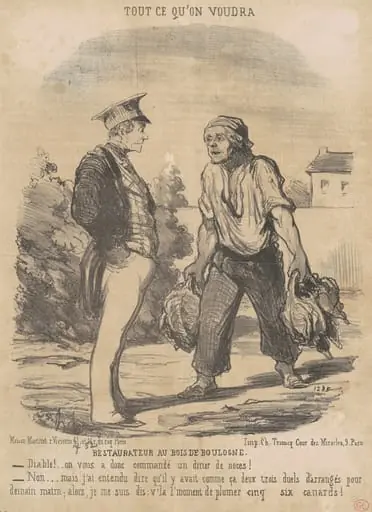 Restaurateur au Bois de Boulogne
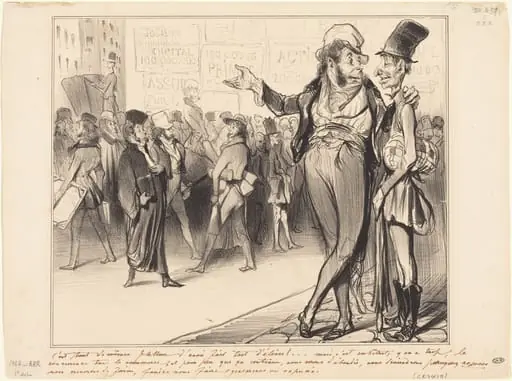 C'est tout de même flatteur d'avoir fait tant d'élèves!...
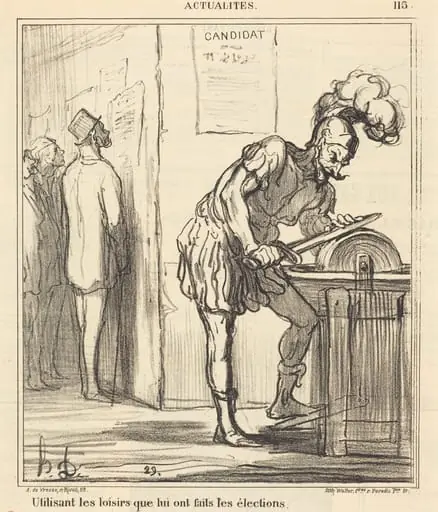 Utilisant les loisirs...
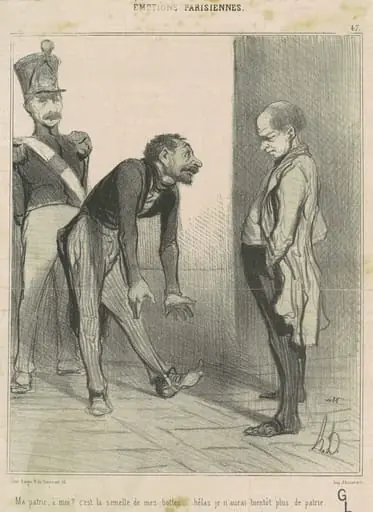 Ma patrie, a moi?...
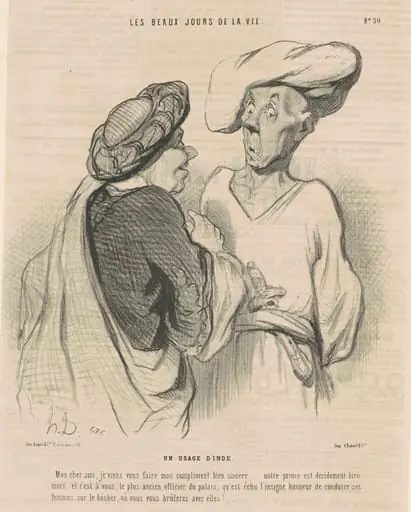 Un usage d'Inde
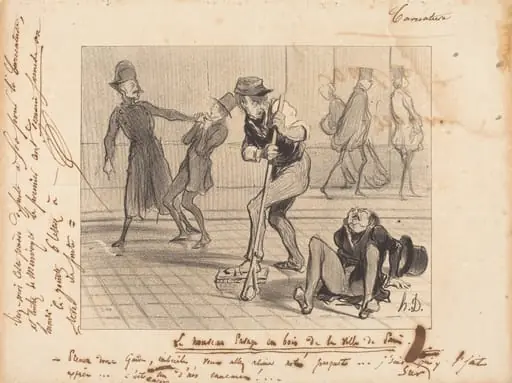 Le Nouveau pavage en bois... de Paris
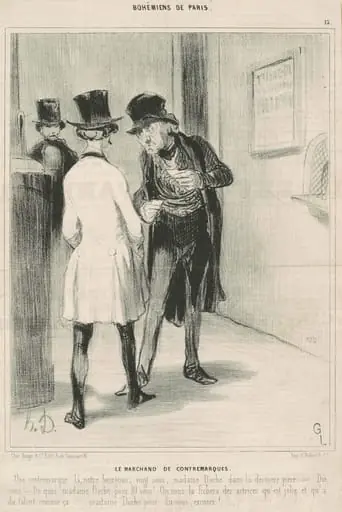 Le marchand de contremarques
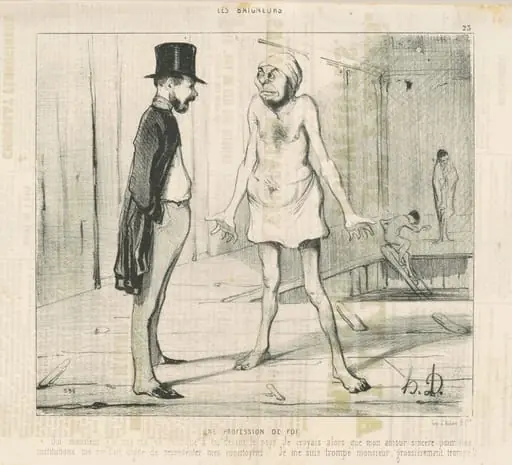 Une profession de foi