Artwork
Oui, on veut dépouiller cet orphelin...
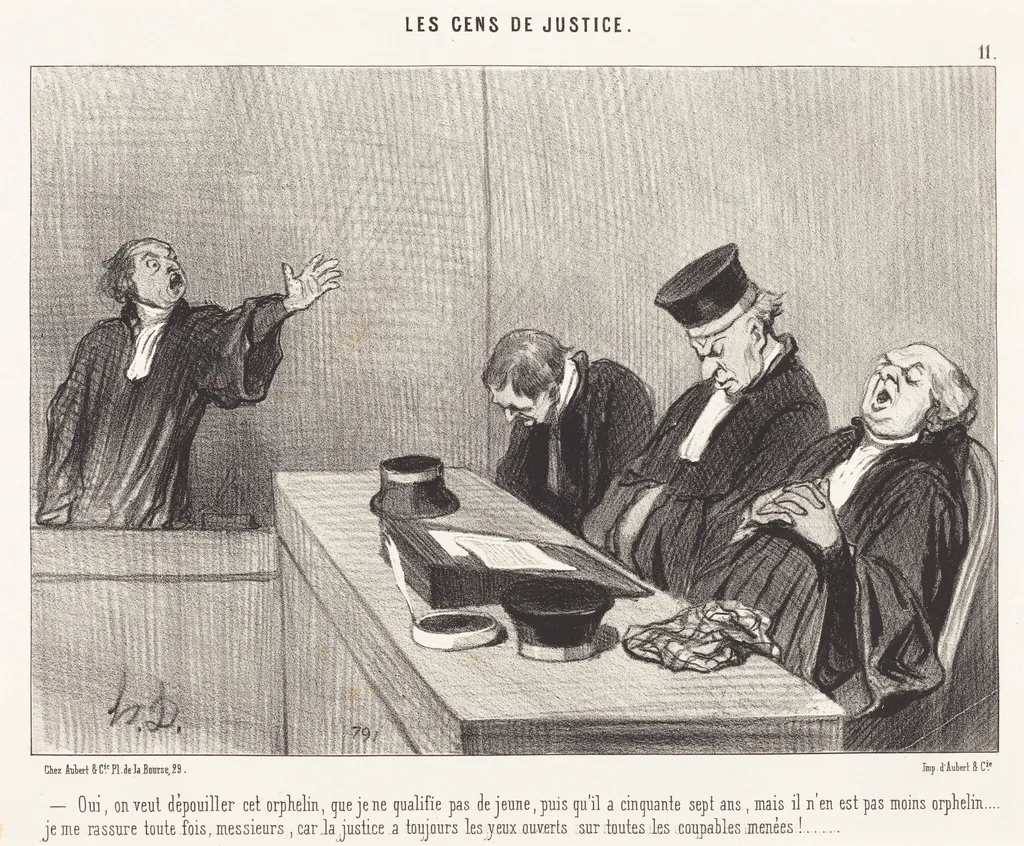
Oui, on veut dépouiller cet orphelin... is an ink print by the Romanticist artist Honoré Daumier. It dates from 1845 and is held in the collection of the National Gallery of Art.
About this work
Overview
Created in 1845, this lithograph by Honoré Daumier is one of many political satires produced during the July Monarchy in France.
Created in 1845, this lithograph by Honoré Daumier is one of many political satires produced during the July Monarchy in France. Executed in the medium of lithography, it captures a moment of legal injustice with sharp visual economy. Daumier, known for his critical eye toward institutional power, used printmaking to reach a broad public, circumventing censorship through the immediacy of the press.
Subject & Meaning
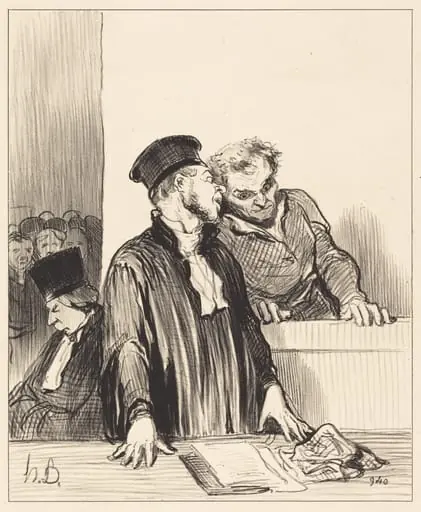
The scene depicts a courtroom where a man gestures in protest against the exploitation of an orphan’s inheritance. The three seated figures, dressed in judicial or bureaucratic attire, appear absorbed in processing the transaction, their expressions cold and focused. The title, though partial, implicates the legal system in predatory behavior, suggesting institutionalized theft under the guise of procedure.
Technique & Style
Daumier employed rapid, expressive linework characteristic of his journalistic lithographs. The figures are rendered with minimal detail but high emotional intensity, particularly the standing man’s exaggerated posture and open mouth. The composition directs attention through contrast: the lone figure’s dynamic gesture against the static, hunched forms of the others. The sketch-like quality enhances the sense of urgency and spontaneity.
History & Provenance
This work was published in the radical newspaper *La Caricature*, where Daumier regularly contributed satirical prints between 1830 and 1835, and again in the 1840s. Though the exact publication date of this piece is uncertain, its style aligns with his output during the mid-1840s, a time of increasing government censorship and political repression under Louis-Philippe.
Context
In 1840s France, legal institutions were often seen as tools of the wealthy, vulnerable citizens like orphans had little recourse against exploitation. Daumier’s prints responded to public frustration with judicial corruption and the erosion of social protections. His work resonated with republican sympathizers who viewed the monarchy as complicit in systemic inequality.
Legacy
Daumier’s lithographs, including this one, helped establish printmaking as a legitimate vehicle for social critique in 19th-century art. His unflinching depictions of institutional abuse influenced later generations of political illustrators and cartoonists, both in France and abroad, cementing his role as a pioneer of visual journalism.
Artist & collection
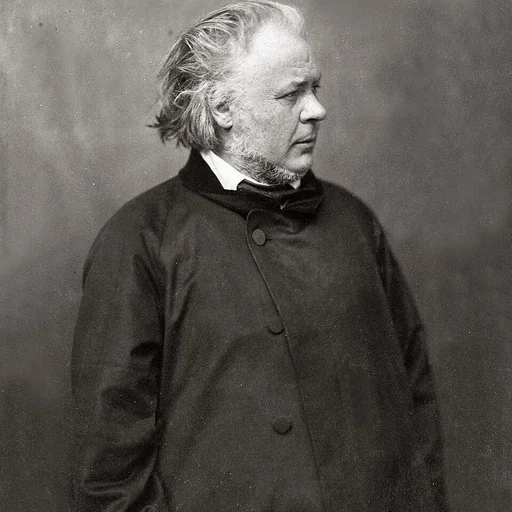
Artist
Honoré-Victorin Daumier was a French painter, sculptor, and printmaker, whose many works offer commentary on the social and political life in France, from the Revolution of 1830 to the fall of the Second French Empire in 1870.









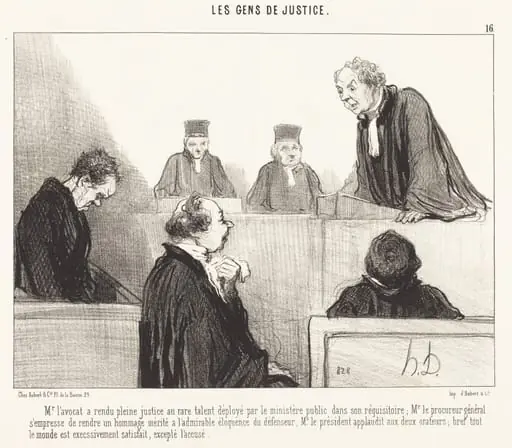 Mr. l'avocat a rendu pleine justice...
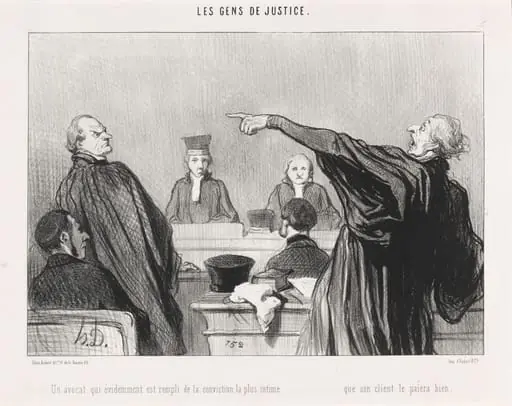 Un Avocat qui est... rempli de la conviction... intime...
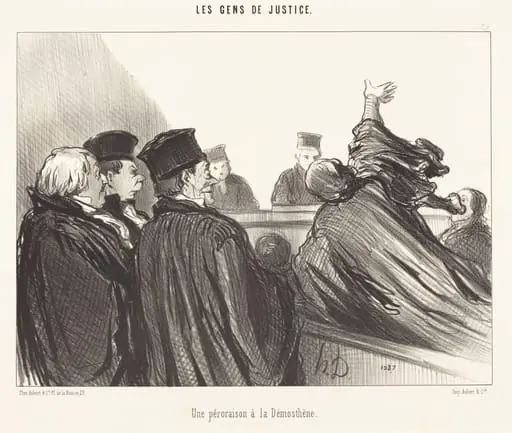 Une Péroraison a la Démosthène
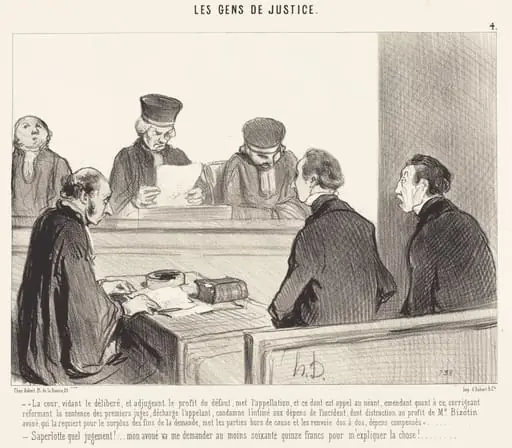 La Cour, vidant le délibéré...
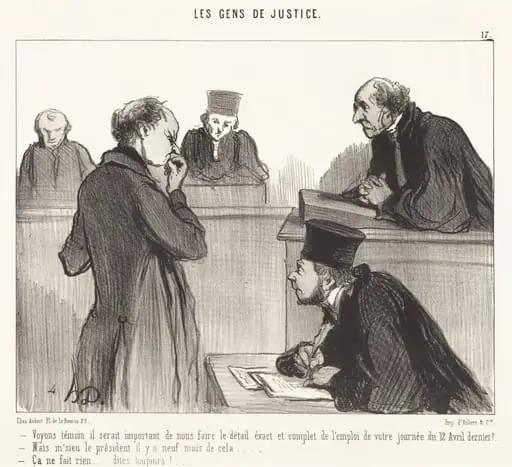 Voyons témoin il serait important de...
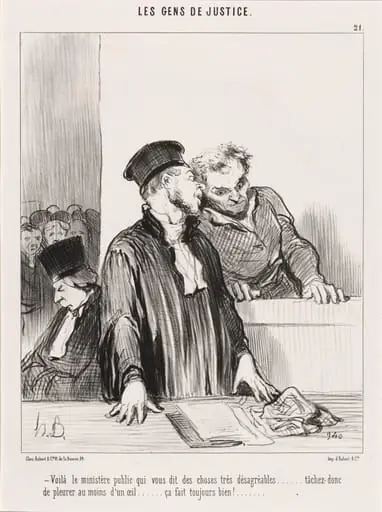 Voila le ministère public qui vous dit des choses... désagréables...
 Voila le ministère public qui vous dit des choses... désagréables...
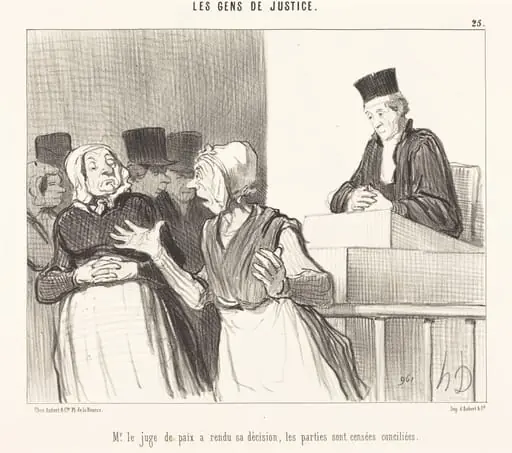 Mr. le Juge de paix a rendu sa décision...
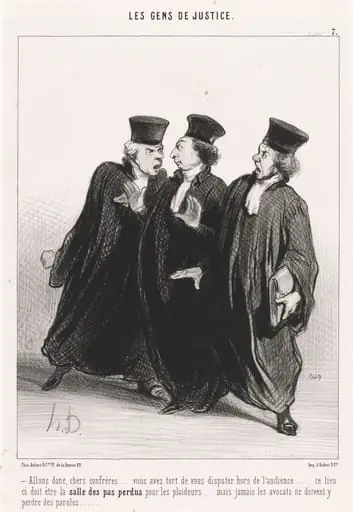 Allons donc, chers confrères...