Artwork
La femme. Je viens de découvrir une mèche...
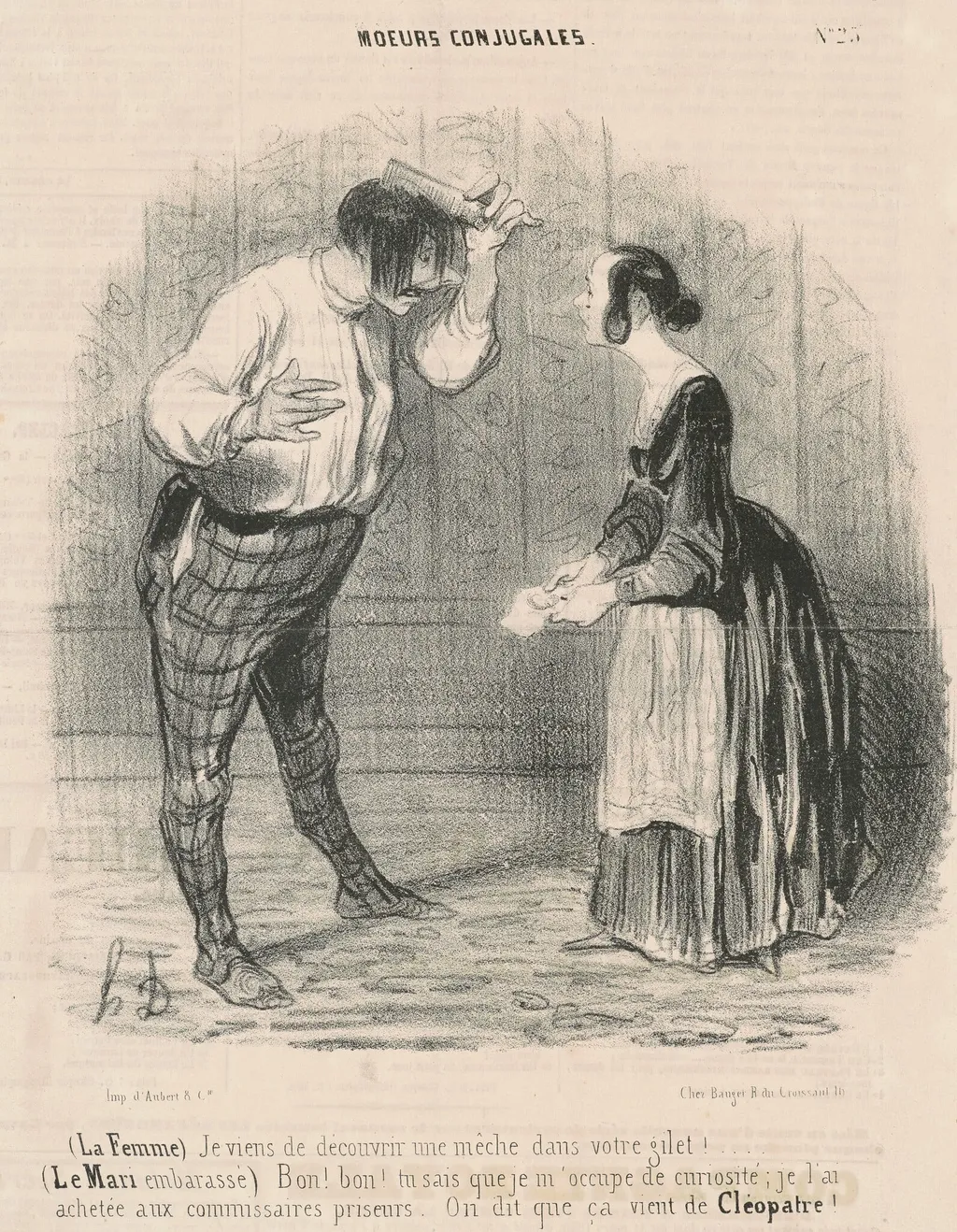
La femme. Je viens de découvrir une mèche... is an ink print by the Romanticist artist Honoré Daumier. It dates from 1840 and is held in the collection of the National Gallery of Art.
About this work
Overview
Executed in ink on paper, the work belongs to a series of prints Daumier produced for periodicals, capturing everyday interactions with unembellished realism.
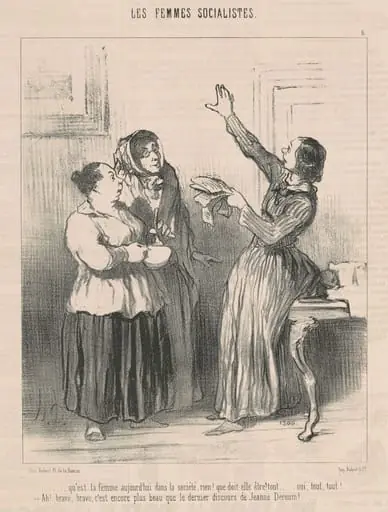
This lithograph by Honoré Daumier portrays a quiet domestic moment between two figures: a man raising a comb above his head, and a woman leaning in as if mid-sentence. Executed in ink on paper, the work belongs to a series of prints Daumier produced for periodicals, capturing everyday interactions with unembellished realism. Its modest scale and medium reflect its origin as mass-produced illustration rather than fine art.
Subject & Meaning
The scene suggests an intimate, unguarded exchange—perhaps a husband teasing his partner while grooming, and she responding with quiet attention. No grand narrative is present; instead, the work finds significance in the subtleties of posture and expression. The man’s gesture is light, not aggressive, and the woman’s parted lips imply a response, grounding the image in lived experience rather than theatricality.
Technique & Style
Daumier employed rapid, incised lines typical of lithographic drawing, allowing the ink to bleed slightly at the edges, lending the image a tactile, unfinished quality. His brushwork emphasizes movement over detail: folds of fabric, the tilt of a head, the curve of a hand are rendered with economical strokes. The technique prioritizes emotional resonance over precision, aligning with his interest in human behavior over idealized form.
History & Provenance
Created during the mid-19th century, this print was likely made for publication in a French illustrated journal, where Daumier regularly contributed satirical and observational scenes. Lithography allowed for quick reproduction at low cost, making such images accessible to the urban middle class. Its survival in private and institutional collections reflects its quiet endurance as a document of ordinary life.
Context
Daumier worked amid rising literacy and print culture in France, where images like this offered a counterpoint to official art and political cartoons. While he was known for biting social satire, this piece belongs to a quieter strand of his output—focused on domestic intimacy rather than public critique. Such scenes mirrored the growing interest in private life among urban audiences.
Legacy
Though not widely exhibited as a standalone work, this lithograph exemplifies Daumier’s enduring influence on modern figural drawing. His ability to distill character through gesture and line prefigured later developments in expressionist and realist printmaking. The image remains a reference point for artists seeking authenticity in everyday moments.
Artist & collection

Artist
Honoré-Victorin Daumier was a French painter, sculptor, and printmaker, whose many works offer commentary on the social and political life in France, from the Revolution of 1830 to the fall of the Second French Empire in 1870.









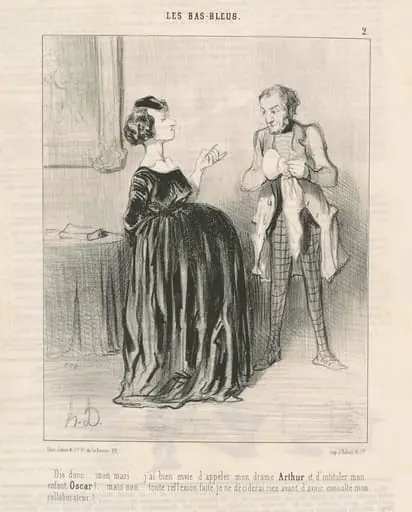 Dis donc ... mon mari ...j'ai bien envie d'appeler mon drama ...
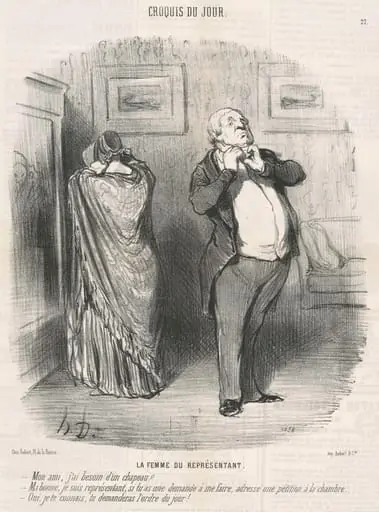 La femme du représentant
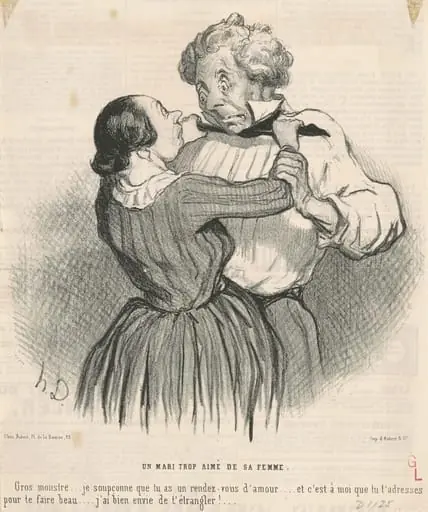 Un mari trop aimé de sa femme
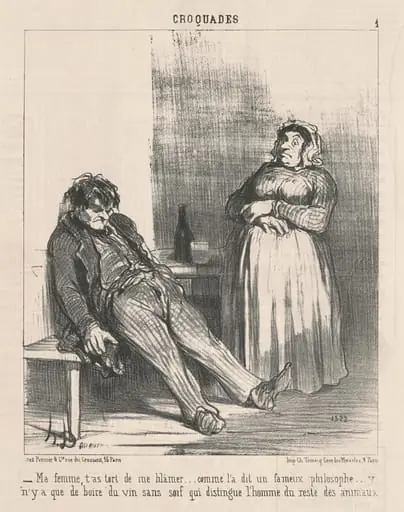 Ma femme, t'as tort de me blamer ...
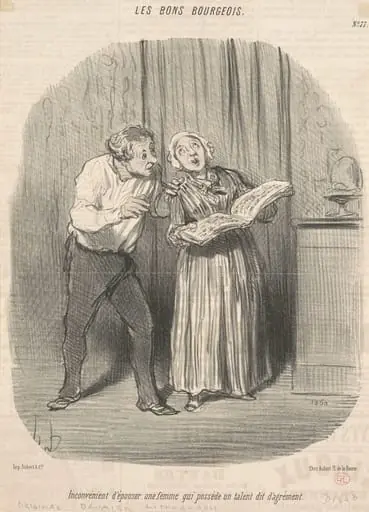 Inconvénient d'épouser une femme qui possède un talent d'agrément
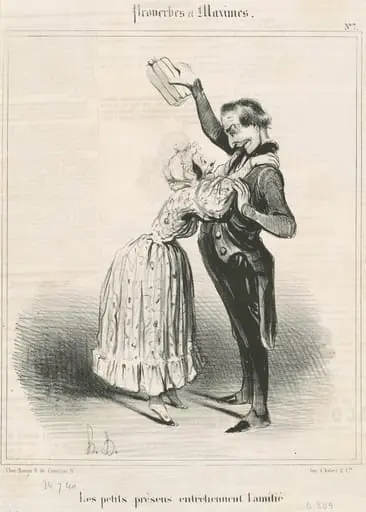 Les petits présens ...
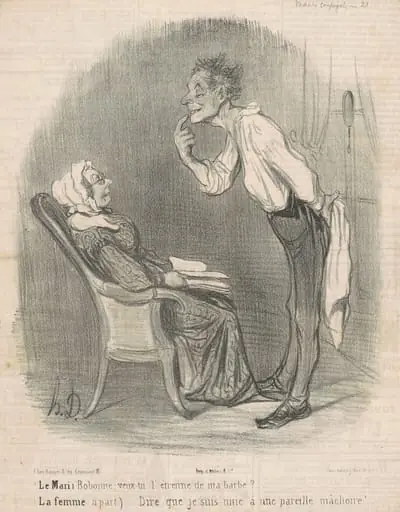 Le mari. Bobonne veux-tu l'étrenne de ma barbe?
 Qu'est la femme aujourd'hui dans la société ...