Artwork
Qu'est la femme aujourd'hui dans la société ...
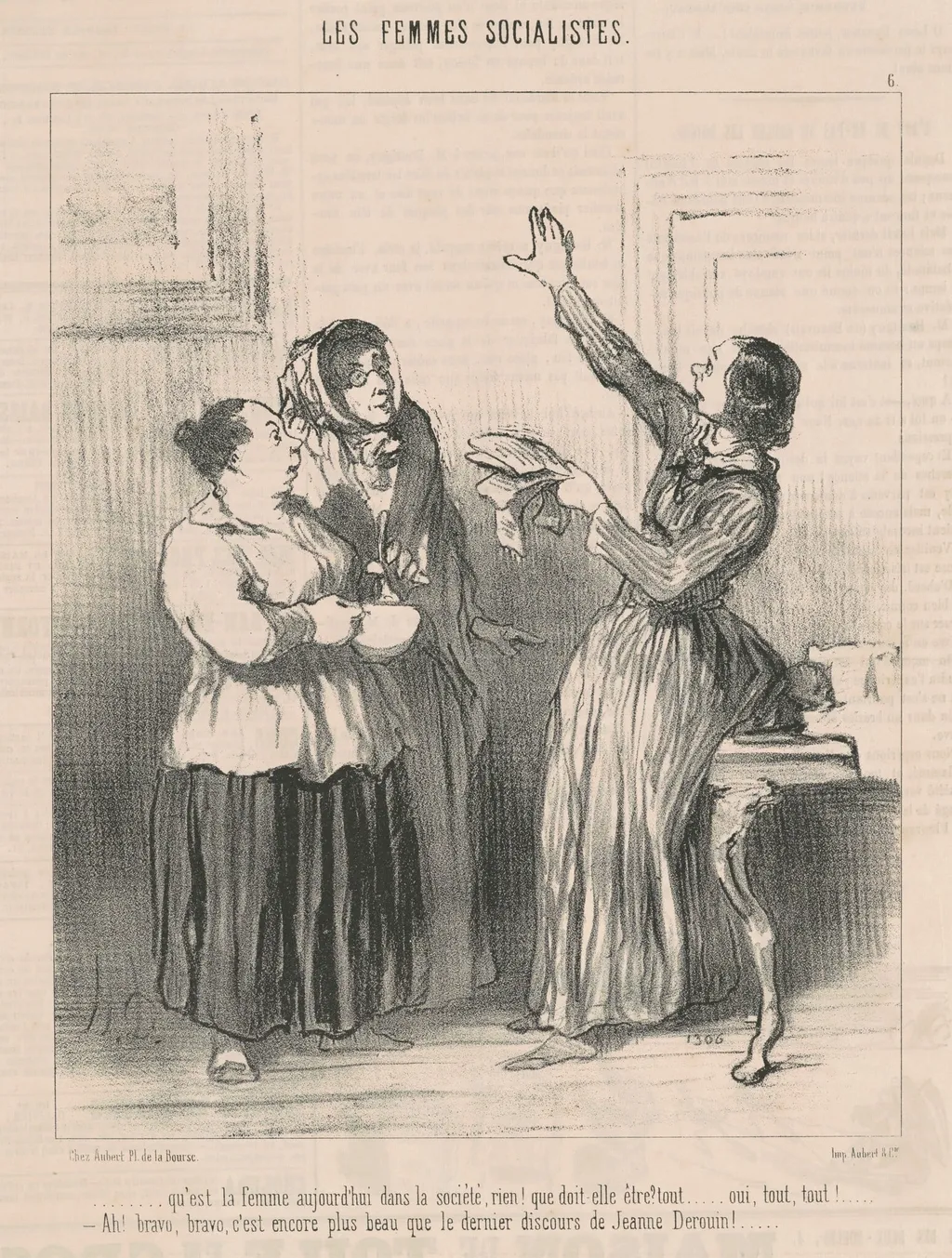
Qu'est la femme aujourd'hui dans la société ... is an ink print by the Romanticist artist Honoré Daumier. It dates from 1849 and is held in the collection of the National Gallery of Art.
About this work
Overview
Honoré Daumier’s lithograph presents an interior scene populated by three women, each rendered with a unique stance and facial expression. The composition centers on a slightly stooped figure wearing a bonnet, whose gaze is directed toward a second woman poised on tiptoe. A third figure occupies the background, completing the tableau of varied postures within a confined domestic space.
Subject & Meaning
The work engages with contemporary debates about women’s place in society, using the differing attitudes of the figures to suggest contrasting aspirations and constraints. The central woman’s modest, hunched posture juxtaposed with the tiptoeing figure’s upward reach evokes a tension between resignation and the desire for upward mobility that characterized mid‑nineteenth‑century discourse on gender roles.
Technique & Style
Executed in lithography, Daumier employs a restrained palette of line and tone, allowing the silhouettes and gestures of the figures to convey emotion without elaborate detail. The economy of form—simple contours, minimal shading—focuses attention on the relational dynamics among the women, a hallmark of Daumier’s approach to social commentary through print.
History & Provenance
Created during the 1850s, a period when Daumier was prolific in socially charged prints, the lithograph reflects his ongoing interest in everyday life and its underlying power structures. The piece has circulated among private collections before entering public holdings, where it continues to serve as a visual document of gendered expectations in 19th‑century France.
Artist & collection

Artist
Honoré-Victorin Daumier was a French painter, sculptor, and printmaker, whose many works offer commentary on the social and political life in France, from the Revolution of 1830 to the fall of the Second French Empire in 1870.









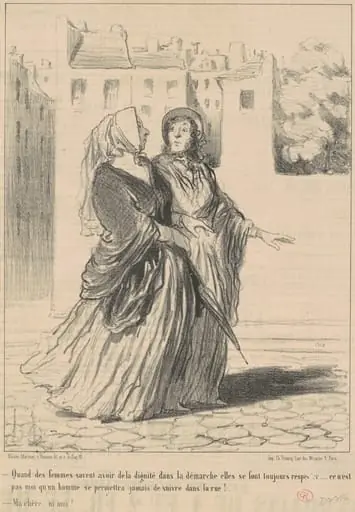 Quand des femmes savent avoir ...
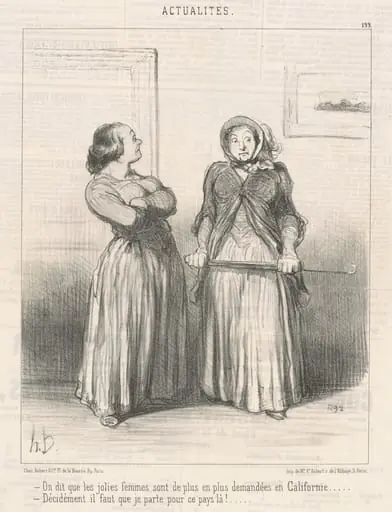 On dit que les jolies femmes sont ...
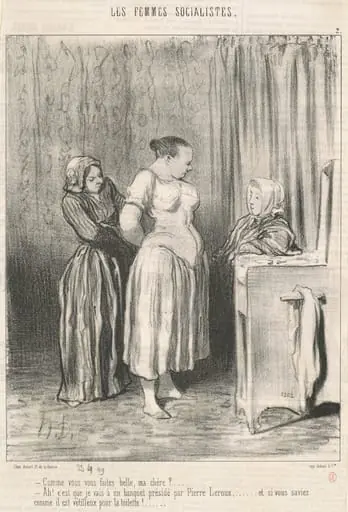 Comme vous faites belle, ma chère? ...
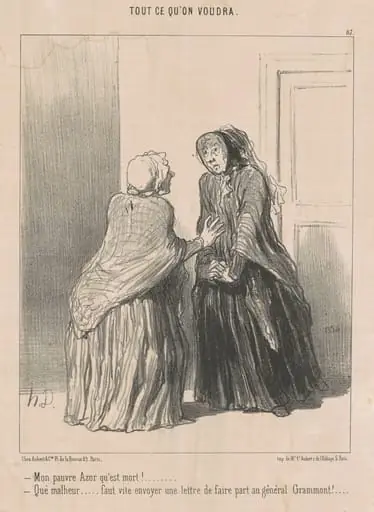 Mon pauvre azor qu'est mort! ...
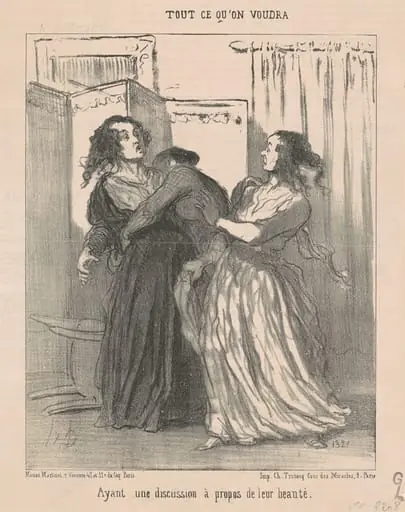 Ayant une discussion a propos de leur beauté
 Femme de lettre humanitaire se livrant sur l'homme ...
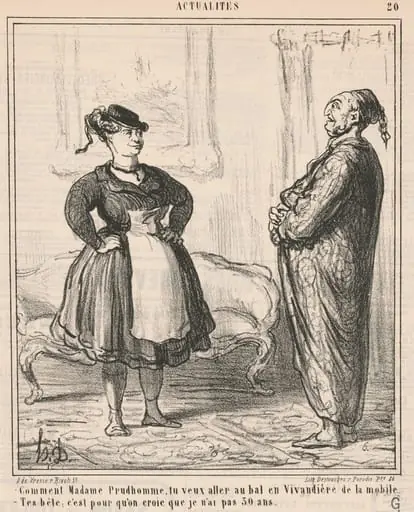 Comment Madame Prudhomme ... En vivandière ...
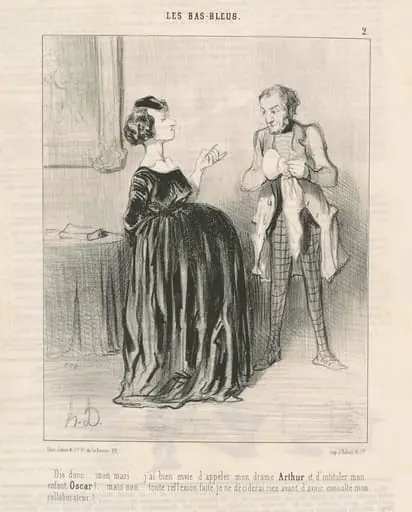 Dis donc ... mon mari ...j'ai bien envie d'appeler mon drama ...
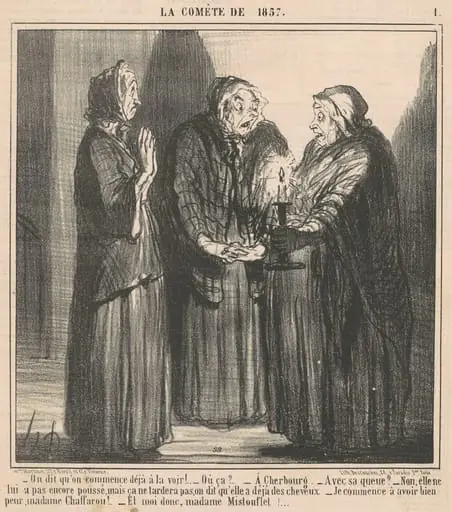 On dit qu'on commence déja a la voir ...
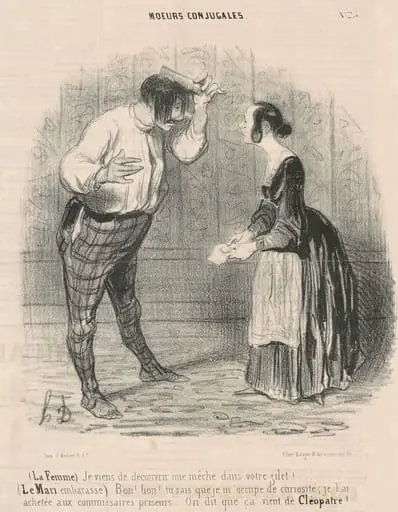 La femme. Je viens de découvrir une mèche...
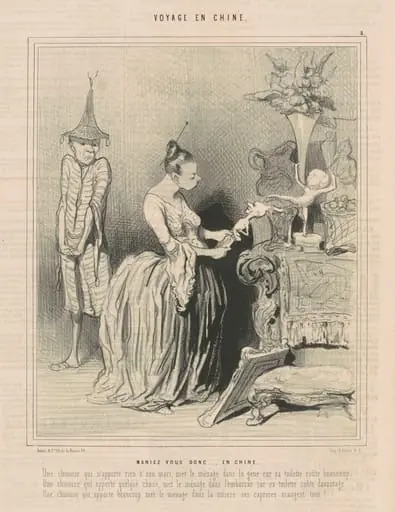 Mariez-vous donc ... en chine