Artwork
La harpe, instrument céleste
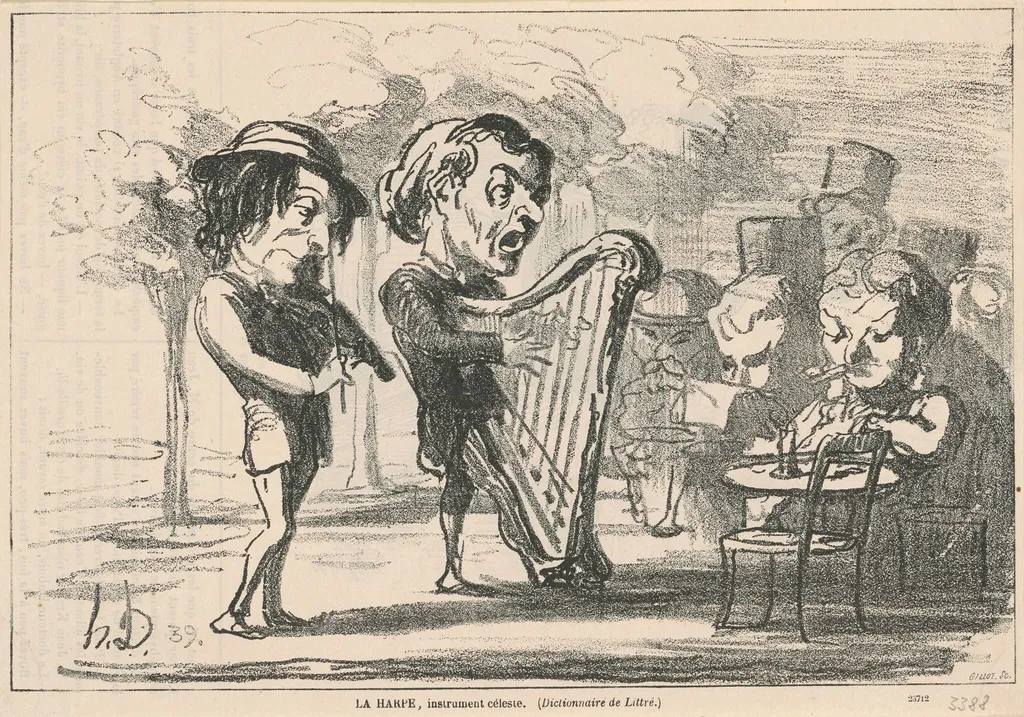
La harpe, instrument céleste is an ink print by the Impressionist artist Honoré Daumier. It dates from 1865 and is held in the collection of the National Gallery of Art.
About this work
Daumier’s 1865 lithograph shows a crowd of exaggerated figures outdoors.
Daumier’s 1865 lithograph shows a crowd of exaggerated figures outdoors. One man plays a harp while another crosses his arms, glaring. The scene feels alive with motion and sharp gestures.
Daumier used lithography to mock Parisian life. His bold lines and funny poses poke at social types. The harp player looks silly, but the crowd seems serious.
It’s like he caught a moment of ordinary chaos. Check out Daumier, Honoré next.
Overview
Created in 1865, La harpe, instrument céleste is a lithograph by Honoré Daumier that captures a bustling outdoor scene populated by exaggerated figures. The work belongs to a series of prints in which Daumier observed and critiqued Parisian society through humor and distortion. Its medium allowed for rapid, expressive reproduction, aligning with his journalistic approach to art.
Subject & Meaning
The central figures include a man playing a harp with theatrical flair and another standing with arms crossed, his expression stern. Surrounding characters display a range of reactions, from indifference to fascination. The harp, traditionally associated with the divine, is rendered absurd in this context, suggesting a satirical take on pretension and the performative nature of public life.
Technique & Style
Daumier employed lithography to achieve bold, fluid lines and high contrast. His figures are elongated and gestural, with minimal detail but maximum expressiveness. The composition is dense and energetic, with overlapping bodies and dynamic postures that convey movement and social tension. The technique suited his need for speed and accessibility in commenting on contemporary life.
History & Provenance
This print was produced during Daumier’s prolific period as a political and social satirist, following his earlier imprisonment for caricature. It was likely published in a periodical or as a standalone sheet, circulating among Parisian middle-class audiences. No definitive early ownership records survive, but it was included in later collections of his graphic work.
Context
In mid-19th century Paris, lithography was a dominant medium for satire, used in newspapers and broadsheets. Daumier’s work responded to the rise of bourgeois culture and its rituals, often highlighting the gap between aspiration and reality. The harp, a symbol of refined entertainment, becomes a vehicle for exposing the absurdity of social performance in public spaces.
Legacy
La harpe, instrument céleste exemplifies Daumier’s enduring influence on modern graphic art and caricature. His ability to distill social observation into sharp, readable imagery paved the way for later satirists and cartoonists. The work remains a key example of how print media could function as both art and critique in an increasingly visual public sphere.
Artist & collection

Artist
Honoré-Victorin Daumier was a French painter, sculptor, and printmaker, whose many works offer commentary on the social and political life in France, from the Revolution of 1830 to the fall of the Second French Empire in 1870.









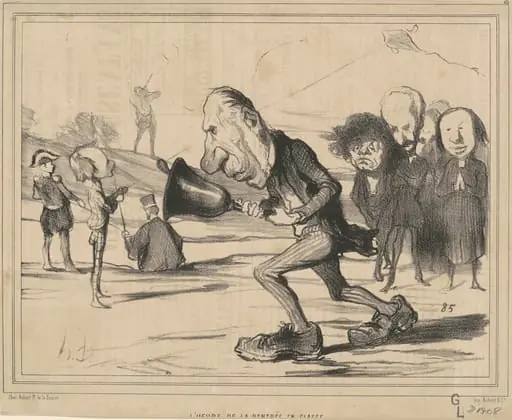 L'heure de la rentrée en classe
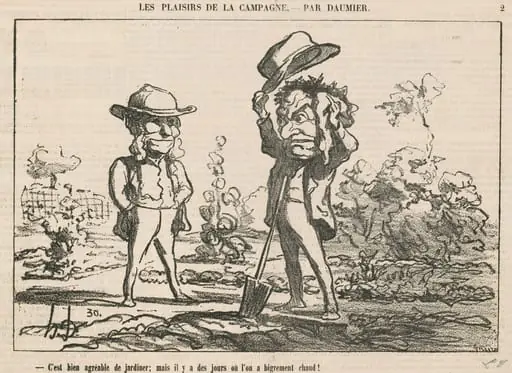 C'est bien agréable de jardiner
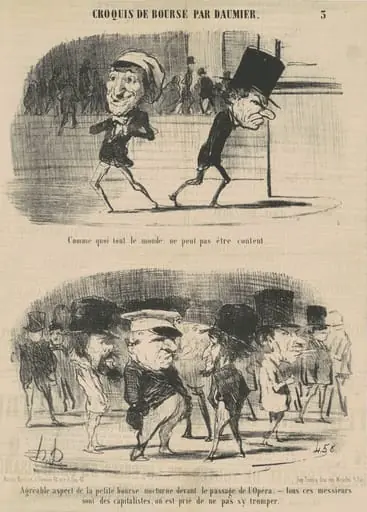 Comme quoi tout le monde de peut ...
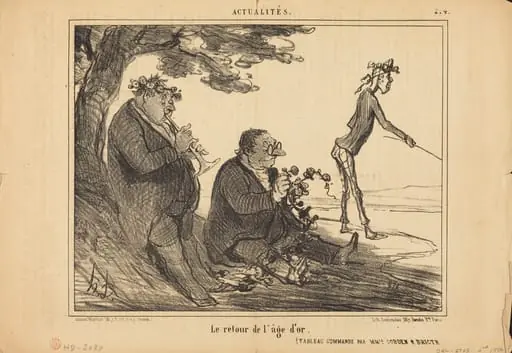 Le Retour de l'age d'or
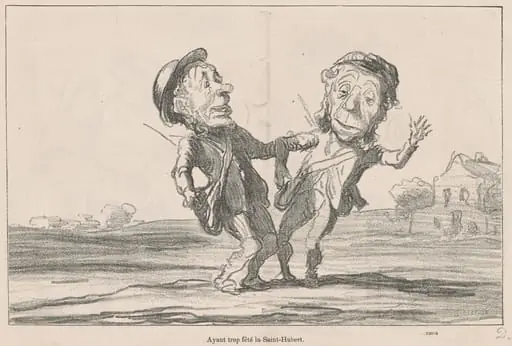 Ayant trop fêté la Saint-Hubert
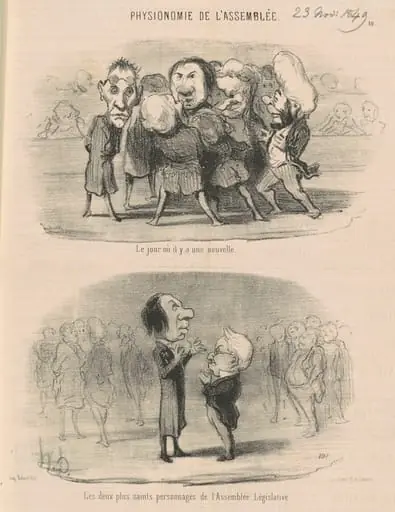 Le jour ou il y a une nouvelle
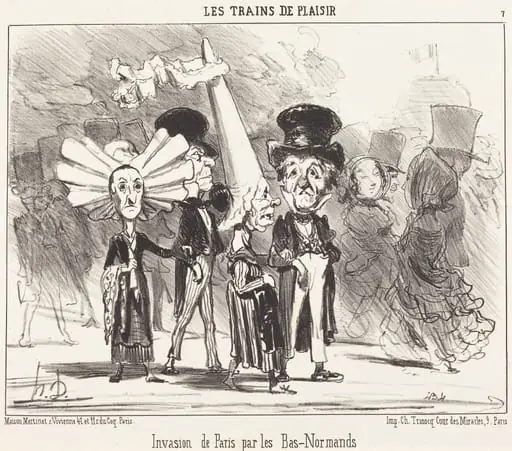 Invasion de Paris par les Bas-Normands
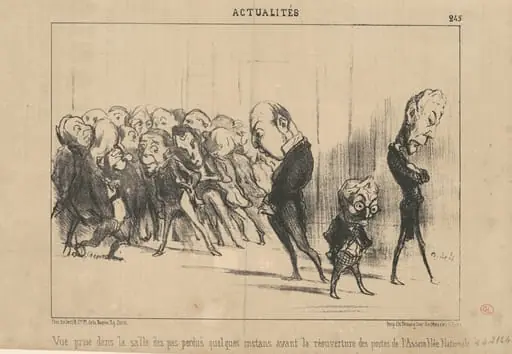 Vue prise dans la salle des pas perdus ...
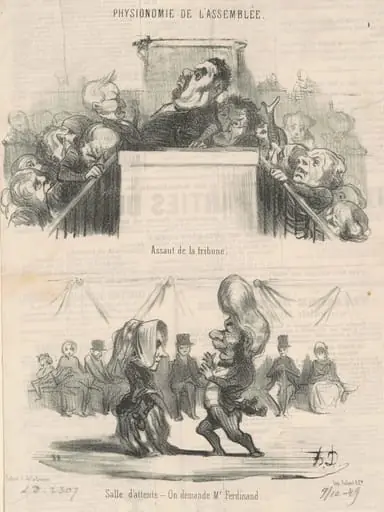 Assaut de la tribune
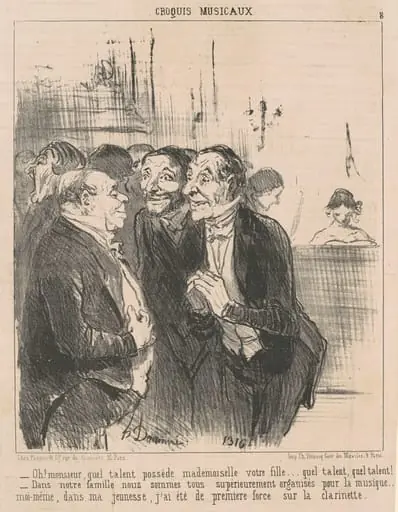 Oh! Monsieur, quel talent possède ...