Artwork
Parlons, Madame...ces nudités sont révoltantes...
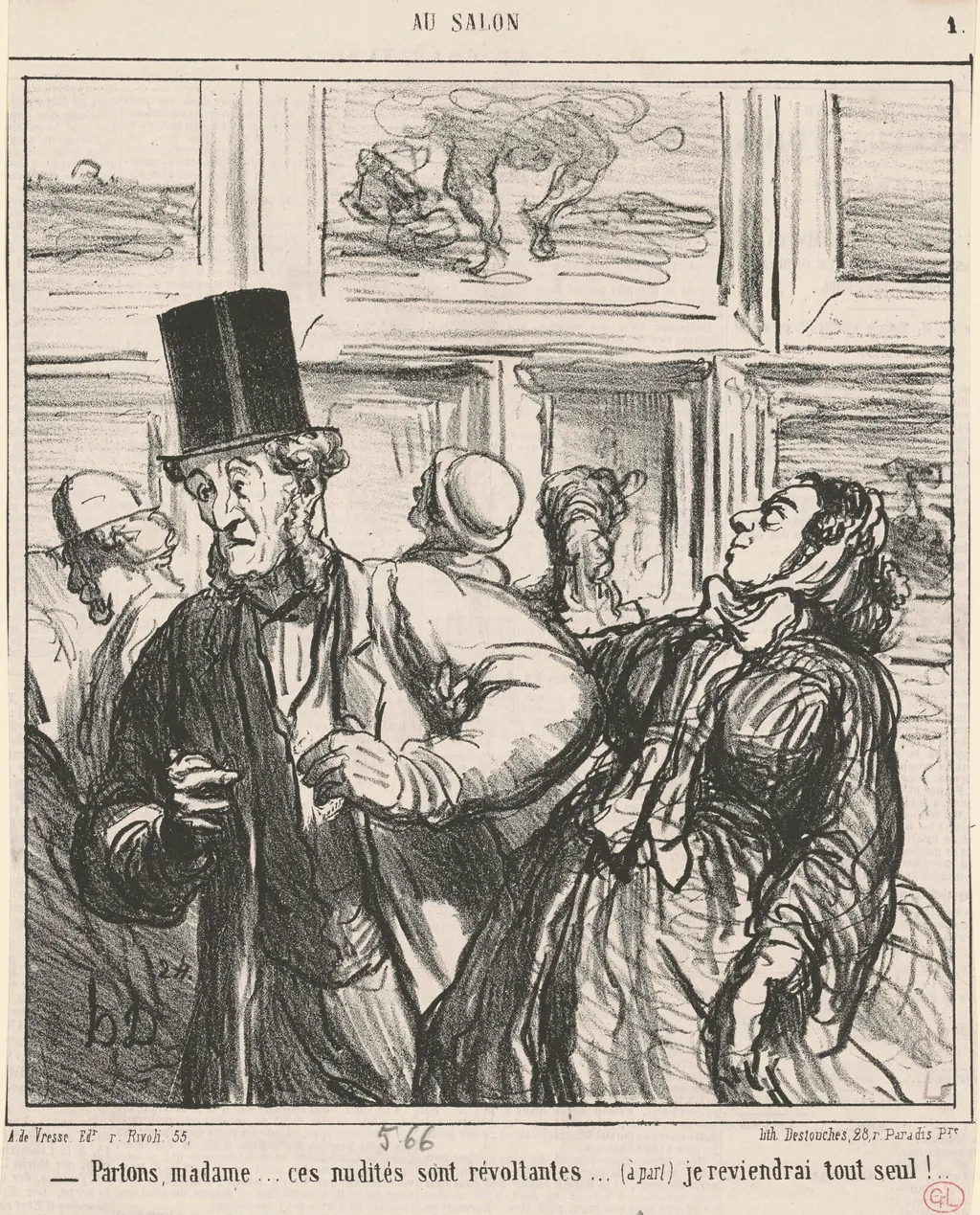
Parlons, Madame...ces nudités sont révoltantes... is an ink print by the Impressionist artist Honoré Daumier. It dates from 1866 and is held in the collection of the National Gallery of Art.
About this work
Overview
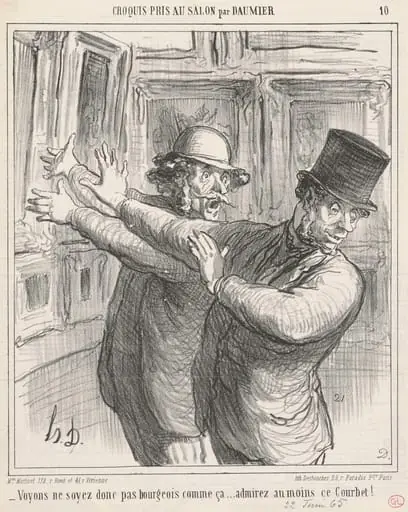
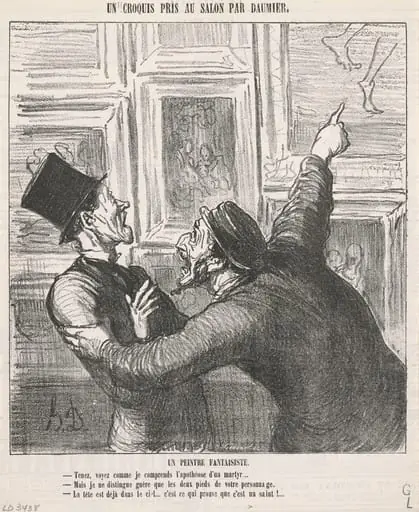
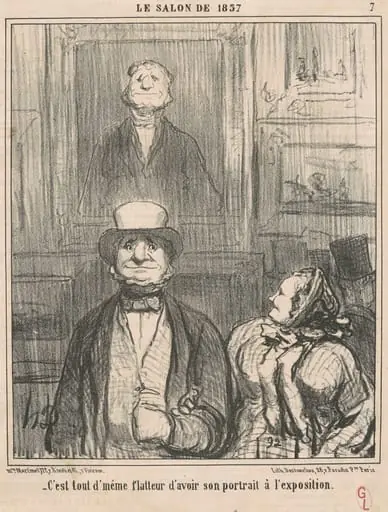
This lithograph by Honoré Daumier captures a bustling art gallery interior, where spectators react to nude paintings displayed on the wall.
This lithograph by Honoré Daumier captures a bustling art gallery interior, where spectators react to nude paintings displayed on the wall. Rendered in bold, fluid black lines, the scene teems with figures in contemporary dress, their exaggerated expressions revealing a spectrum of discomfort, mockery, and pretension. The work functions as a social observation, using the gallery as a stage for public performance rather than genuine aesthetic engagement.
Subject & Meaning
The figures in the scene respond to the nudes with varied, often absurd expressions—some avert their gaze, others smirk or feign shock. Daumier critiques the performative nature of art appreciation among the bourgeoisie, highlighting how social conventions mask true understanding. The contrast between the unembellished nudity on the wall and the theatrical reactions of the viewers underscores a disconnect between cultural display and personal sincerity.
Technique & Style
Daumier employs lithographic ink with vigorous, incisive lines to define forms and convey emotion. His use of high-contrast shading and simplified contours lends a caricatural quality, amplifying the absurdity of each figure’s posture and expression. The composition is densely packed, with no clear focal point, mirroring the chaotic energy of the crowd and reinforcing the sense of collective superficiality.
History & Provenance
Created in the mid-19th century, this print was likely published in a periodical or as part of a series targeting contemporary Parisian life. Daumier regularly contributed to satirical journals, using lithography to reach a broad audience. The work’s survival in museum collections reflects its enduring value as a document of social critique during a time of rapid cultural change in France.
Context
During the July Monarchy and Second Empire, public art exhibitions became sites of social spectacle, where class distinctions were performed as much as aesthetic judgments. Daumier, a keen observer of urban life, targeted the hypocrisy of middle-class patrons who claimed cultural refinement while revealing ignorance or discomfort. His work responded to the growing commodification of art and the rise of mass public exhibitions.
Legacy
Daumier’s lithograph influenced later artists who used printmaking to interrogate social norms, particularly in the realms of satire and realism. Its unflinching portrayal of human behavior in cultural spaces remains relevant as a model for examining how public institutions shape—and sometimes distort—individual perception. The work endures not for its beauty, but for its unvarnished honesty.
Artist & collection

Artist
Honoré-Victorin Daumier was a French painter, sculptor, and printmaker, whose many works offer commentary on the social and political life in France, from the Revolution of 1830 to the fall of the Second French Empire in 1870.