Artwork
Le Charbonnier aime être (est maitre)...
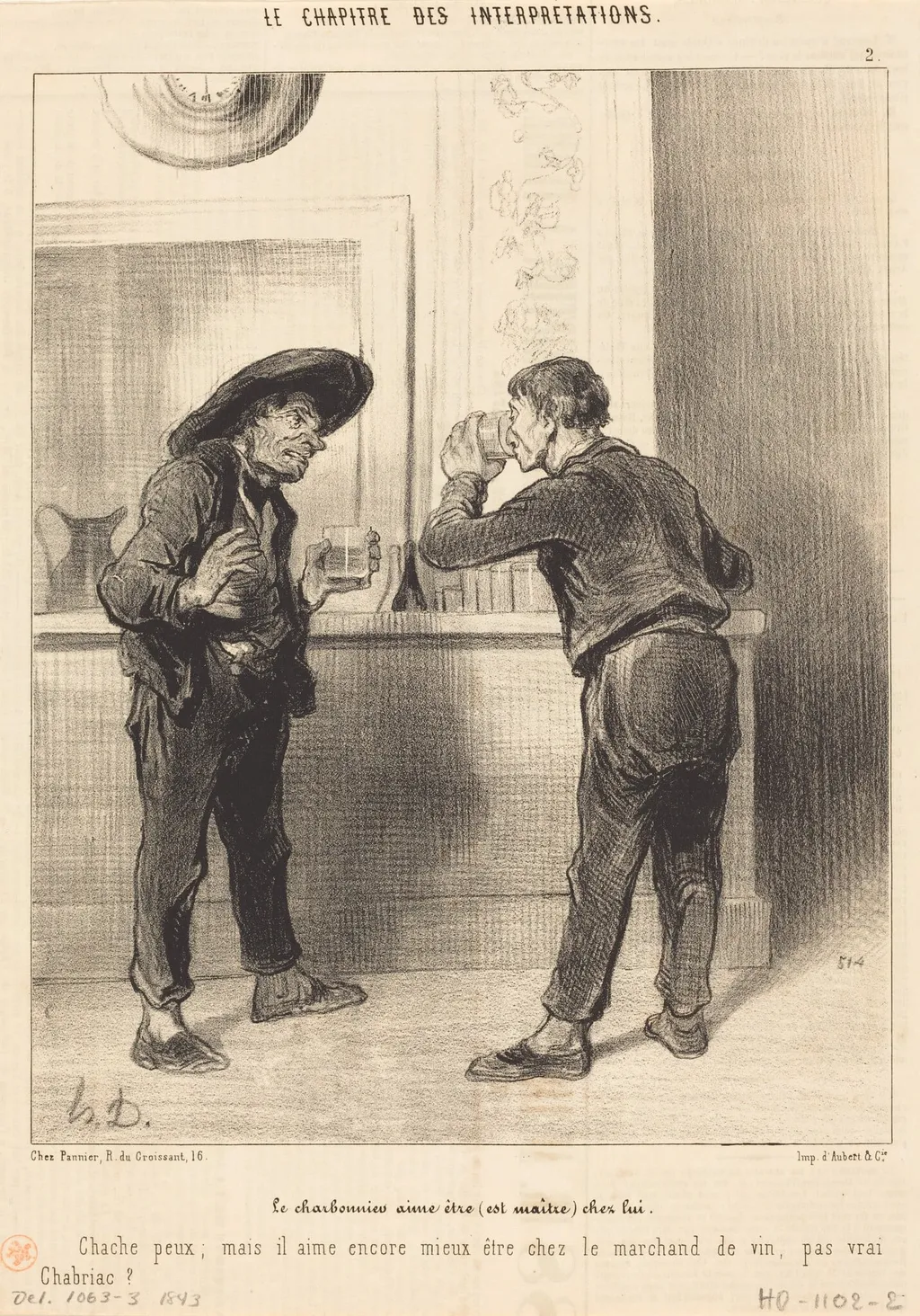
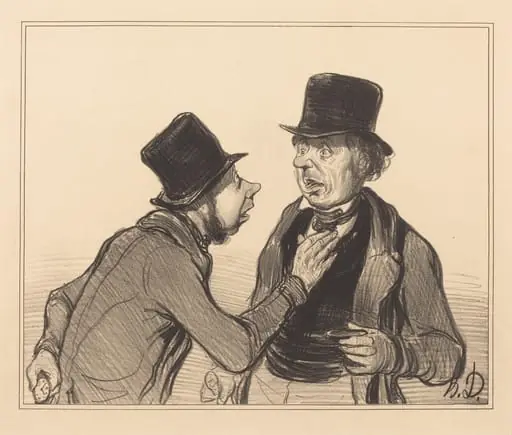
Le Charbonnier aime être (est maitre)... is an ink print by the Romanticist artist Honoré Daumier. It dates from 1843 and is held in the collection of the National Gallery of Art.
About this work
Overview
Executed with rapid, fluid lines, the image reflects Daumier’s role as a visual commentator in the politically charged press of July Monarchy France.
Created in 1843, this lithograph on newsprint by Honoré Daumier captures a quiet, unguarded moment between two working-class men. Executed with rapid, fluid lines, the image reflects Daumier’s role as a visual commentator in the politically charged press of July Monarchy France. Printed on inexpensive paper, it was likely distributed in satirical journals, reaching a broad audience beyond elite art circles.
Subject & Meaning
The scene depicts a charcoal seller and another man, possibly a neighbor or acquaintance, sharing a drink. The charcoal seller, identified by his hat and posture, appears startled as his companion leans in, mug in hand. The hanging fish and discarded hat suggest modest domesticity. The title, a play on words, subtly mocks the man’s pretension to mastery, underscoring Daumier’s critique of social aspiration among the lower classes.
Technique & Style
Daumier employed lithography to achieve immediacy and spontaneity. His loose, sketch-like strokes convey movement and expression without detail, emphasizing gesture over precision. The use of newsprint—cheap and ephemeral—mirrors the transient nature of daily life and the populist intent of his work. Shadows and minimal background elements focus attention on the figures’ interaction, enhancing the sense of intimacy and realism.
History & Provenance
Produced during Daumier’s most active period as a political caricaturist, this print emerged from his contributions to *Le Charivari*, a journal known for its sharp social satire. Though originally published in a periodical, the work survived as part of collections that preserved his printed oeuvre. Its survival on fragile paper underscores its initial function as disposable commentary rather than fine art.
Context
In 1843, France was under the July Monarchy, a regime sensitive to criticism. Daumier had recently been imprisoned for satirizing King Louis-Philippe, yet continued to depict ordinary people with dignity and irony. This print reflects a broader cultural moment in which visual satire became a tool for dissent, using humor to expose the gap between social pretense and lived reality among the urban poor.
Legacy
Daumier’s lithographs, including this one, helped redefine printmaking as a medium for social observation rather than mere illustration. His unidealized portrayals of working-class life influenced later realist and modernist artists. Though created for mass circulation, these works are now recognized for their psychological depth and quiet humanity, offering enduring insight into 19th-century French society.
Artist & collection
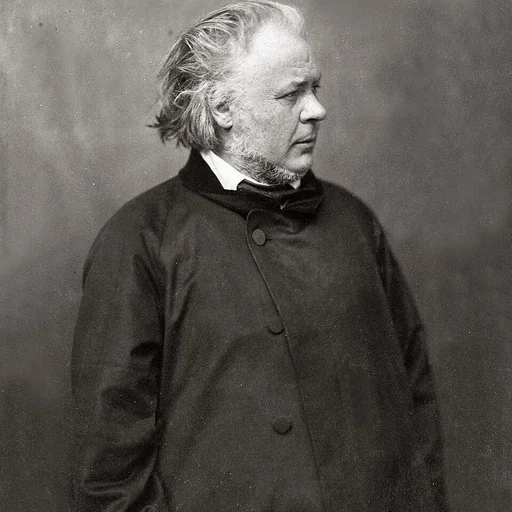
Artist
Honoré-Victorin Daumier was a French painter, sculptor, and printmaker, whose many works offer commentary on the social and political life in France, from the Revolution of 1830 to the fall of the Second French Empire in 1870.









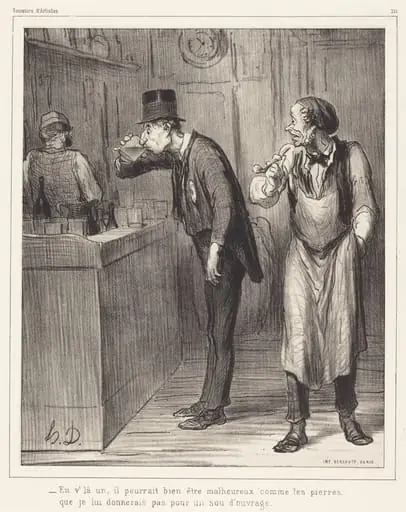 En v'la un, il pourrait bien être malheureux...
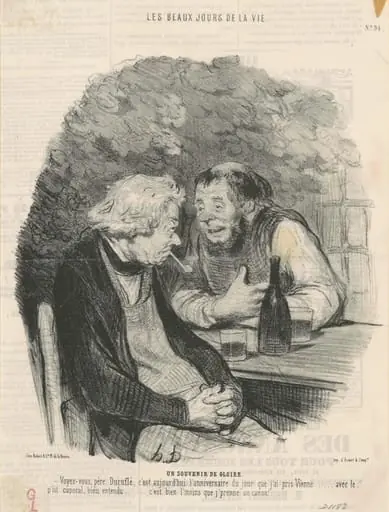 Un souvenir de gloire
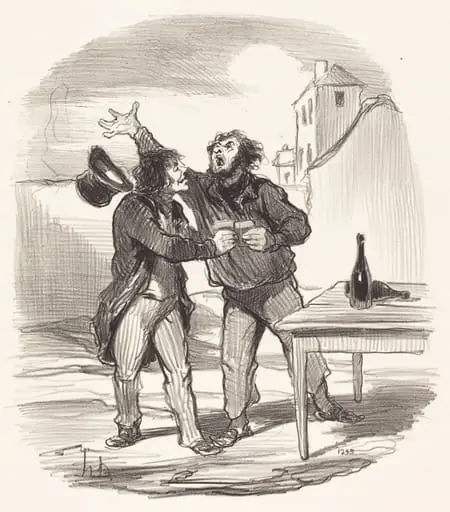 Membre... du dix Décembre prenant le la...
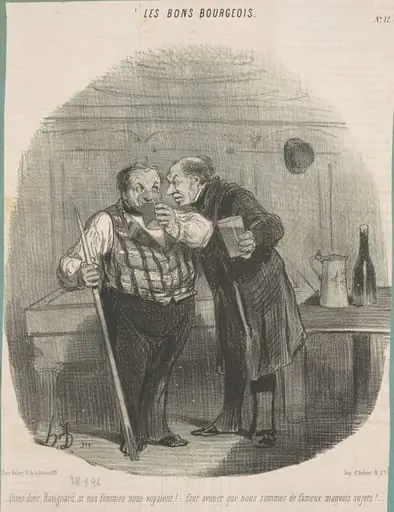 Dis donc, ravignard, si nos femmes nous voyaient! ...
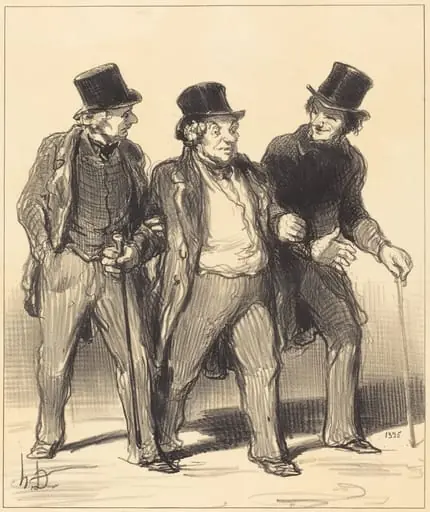 Il me semble que j'aperçois... un... chien... pas muselé!...
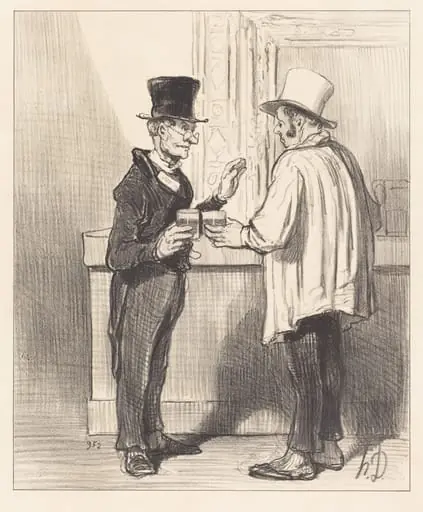 Un Défenseur... causant... dans son cabinet habituel
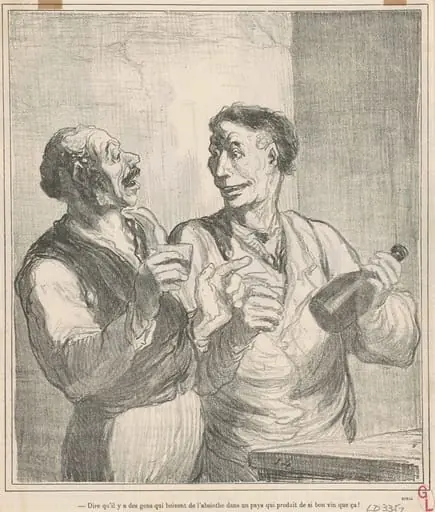 Dire qu'il y a des gens qui boivent de l'absinthe ...
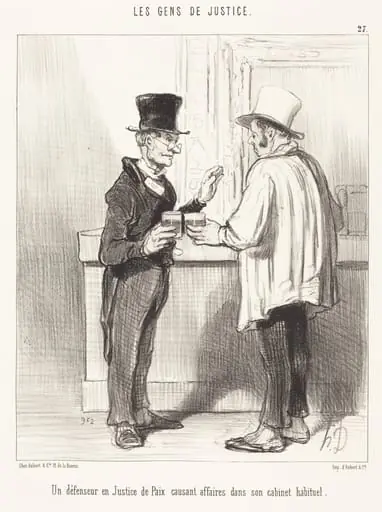 Un Défenseur... causant... dans son cabinet habituel
 Oui Monsieur vous n'êtes pas de Paris...