Artwork
Il me semble que j'aperçois... un... chien... pas muselé!...
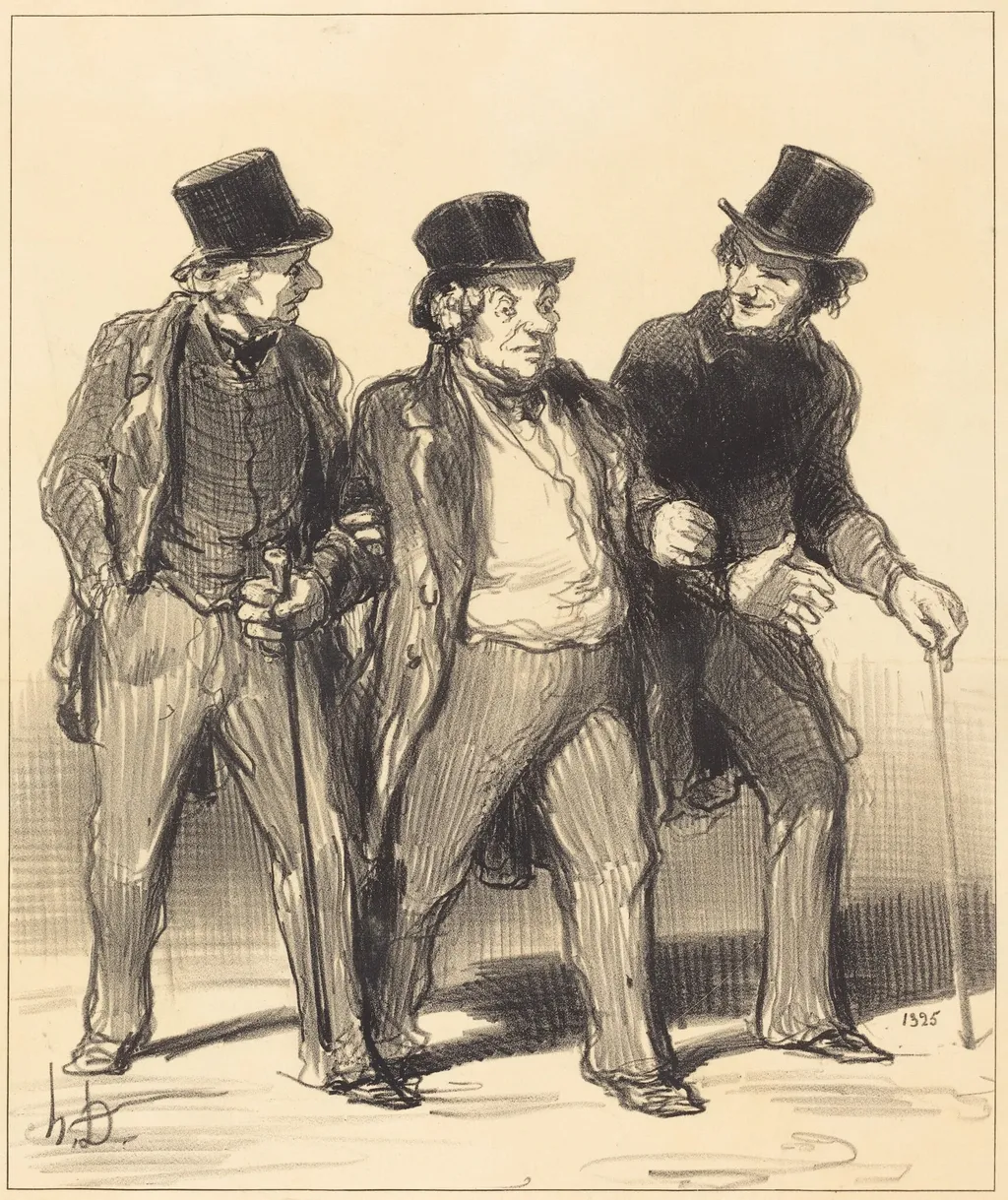
Il me semble que j'aperçois... un... chien... pas muselé!... is an ink print by the Impressionist artist Honoré Daumier. It dates from 1852 and is held in the collection of the National Gallery of Art.
About this work
Overview
Executed in the medium of lithography, it belongs to a broader body of work that used printmaking to critique French society under Louis-Philippe’s regime.
Created in 1852, this lithograph by Honoré Daumier captures a moment of public indignation through sharp visual wit. Executed in the medium of lithography, it belongs to a broader body of work that used printmaking to critique French society under Louis-Philippe’s regime. Daumier’s ability to distill complex social tensions into single, expressive scenes made his prints widely circulated and influential among urban readers.
Subject & Meaning
The image depicts three well-dressed men reacting to the sight of an unchained dog, a metaphor for unchecked political dissent. Their exaggerated expressions—shock, discomfort, and mockery—reflect elite anxiety over the erosion of social order. The dog, though unseen, functions as a symbol of popular unrest, its presence implied through the men’s visceral responses. Daumier critiques the bourgeoisie’s fear of uncontrolled freedom, equating it with moral decay.
Technique & Style
Daumier employed rapid, gestural lines typical of his lithographic process, conveying urgency and emotional intensity. The dark, minimal background isolates the figures, heightening their theatricality. Ink washes and varied line weight model their forms without detail, emphasizing movement over realism. The loose, almost sketch-like quality reflects the immediacy of newspaper illustration, aligning the work with the ephemeral nature of political satire.
History & Provenance
Produced during a period of heightened censorship under Louis-Philippe, the print likely appeared in *Le Charivari*, where Daumier regularly published under pseudonyms to evade prosecution. Though original prints were distributed to subscribers, few survive due to the medium’s fragility and the political sensitivity of the content. The work’s survival reflects its significance as a document of resistance through visual culture.
Context
In early 1850s France, public discourse was tightly controlled, yet satire thrived in illustrated journals. Daumier’s work responded to laws restricting press freedom and the monarchy’s attempts to suppress dissent. His caricatures often used animals or absurdity to bypass direct censorship, allowing readers to infer political meaning. This print fits within a tradition of French visual satire that linked social behavior to governance.
Legacy
Daumier’s lithographs, including this one, helped redefine printmaking as a vehicle for social critique rather than mere illustration. His influence extended to later generations of satirists and expressionist artists who valued emotional truth over formal precision. Though initially dismissed as journalistic, his work is now recognized for its psychological depth and enduring commentary on power and public perception.
Artist & collection
Artist
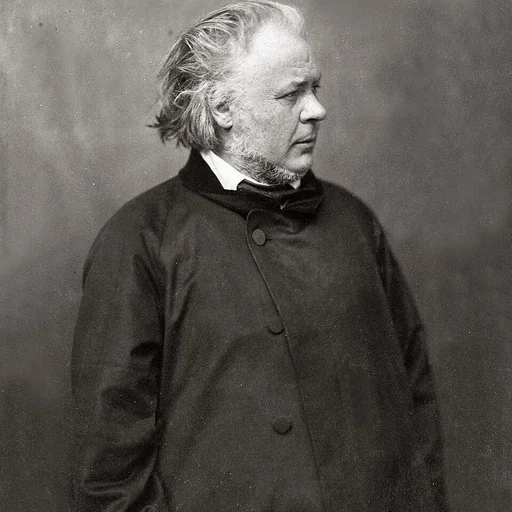
Honoré-Victorin Daumier was a French painter, sculptor, and printmaker, whose many works offer commentary on the social and political life in France, from the Revolution of 1830 to the fall of the Second French Empire in 1870.









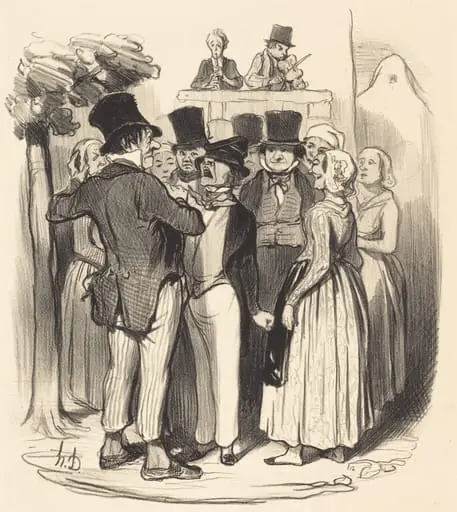 Ah! Gringalet d'Paris... tu viendras faire danser...
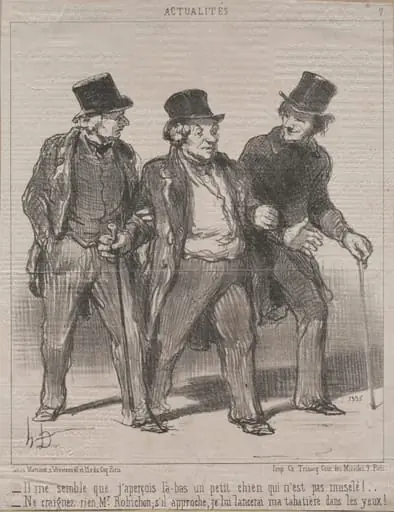 It seems to me that I notice a little dog there that is not muzzled!...
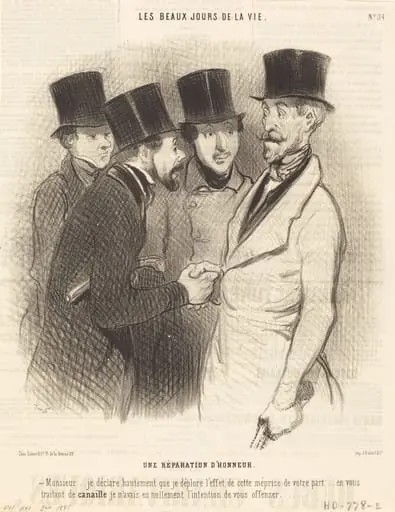 Une Réparation d'honneur
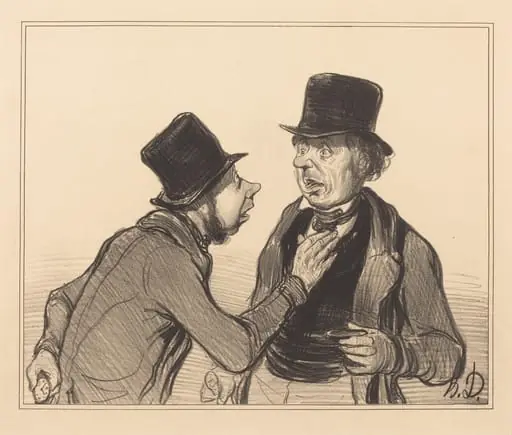 Oui Monsieur vous n'êtes pas de Paris...
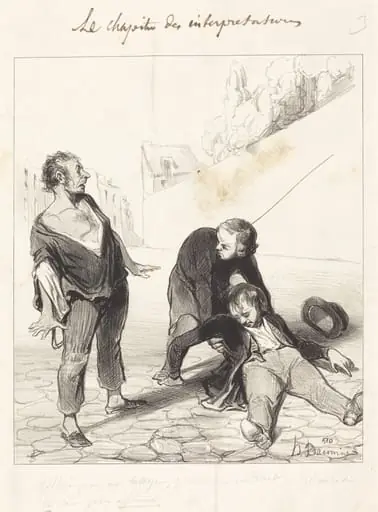 Fallait pas me tutoyer, j'suis dans...
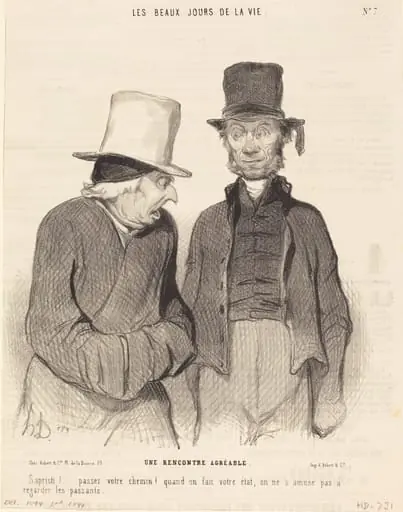 Une Rencontre agréable
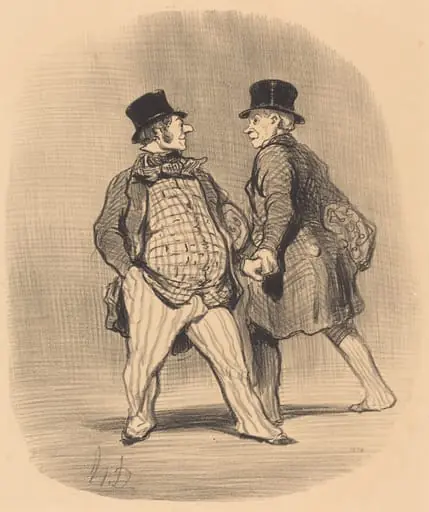 Confrère, méfiez-vous du petit baron...
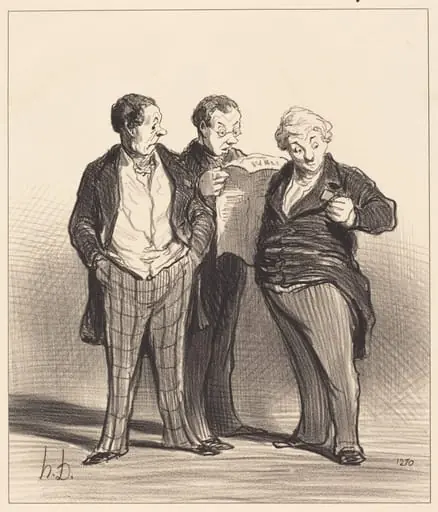 L'Interdiction du port des décorations
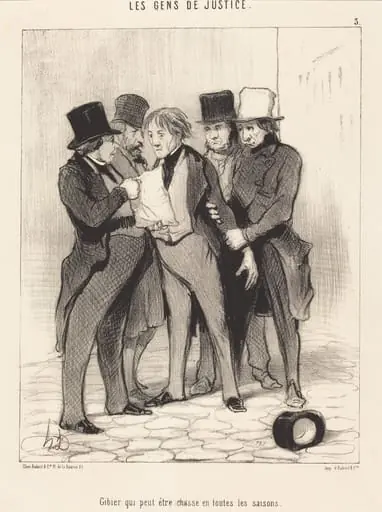 Gibier qui peut être chassé en toutes les saisons
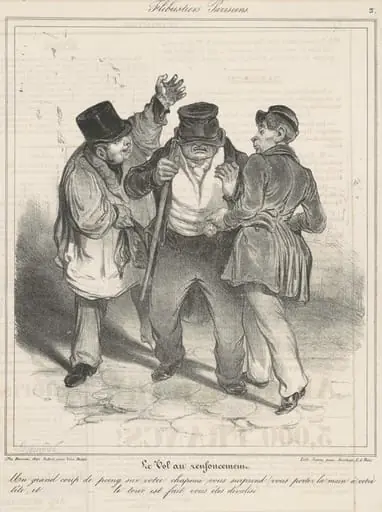 Le vol au renfoncement
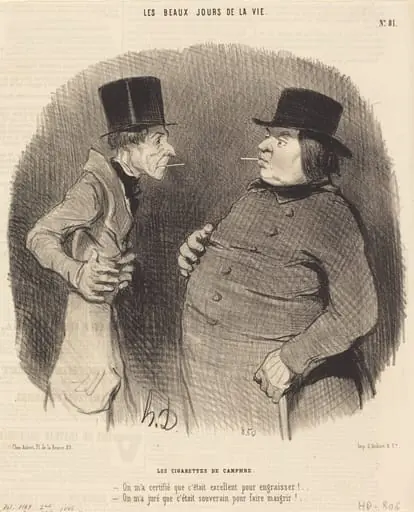 Les Cigarettes de camphre
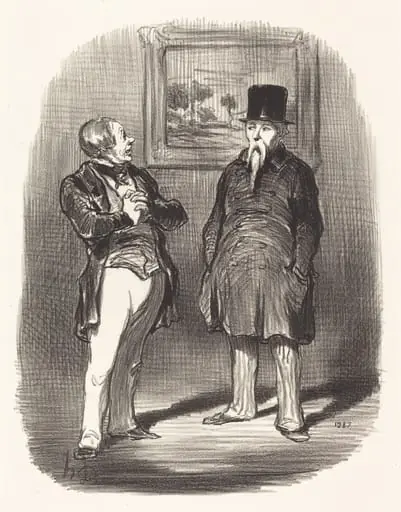 Tiens... je ne te reconnaissais pas...