Artwork
Le czar a Sébastopol
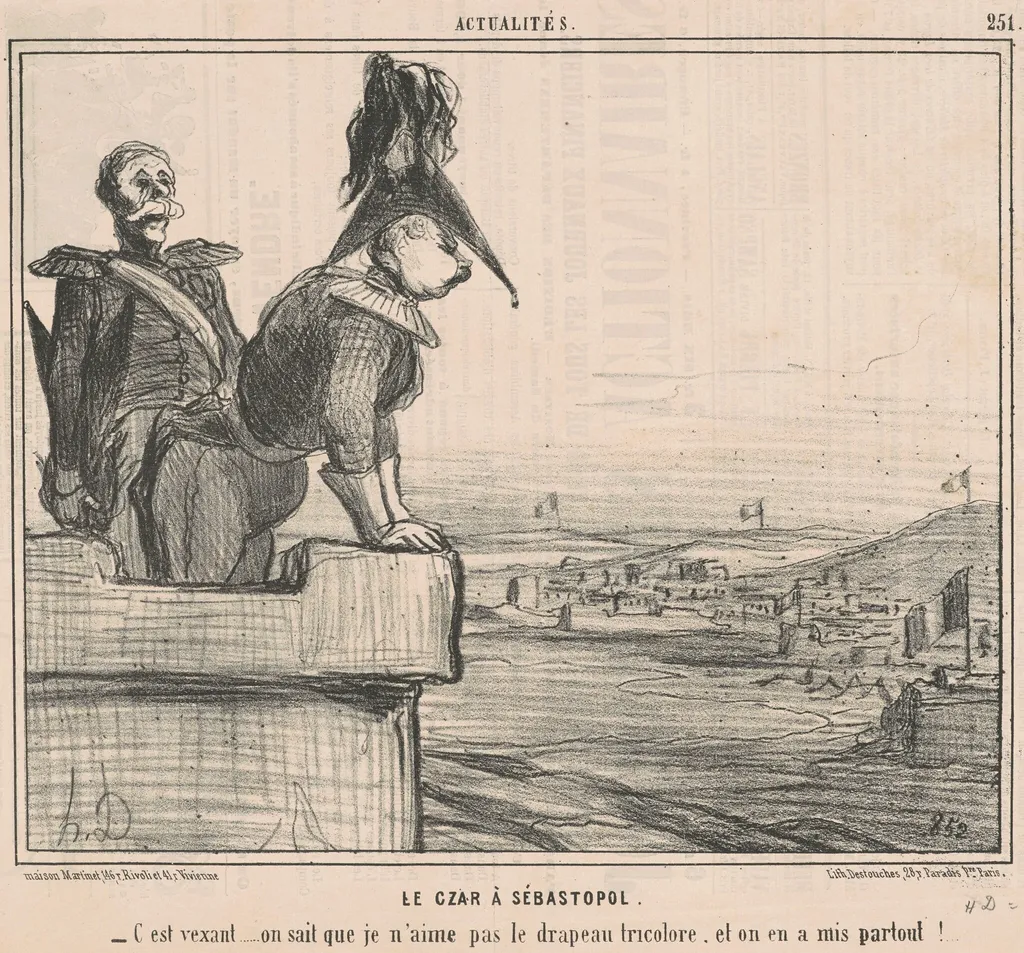
Le czar a Sébastopol is an ink print by the Impressionist artist Honoré Daumier. It dates from 1855 and is held in the collection of the National Gallery of Art.
About this work
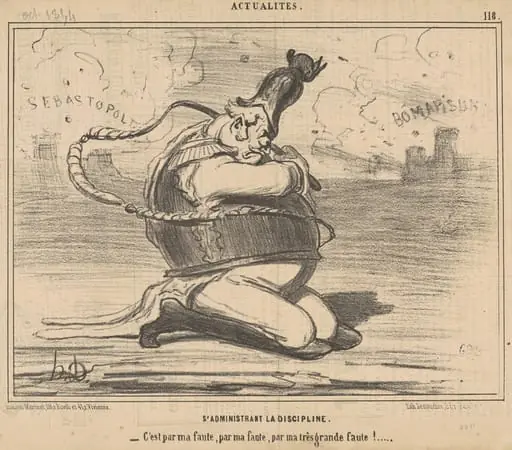
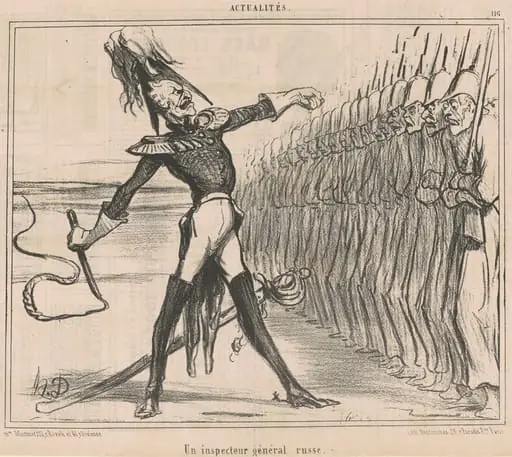
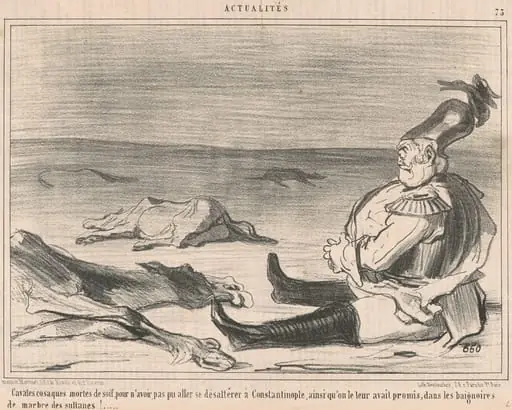
This lithograph shows two puffed-up men in military coats. One sits stiff as a board. The other leans like he might topple over. Their faces look silly on purpose.
Daumier made this in 1855. It mocks leaders who act tough but can’t stand straight. The style is rough and fast—typical of his cartoons.
Look up lithography to see how he used greasy crayons on stone.
Overview
Le czar à Sébastopol is a lithograph by Honoré Daumier, created in 1855. The print features two militarized figures in comedic, exaggerated postures set against a cityscape backdrop.
Subject & Meaning
The work satirically depicts authority figures, emphasizing the discrepancy between their perceived toughness and actual instability, as conveyed through their rigid and precarious poses.
Technique & Style
Characterized by rapid, rough execution, the lithograph exemplifies Daumier's cartooning style. The process involved drawing with greasy crayons on stone, a hallmark of lithographic technique.
History & Provenance
Produced in 1855, the lithograph reflects Daumier's mid-19th-century commentary on military leadership. Specific provenance details are not provided.
Context
Set against the implied backdrop of Sébastopol, the piece may allude to the Crimean War (1853-1856), using satire to critique military figureheads of the era.
Legacy
As a satirical work, Le czar à Sébastopol contributes to Daumier's legacy of social commentary through art, though its specific impact or reception is not detailed here.
Own this work as a print
Artist & collection

Artist
Honoré-Victorin Daumier was a French painter, sculptor, and printmaker, whose many works offer commentary on the social and political life in France, from the Revolution of 1830 to the fall of the Second French Empire in 1870.