Artwork
Progrès de l'équitation
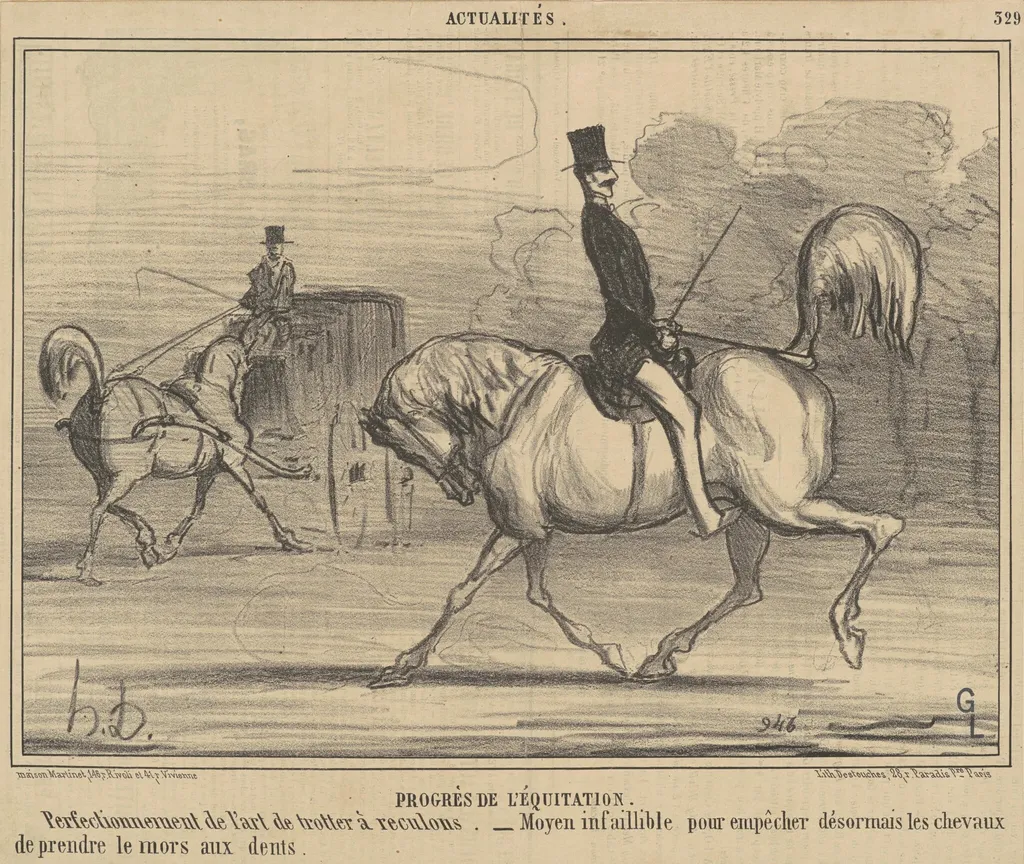
Progrès de l'équitation is an ink print by the Impressionist artist Honoré Daumier. It dates from 1856 and is held in the collection of the National Gallery of Art.
About this work
Overview
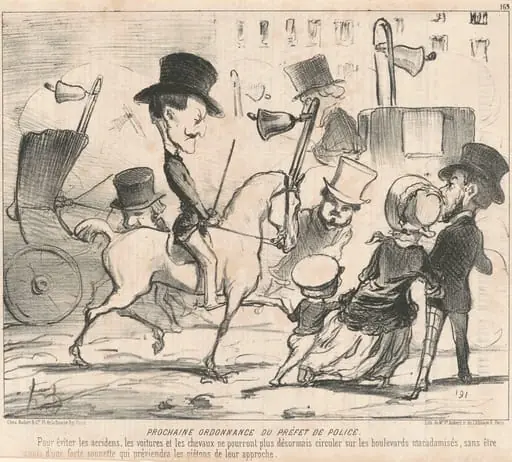
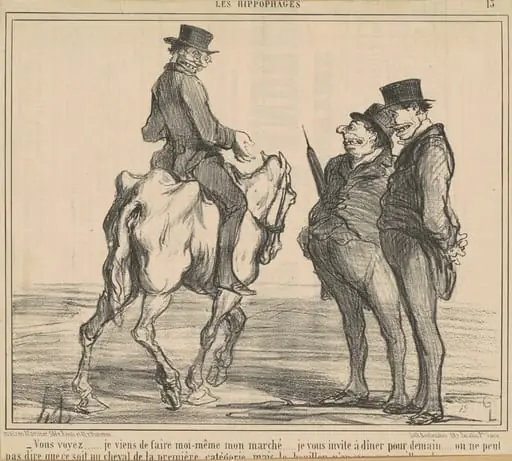
Honoré Daumier’s lithograph Progrès de l’équitation presents a well‑dressed rider astride a powerful horse, with a second horse‑drawn carriage receding in the distance. The composition concentrates on the animal’s musculature and motion, while the background remains vague, directing the eye to the central equestrian activity.
Subject & Meaning
The image juxtaposes the formality of the rider’s attire with the raw energy of the horse, suggesting a commentary on the tension between civilized appearance and natural vigor. By foregrounding the animal’s strength, Daumier subtly highlights the everyday spectacle of urban transport and the skill required to master it.
Technique & Style
Executed as a lithograph, the work relies on bold, gestural lines to delineate the horses’ sinewy bodies and convey a sense of movement. Daumier’s characteristic attention to anatomical detail is evident, while the softened, indistinct backdrop demonstrates his use of contrast to emphasize the primary figures.
Context
Created during Daumier’s prolific period of social observation, the print reflects his interest in public life and transportation in 19th‑century Paris. Though known for satirical caricature, here he adopts a more straightforward depiction, yet retains a hint of wry observation typical of his broader oeuvre.
Artist & collection

Artist
Honoré-Victorin Daumier was a French painter, sculptor, and printmaker, whose many works offer commentary on the social and political life in France, from the Revolution of 1830 to the fall of the Second French Empire in 1870.