Artwork
Le Futur monument de Napoléon aux Invalides
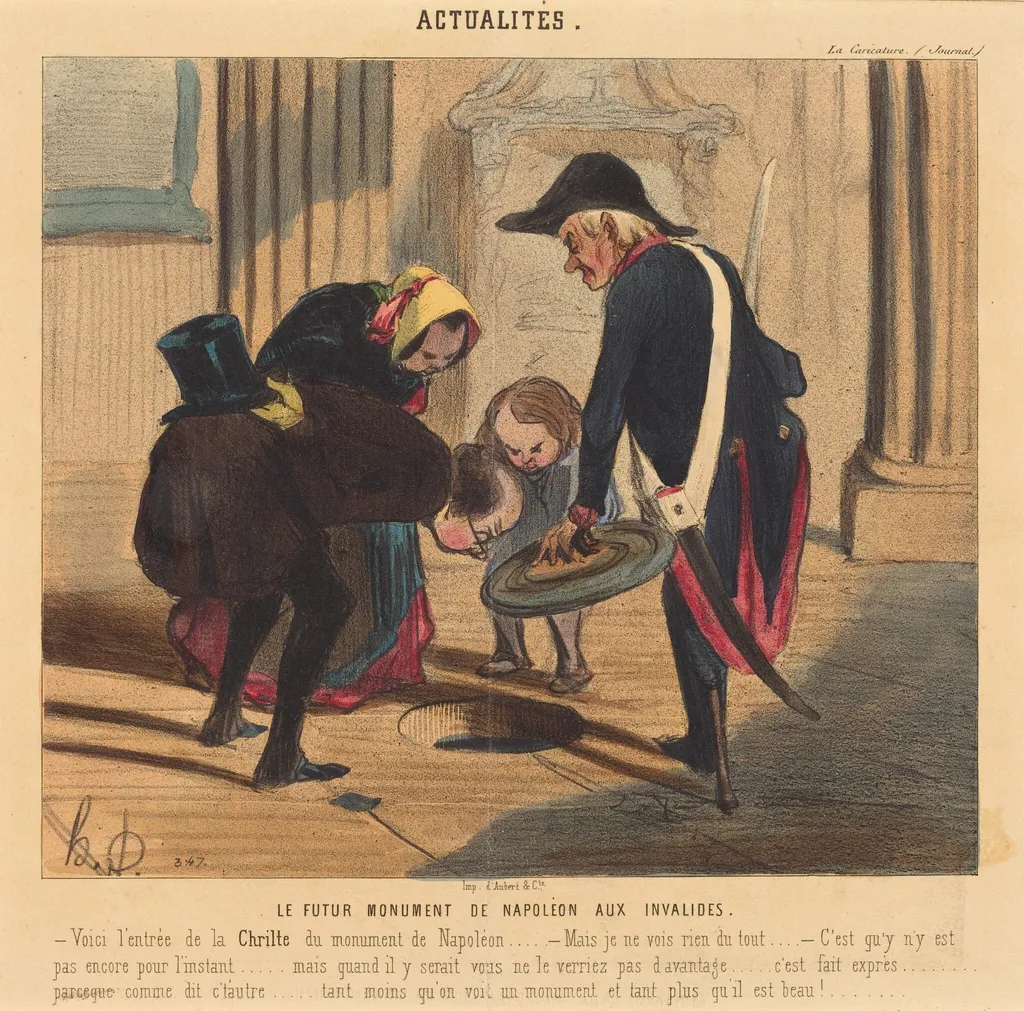
Le Futur monument de Napoléon aux Invalides is an ink print by the Romanticist artist Honoré Daumier. It dates from 1842 and is held in the collection of the National Gallery of Art.
About this work
Overview
Honoré Daumier’s hand‑colored lithograph *Le Futur monument de Napoléon aux Invalides* (1842) presents a modest, domestic tableau that contrasts with its grand title. Executed in the early years of the July Monarchy, the print captures three figures—a senior man, a woman, and a child—gathered around a small circular object on a stone‑paved courtyard, with a massive column looming in the background.
Subject & Meaning
The central group appears to be examining a coin or medal, suggesting a moment of quiet reflection or perhaps a commentary on the value of commemorating Napoleon. The juxtaposition of ordinary people with the notion of a future monument hints at Daumier’s subtle critique of the political climate and the ways public memory is constructed.
Technique & Style
Daumier employed lithography, a printmaking process that allowed rapid production and the addition of hand‑applied color. The work’s muted palette—blues, blacks, and earth tones—combined with a straightforward composition emphasizes the scene’s intimacy, while the precise line work reflects the artist’s experience in caricature and social satire.
History & Provenance
Created in 1842, the lithograph belongs to the prolific period of Daumier’s career when he contributed regularly to satirical journals such as *La Caricature* and *Le Charivari*. Though primarily known for his caricatures, Daumier produced a substantial body of politically charged images from the 1830 Revolution through the end of the Second Empire in 1870.
Context
During the July Monarchy, public discourse often centered on the legacy of Napoleon and the role of monuments in shaping national identity. Daumier’s work engages with these debates, using a modest scene to reflect broader questions about authority, memory, and the everyday citizen’s relationship to state-sponsored commemoration.
Legacy
The print exemplifies Daumier’s ability to blend social observation with political commentary, reinforcing his reputation as a chronicler of 19th‑century French life. Its nuanced approach to a seemingly simple subject continues to inform studies of how art can subtly interrogate power structures.
Artist & collection

Artist
Honoré-Victorin Daumier was a French painter, sculptor, and printmaker, whose many works offer commentary on the social and political life in France, from the Revolution of 1830 to the fall of the Second French Empire in 1870.









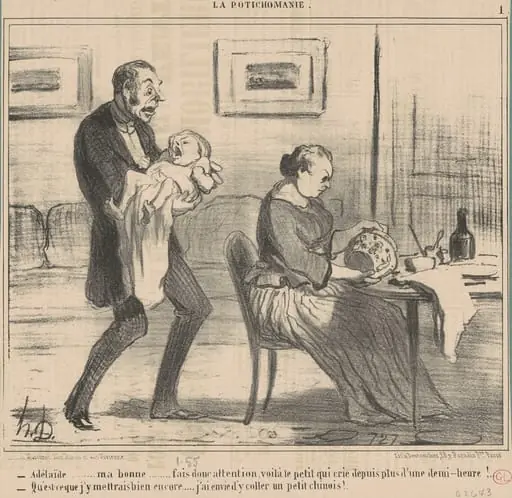 Adélaide ... ma bonne ... fais donc ...
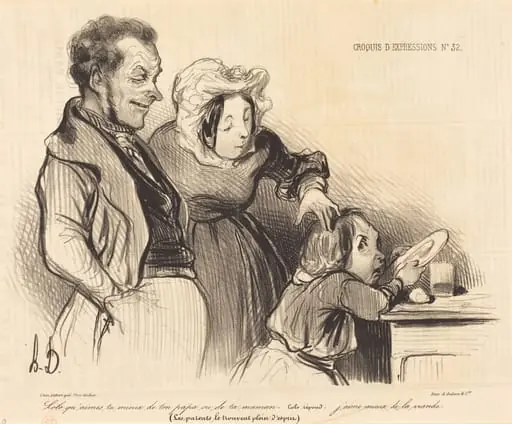 Lolo qu'aimes-tu mieux de ton papa ou de ta maman...
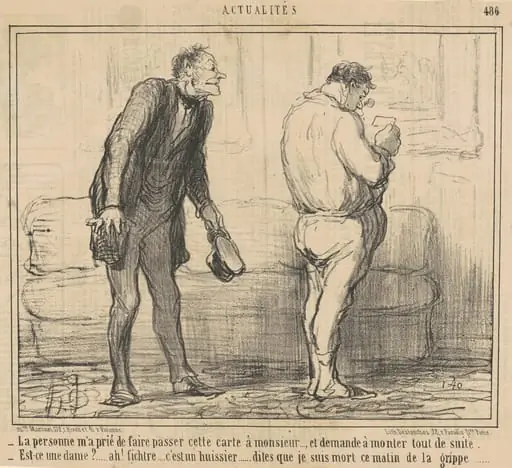 La personne ... demande a monter tout de suite ...
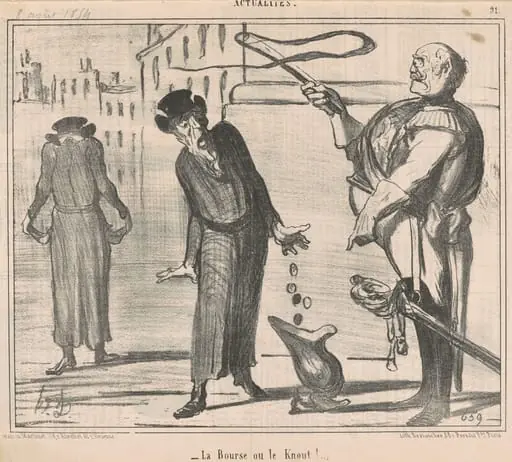 La bourse ou le knout!
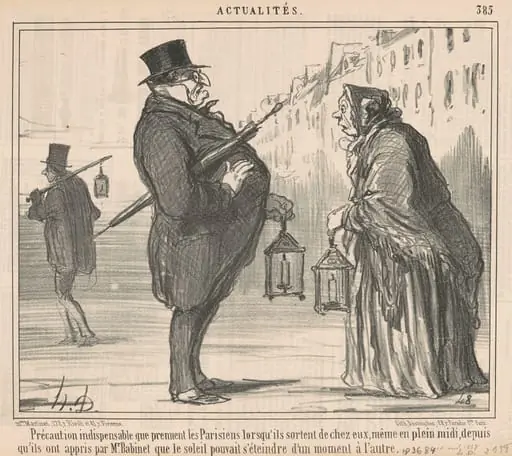 Précaution indispensable que prennent les Parisiens ...
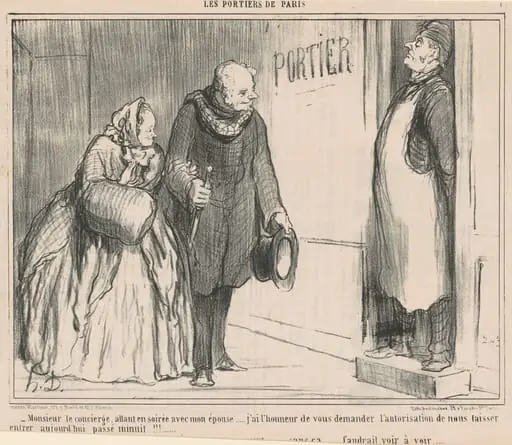 Monsieur le concierge, allant en soirée
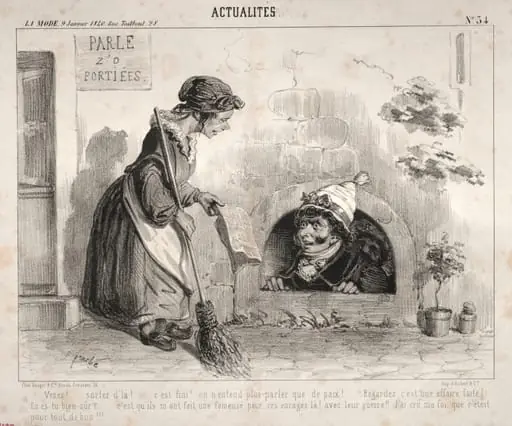 Actualités: Venez! ...sortez d'la! ... c'est fini! on n'entend plus parler que de paix!...
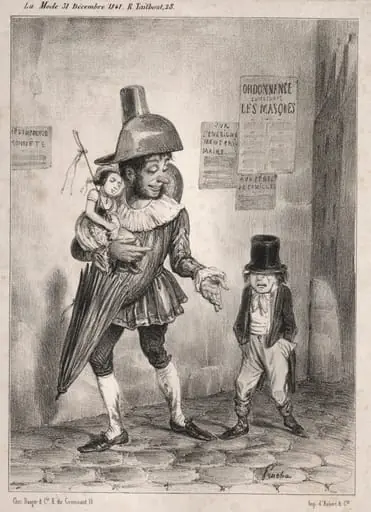 Pochades de carnaval: Vois-tu, si ton maître est bien content de toi et si tu as le prix de sagesse cette année! je te laisserai deguiser en paillasse! ...l'année prochaine!!
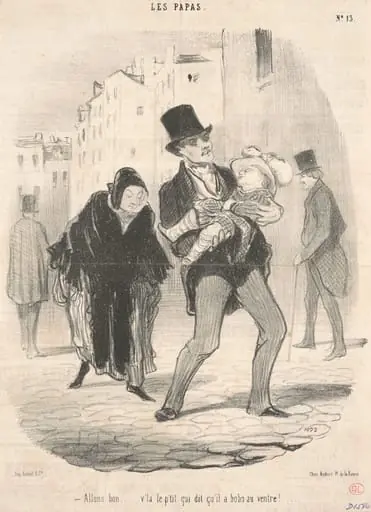 Allons bon ... v'la p'tit qui dit ...
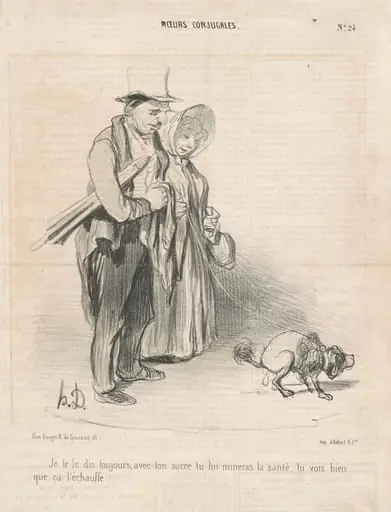 Je te le dis toujours, avec ton sucre...
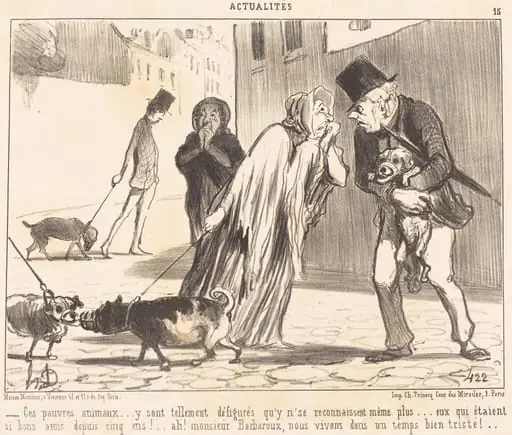 Ces pauvres animaux... n'se reconnaissent... plus...
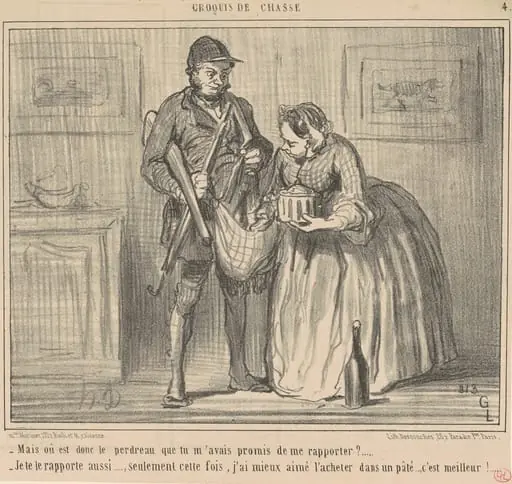 Mais ou est donc le perdreau