Artwork
Le Jour ou l'on dine chez Monsieur le Directeur...
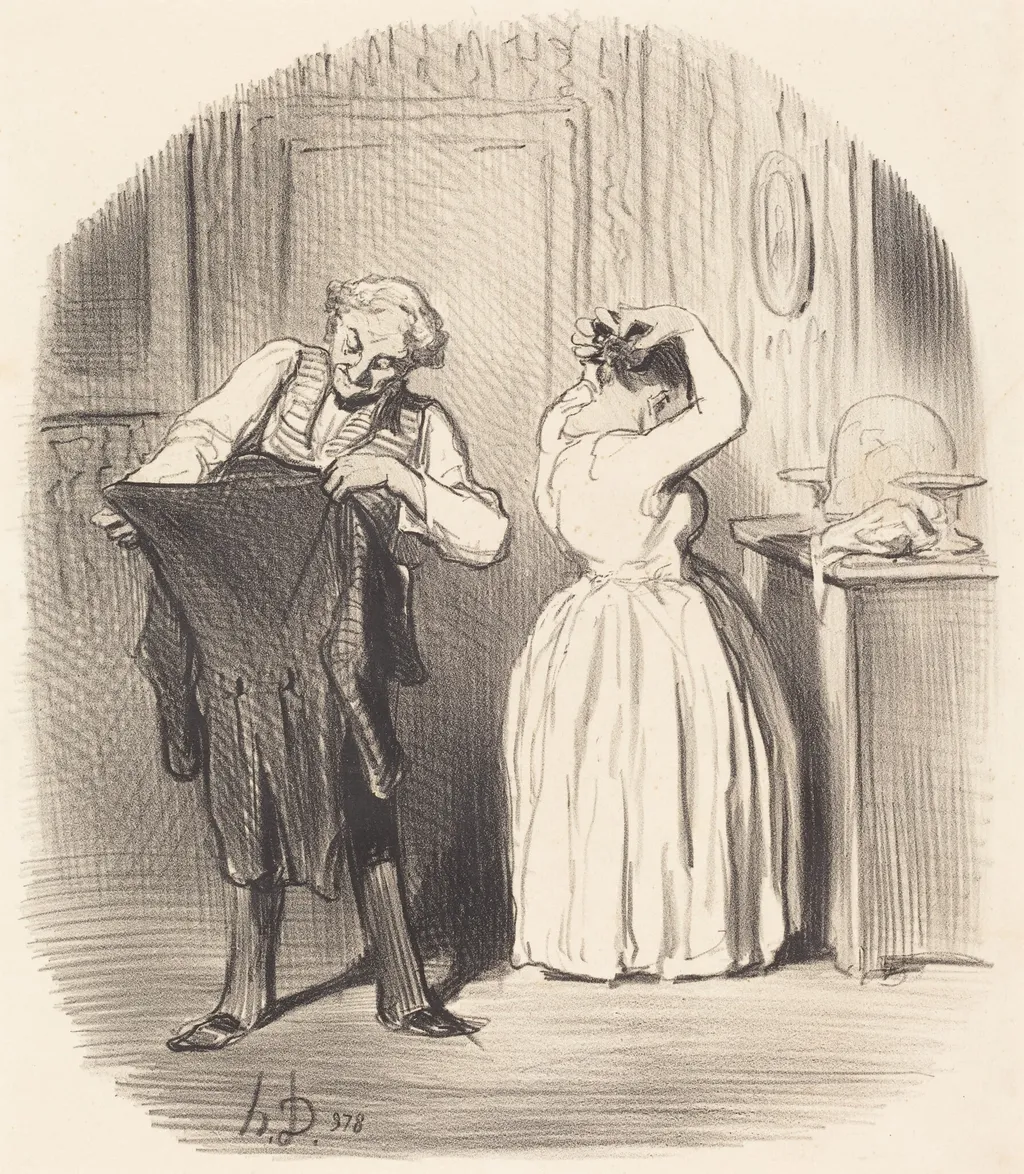
Le Jour ou l'on dine chez Monsieur le Directeur... is an ink print by the Impressionist artist Honoré Daumier. It dates from 1852 and is held in the collection of the National Gallery of Art.
About this work
Overview
Honoré Daumier’s 1852 lithograph *Le Jour où l’on dîne chez Monsieur le Directeur…* is a satirical print that captures a modest interior scene with two figures—a man gesturing with a coat‑like object and a woman adjusting her hair—observed through quick, sketch‑like lines. The composition, rendered in a dimly lit, cluttered room, conveys a sense of everyday immediacy rather than formal elegance.
Subject & Meaning
The work lampoons social pretensions by juxtaposing exaggerated gestures with a cramped domestic setting, suggesting a critique of bourgeois manners and hierarchical expectations. Daumier’s republican sympathies surface in the subtle mockery of the figures’ self‑importance, highlighting the gap between outward display and the modest reality of their surroundings.
Technique & Style
Executed as a lithograph, the image relies on bold, spontaneous strokes that resemble a hurried sketch, emphasizing immediacy and wit. Daumier’s use of stark contrasts and minimal shading accentuates the cramped space, while the inclusion of a small glass‑domed statue and a mirror adds narrative detail without detracting from the overall sketchy aesthetic.
History & Provenance
Created during Daumier’s prolific period of work for satirical journals such as *La Caricature* and *Le Charivari*, the print reflects his ongoing engagement with political and social commentary under the July Monarchy and early Second Empire. It circulated among the period’s print market, reaching a readership attuned to visual criticism of contemporary French society.
Context
The lithograph belongs to a broader series of Daumier’s caricatures that scrutinized institutional power and the emerging middle class. Its 1852 date places it amid growing republican sentiment, when artists increasingly employed humor and exaggeration to question authority and expose the pretensions of the newly affluent.
Artist & collection

Artist
Honoré-Victorin Daumier was a French painter, sculptor, and printmaker, whose many works offer commentary on the social and political life in France, from the Revolution of 1830 to the fall of the Second French Empire in 1870.









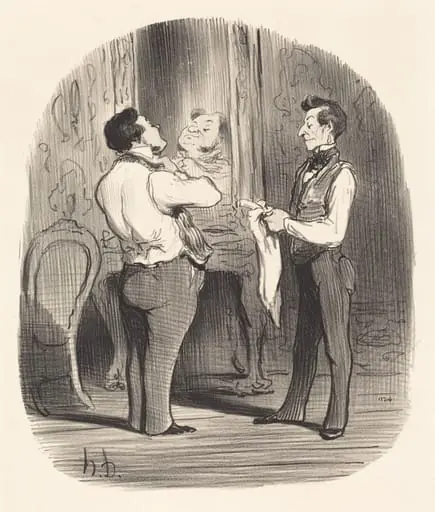 Le Jour ou il s'agit de faire une conquête
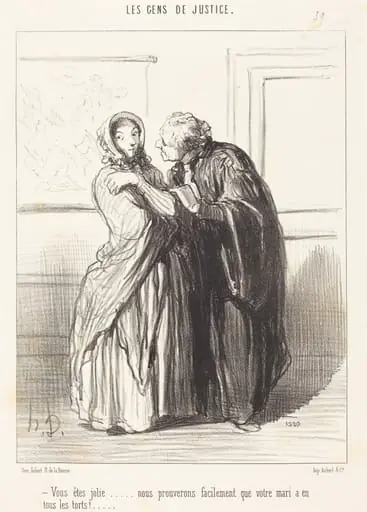 Vous êtes jolie...
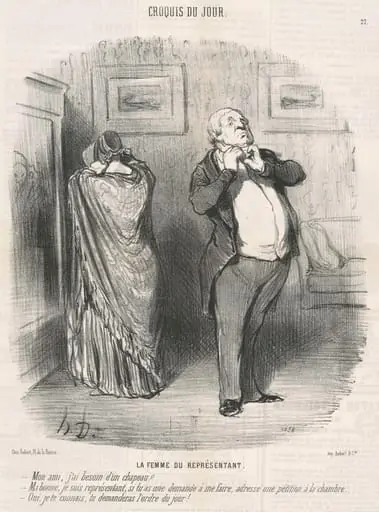 La femme du représentant
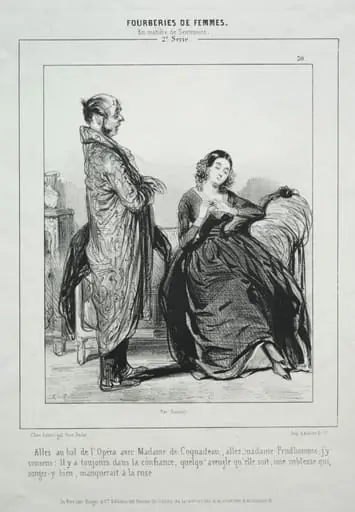 Fourberies de Femmes En Matière de Sentiment
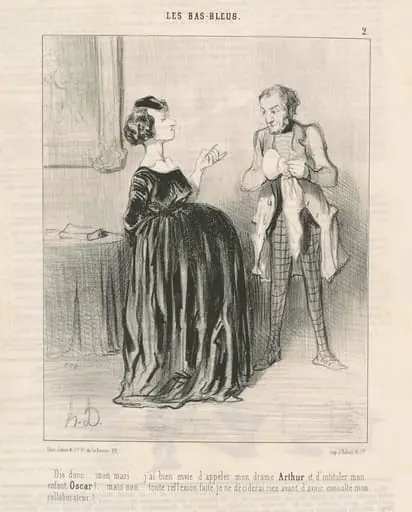 Dis donc ... mon mari ...j'ai bien envie d'appeler mon drama ...
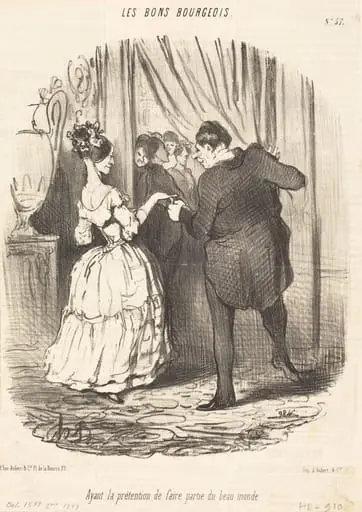 Ayant la prétention de faire partie du beau monde
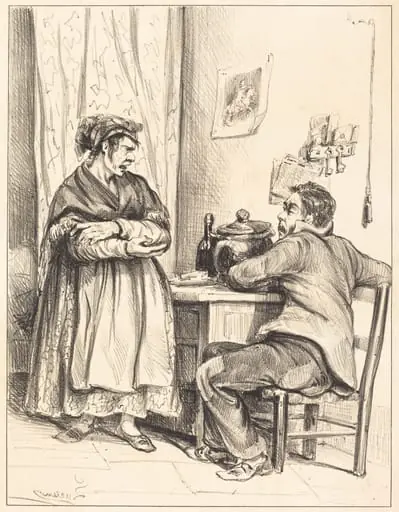 Domestic Dispute
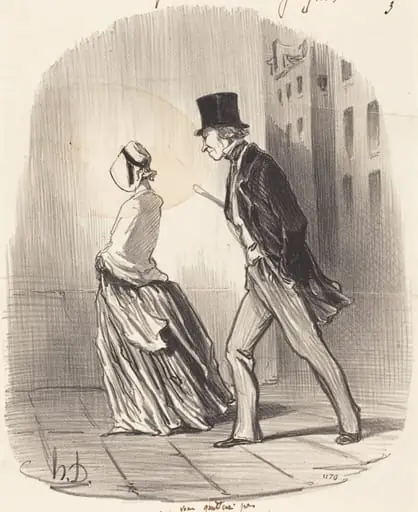 Non, madame, je ne vous quitterai pas...
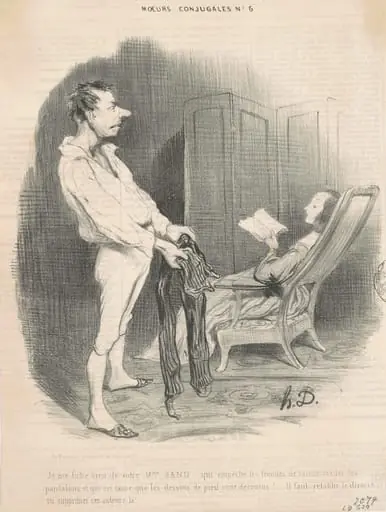 Je me fiche bien de votre Mme Sand...
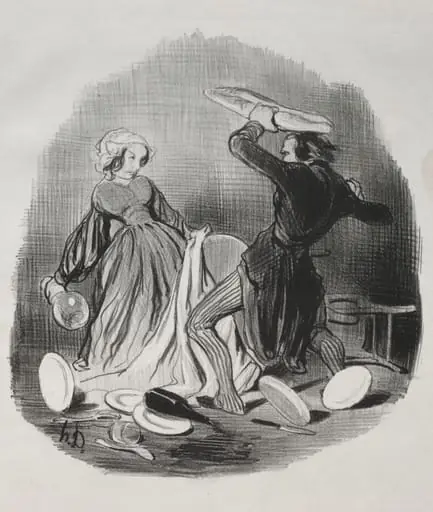 Ah! You Think Your Wife Does Not Provide Enough for You, Villain. . . .