Artwork
Le Nouveau polichinelle napolitain
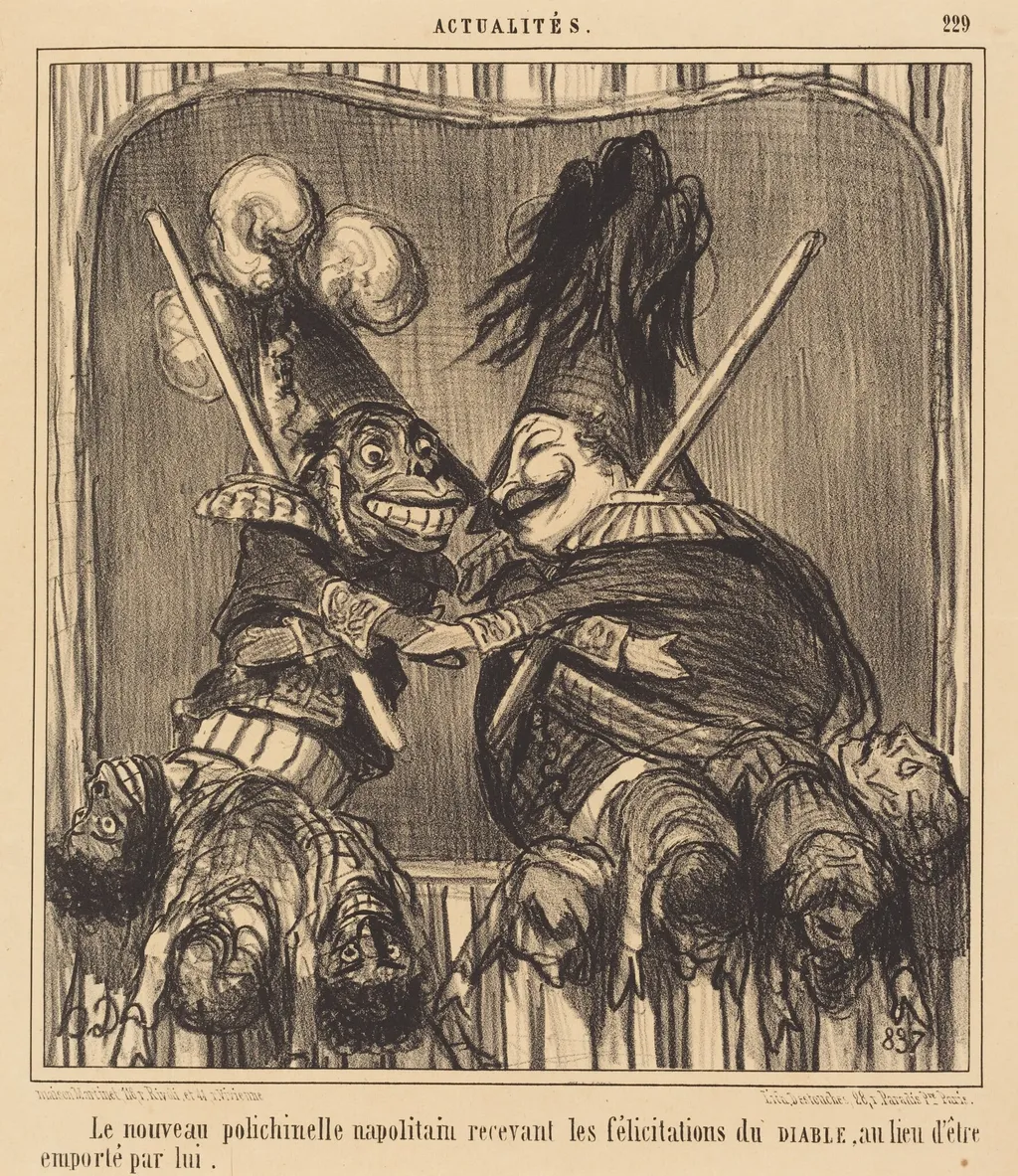
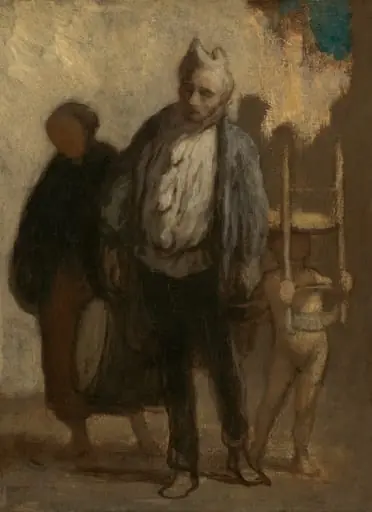
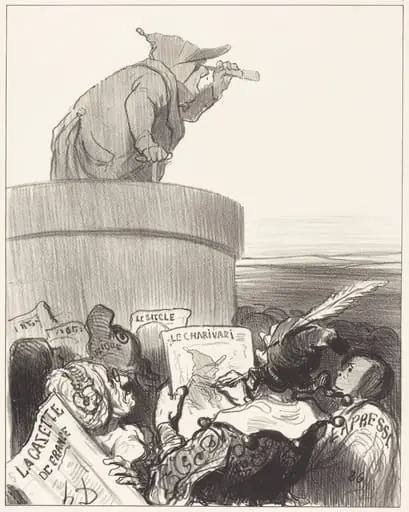
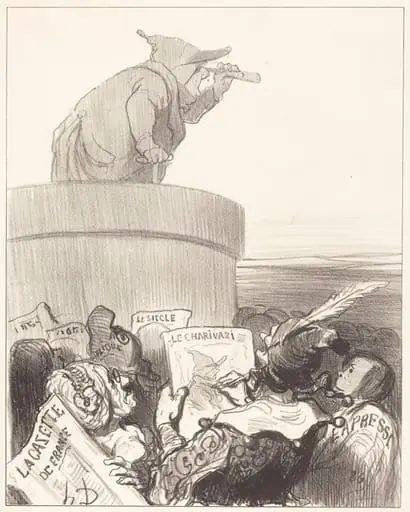
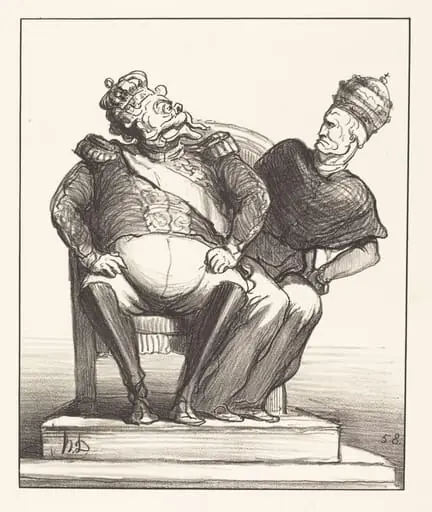
Le Nouveau polichinelle napolitain is an ink print by the Impressionist artist Honoré Daumier. It dates from 1855 and is held in the collection of the National Gallery of Art.
About this work
Overview
Created in 1855, this lithograph by Honoré Daumier belongs to a series of satirical prints produced for French periodicals like *Le Charivari*. It employs the medium’s capacity for rapid reproduction to deliver pointed social critique. Daumier, known for his incisive depictions of power and folly, used lithography to reach a broad public audience during a time of political instability in France.
Subject & Meaning
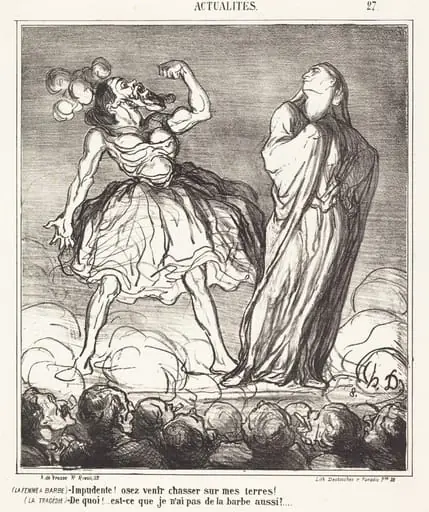
The image contrasts a towering, menacing figure—resembling a devil—with a diminutive, elegantly dressed individual clutching a small sword.
The image contrasts a towering, menacing figure—resembling a devil—with a diminutive, elegantly dressed individual clutching a small sword. The title references Polichinelle, a traditional puppet figure, suggesting a dark parody of public adulation. Rather than depicting literal possession, the scene implies a corrupting influence masquerading as honor, critiquing how authority figures manipulate public perception.
Technique & Style
Daumier used bold, fluid lines and dense hatching to create stark contrasts between light and shadow. The devil’s form is rendered with jagged, chaotic strokes, while the smaller figure is defined by delicate contours, emphasizing vulnerability. The lithographic process allowed for expressive tonal variation, enabling Daumier to heighten drama and psychological tension without color.
History & Provenance
The print was produced during the reign of Napoleon III, when censorship tightened but satirical press persisted. Daumier had previously been imprisoned for caricaturing Louis-Philippe, yet continued producing work for underground and mainstream journals. This piece likely appeared in *Le Charivari*, where his critiques of political hypocrisy were regularly published under the guise of humor.
Context
In mid-19th century France, lithography became a vital tool for political dissent. Daumier’s work emerged amid rising tensions between republicans and authoritarian regimes. His imagery drew from popular theater and folklore, transforming familiar archetypes into vehicles for exposing the moral decay of those in power, resonating with readers familiar with the era’s political theater.
Legacy
Daumier’s prints influenced later generations of illustrators and cartoonists who sought to merge art with social critique. His use of caricature as a form of civic commentary helped establish the visual language of political satire in modern media. Though created for ephemeral publications, his lithographs endure as documents of public resistance and artistic integrity.
Artist & collection
Artist
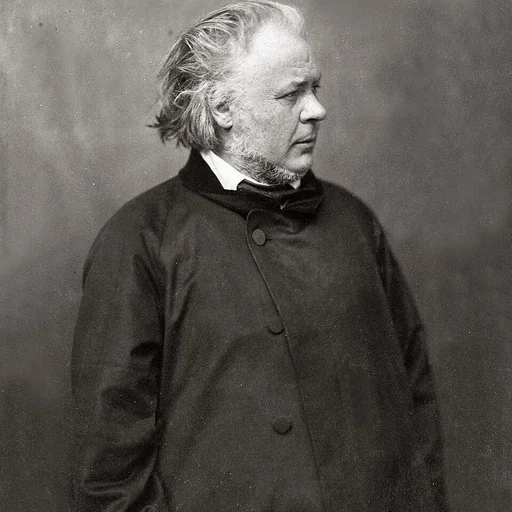
Honoré-Victorin Daumier was a French painter, sculptor, and printmaker, whose many works offer commentary on the social and political life in France, from the Revolution of 1830 to the fall of the Second French Empire in 1870.