Artwork
Décidément on ne peut pas...
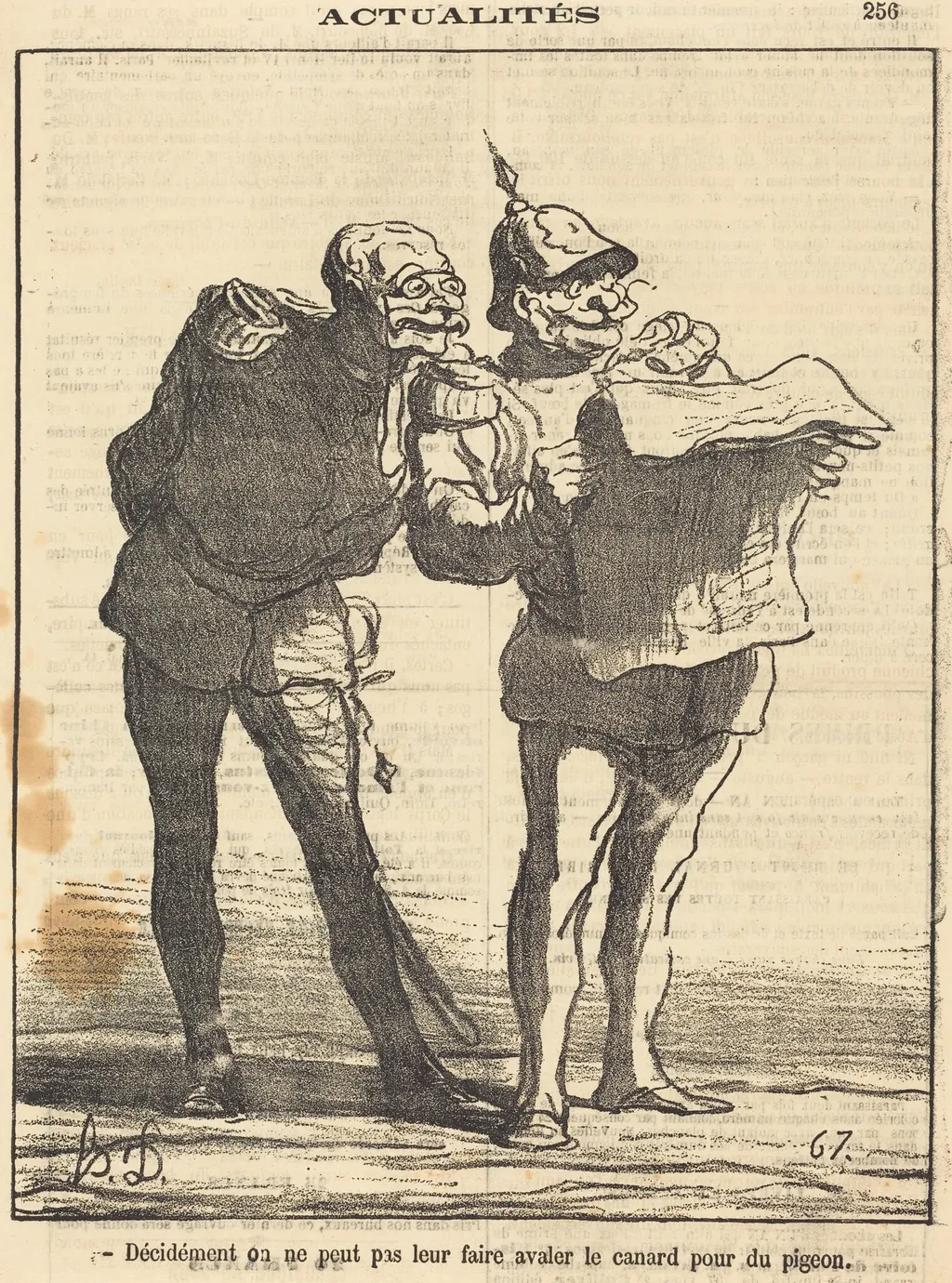
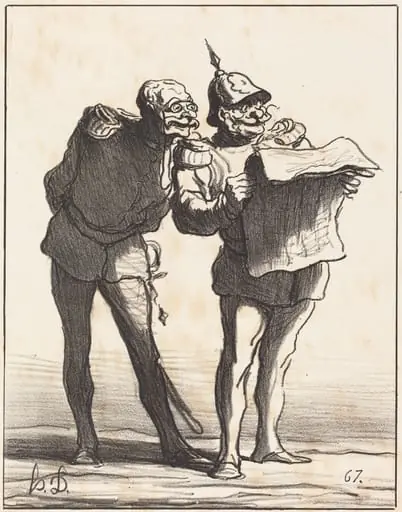
Décidément on ne peut pas... is a print by the Impressionist artist Honoré Daumier. It dates from 1870 and is held in the collection of the National Gallery of Art. Created in 1870, *Décidément on ne peut pas.
About this work
Overview
Executed during the final years of the Second French Empire, the work embodies his commitment to using print media as a vehicle for social critique.
Created in 1870, *Décidément on ne peut pas...* is a gillotype print on newsprint by Honoré Daumier, reflecting his decades-long engagement with political satire. Executed during the final years of the Second French Empire, the work embodies his commitment to using print media as a vehicle for social critique. Its ephemeral material—newsprint—underscores its immediacy and connection to daily public discourse.
Subject & Meaning
The image depicts two men locked in a bizarre, physically strained interaction: one forces the other’s face into a birdcage while the victim writhes, his bony frame exposed. The caption, a punning French joke about substituting a duck for a pigeon, mocks arbitrary authority and absurd legal or bureaucratic logic. The scene’s grotesque humor targets the capriciousness of power, suggesting how those in control impose illogical demands on the powerless.
Technique & Style
Daumier employed the gillotage process, a lithographic technique suited for rapid reproduction in newspapers. He used bold, loose ink lines and dense shading to convey motion and tension, mimicking the urgency of journalistic illustration. The rough, unpolished quality of the drawing enhances its spontaneity, rejecting academic refinement in favor of expressive immediacy and visual wit.
History & Provenance
Produced during a period of political instability preceding the Franco-Prussian War, the print likely appeared in a satirical journal such as *Le Charivari*, where Daumier had published for over thirty years. Its use of newsprint aligns with his practice of reaching a broad, urban readership. Few original impressions survive, as such prints were often discarded after publication, making surviving examples rare.
Context
Daumier’s work emerged from a France deeply divided after the 1830 Revolution and during the collapse of Napoleon III’s regime. His cartoons consistently challenged monarchy, clergy, and the judiciary, often at personal risk—including imprisonment in 1832. This print continues his tradition of using visual metaphor to expose hypocrisy and abuse of power in a society undergoing rapid, turbulent change.
Legacy
Daumier’s satirical prints influenced generations of cartoonists and social commentators, bridging 19th-century political illustration and modern editorial art. His ability to distill complex social tensions into single, visceral images established a model for visual critique. Though created for transient publication, works like this endure as documents of democratic dissent and the power of the drawn line to challenge authority.
Artist & collection
Artist
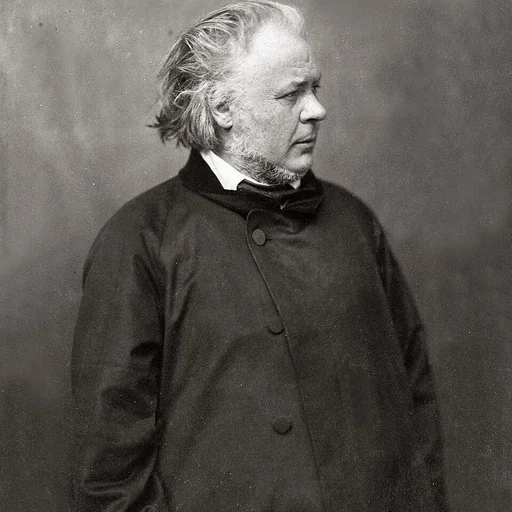
Honoré-Victorin Daumier was a French painter, sculptor, and printmaker, whose many works offer commentary on the social and political life in France, from the Revolution of 1830 to the fall of the Second French Empire in 1870.









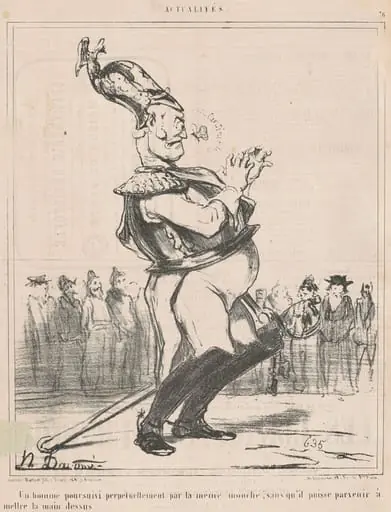 Un homme poursuivi ...
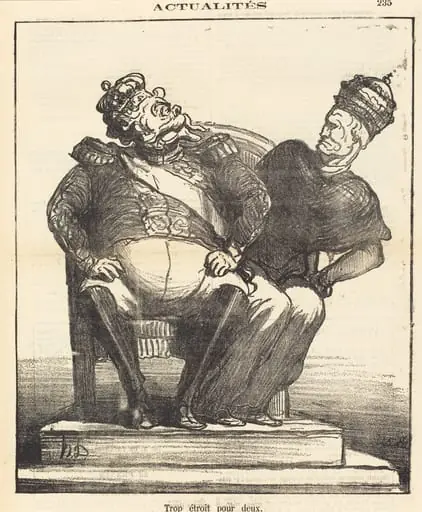 Trop étroit pour deux
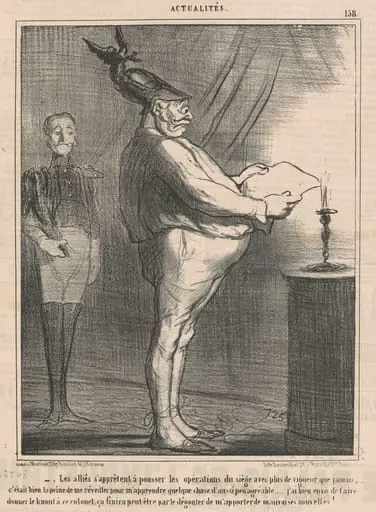 Les alliés s'appretent a pousser les opérations ...
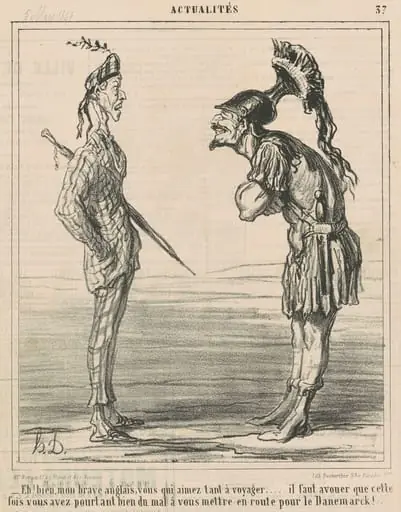 Eh bien! Mon brave anglais ...
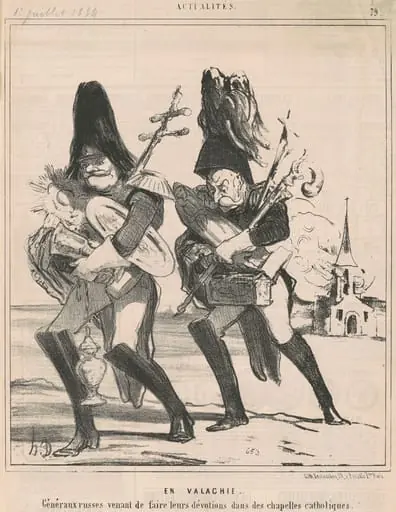 En valachie
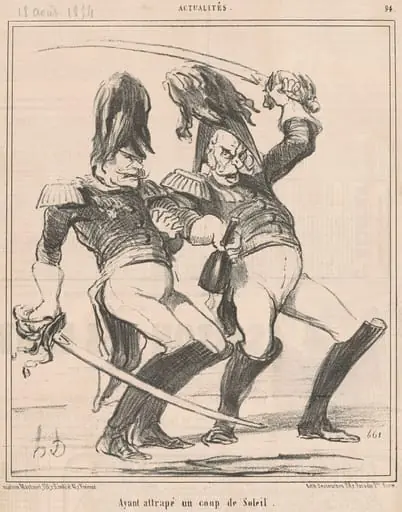 Ayant attrapé un coup de soleil
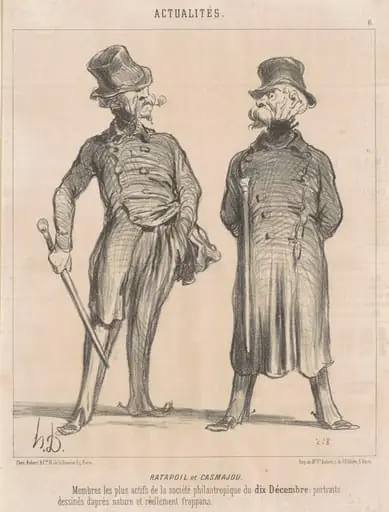 Ratapoil et Casmajou
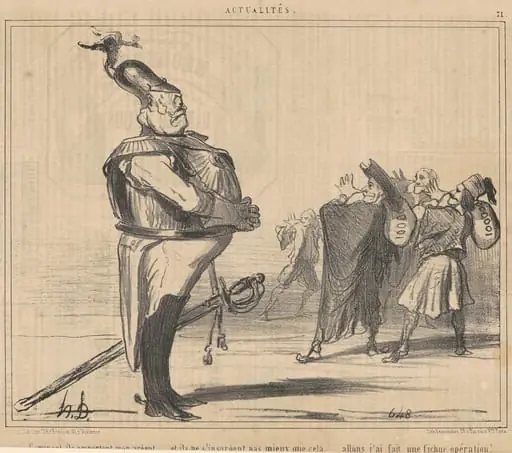 Comment, ils emportent mon argent ...
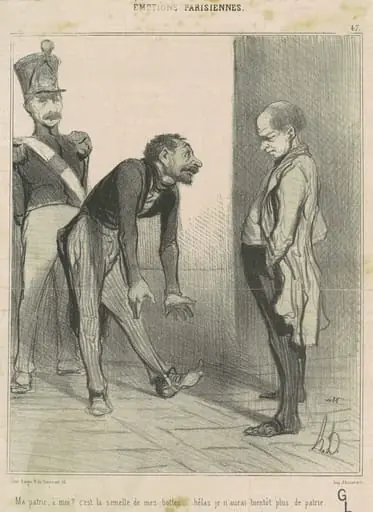 Ma patrie, a moi?...
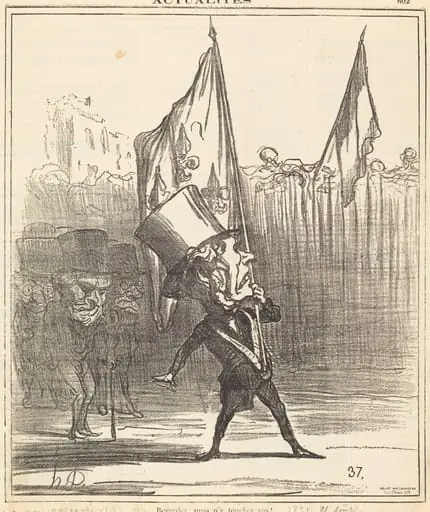 Regardez, mais n'y touchez pas!
 L'empereur Nicolas recevant une députation ...
 Décidément on ne peut pas...