Artwork
Trop étroit pour deux
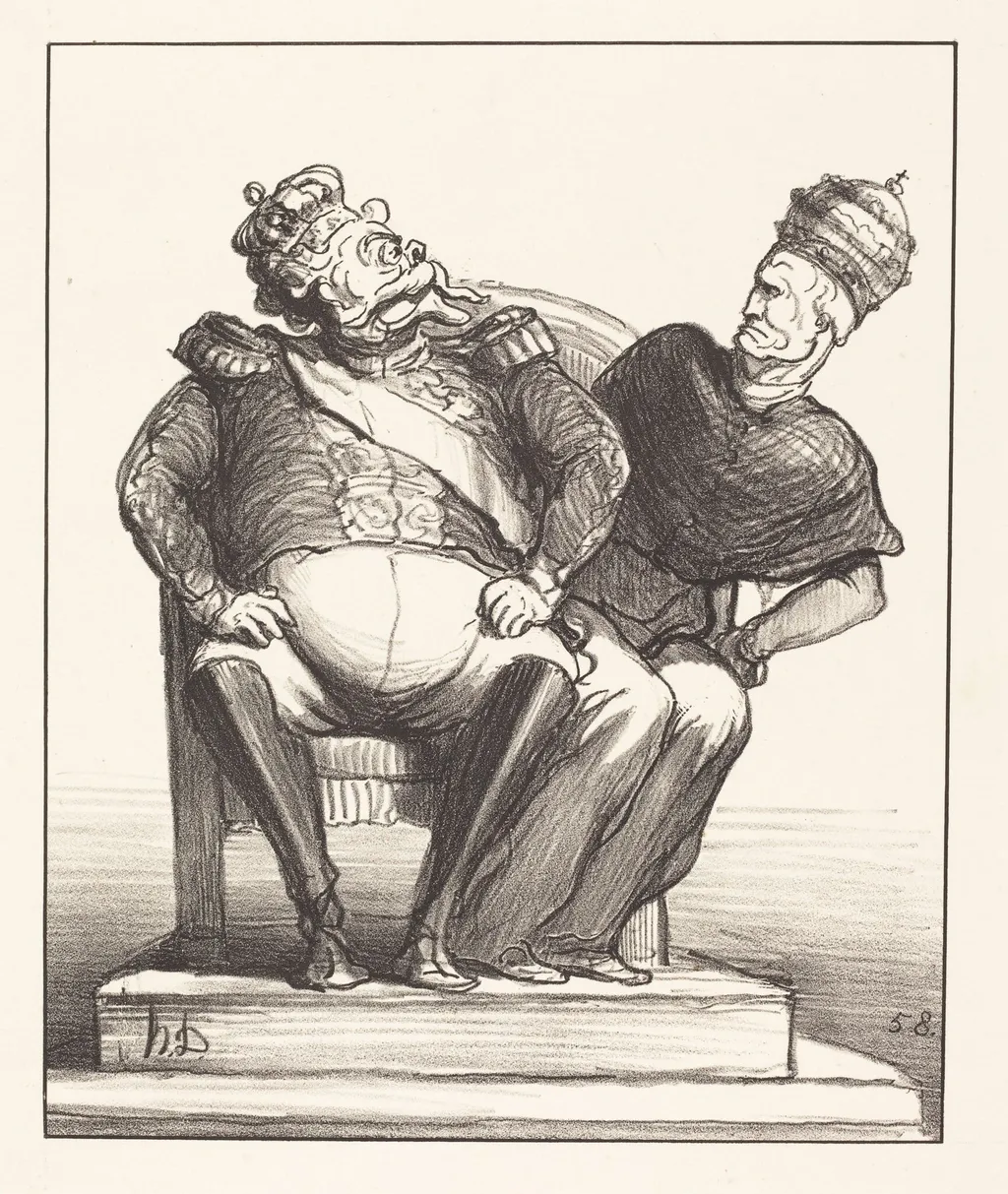
Trop étroit pour deux is an ink print by the Impressionist artist Honoré Daumier. It dates from 1870 and is held in the collection of the National Gallery of Art.
About this work
Overview
Created in 1870, this lithograph by Honoré Daumier presents a cramped scene in which two men share a single chair. The figure on the left is distinguished by a crown and a dark coat, while his companion on the right is dressed in a simple dark shirt and trousers. Set against an unadorned white backdrop, the composition emphasizes the physical tension between the pair.
Subject & Meaning
The awkward posture—one man's legs draped over the other's—conveys a sense of discomfort and forced proximity. Daumier’s choice of a crowned figure alongside an ordinary man invites a satirical reading, hinting at the uneasy relationship between authority and the common citizen during a period of political strain in France.
Technique & Style
Executed in lithography, the work relies on bold, decisive lines and strong chiaroscuro shading to model the figures and suggest depth. The stark contrast between the dark silhouettes and the white background heightens the visual impact, while the minimal setting focuses attention on the interaction of the two characters.
Context
Produced amid the turbulent years leading to the collapse of the Second French Empire, the print reflects Daumier’s ongoing engagement with contemporary social and political issues. As a regular contributor to satirical journals such as La Caricature and Le Charivari, he used imagery like this to critique the ruling class and to voice republican sentiments.
Artist & collection

Artist
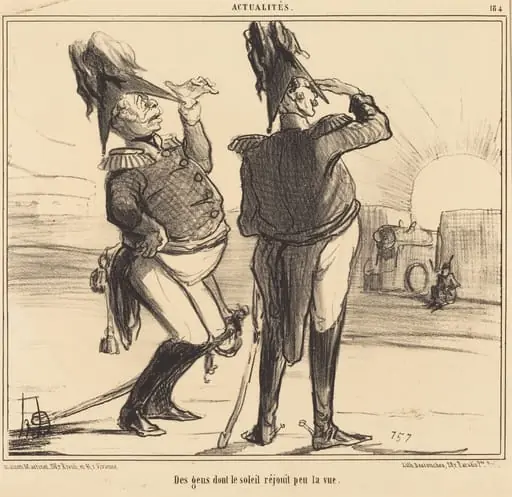
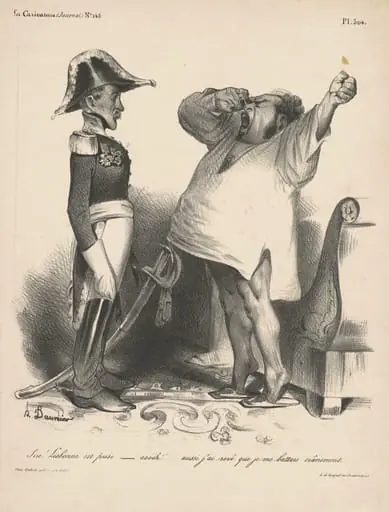
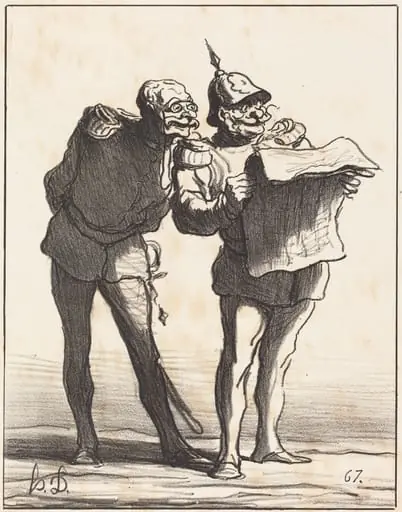
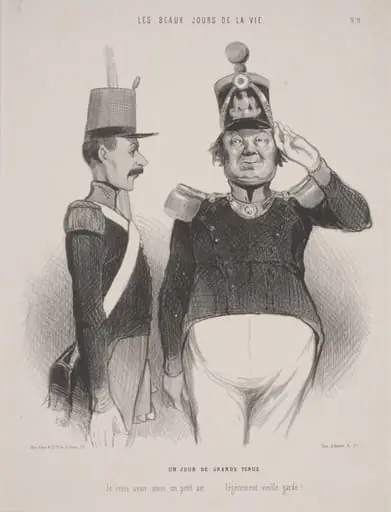
Honoré-Victorin Daumier was a French painter, sculptor, and printmaker, whose many works offer commentary on the social and political life in France, from the Revolution of 1830 to the fall of the Second French Empire in 1870.