Artwork
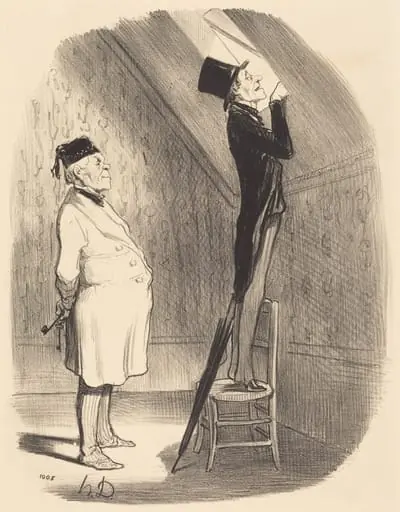
Le Nouveau tapissier de la couronne...
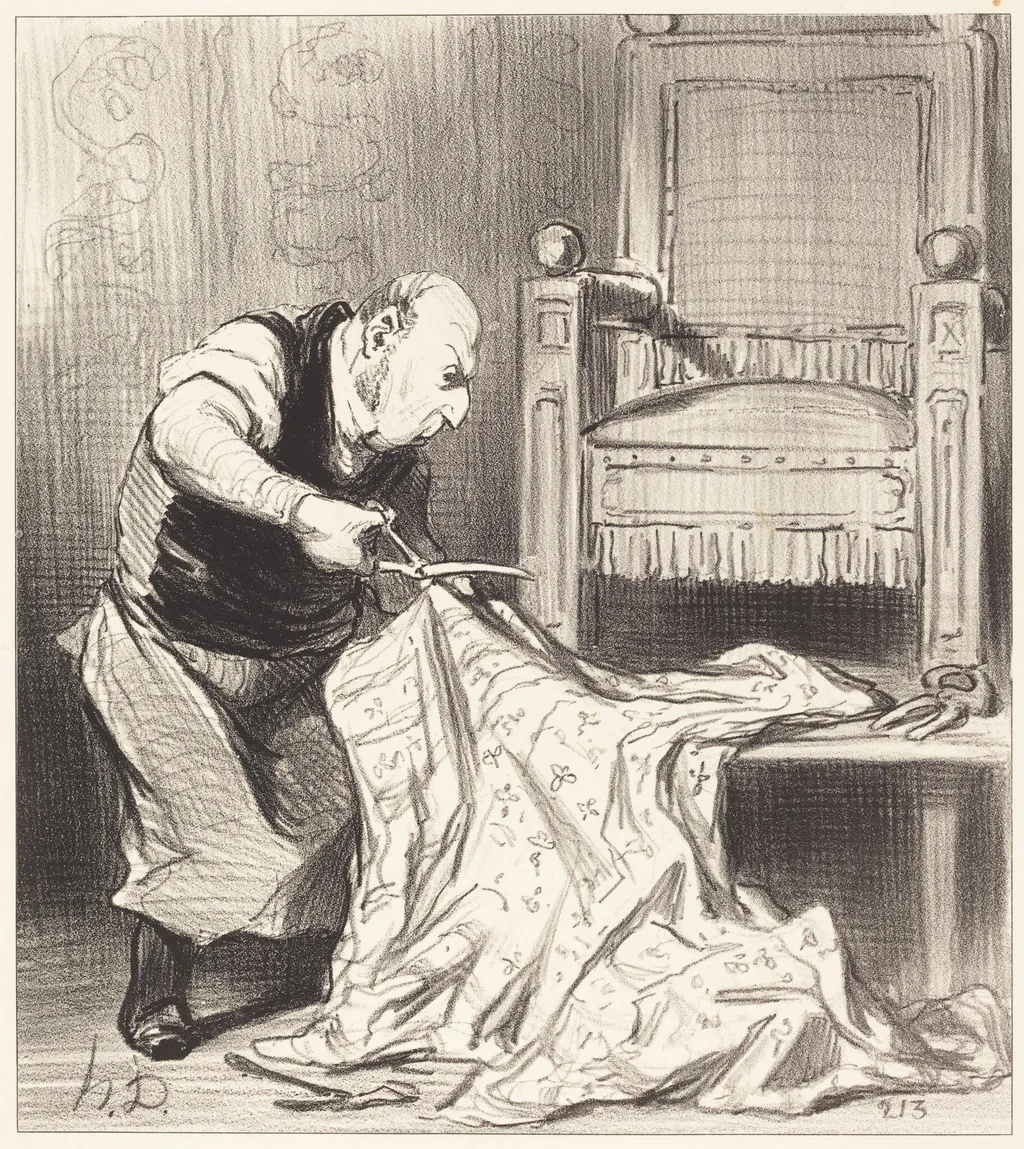
Le Nouveau tapissier de la couronne... is an ink print by the Impressionist artist Honoré Daumier. It dates from 1850 and is held in the collection of the National Gallery of Art.
About this work
Overview
Created in 1850, this lithograph by Honoré Daumier captures a solitary craftsman at work, engaged in the precise act of cutting richly patterned fabric.
Created in 1850, this lithograph by Honoré Daumier captures a solitary craftsman at work, engaged in the precise act of cutting richly patterned fabric. Unlike his more overtly political satires, this piece turns inward, focusing on labor rather than spectacle. It belongs to a series of works that observe everyday trades with quiet dignity, reflecting Daumier’s broader interest in the lives of ordinary people during a time of shifting social structures in France.
Subject & Meaning
The figure, a tailor or upholsterer, is depicted in deep concentration, his hands occupied with the meticulous task of shaping fabric. The absence of royal insignia or ceremonial context subverts the title’s reference to the crown, suggesting irony or quiet resistance. Rather than glorifying nobility, the image elevates the artisan’s skill, implying that true value lies in labor, not title. The work quietly critiques class hierarchies by centering the unseen worker.
Technique & Style
Daumier employed lithography to achieve subtle tonal gradations, using ink washes and hatching to model form and texture. The fabric’s intricate patterns are rendered with delicate lines, while the man’s clothing and the chair’s contours are suggested through bold, simplified shadows. The plain background eliminates distraction, focusing attention on the interplay of light, material, and gesture. The technique balances precision with expressive economy, characteristic of Daumier’s graphic style.
History & Provenance
Produced during the early years of the Second Republic, the print likely circulated as a standalone image or in a periodical, though its exact publication history is unclear. Daumier had recently faced legal repercussions for his political caricatures, leading him to shift toward more oblique social commentary. This work may have been part of a quieter phase in his career, where he explored themes of craftsmanship and dignity away from direct satire.
Context
In 1850s France, industrialization was transforming traditional crafts, and the monarchy’s lingering influence clashed with republican ideals. Daumier, a committed democrat, often depicted laborers as silent witnesses to societal change. This image aligns with a growing cultural interest in the dignity of work, even as mechanization threatened artisanal trades. The quiet intensity of the scene mirrors broader anxieties about identity, value, and labor in a rapidly modernizing world.
Legacy
Though less famous than Daumier’s political cartoons, this lithograph exemplifies his ability to convey social observation through understated imagery. It influenced later realist artists who sought to portray labor without sentimentality. The work remains a quiet testament to his belief that the ordinary gestures of daily life held profound significance, offering a counterpoint to the grand narratives of power and spectacle that dominated his era.
Artist & collection

Artist
Honoré-Victorin Daumier was a French painter, sculptor, and printmaker, whose many works offer commentary on the social and political life in France, from the Revolution of 1830 to the fall of the Second French Empire in 1870.