Artwork
Oh! quant a la vue, vous ne trouverez pas mieux qu'ici!
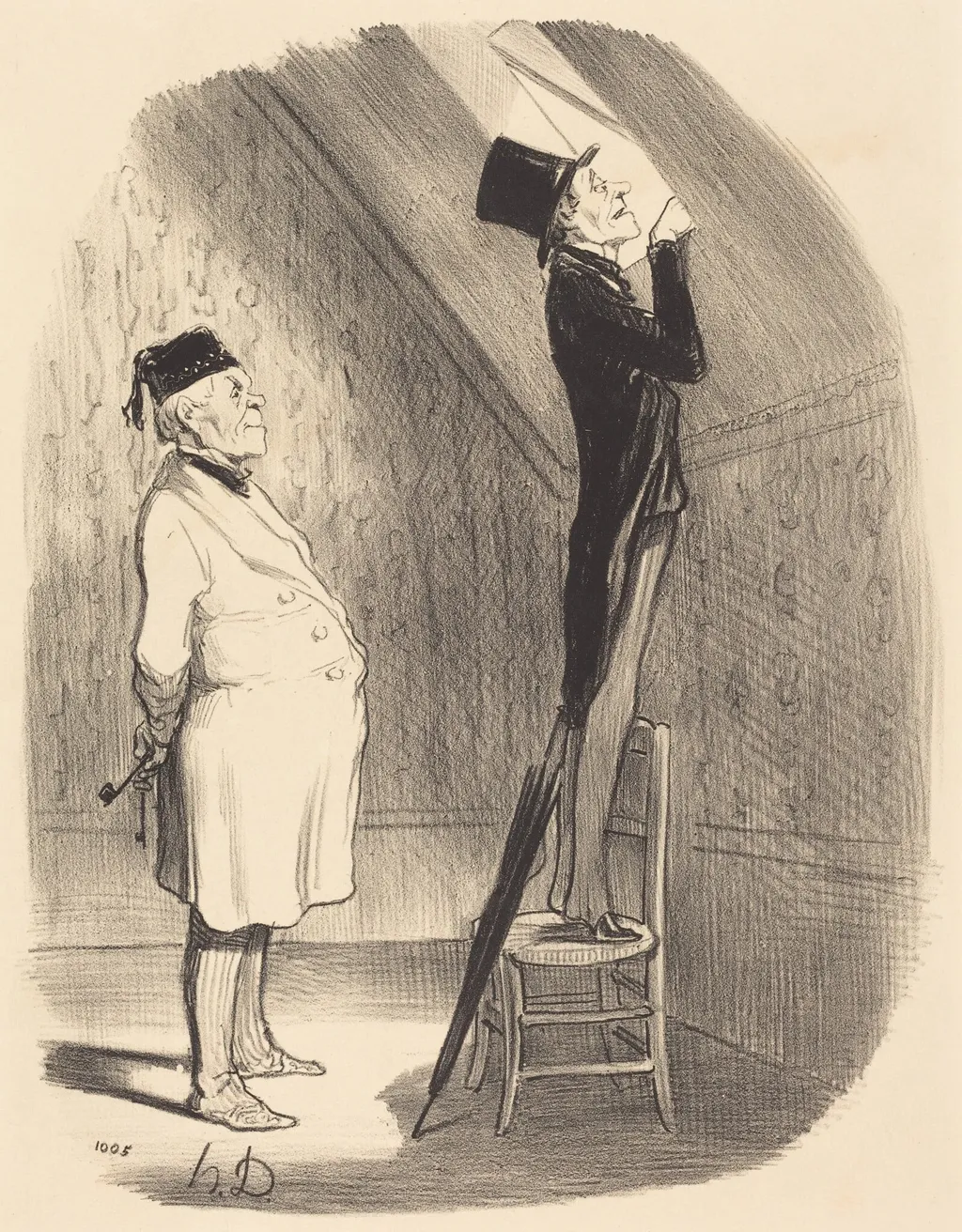
Oh! quant a la vue, vous ne trouverez pas mieux qu'ici! is an ink print by the Romanticist artist Honoré Daumier. It dates from 1847 and is held in the collection of the National Gallery of Art.
About this work
Overview
The title, ironically praising a view, contrasts with the dim, unremarkable interior depicted, inviting skepticism toward superficial claims of grandeur.
Created in 1847, this lithograph by Honoré Daumier is one of many satirical works produced during his tenure with French illustrated newspapers. It captures a quiet, almost absurd moment of domestic labor, framed as a commentary on misplaced pride or illusion. The title, ironically praising a view, contrasts with the dim, unremarkable interior depicted, inviting skepticism toward superficial claims of grandeur.
Subject & Meaning
Two men occupy a modest, shadowed room: one stands on a chair, adjusting a tall lantern, while the other observes with folded arms. The older figure, clad in a loose coat and cap, leans on a cane, suggesting age and perhaps frailty. The scene mocks the pretense of importance—elevating a simple act of lighting a lamp as if it were a grand achievement—reflecting Daumier’s broader critique of bourgeois self-importance and misplaced authority.
Technique & Style
Daumier employed rapid, expressive linework typical of lithographic sketching, allowing movement and emotion to emerge through fluid, unfinished strokes. The uneven lighting is rendered through stark contrasts of ink wash and bare paper, enhancing the sense of depth and mood. Rather than polished detail, the work relies on suggestion—shadows stretch unnaturally, figures are simplified, and the composition feels spontaneous, as if captured mid-action.
History & Provenance
Produced during Daumier’s most active period as a political caricaturist, this print likely appeared in Le Charivari, where his satires regularly targeted social pretensions. Though not tied to a specific political event, it aligns with his broader body of work from the 1840s, a time of rising tensions before the 1848 revolution. Its survival in public collections reflects its recognition as a representative example of his graphic style and social observation.
Context
In mid-19th century France, illustrated periodicals provided a rare platform for visual criticism of power. Daumier’s prints operated within this space, using humor and irony to expose the gap between appearance and reality among the middle and upper classes. This work reflects a cultural moment when satire was both popular and politically charged, offering a quiet but persistent challenge to societal norms through everyday scenes.
Legacy
Daumier’s lithographs, including this one, influenced later generations of realist and modernist artists who valued expressive line and social insight over academic finish. His ability to convey complex human behavior with minimal detail helped redefine printmaking as a vehicle for psychological and societal commentary. Today, his works remain studied for their economy of form and unflinching observation of ordinary life.
Artist & collection
Artist
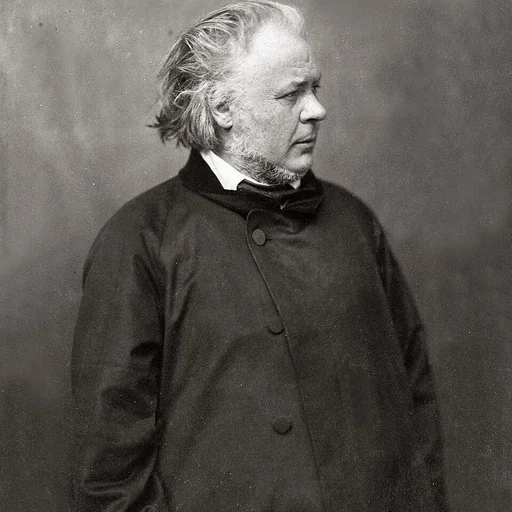
Honoré-Victorin Daumier was a French painter, sculptor, and printmaker, whose many works offer commentary on the social and political life in France, from the Revolution of 1830 to the fall of the Second French Empire in 1870.

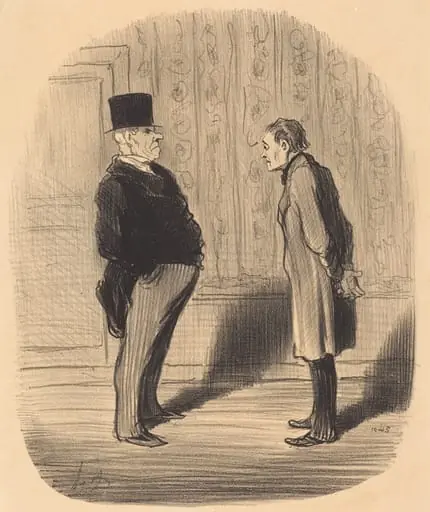 Eh! bien monsieur et mes trois termes...
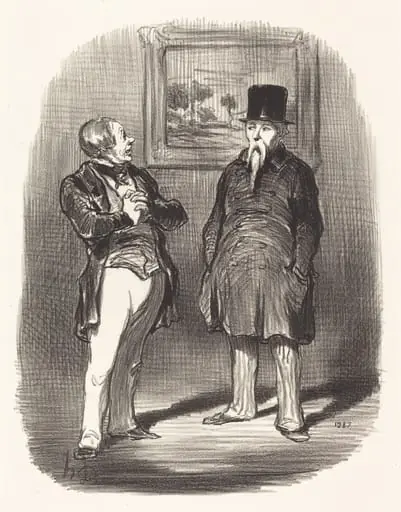 Tiens... je ne te reconnaissais pas...
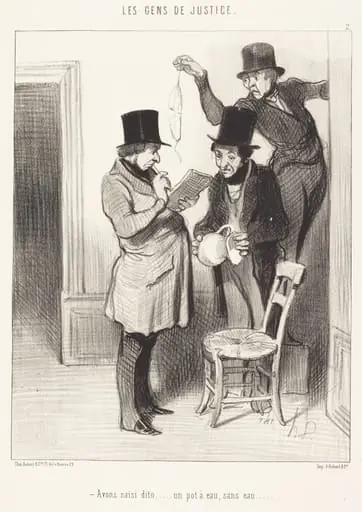 Avons saisi dito... un pot a eau, sans eau
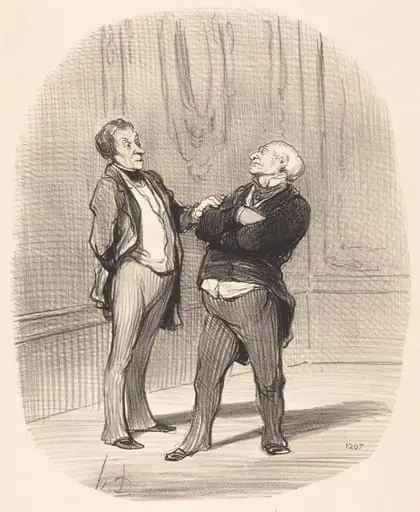 Il y a la guerre... les loyers vont... diminuer...
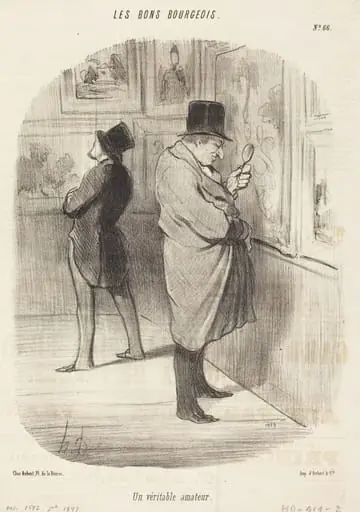 Un Veritable amateur
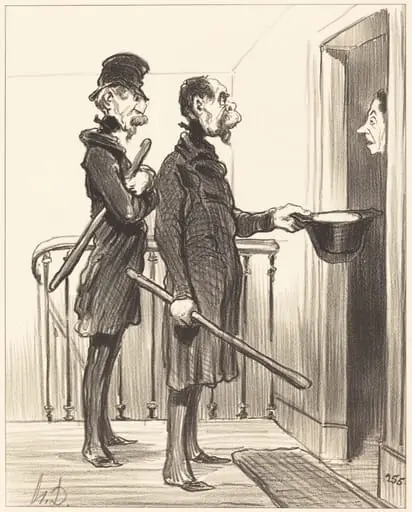 La Souscription Napoléonienne
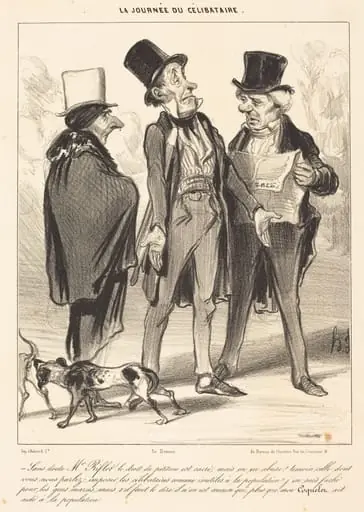 Sans doute M. Riflot le droit...
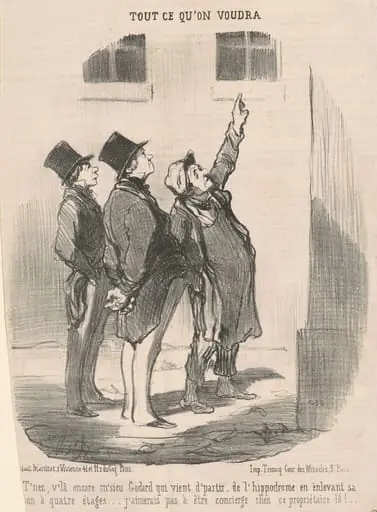 T'nez, v'la encore M'sieu Godard ...
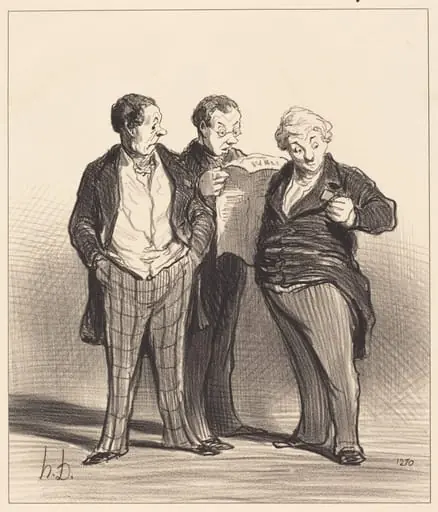 L'Interdiction du port des décorations