Artwork
Le Rajeunissement du Constitutionnel
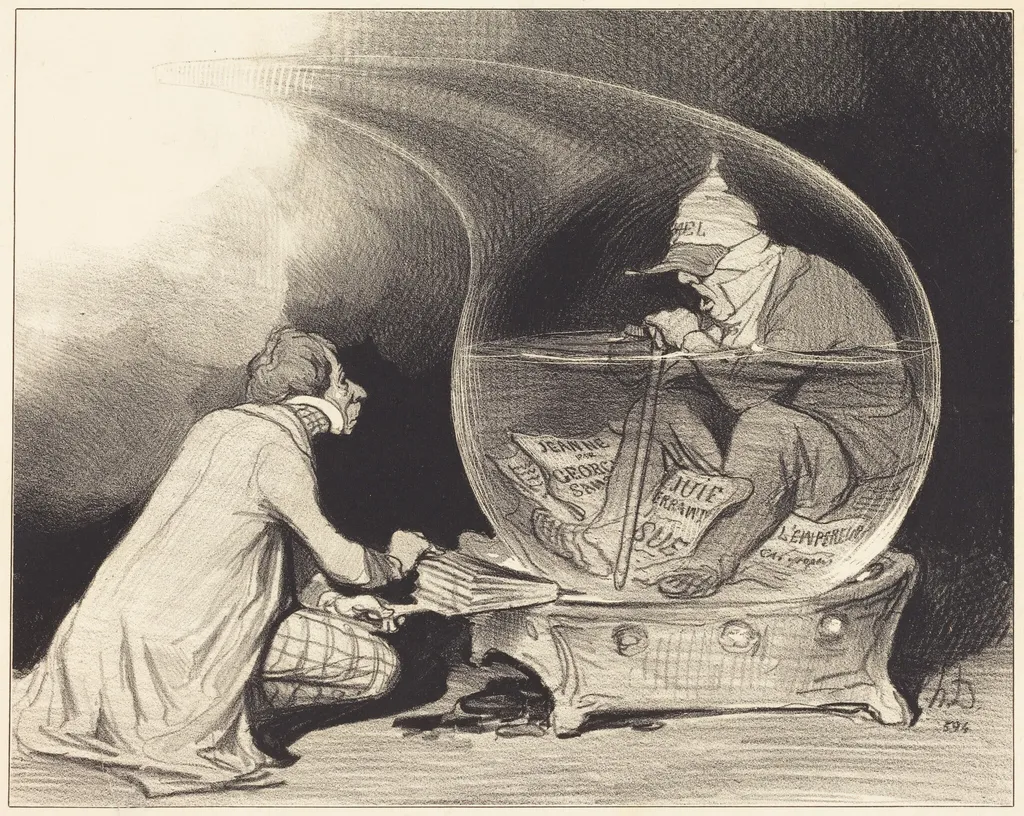
Le Rajeunissement du Constitutionnel is an ink print by the Romanticist artist Honoré Daumier. It dates from 1844 and is held in the collection of the National Gallery of Art.
About this work
Overview
Daumier, known for his incisive prints in satirical journals, used lithography to critique power with wit and visual economy.
Created in 1844, this lithograph by Honoré Daumier is a political satire targeting the French press under the July Monarchy. It depicts a figure submerged in a glass vessel, writing intently under a focused light. The image functions as a metaphor for the constrained yet persistent voice of journalism, operating under state pressure. Daumier, known for his incisive prints in satirical journals, used lithography to critique power with wit and visual economy.
Subject & Meaning
The central figure, wearing a pointed hat and immersed in water, symbolizes a journalist or editor of the newspaper *Le Constitutionnel*, which was perceived as overly compliant with the regime. The glass bowl suggests both isolation and transparency—his work is visible but suffocating. The act of writing amid liquid implies an unnatural, almost absurd struggle to produce news under censorship, reflecting public skepticism toward state-aligned media.
Technique & Style
Daumier employed lithography to achieve bold contrasts and fluid line work, characteristic of his graphic style. The dark background and stark spotlight isolate the figure, heightening the theatricality of the scene. The water’s ripple is rendered with minimal strokes, yet conveys movement and tension. His use of chiaroscuro directs attention to the writer’s concentration, emphasizing the psychological weight of his labor rather than physical realism.
History & Provenance
The print was published in 1844 in *Le Charivari*, a widely circulated satirical weekly where Daumier regularly contributed. It emerged during a period of tightening press laws under King Louis-Philippe, when journalists faced fines and imprisonment. Though Daumier had been jailed in 1832 for earlier caricatures, this work continued his campaign against political hypocrisy, circulating among middle-class readers who shared his republican sympathies.
Context
France in the 1840s was marked by political instability following the 1830 Revolution. The July Monarchy maintained power through controlled liberal reforms, while the press became a battleground for influence. Daumier’s prints responded to this climate, using allegory to bypass censorship. *Le Rajeunissement du Constitutionnel* reflects broader anxieties about media manipulation and the erosion of journalistic independence under a regime that tolerated criticism only when it was contained.
Legacy
Daumier’s lithographs, including this one, established a precedent for political illustration in modern journalism. His ability to distill complex social tensions into single, potent images influenced later satirists and cartoonists across Europe and America. Though not widely exhibited in his lifetime, his work gained recognition in the 20th century as a vital record of 19th-century French political culture and the enduring struggle for free expression.
Artist & collection
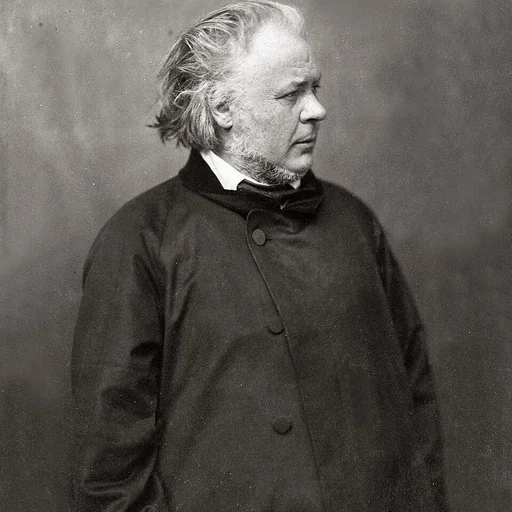
Artist
Honoré-Victorin Daumier was a French painter, sculptor, and printmaker, whose many works offer commentary on the social and political life in France, from the Revolution of 1830 to the fall of the Second French Empire in 1870.