Artwork
Un Matamore portant une... botte...
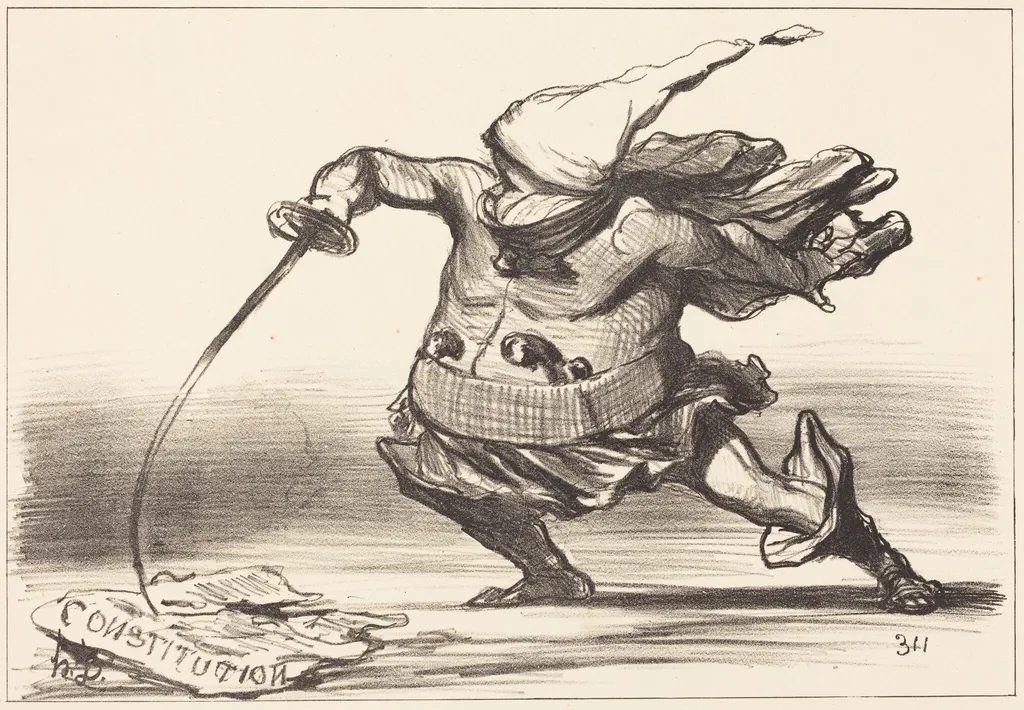
Un Matamore portant une... botte... is an ink print by the Impressionist artist Honoré Daumier. It dates from 1851 and is held in the collection of the National Gallery of Art.
About this work
Overview
Created in 1851, this lithographic print by Honoré Daumier presents a flamboyantly dressed figure caught in a dynamic pose.
Created in 1851, this lithographic print by Honoré Daumier presents a flamboyantly dressed figure caught in a dynamic pose. The composition shows the man lunging forward with a sword, his hat askew, while a tiny rolled document labeled “Constitution” lies beneath his foot, suggesting disdain for legal authority. The work exemplifies Daumier’s characteristic use of satire to critique pretentious displays of power.
Subject & Meaning
The central character is a “matamore,” a term for a boastful yet cowardly pretender to bravery. By exaggerating the costume and posture, Daumier ridicules those who adopt grandiose gestures of heroism while lacking genuine resolve. The crushed Constitution paper reinforces the notion that such figures trample over genuine civic principles for show.
Technique & Style
Executed in lithography, the print employs bold, fluid lines and stark contrasts typical of Daumier’s graphic approach. The medium allowed rapid production for periodicals, enabling sharp, immediate commentary. The exaggerated anatomy and energetic brush‑like strokes heighten the caricature, emphasizing movement and mockery over realistic detail.
History & Provenance
Daumier produced this image during the July Monarchy, a period marked by political tension that later extended into the Second Empire. The lithograph appeared in satirical journals such as *La Caricature* and *Le Charivari*, venues through which the artist regularly disseminated his critiques of the monarchy, clergy, and other authorities.
Context
Mid‑nineteenth‑century France experienced frequent shifts in governance, prompting artists like Daumier to adopt humor as a vehicle for dissent. The print reflects broader societal skepticism toward ostentatious displays of power, aligning with contemporary caricatures that exposed the gap between public posturing and actual political substance.
Legacy
While not among Daumier’s most widely reproduced works, this lithograph illustrates his enduring commitment to social commentary through accessible visual satire. It continues to be referenced in studies of political caricature, demonstrating how lithography served as a potent tool for challenging authority in the public sphere.
Artist & collection
Artist
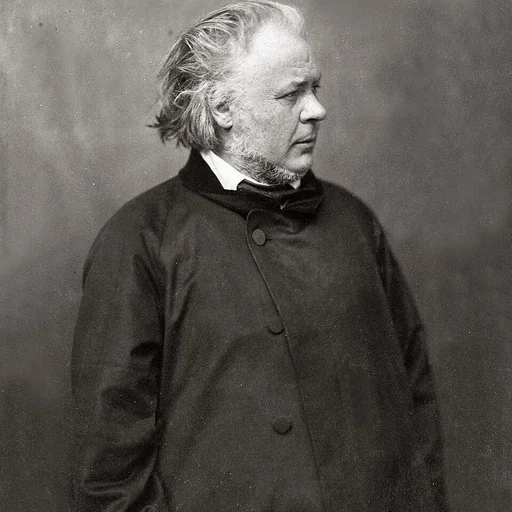
Honoré-Victorin Daumier was a French painter, sculptor, and printmaker, whose many works offer commentary on the social and political life in France, from the Revolution of 1830 to the fall of the Second French Empire in 1870.

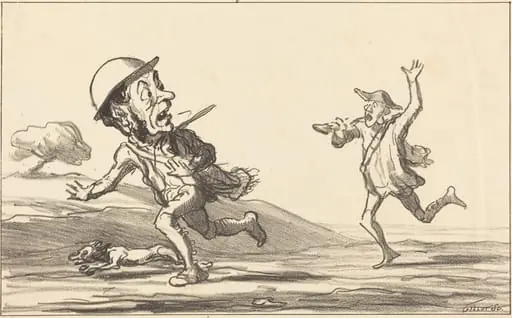 Allons bon!... il parait... chasse réservée
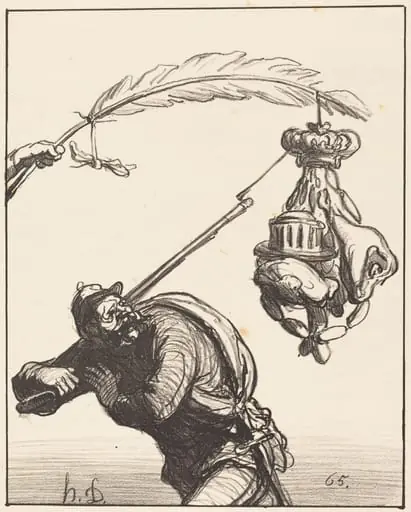 La paix a tout prix
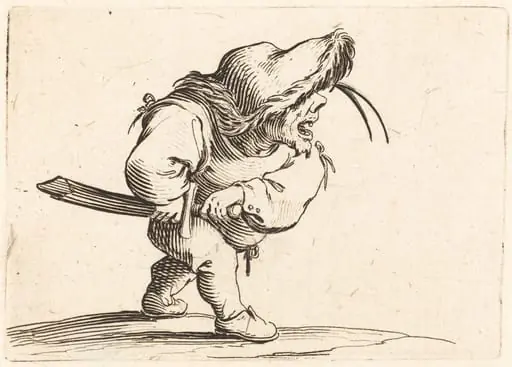 Man Preparing to Draw his Sword
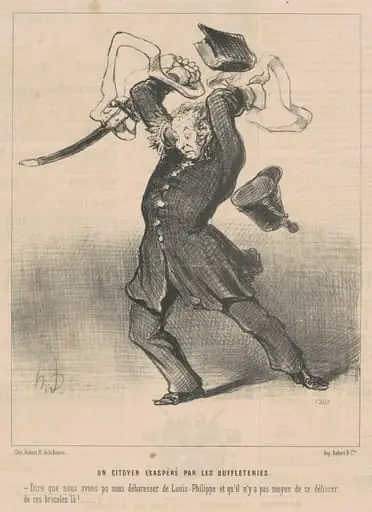 Un citoyen exaspéré par les buffleteries
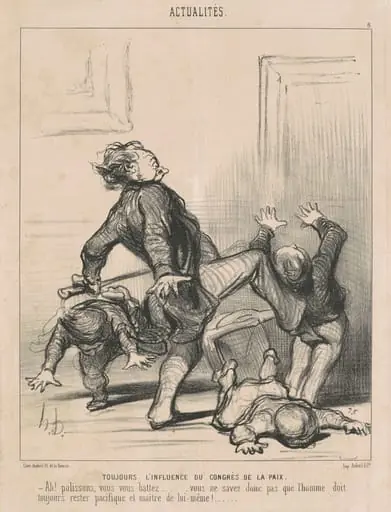 Toujours l'influence du congres de la paix ...
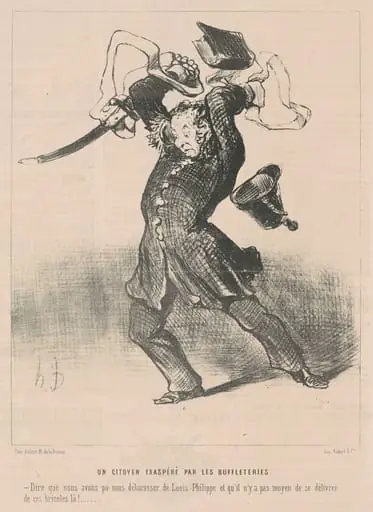 Un citoyen exaspéré par les buffleteries
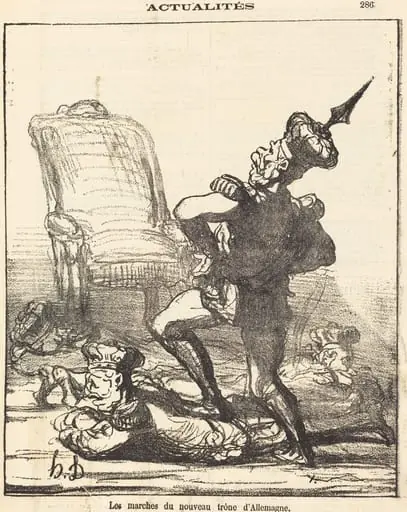 Les marches du nouveau trone d'Allemagne
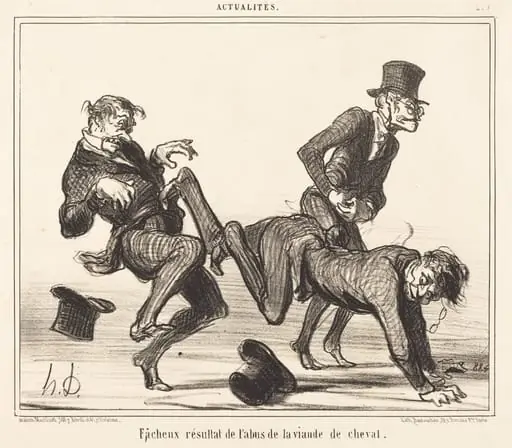 Facheux résultat... de la viande de cheval
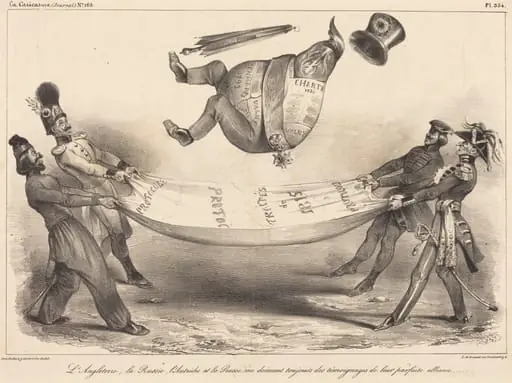 L'Angleterre, la Russie, l'Autriche...leur parfaite alliance
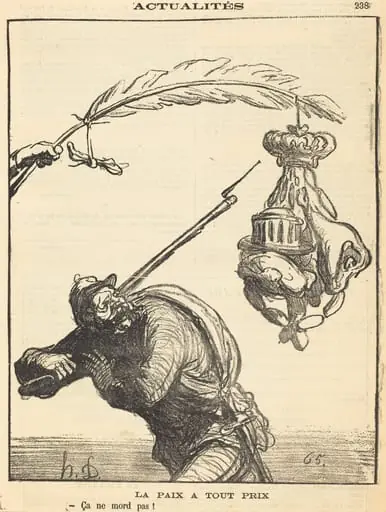 La paix a tout prix
 Le Constitutionnel contemplant l'horizon politique
 Le Portier en tournées de visites...