Artwork
Clytemnestre poussée par mimi Véron...
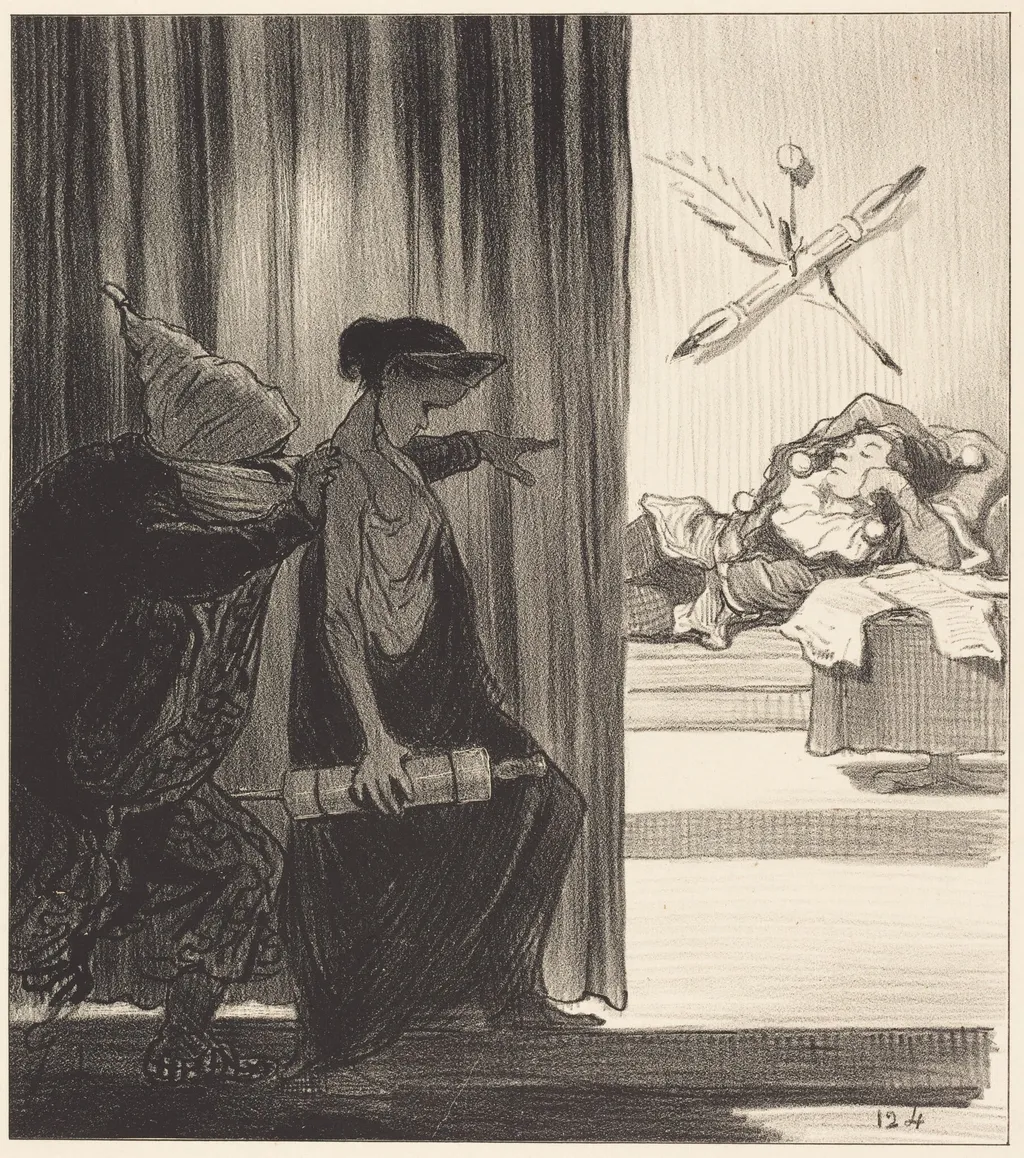
Clytemnestre poussée par mimi Véron... is an ink print by the Impressionist artist Honoré Daumier. It dates from 1850 and is held in the collection of the National Gallery of Art.
About this work
Overview
The right panel shows a more intimate moment: a bird hovers above a bed where a woman lies tangled in sheets, one arm reaching upward.
Created in 1850, this lithograph by Honoré Daumier presents a diptych of contrasting scenes. The left panel depicts a formally dressed woman, seated rigidly with a fan, framed by heavy curtains that suggest a theatrical set. The right panel shows a more intimate moment: a bird hovers above a bed where a woman lies tangled in sheets, one arm reaching upward. The work exemplifies Daumier’s characteristic blend of satire and observation.
Subject & Meaning
The juxtaposition of a staged, aristocratic figure with a candid, domestic tableau invites a comparison between public performance and private reality. By placing a stylized, perhaps costume‑like woman beside a vulnerable, disheveled one, Daumier hints at the superficiality of social pretensions and the underlying human frailty that such façades conceal, a theme recurrent in his socially critical oeuvre.
Technique & Style
Executed as a lithograph, the print employs the medium’s capacity for fine line work and tonal variation. Daumier’s hand is evident in the crisp delineation of the curtain’s folds and the delicate rendering of the bird’s wings, while the softer, more fluid strokes in the right panel convey the immediacy of a fleeting, private scene. The contrast in texture reinforces the thematic dichotomy.
Context
During the mid‑nineteenth century, Daumier contributed regularly to satirical journals such as La Caricature and Le Charivari, using his art to critique the monarchy, aristocracy, and clergy from a republican perspective. This lithograph fits within that broader program, employing humor and visual irony to comment on the social hierarchies and moral pretensions of contemporary French society.
Legacy
While not among Daumier’s most widely reproduced images, the work illustrates his skill in merging narrative contrast with political commentary. It remains a useful example of how lithography enabled rapid dissemination of critical viewpoints, and it continues to be studied for its insight into the interplay between public spectacle and private vulnerability in nineteenth‑century French culture.
Artist & collection

Artist
Honoré-Victorin Daumier was a French painter, sculptor, and printmaker, whose many works offer commentary on the social and political life in France, from the Revolution of 1830 to the fall of the Second French Empire in 1870.









 Actresses in Their Dressing Rooms
 Oedipe chez le Sphinx
 La Femme a barbe
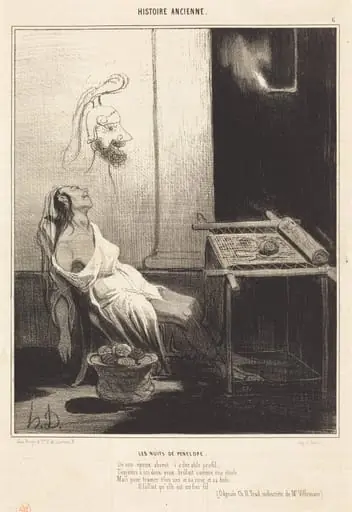 Les Nuits de Pénélope
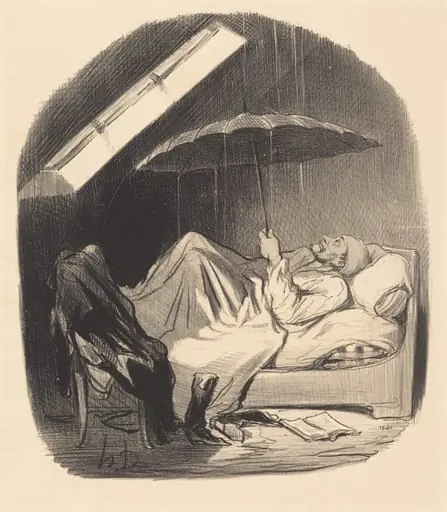 Brigand de propriétaire...
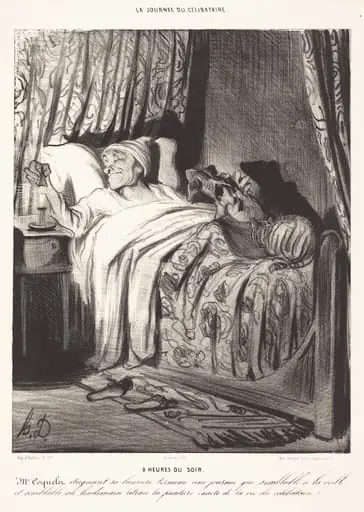 9 heures du soir
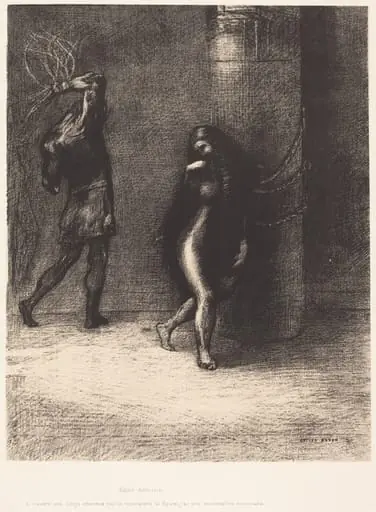 Saint-Antoine...A travers ses longs cheveux qui lui couvraient la figure, j'ai cru reconnaitre Ammonaria (Saint Anthony: "Beneathe her long hair , which covered her face, I thought I recognized Ammonaria)
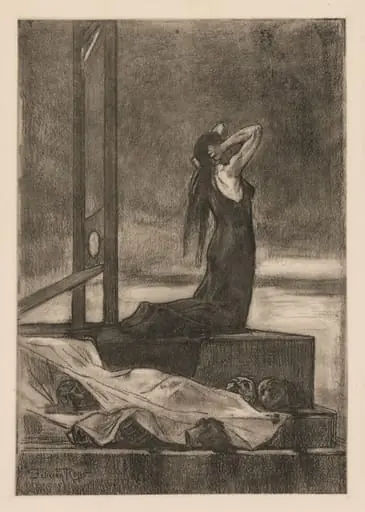 Capital Punishment: The Pain of Death (Todesstrafe: La peine de mort)
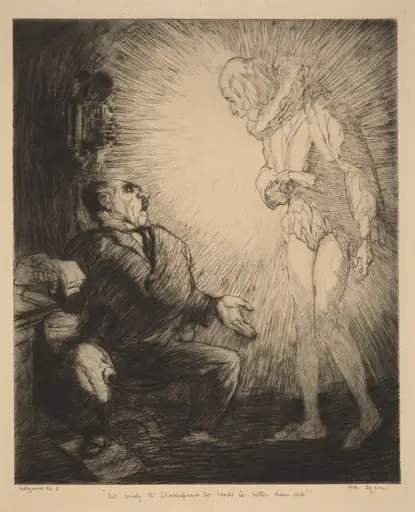 "But surely, Mr. Shakespeare, two heads is better than one"
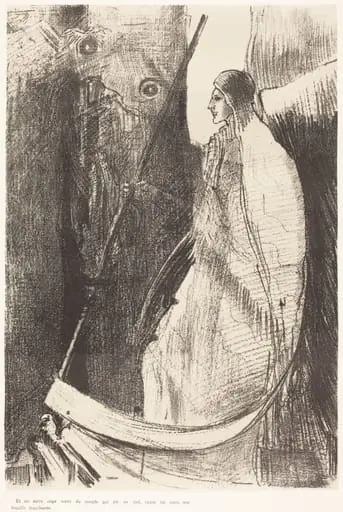 Et un autre ange sortit du temple qui est au ciel, ayant lui aussi une faucille tranchante (And another angel came out of the temple which is in heaven, and he also having a sharp sickle)
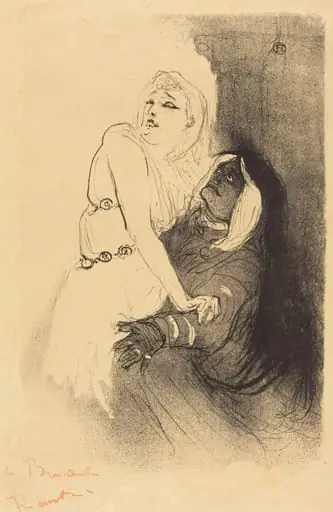 At the Renaissance: Sarah Bernhardt in "Phedre" (A la Renaissance: Sarah Bernhardt dans "Phèdre")
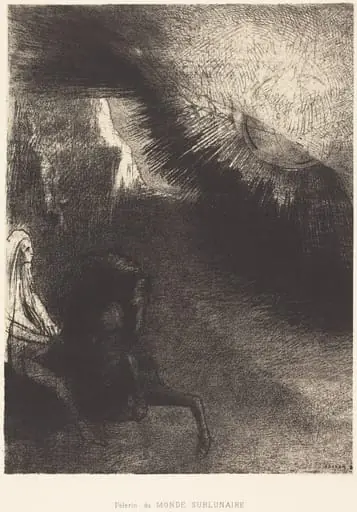 Pélerin du monde sublunaire (Pilgrim of the sublunary world)