Artwork
Le regulateur
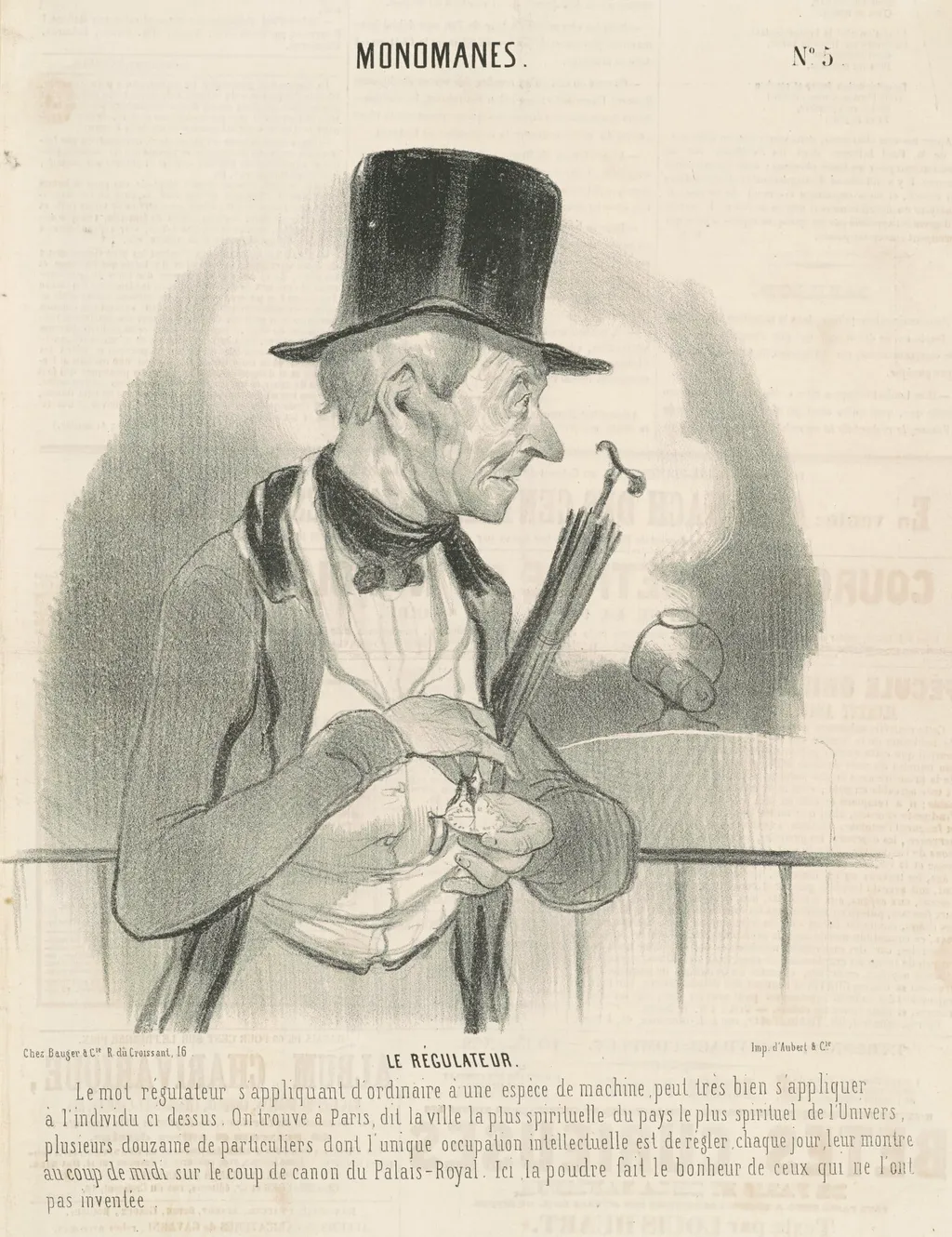
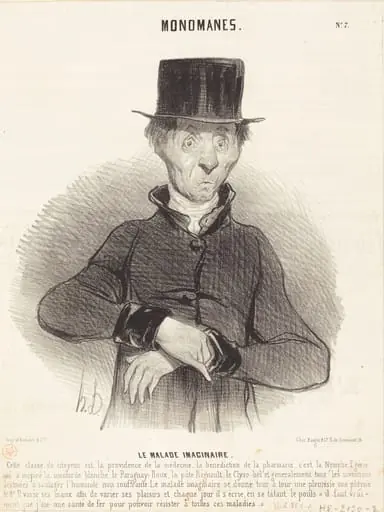
Le regulateur is an ink print by the Romanticist artist Honoré Daumier. It dates from 1841 and is held in the collection of the National Gallery of Art.
About this work
Overview
Created in 1841, this lithograph by Honoré Daumier presents a solitary figure seen in profile. The gentleman is dressed in formal attire, complete with a top hat, an umbrella tucked under his arm, and a pocket watch that he is adjusting. The composition captures a moment of meticulous self‑monitoring, reflecting the artist’s interest in the rhythms of everyday life.
Subject & Meaning
The work portrays a well‑dressed man preoccupied with checking the time, a visual commentary on the growing preoccupation with punctuality and social order in mid‑nineteenth‑century France. By emphasizing the act of consulting a watch, Daumier hints at the broader cultural pressure to conform to schedules and the authority such temporal discipline imposes on individuals.
Technique & Style
Executed in lithography, the image relies on crisp, decisive lines that delineate the figure’s silhouette and accessories with a satirical edge. Daumier’s handling of contrast and detail—sharp outlines for the hat and watch against a relatively plain background—creates a sense of rigidity, underscoring the mechanical nature of the subject’s behavior.
Context
Produced during a period when urban life in Paris was increasingly regulated by railway timetables and industrial work patterns, the print reflects contemporary anxieties about the loss of personal spontaneity. Daumian’s broader oeuvre frequently lampooned the bourgeois class, and this piece fits within his series of social observations that critique the era’s emerging clock‑driven mentality.
Artist & collection
Artist
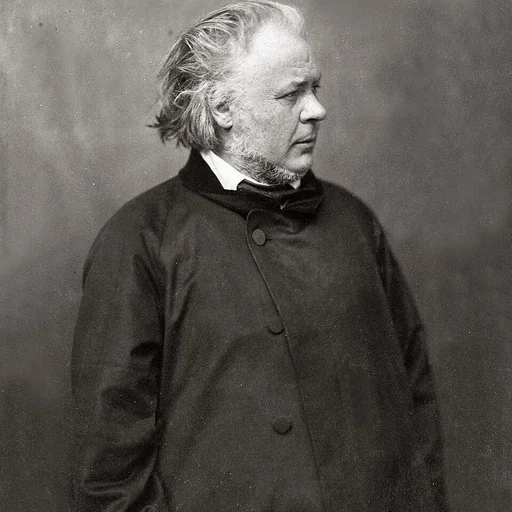
Honoré-Victorin Daumier was a French painter, sculptor, and printmaker, whose many works offer commentary on the social and political life in France, from the Revolution of 1830 to the fall of the Second French Empire in 1870.