Artwork
Le Crocodile
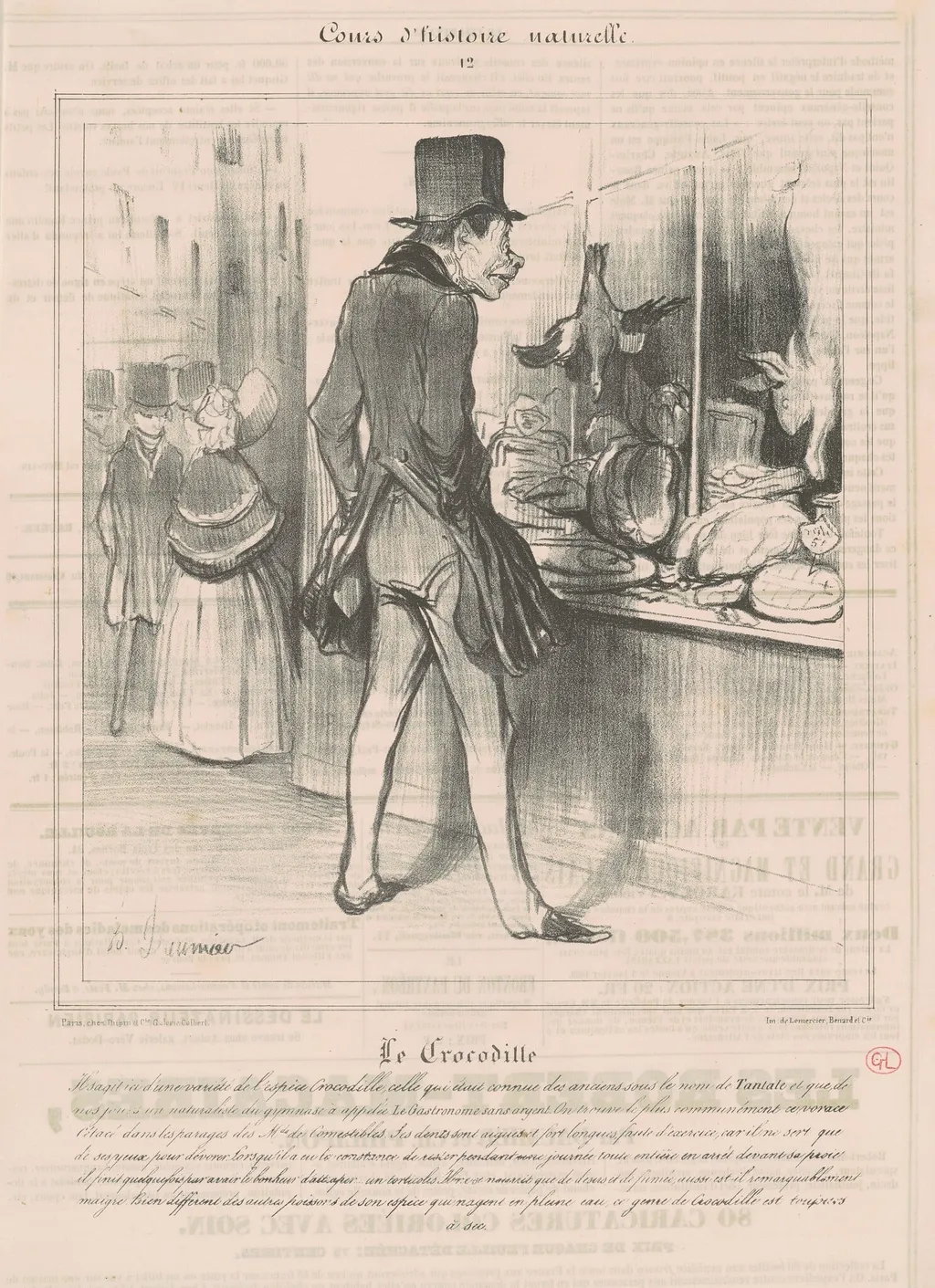
Le Crocodile is an ink print by the Romanticist artist Honoré Daumier. It dates from 1838 and is held in the collection of the National Gallery of Art.
About this work
Daumier’s 1838 lithograph shows a man in a top hat staring into a shop window filled with cuts of meat and baskets of produce.
Daumier’s 1838 lithograph shows a man in a top hat staring into a shop window filled with cuts of meat and baskets of produce. The strange mix—elegant hat, raw meat—feels off, like he’s out of place. His blank face makes you wonder: what is he really looking at? Is it food? Or something else?
Daumier made this using lithography, a printing method where grease and water repel each other on stone. It lets artists draw fast and loose, then print many copies cheaply. This one looks rough but full of life.
Want to see how he did it? Look up lithography.
Overview
Le Crocodile is a lithograph created by Honoré Daumier in 1838, exemplifying his work in printmaking.
Subject & Meaning
The print depicts a top-hatted man gazing into a shop window displaying an assortment of meats and produce, juxtaposing refinement with raw commodities. His expressionless face invites interpretation of his true focus.
Technique & Style
Daumier employed lithography, a technique leveraging the repulsion between grease and water on stone, allowing for spontaneous drawing and mass production. The resulting image is characterized by bold lines and shading, conveying a sense of immediacy and energy.
Artist & collection

Artist
Honoré-Victorin Daumier was a French painter, sculptor, and printmaker, whose many works offer commentary on the social and political life in France, from the Revolution of 1830 to the fall of the Second French Empire in 1870.









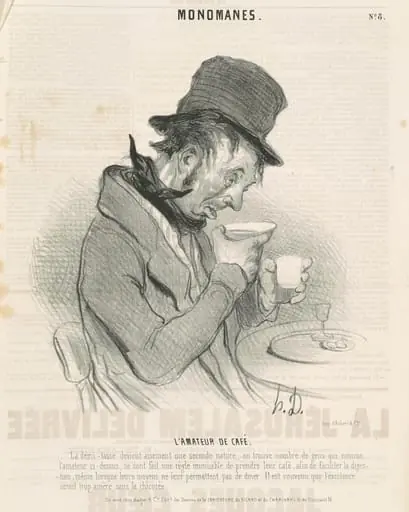 L'amateur de café
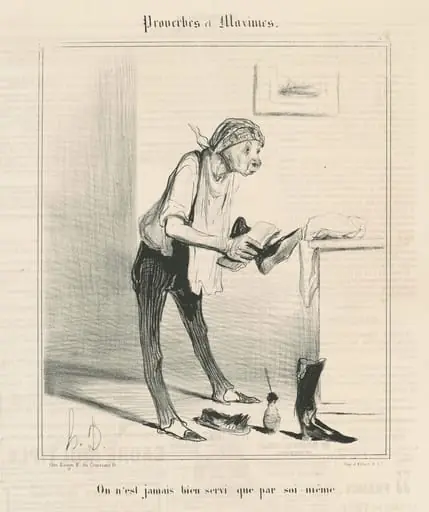 On n'est jamais bien servi que par soi-même
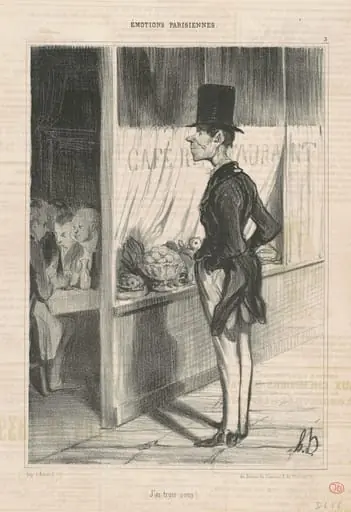 J'ai trois sous
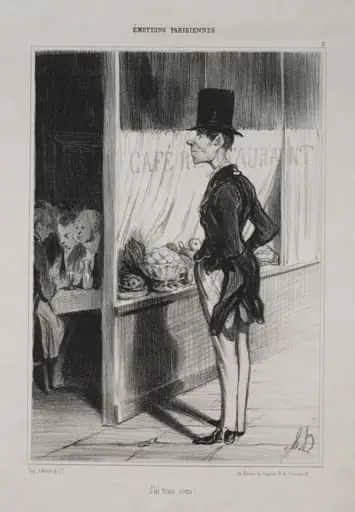 I Have Three Sous!
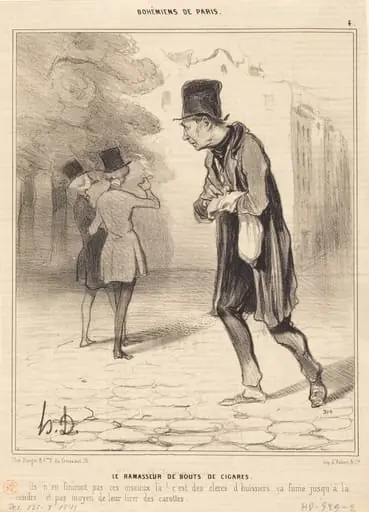 Le Ramasseur de bouts de cigares
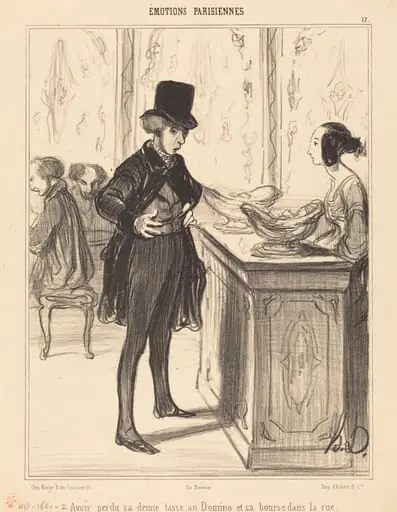 Avoir perdu sa demi-tasse au Domino et sa bourse dans la rue
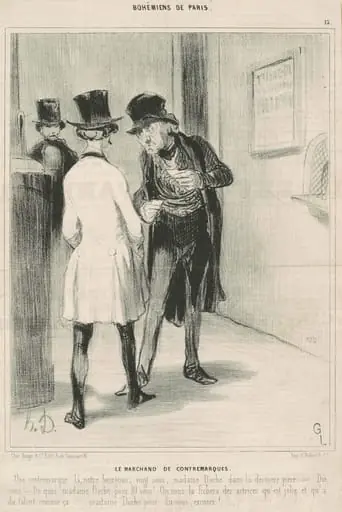 Le marchand de contremarques
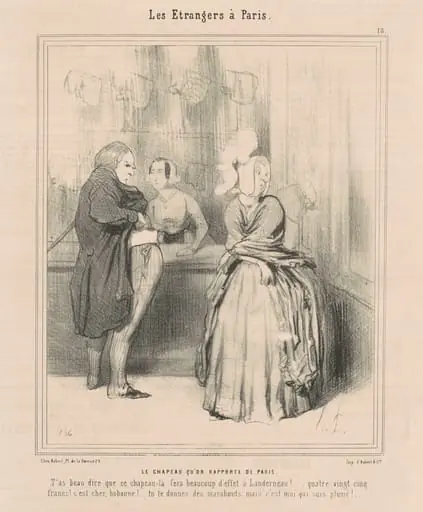 Le chapeau qu'on rapporte de Paris
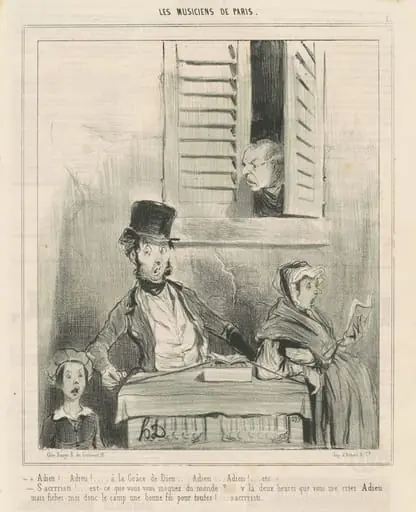 Adieu! ... A la grâce de dieu ...
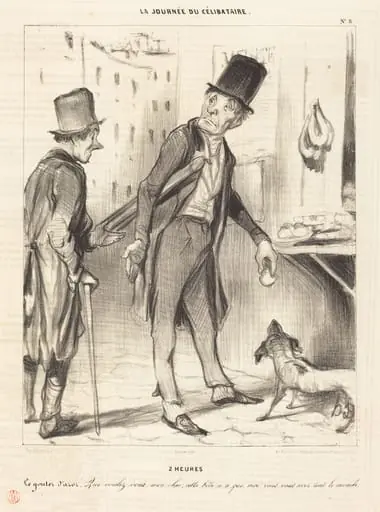 2 heures - Le gouter d'Azor
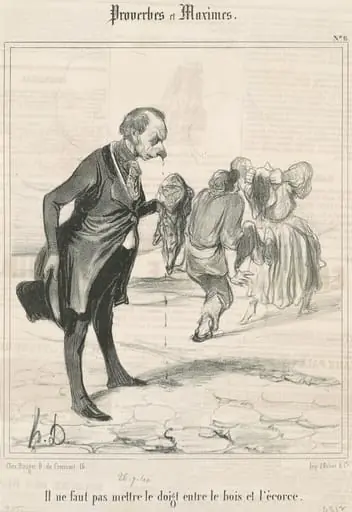 Il ne faut pas mettre le doigt ...
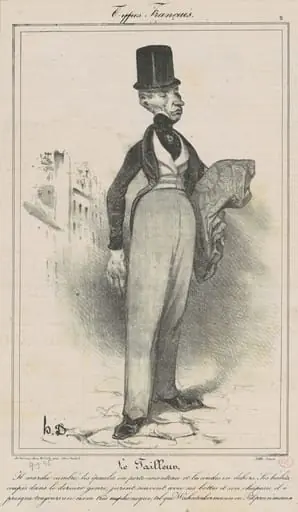 Le Tailleur