Artwork
Une mine d'or qui dort
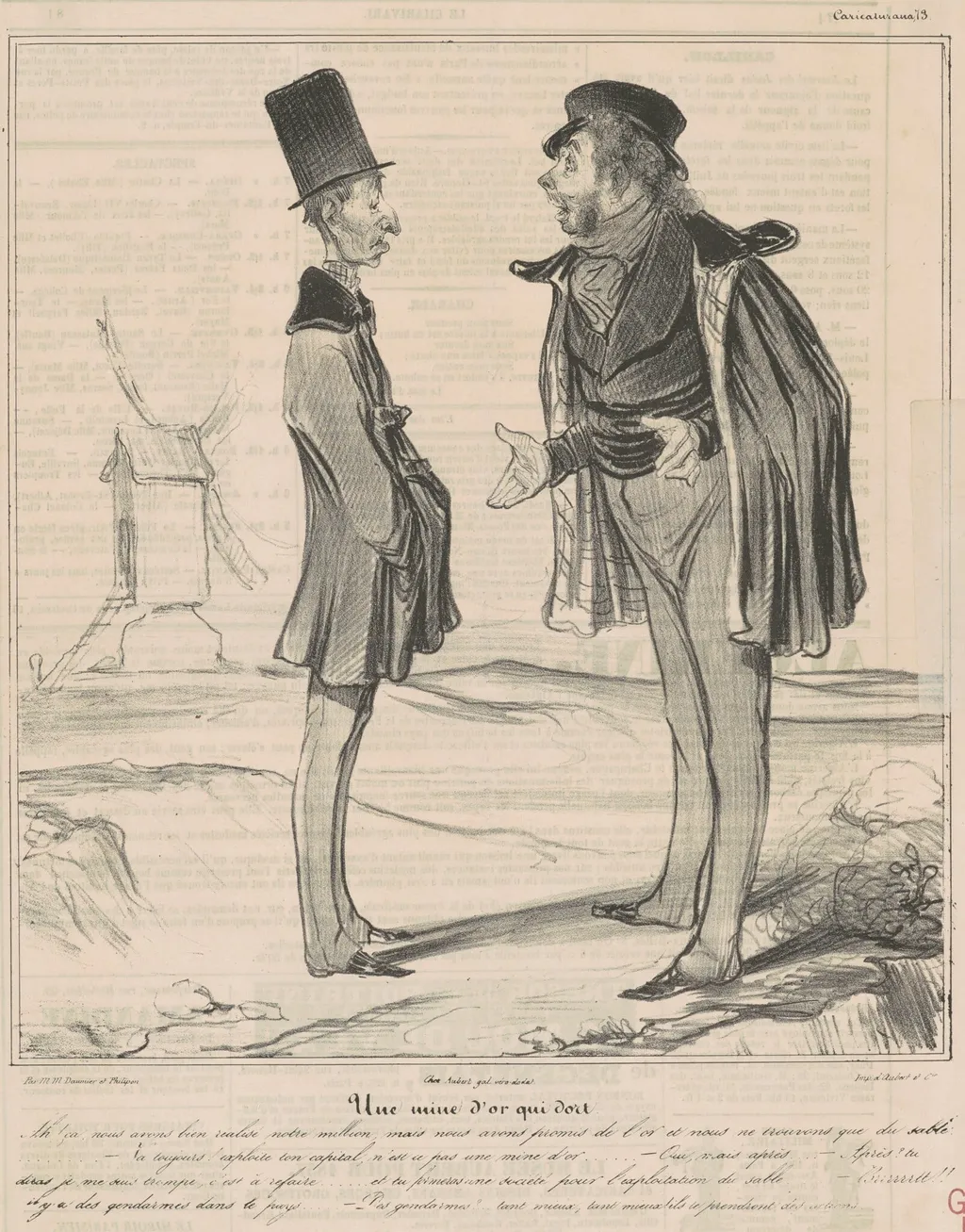
Une mine d'or qui dort is an ink print by the Romanticist artist Honoré Daumier. It dates from 1840 and is held in the collection of the National Gallery of Art.
About this work
Overview
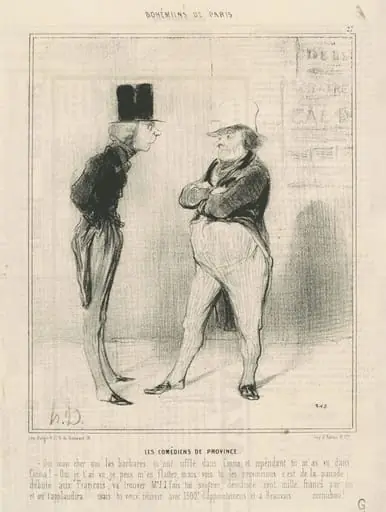
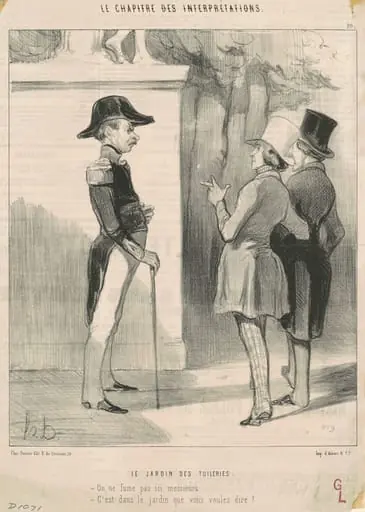
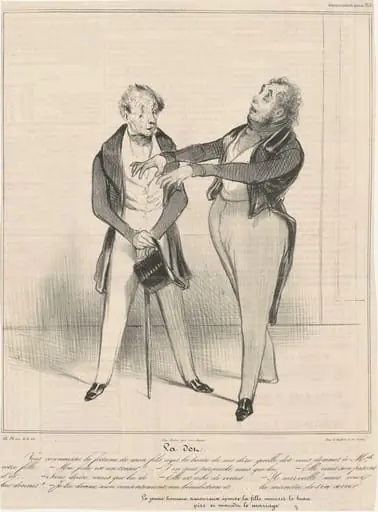
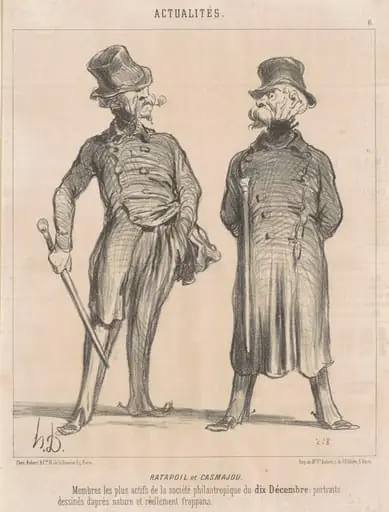
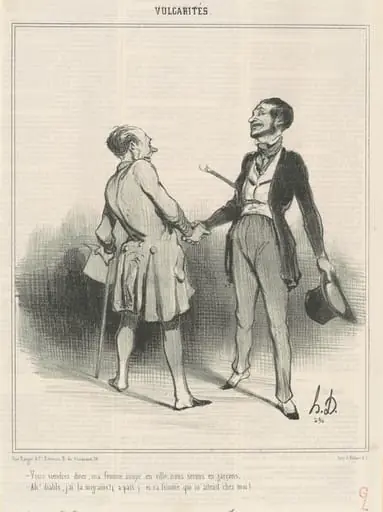
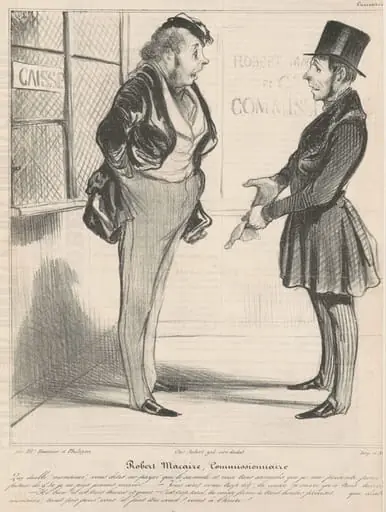
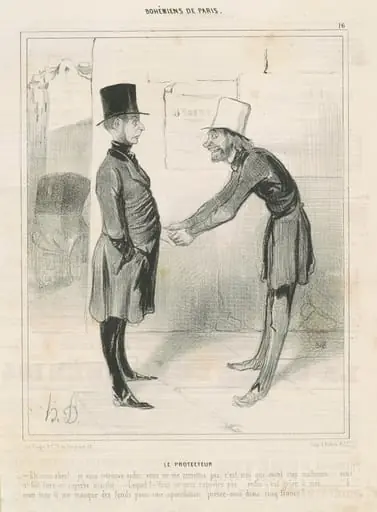
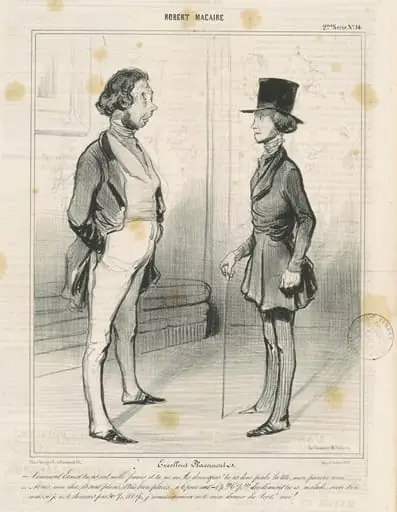
Honoré Daumier’s lithograph Une mine d’or qui dort presents a brief outdoor scene in which two caricatured figures converse beside a windmill. Rendered in black‑and‑white line work, the print captures a moment of everyday interaction, employing exaggerated physiognomy to emphasize the characters’ social roles within a 19th‑century French setting.
Subject & Meaning
The two figures, rendered with oversized heads and pronounced gestures, appear engaged in a casual dialogue that hints at the quirks of contemporary society. By amplifying their features, Daumier invites viewers to consider the types of people populating public spaces, offering a subtle critique of social habits and class distinctions of his era.
Technique & Style
Executed as a lithograph, the work relies on fine, densely rendered lines that delineate clothing folds, facial expressions, and the windmill’s structure. Daumier’s characteristic use of bold contouring and meticulous hatching creates depth and texture, while the caricatural exaggeration aligns with his broader practice of satirical observation.
Context
Created during a period when French artists frequently employed humor to comment on modern life, the print reflects Daumier’s ongoing interest in the public sphere. The windmill, a familiar rural landmark, situates the scene within the everyday landscape of 19th‑century France, underscoring the artist’s focus on ordinary encounters as material for social commentary.
Artist & collection

Artist
Honoré-Victorin Daumier was a French painter, sculptor, and printmaker, whose many works offer commentary on the social and political life in France, from the Revolution of 1830 to the fall of the Second French Empire in 1870.