Artwork
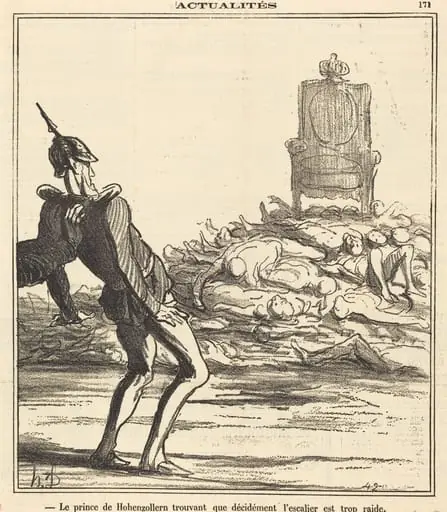
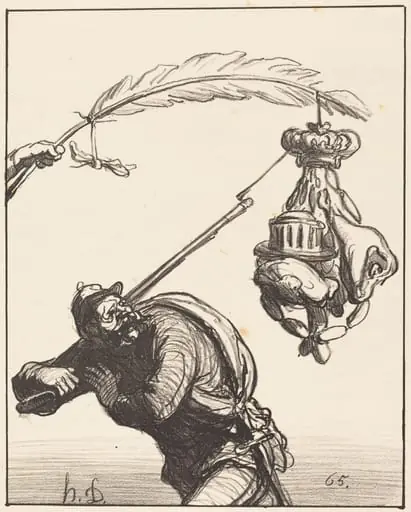
Les marches du nouveau trone d'Allemagne
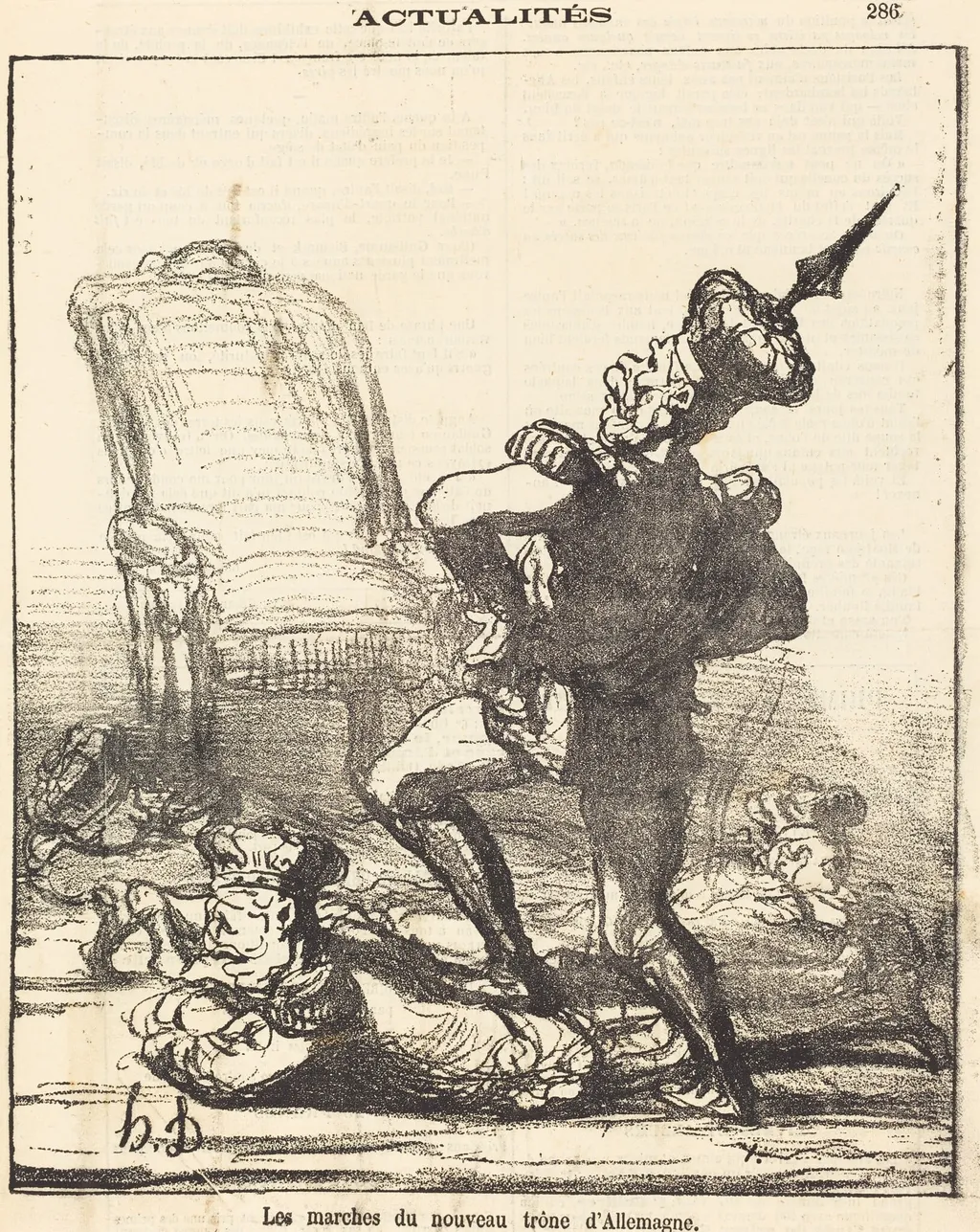
Les marches du nouveau trone d'Allemagne is a print by the Impressionist artist Honoré Daumier. It dates from 1871 and is held in the collection of the National Gallery of Art.
About this work
Overview
Rendered in a rapid, sketch‑like manner, the image employs stark lines and minimal shading to convey a sense of immediacy and agitation.
Created in 1871, *Les marches du nouveau trone d’Allemagne* is a gillotage print executed on newsprint by French artist Honoré Daumier. The work belongs to Daumier’s extensive series of politically charged caricatures that target the institutions of monarchy and empire. Rendered in a rapid, sketch‑like manner, the image employs stark lines and minimal shading to convey a sense of immediacy and agitation.
Subject & Meaning
The composition depicts a corpulent figure seated in an ornate chair, clutching a long scepter, his face rendered indistinct and uneasy. Beneath him, diminutive characters labor with a heap of stones or a shattered throne, suggesting the burdens and instability of newly claimed authority. The title’s reference to a "new German throne" signals a satirical commentary on the recent political reorganization in Germany following the Franco‑Prussian War.
Technique & Style
Daumier employed the gillotage process, a form of lithographic printing that allowed for swift production on inexpensive paper. The use of newsprint underscores the work’s intended immediacy and its function as a newspaper‑type illustration. Rough, gestural lines and simplified forms convey a sense of urgency, while the limited tonal range focuses attention on the exaggerated figures rather than on detailed rendering.
Context
The print emerged in the aftermath of France’s defeat in the Franco‑Prussian War and the collapse of the Second French Empire in 1870. Daumier’s republican sympathies informed his critique of the newly established German Empire under Wilhelm I, which he viewed as an extension of monarchical power that threatened French republican ideals. The work thus reflects the broader climate of political upheaval and national humiliation in late‑19th‑century France.
Legacy
While not as widely reproduced as Daumier’s newspaper cartoons, this print exemplifies his enduring commitment to political satire through visual art. It illustrates how print media served as a vehicle for dissent and public discourse in the 19th century, and it contributes to the scholarly understanding of Daumier’s role as a chronicler of his era’s power dynamics.
Artist & collection
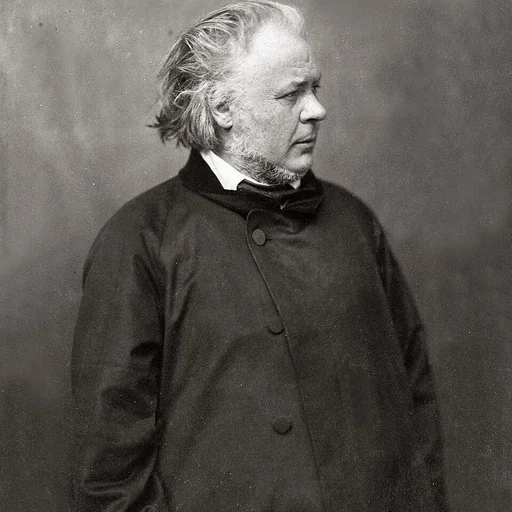
Artist
Honoré-Victorin Daumier was a French painter, sculptor, and printmaker, whose many works offer commentary on the social and political life in France, from the Revolution of 1830 to the fall of the Second French Empire in 1870.