Artwork
M. Prudhomme Philantrope
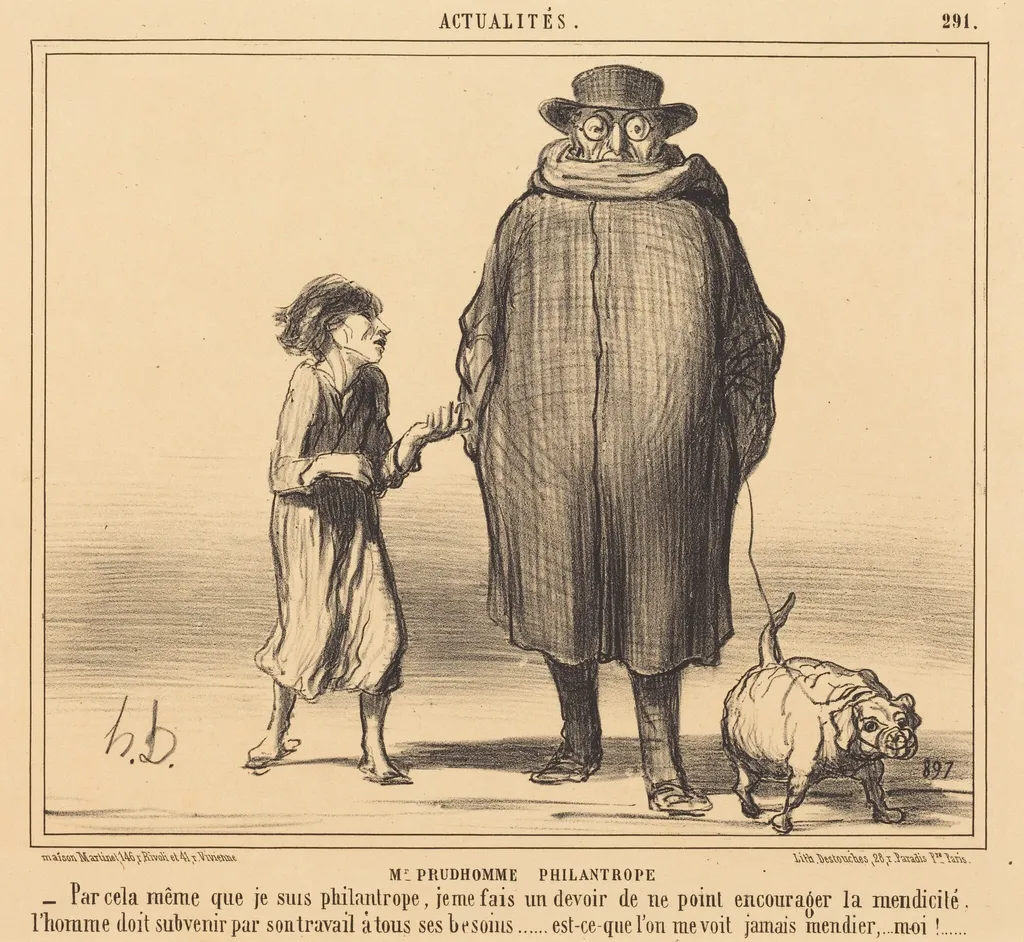
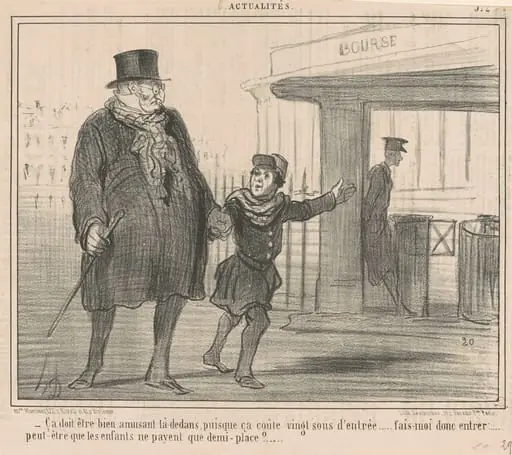
M. Prudhomme Philantrope is an ink print by the Impressionist artist Honoré Daumier. It dates from 1856 and is held in the collection of the National Gallery of Art.
About this work
Overview
Created in 1856, this lithograph by Honoré Daumier depicts a tall, rigid gentleman in a long coat and hat extending an object to a smaller woman, while a tiny dog watches nearby. The title, *M. Prudhomme Philanthrope*, identifies the figure as a self‑styled philanthropist, rendered with exaggerated eyes and a solemn expression that underscores the work’s satirical tone.
Subject & Meaning
Daumier presents the man as a caricature of bourgeois charity, emphasizing his pompous posture and grand gestures. The contrast between his imposing figure and the modestly dressed woman, whose hands are clasped, highlights a disparity between ostentatious giving and genuine need, critiquing the hypocrisy of charitable pretensions prevalent in mid‑nineteenth‑century French society.
Technique & Style
Executed as a lithograph, the print relies on crisp, decisive lines that accentuate the characters’ exaggerated features. Daumier’s use of stark contrast and simplified forms amplifies the comedic effect, while the precise rendering of clothing and posture conveys a clear social commentary through visual satire.
History & Provenance
Daumier produced the image during a prolific period of political and social caricature, contributing to satirical journals such as *La Caricature* and *Le Charivari*. The print circulated among the period’s critical readership, reflecting the artist’s ongoing engagement with the July Revolution’s aftermath and the Second French Empire’s social dynamics.
Context
The work belongs to a broader tradition of French satirical printmaking that used humor to challenge authority. In the 1850s, rising philanthropic societies often masked self‑interest, a phenomenon Daumier exposes by juxtaposing the philanthropist’s grandiosity with the humble figure of the recipient.
Legacy
Daumier’s lithographs, including this depiction of Mr. Prudhomme, continue to inform studies of 19th‑century social critique, illustrating how visual satire can dissect class attitudes. The print remains a reference point for understanding the interplay between charitable rhetoric and underlying social inequities.
Artist & collection

Artist
Honoré-Victorin Daumier was a French painter, sculptor, and printmaker, whose many works offer commentary on the social and political life in France, from the Revolution of 1830 to the fall of the Second French Empire in 1870.









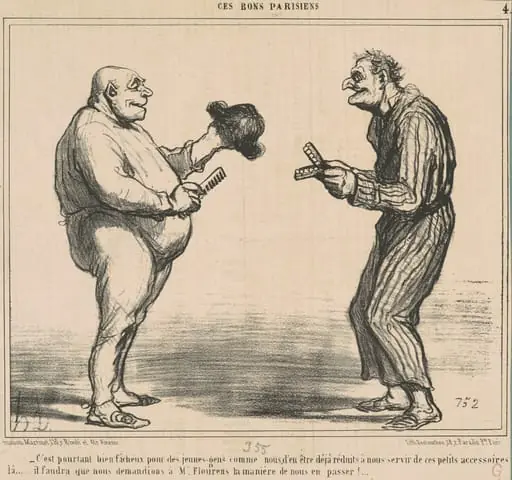 C'est pourtant bien facheux pour ...
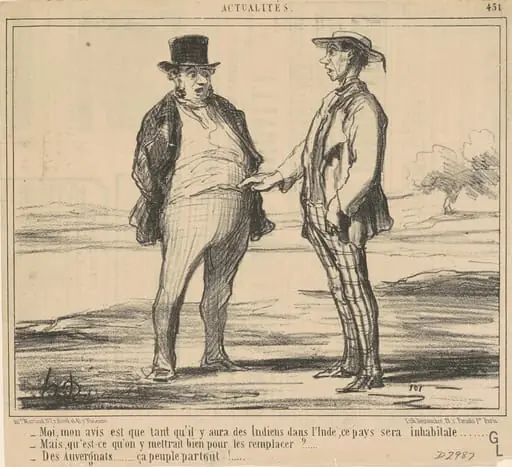 Mois, mon avis est ...
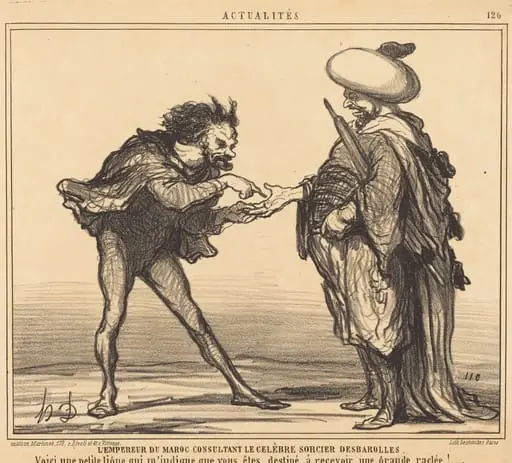 L'Empereur du Maroc consultant... Desbarolles
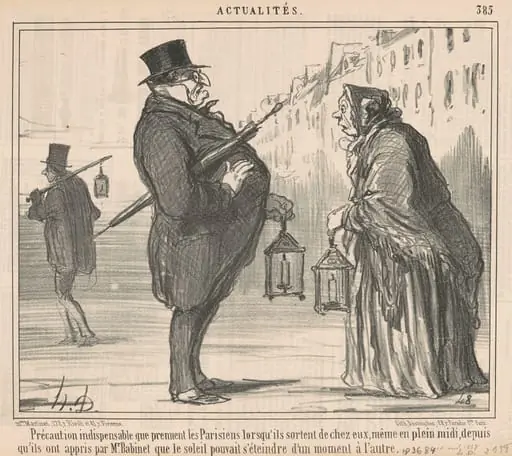 Précaution indispensable que prennent les Parisiens ...
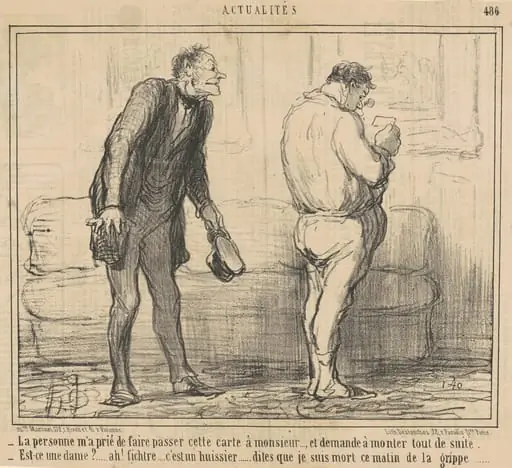 La personne ... demande a monter tout de suite ...
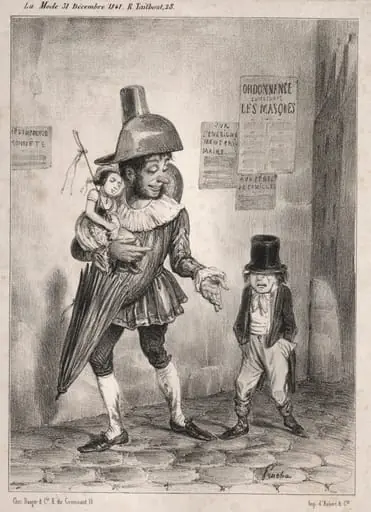 Pochades de carnaval: Vois-tu, si ton maître est bien content de toi et si tu as le prix de sagesse cette année! je te laisserai deguiser en paillasse! ...l'année prochaine!!
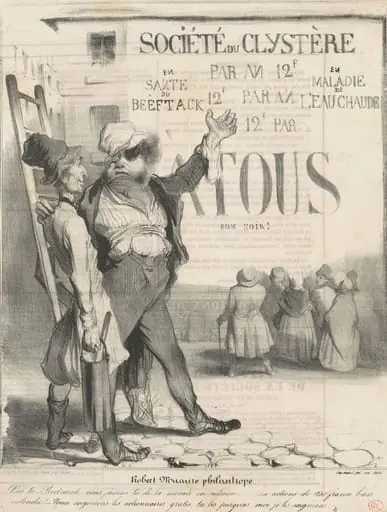 Robert Macaire philantrope
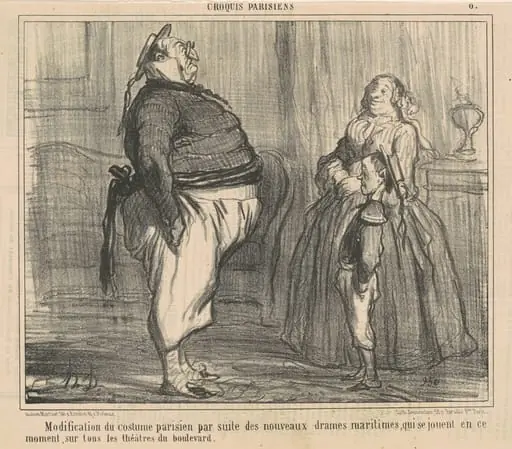 Modification du costume parisien ...
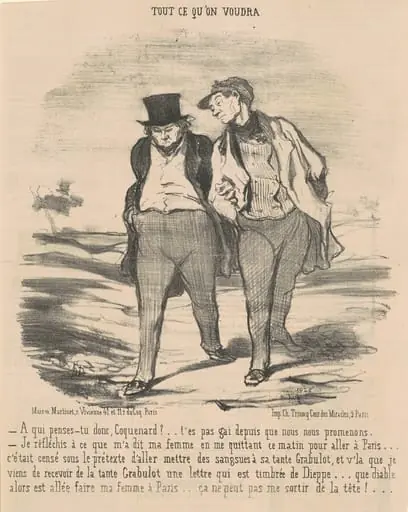 A qui penses-tu donc, coquenard? ...
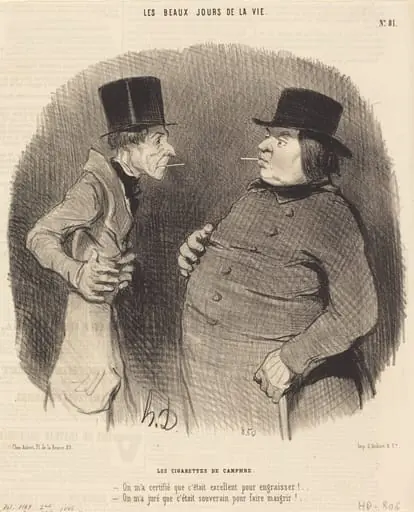 Les Cigarettes de camphre
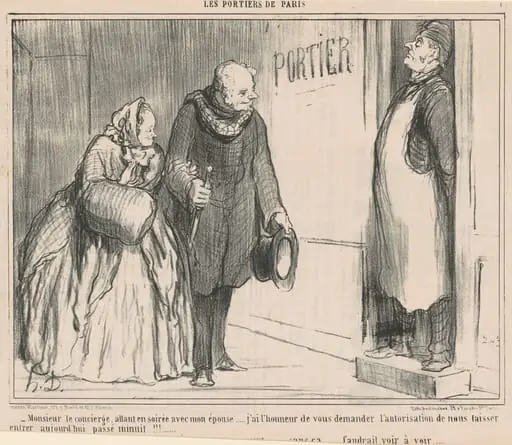 Monsieur le concierge, allant en soirée
 Ca doit être bien amusant la-dedans ...