Artwork
M'sieu... que c'est tannant d'avoir la colique quand...
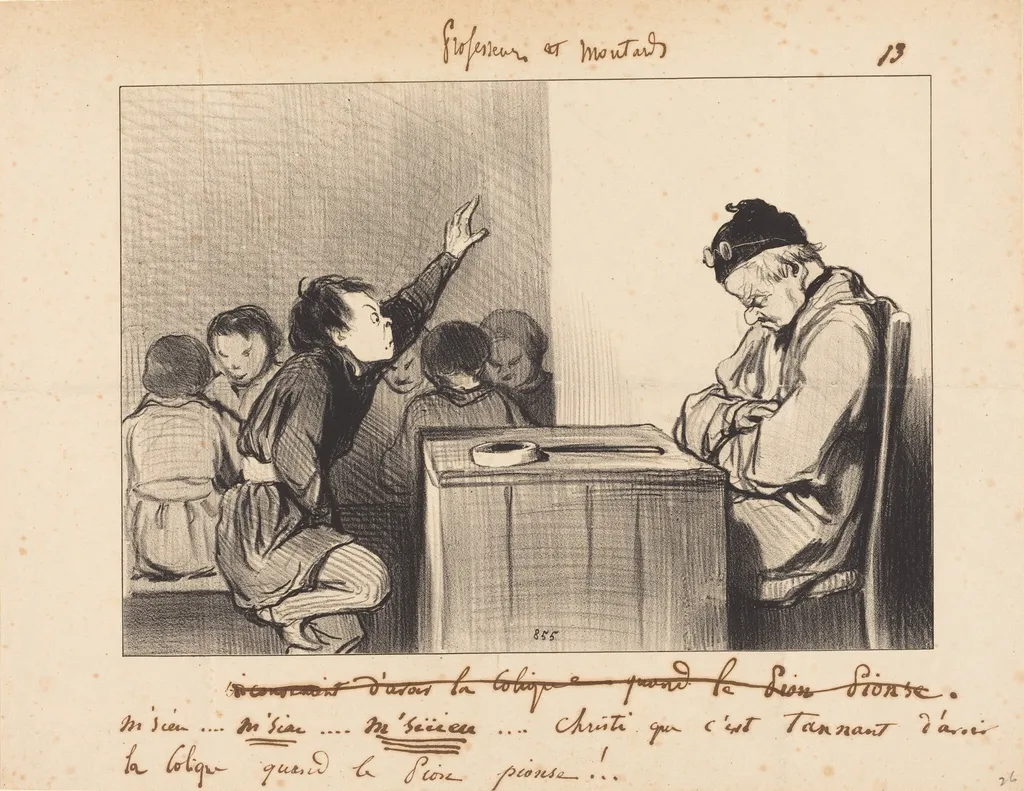
M'sieu... que c'est tannant d'avoir la colique quand... is an ink print by the Romanticist artist Honoré Daumier. It dates from 1846 and is held in the collection of the National Gallery of Art.
About this work
Overview
This 1846 lithograph by Honoré Daumier captures a moment of private distress in a public setting. The work belongs to a series of satirical prints Daumier produced for French periodicals, where everyday human foibles were rendered with sharp observation. Unlike grand historical scenes, it focuses on an unremarkable yet universally relatable experience: bodily discomfort interrupting routine life.
Subject & Meaning
A man, seated at a desk and wearing a hat, is shown hunched in physical agony while others watch nearby. The title, spoken in colloquial French, underscores the frustration of suffering at an inconvenient moment. Daumier uses this mundane scenario to subtly critique social pretense—how private vulnerability is met with public curiosity, revealing the awkwardness of bourgeois manners.
Technique & Style
Executed in lithography, the image relies on bold, fluid lines and tonal contrasts to convey texture and emotion. Daumier’s hand captures movement and tension without excess detail; the man’s posture and the observers’ postures are suggested with economical strokes. The medium’s immediacy enhances the scene’s intimacy, as if the viewer has stumbled upon a private moment in a crowded room.
History & Provenance
Though not politically charged like his depictions of judges or royalty, this work reflects his consistent interest in human behavior under social pressure.
Created during Daumier’s most prolific period for political and social satire, the print likely appeared in *Le Charivari*, a weekly publication known for its caricatures. Though not politically charged like his depictions of judges or royalty, this work reflects his consistent interest in human behavior under social pressure. Its survival in museum collections underscores its value as a document of 19th-century visual culture.
Context
In mid-19th century France, lithography enabled rapid dissemination of images to a broad public. Daumier’s work thrived in this environment, where newspapers became platforms for social commentary. While censorship targeted overt political attacks, his focus on bodily and behavioral absurdities allowed him to critique society indirectly—turning personal discomfort into a mirror for collective norms.
Legacy
Daumier’s ability to elevate ordinary moments into poignant social observations influenced later realist and modernist artists. This print, like many of his works, avoids melodrama, instead relying on restraint and recognition. Its enduring relevance lies in its quiet accuracy: the tension between private suffering and public observation remains a familiar human condition.
Artist & collection

Artist
Honoré-Victorin Daumier was a French painter, sculptor, and printmaker, whose many works offer commentary on the social and political life in France, from the Revolution of 1830 to the fall of the Second French Empire in 1870.









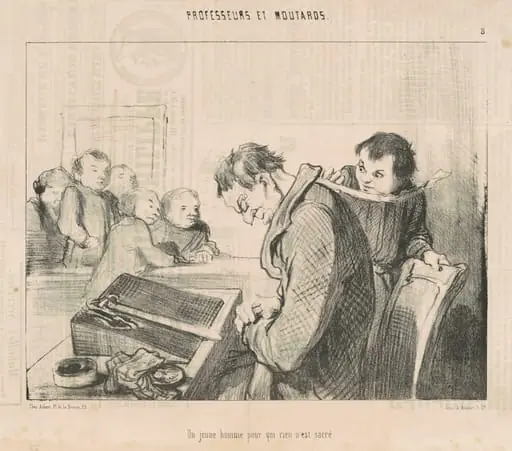 Un jeune homme pour qui rien n'est sacre
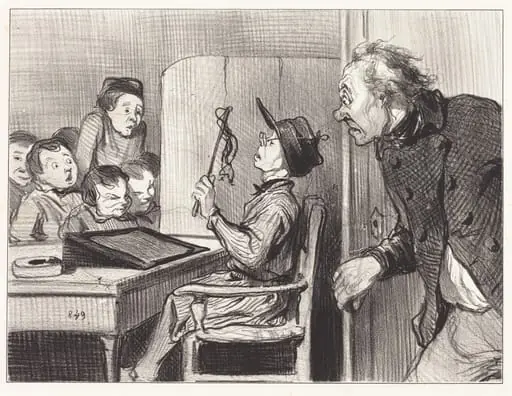 Attends... j'te vas en donner... du maitre d'école
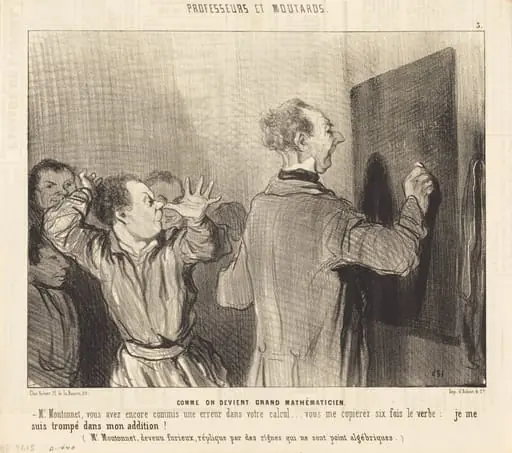 Comment on devient un grand mathématicien
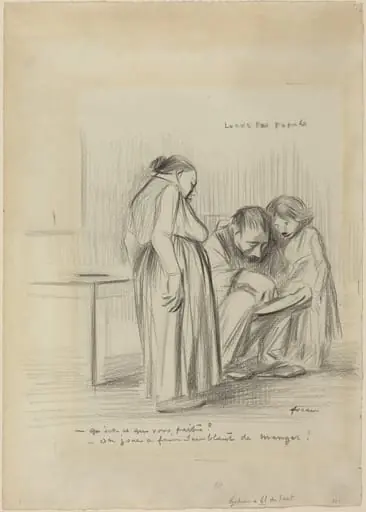 a) Ludus pro Populo (recto); b) Head of a Man (verso)
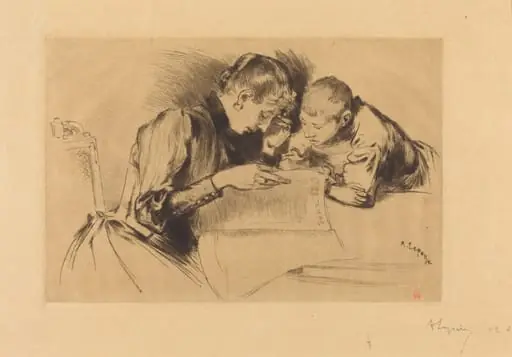 Images (Les images)
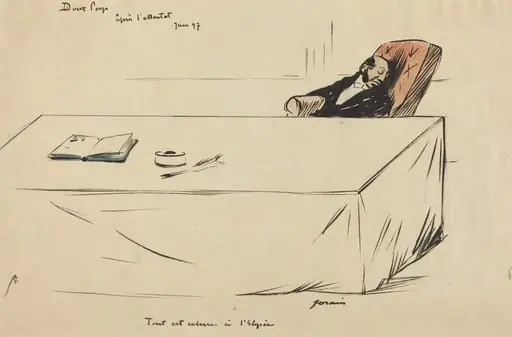 Apres l'attentat, Juin '97
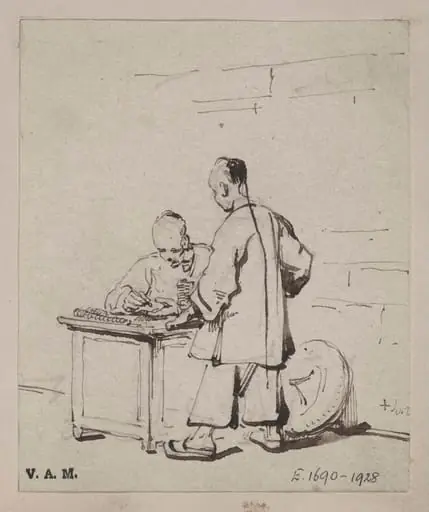 AA Chinese moneychanger seated at a table, with a standing figure
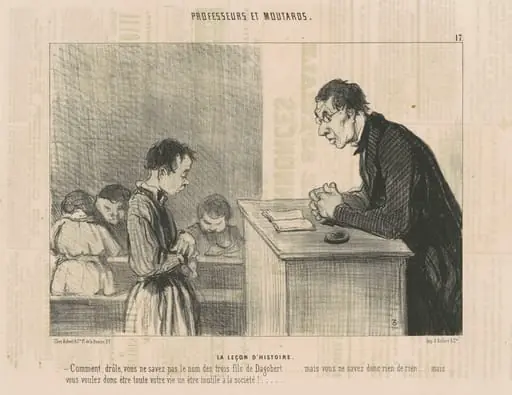 Le leçon d'histoire
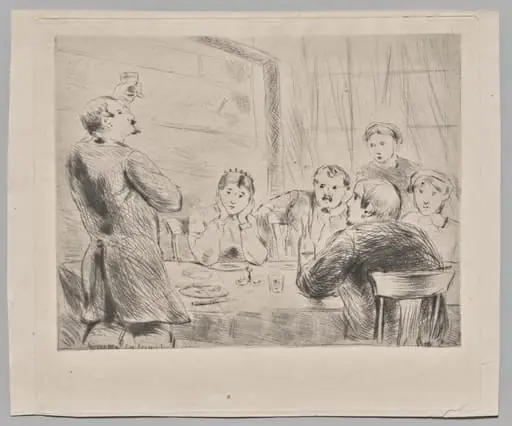 Untitled
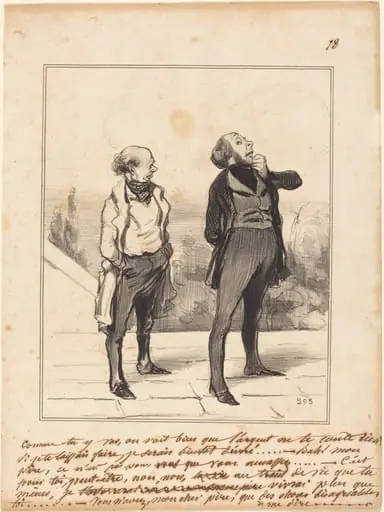 Comme tu y vas...