Artwork
Mariage chinois
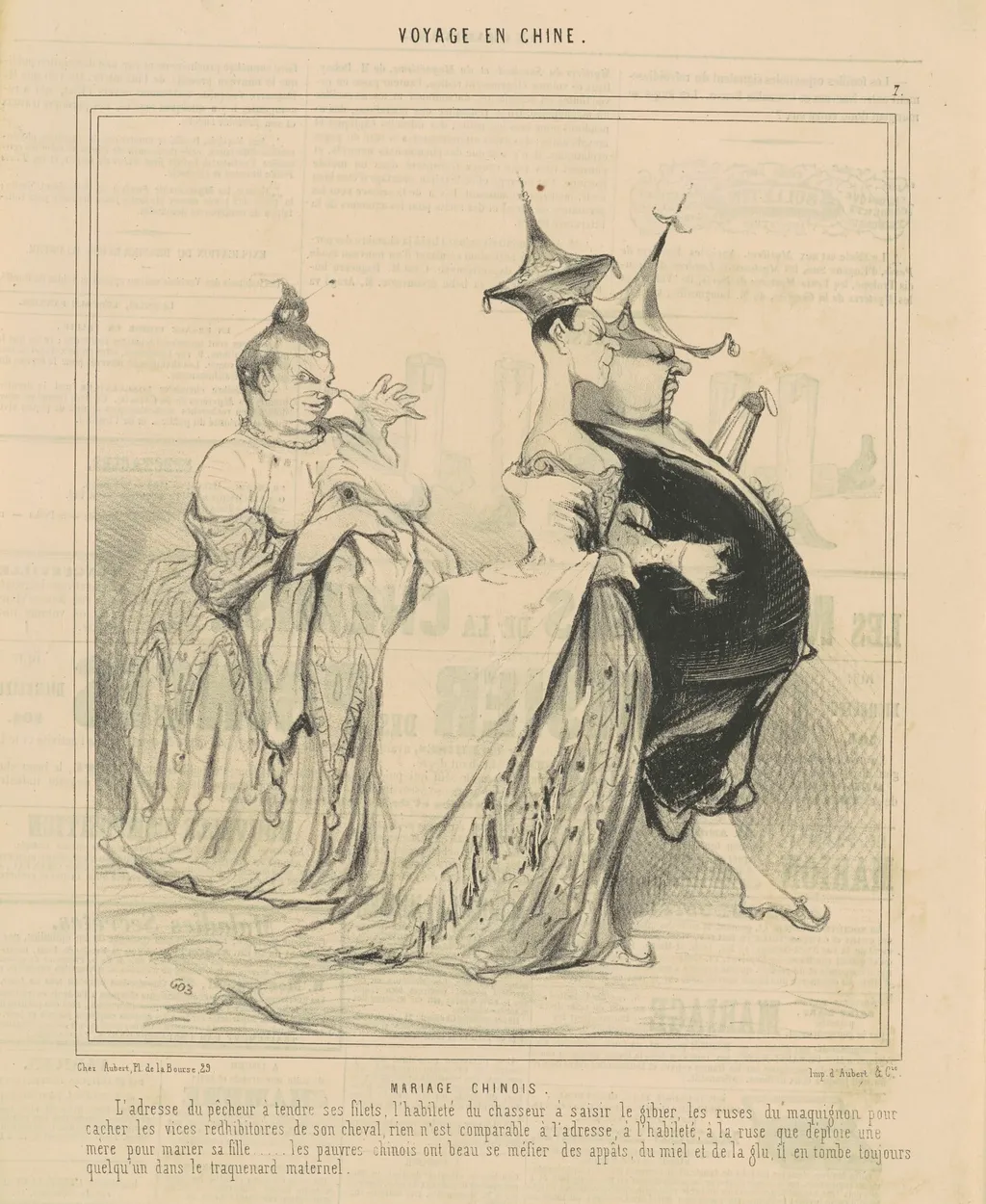
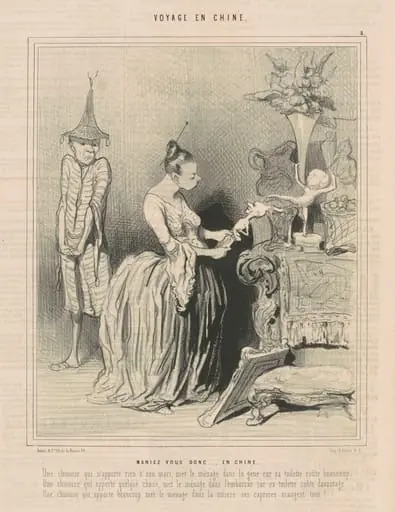
Mariage chinois is an ink print by the Romanticist artist Honoré Daumier. It dates from 1846 and is held in the collection of the National Gallery of Art.
About this work
Overview
Honoré Daumier’s 1846 lithograph Mariage chinois presents a comic tableau of a newlyweds seated opposite one another, separated by a third figure who holds a fan. The image, rendered in the artist’s characteristic satirical vein, uses exaggerated gestures and facial expressions to highlight the awkwardness of the matrimonial encounter.
Subject & Meaning
The work portrays a bride and groom positioned across a table, their uneasy postures suggesting a strained intimacy. The intervening figure, fan in hand, acts as a visual barrier, amplifying the sense of discomfort. Daumier employs this scenario to critique the conventions of marriage, suggesting that social rituals often mask underlying tension.
Technique & Style
Created through lithography, the print exploits the medium’s capacity for bold line work and tonal variation. Daumier’s hand‑drawn outlines are complemented by subtle shading, allowing the caricatured figures to emerge with a lively immediacy. The style combines realistic detail with exaggerated features, a hallmark of his satirical approach.
History & Provenance
First issued in 1846, Mariage chinois was part of Daumier’s prolific output of socially engaged prints. The lithograph circulated among the Parisian press and private collectors, reflecting the artist’s engagement with contemporary commentary. Its ownership history traces through several European collections before entering public museum holdings in the early twentieth century.
Artist & collection
Artist
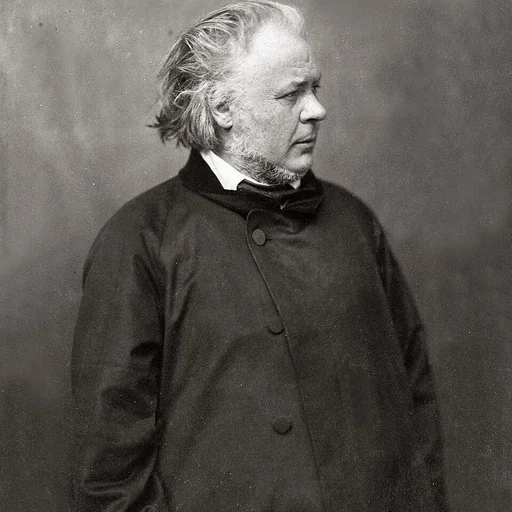
Honoré-Victorin Daumier was a French painter, sculptor, and printmaker, whose many works offer commentary on the social and political life in France, from the Revolution of 1830 to the fall of the Second French Empire in 1870.