Artwork
Monsieur le sténographe ...
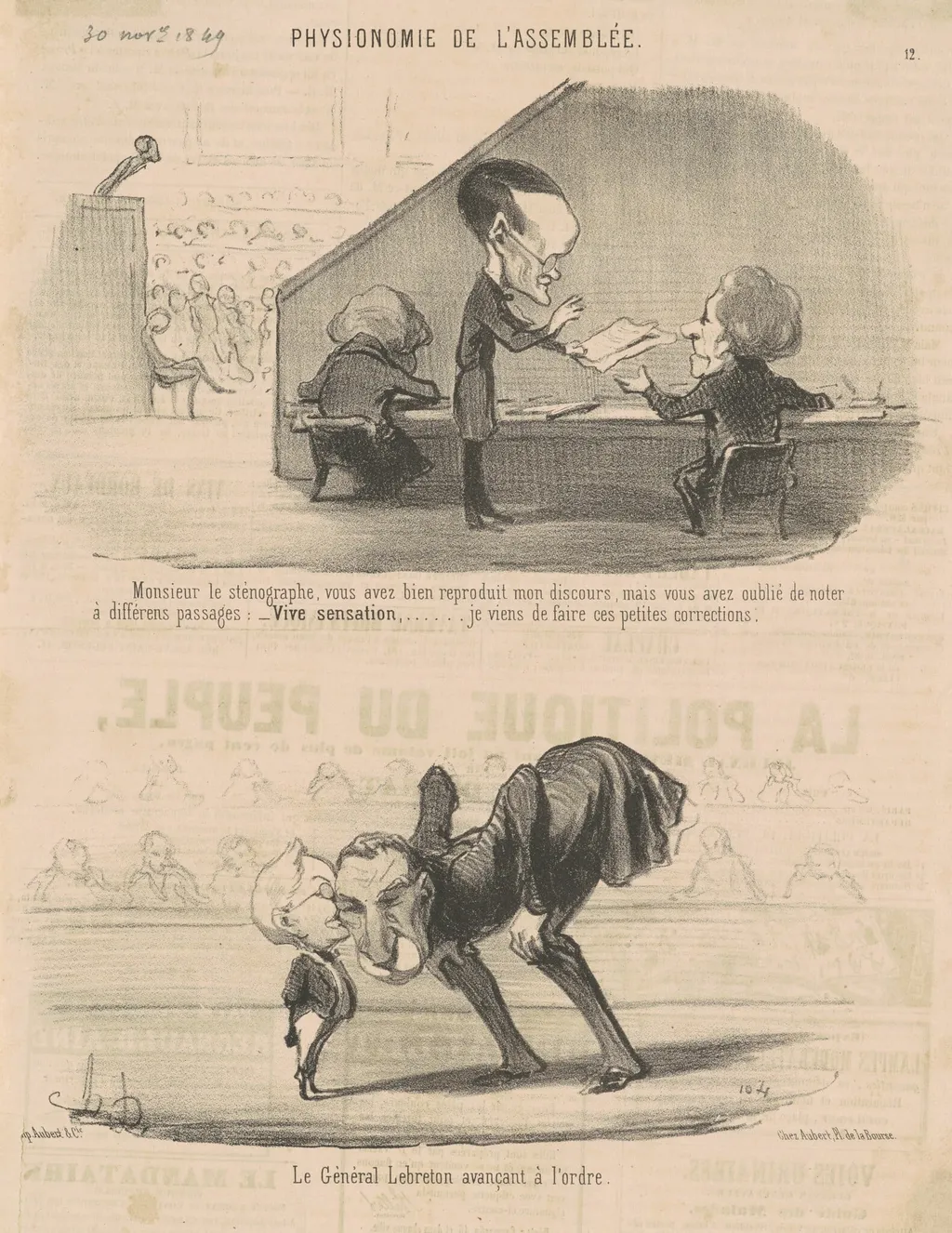
Monsieur le sténographe ... is an ink print by the Romanticist artist Honoré Daumier. It dates from 1849 and is held in the collection of the National Gallery of Art.
About this work
Overview
Honoré Daumier’s 1849 lithograph, titled *Monsieur le sténographe*, presents a bustling interior filled with a crowd of officials.
Honoré Daumier’s 1849 lithograph, titled *Monsieur le sténographe*, presents a bustling interior filled with a crowd of officials. Central to the composition are two interactions: a gentleman in a top hat passes a document to a seated figure, while another leans toward a diminutive man at a desk. The scene is rendered with vigorous, sketch‑like lines that amplify the frenetic atmosphere of a parliamentary gathering.
Subject & Meaning
The work functions as a satirical commentary on the French bureaucratic class of the mid‑nineteenth century. By exaggerating facial features and postures, Daumier highlights the self‑importance and petty maneuverings of clerks and legislators, suggesting a theatrical, almost farcical, power play rather than a literal record of any specific meeting.
Technique & Style
Executed in lithography, Daumier drew directly onto a limestone slab with a greasy crayon, allowing the image to be transferred to paper through inked impressions. The print’s bold, uneven contours and stark contrasts convey immediacy, while the caricatured distortions align with the artist’s broader practice of using humor and exaggeration to critique society.
History & Provenance
Created while Daumier was employed by a Parisian newspaper, the lithograph was part of a prolific series targeting lawyers, politicians, and civil servants. Though the original stone block is lost, the image circulated widely in the press and later entered museum collections, illustrating Daumier’s role as a visual journalist of his era.
Artist & collection
Artist
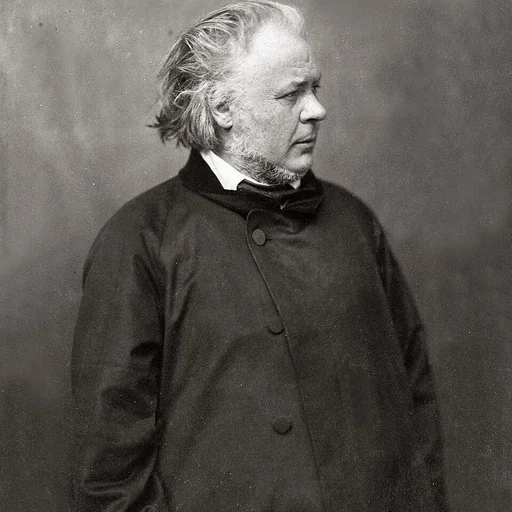
Honoré-Victorin Daumier was a French painter, sculptor, and printmaker, whose many works offer commentary on the social and political life in France, from the Revolution of 1830 to the fall of the Second French Empire in 1870.

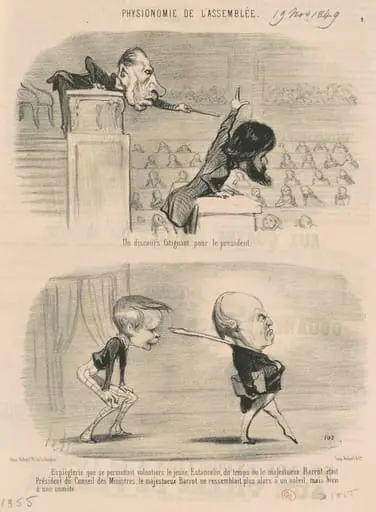 Un discours fatiguant pour le président
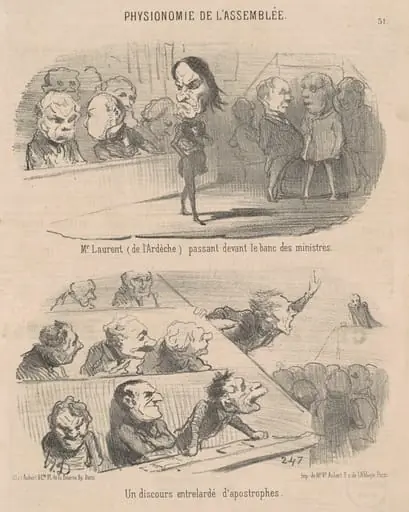 M. Laurent (de l'ardèche) Passant ...
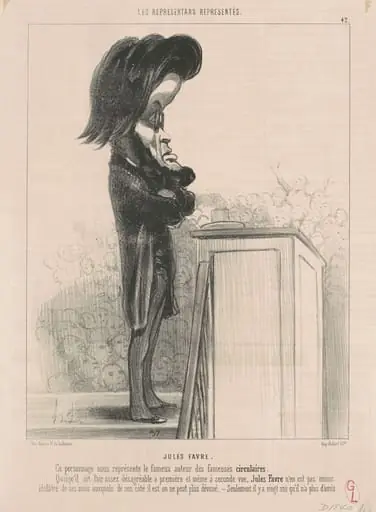 Jules Favre
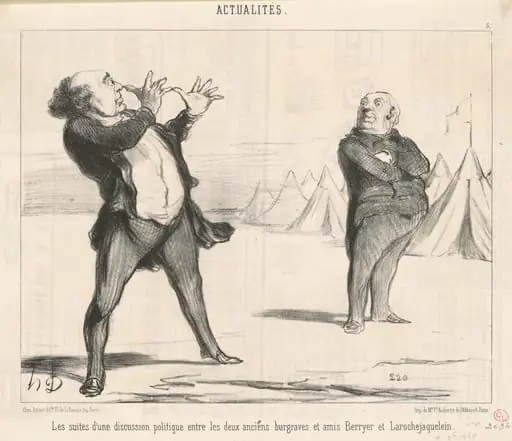 Les suites d'une discussion politique ...
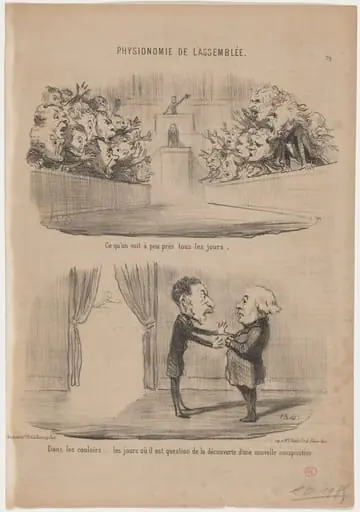 Ce qu'on voit a peu près tous les jours
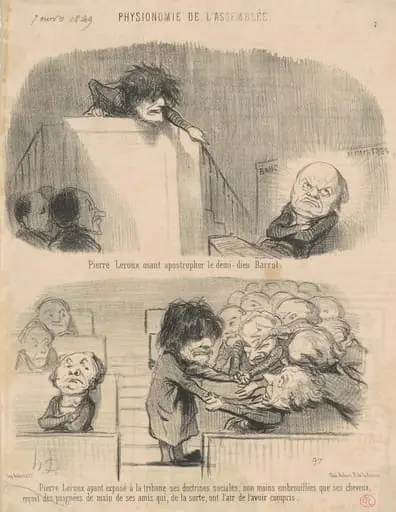 Pierre Leroux Osant apostrophe ...
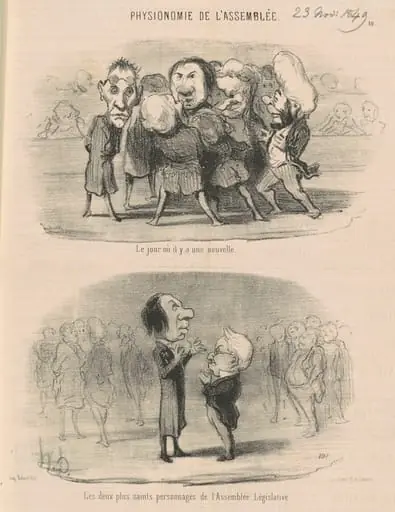 Le jour ou il y a une nouvelle
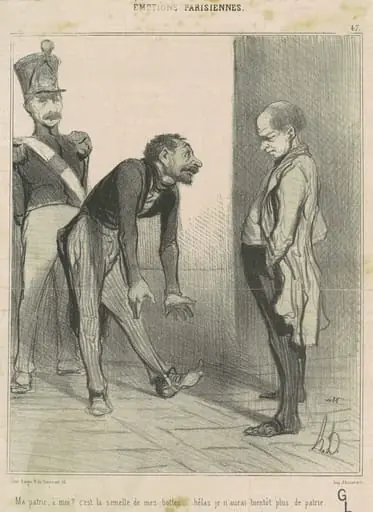 Ma patrie, a moi?...
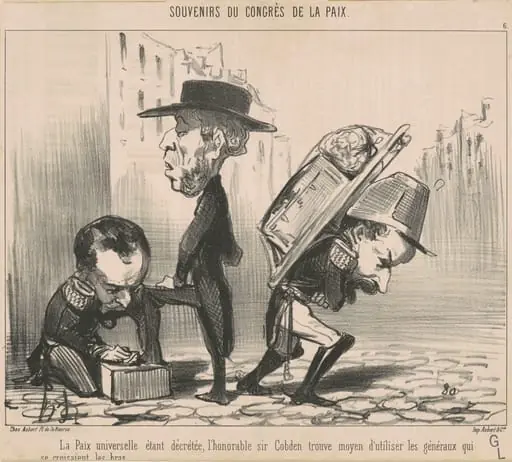 La paix universelle étant décrétée ...
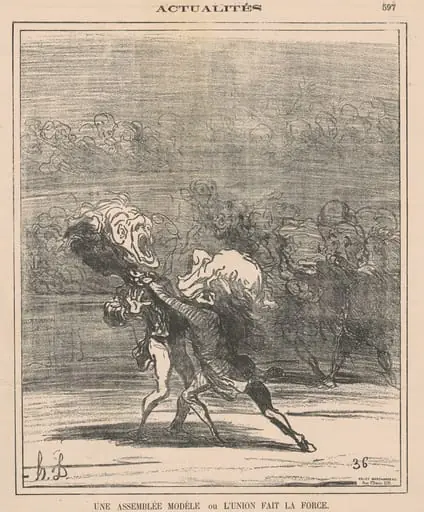 Une assembleé modèle ...