Artwork
Un discours fatiguant pour le président
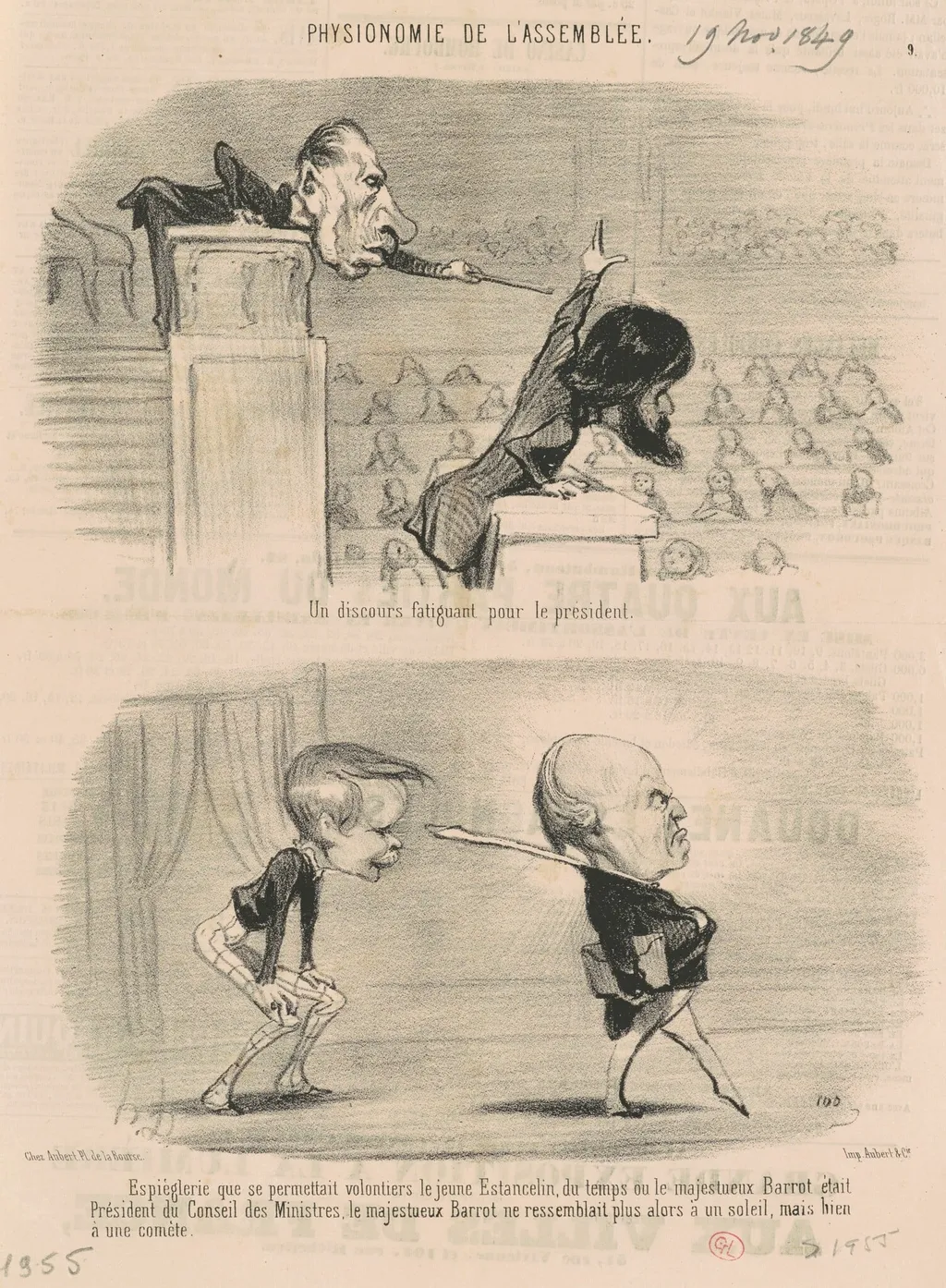
Un discours fatiguant pour le président is an ink print by the Romanticist artist Honoré Daumier. It dates from 1849 and is held in the collection of the National Gallery of Art.
About this work
Overview
Daumier’s work here blends observation with satire, using the medium of lithography to critique public life with precision and wit.
This lithograph by Honoré Daumier captures a moment of political monotony in a legislative chamber. The upper register shows a president visibly exhausted, his head drooping as a speaker addresses the assembly. Below, the audience is rendered with grotesque, exaggerated facial features—distorted mouths, bulging cheeks, and elongated noses—that amplify the absurdity of the scene. Daumier’s work here blends observation with satire, using the medium of lithography to critique public life with precision and wit.
Subject & Meaning
The image contrasts the apathy of authority with the chaotic energy of the crowd. The president’s fatigue symbolizes disillusionment with governance, while the grotesque expressions of the deputies suggest a legislature driven by performative posturing rather than serious debate. Daumier does not target individuals but the ritualized emptiness of political spectacle, revealing how power can become a farce when detached from substance.
Technique & Style
Daumier employed lithography to achieve rapid, expressive lines suited to journalistic satire. His use of ink wash and bold contours creates stark contrasts between the solemn, static figure of the president and the animated, almost monstrous crowd below. The lower section’s caricatured faces—distorted through exaggeration rather than realism—reflect his signature style, honed through years of producing political cartoons for periodicals.
History & Provenance
Created during the July Monarchy or early Second Republic, this print belongs to a vast body of over four thousand political lithographs Daumier produced between the 1830s and 1870s. Many of these works led to legal penalties, including imprisonment, for ridiculing public officials. Though often published in journals like La Caricature, this particular image survives as a testament to his persistent critique of institutional decay in 19th-century France.
Context
Daumier’s prints emerged amid a turbulent era of French political upheaval, following the revolutions of 1830 and 1848. With limited press freedom and censorship targeting satire, lithography offered a discreet yet potent medium for dissent. His depictions of lawmakers and bureaucrats resonated with a public weary of empty rhetoric, turning the assembly into a stage for collective ridicule and social commentary.
Legacy
Daumier’s political lithographs influenced later generations of satirical artists and cartoonists, establishing a visual language for institutional critique. His ability to convey complex social tensions through simplified, expressive forms prefigured modern editorial illustration. Though largely overlooked in his lifetime beyond print circles, his work is now recognized as a foundational contribution to the history of political art in Europe.
Artist & collection

Artist
Honoré-Victorin Daumier was a French painter, sculptor, and printmaker, whose many works offer commentary on the social and political life in France, from the Revolution of 1830 to the fall of the Second French Empire in 1870.









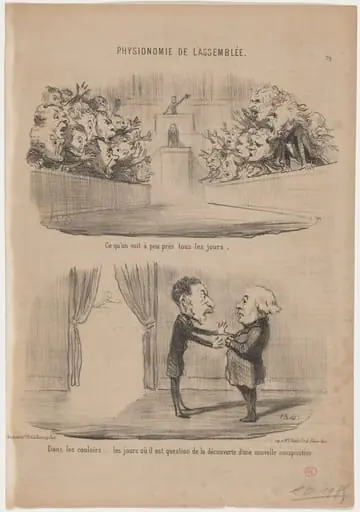 Ce qu'on voit a peu près tous les jours
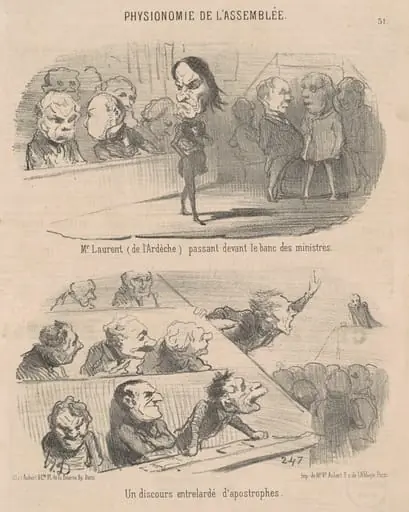 M. Laurent (de l'ardèche) Passant ...
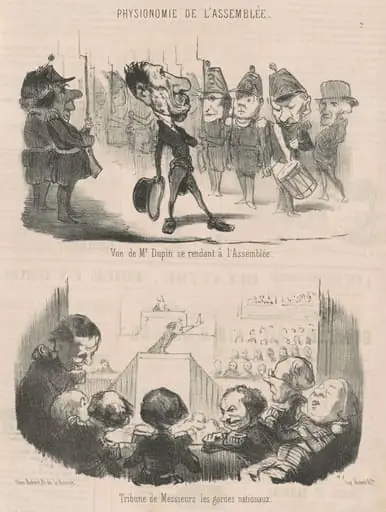 Vue de M. Dupin se rendant a l'assemblée
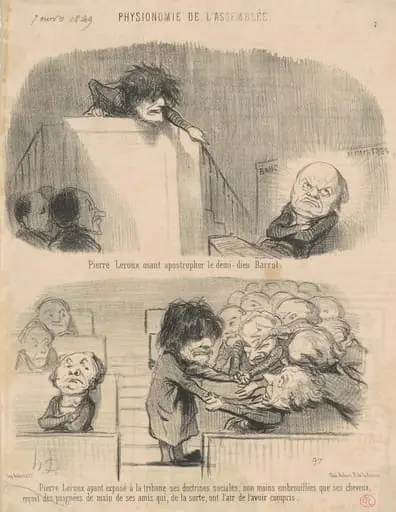 Pierre Leroux Osant apostrophe ...
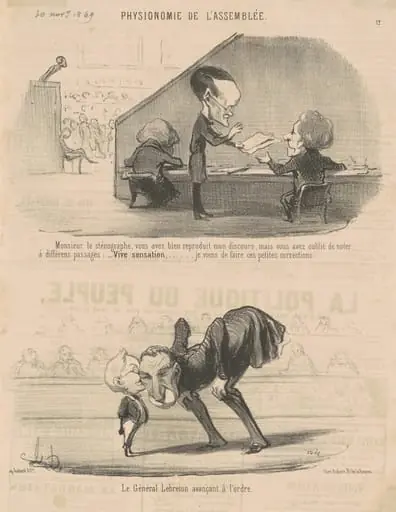 Monsieur le sténographe ...
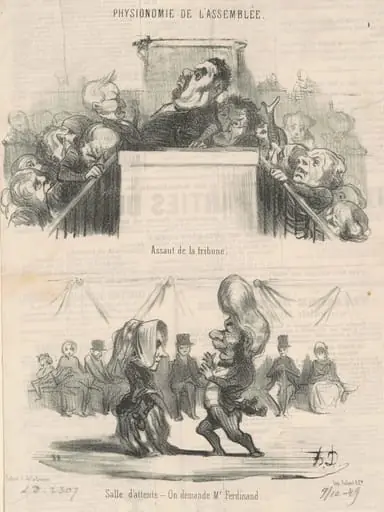 Assaut de la tribune
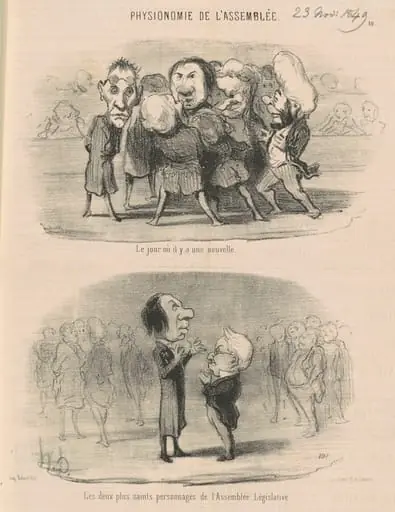 Le jour ou il y a une nouvelle
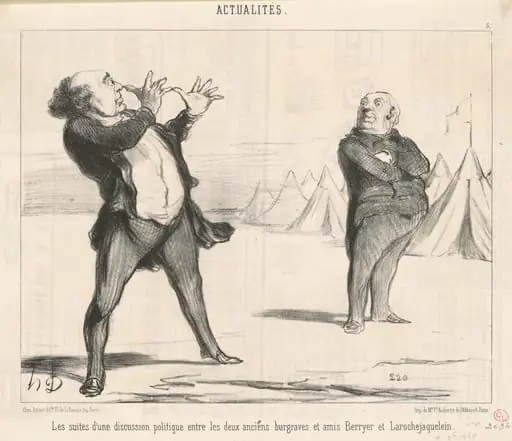 Les suites d'une discussion politique ...
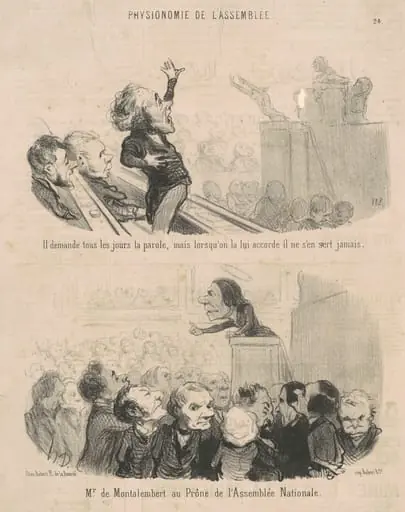 Il demande tous les jours la parole ...
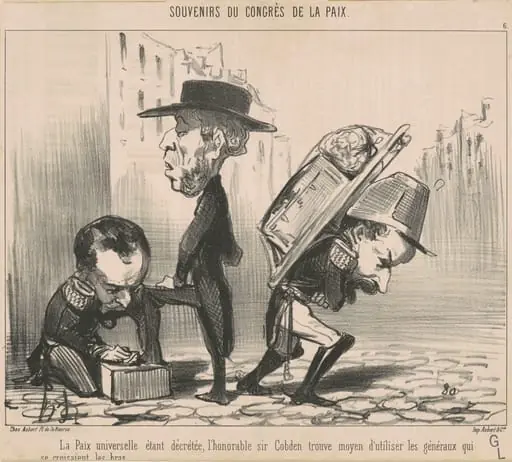 La paix universelle étant décrétée ...
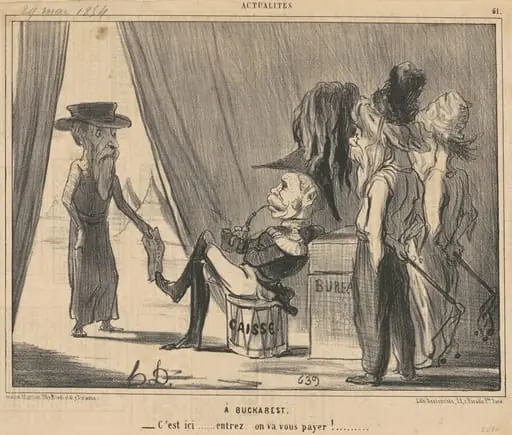 A Bucharest
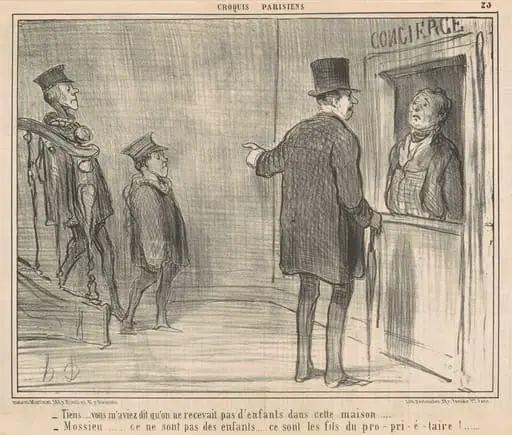 Tiens ... vous m'aviez dit ...