Artwork
Ovide Remilly
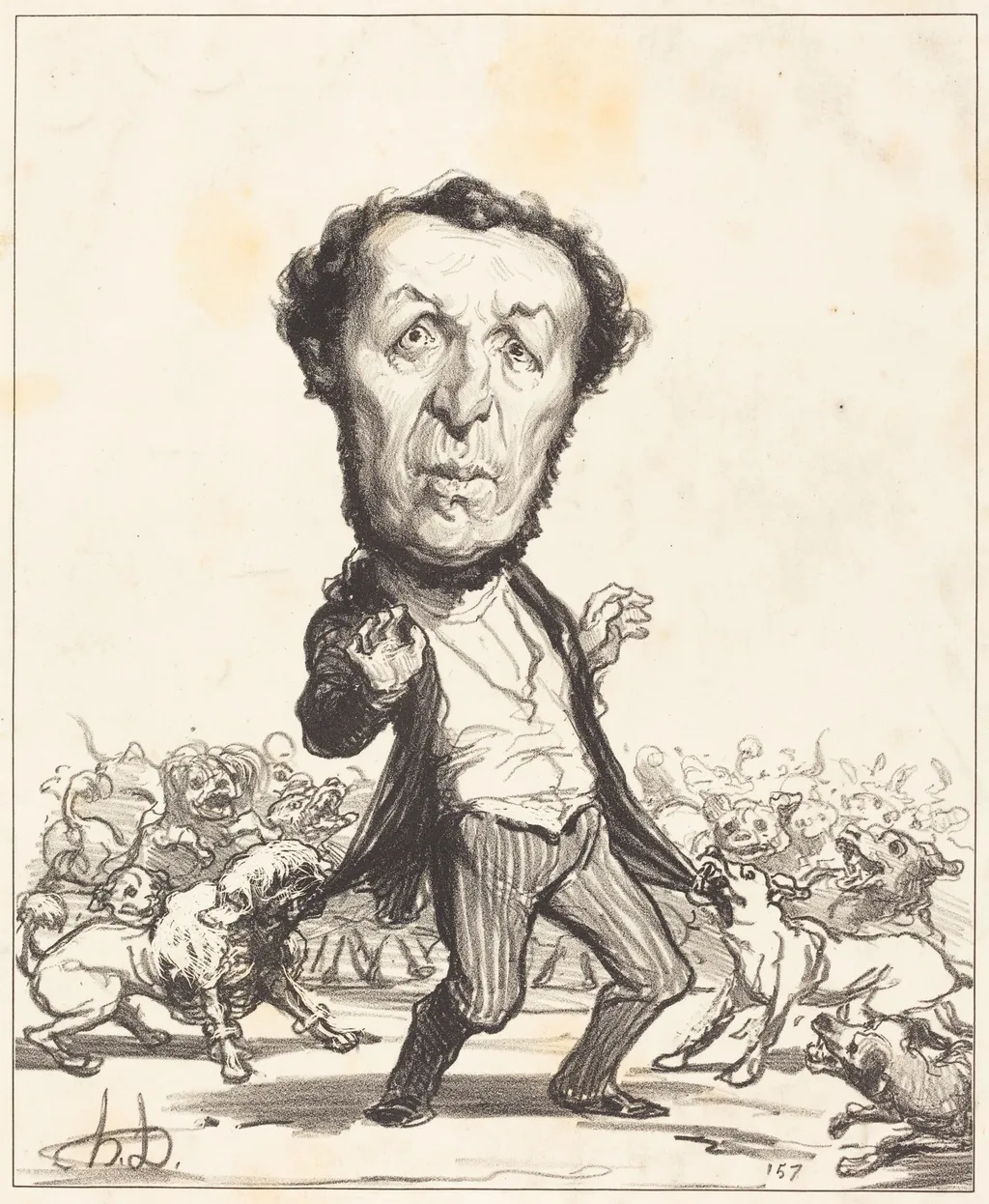
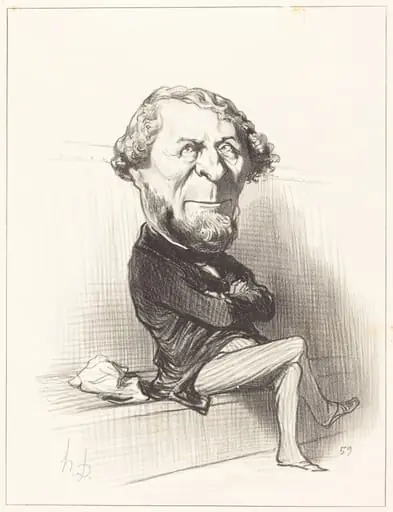
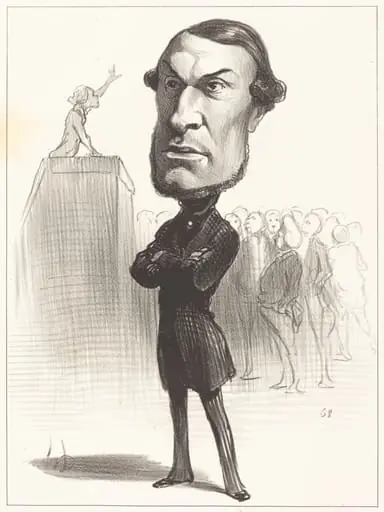
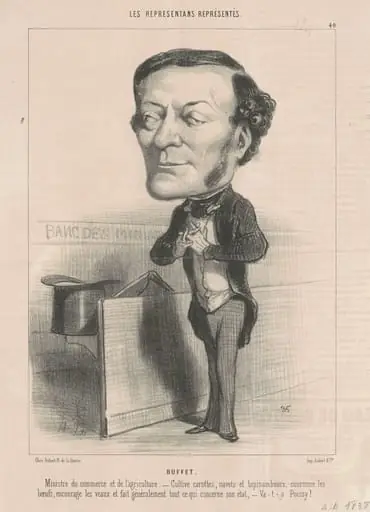
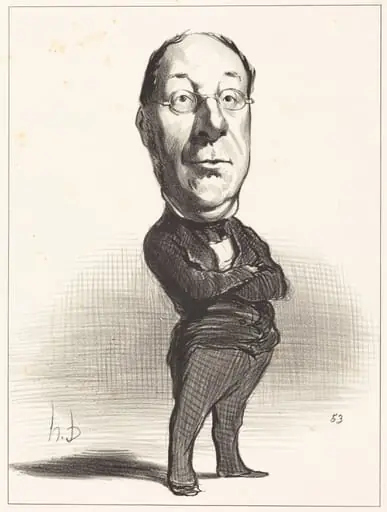
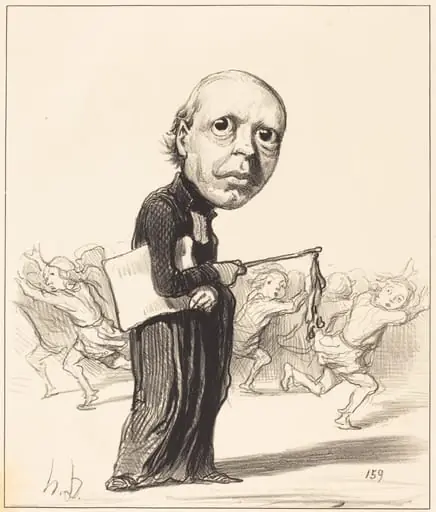
Ovide Remilly is an ink print by the Impressionist artist Honoré Daumier. It dates from 1850 and is held in the collection of the National Gallery of Art.
About this work
Overview
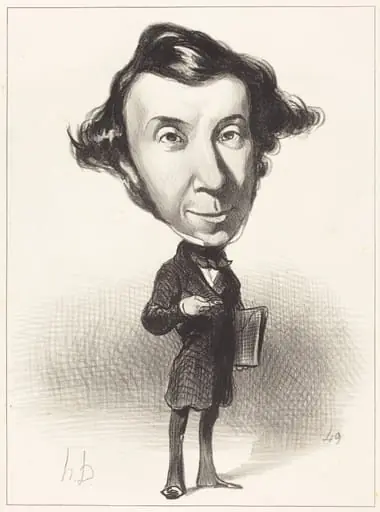
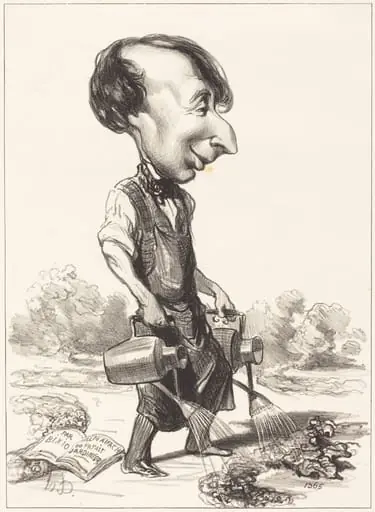
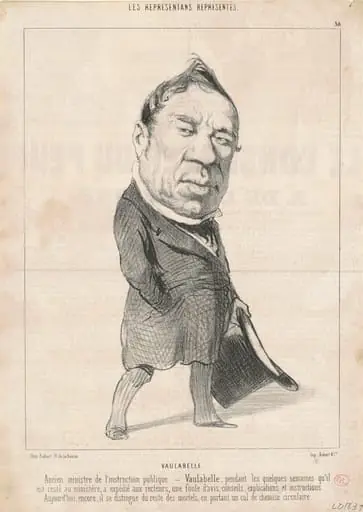
Created in 1850, Ovide Remilly is a lithographic print by Honoré Daumier, part of his prolific series of satirical images produced during the turbulent years of the July Monarchy and the early Second Republic. The work exemplifies Daumier’s commitment to using inexpensive, widely circulated prints to comment on contemporary French politics and society.
Subject & Meaning
The image depicts a prominently featured, large‑headed gentleman in elaborate attire, captured mid‑stride with an exaggerated, serious expression. Surrounding him are indistinct, hurried figures rendered as vague silhouettes, suggesting a bustling crowd in which the central figure dominates the narrative, a visual metaphor for the prominence of certain social types in 1850s France.
Technique & Style
Daumier employs the lithographic process to contrast sharply defined lines on the main figure with loosely sketched, blurred forms for the background. This deliberate disparity directs the viewer’s attention to the caricatured individual while conveying the chaotic mass of society through minimal detail, a hallmark of his satirical style.
History & Provenance
The print originally appeared in one of Daumier’s regular outlets for political satire, such as La Caricature or Le Charivari, venues that disseminated his republican‑leaning critiques of the monarchy, aristocracy, and clergy. It remains a representative example of his work from the period when print media served as a primary vehicle for public dissent.
Context
During the mid‑nineteenth century, France experienced rapid political change, moving from the July Monarchy to the Second Republic. Daumier’s prints, including Ovide Remilly, responded to this instability by lampooning figures of authority and reflecting the anxieties of a society in flux, using humor as a form of political engagement.
Legacy
Ovide Remilly continues to illustrate Daumier’s influence on the tradition of political caricature, demonstrating how lithography could merge artistic expression with mass communication. The work is frequently cited in studies of 19th‑century French visual culture as an early example of socially engaged printmaking.
Artist & collection

Artist
Honoré-Victorin Daumier was a French painter, sculptor, and printmaker, whose many works offer commentary on the social and political life in France, from the Revolution of 1830 to the fall of the Second French Empire in 1870.