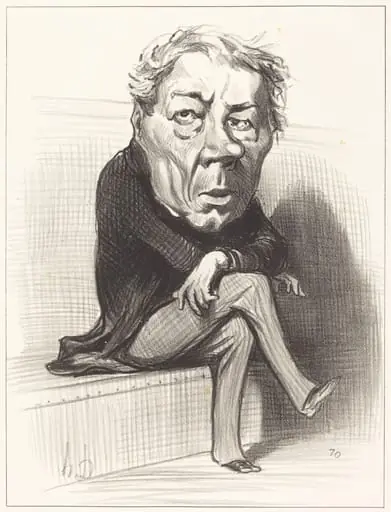
Artwork
J.-B. Gustave de Laboulie
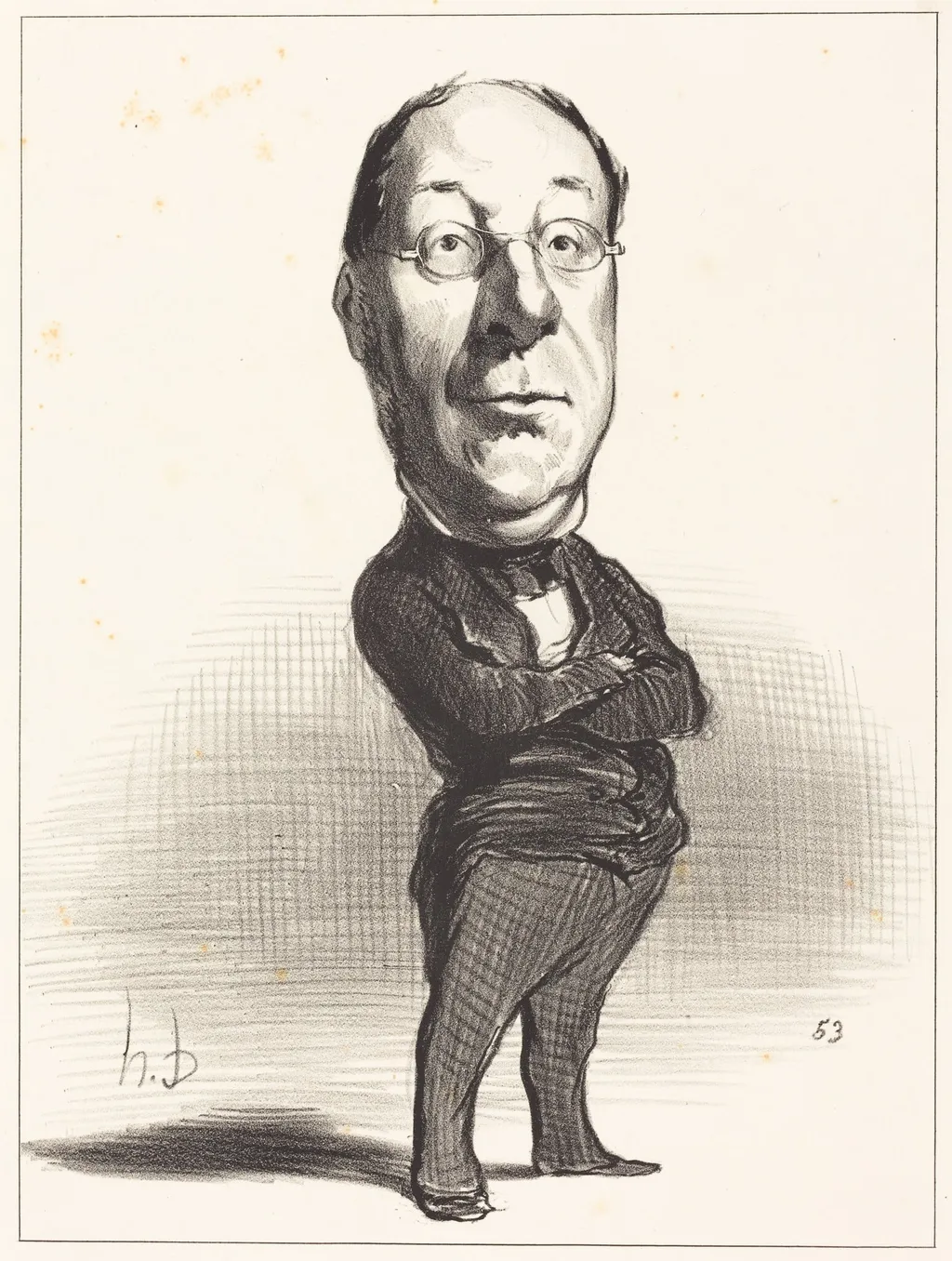
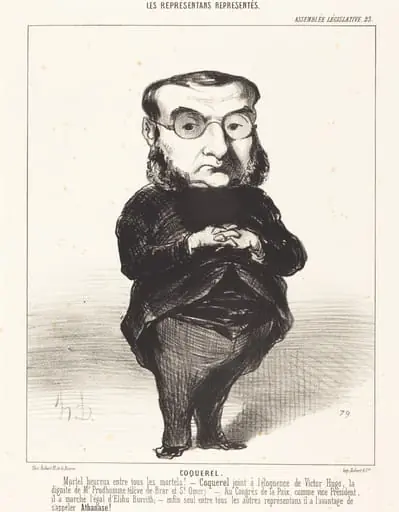
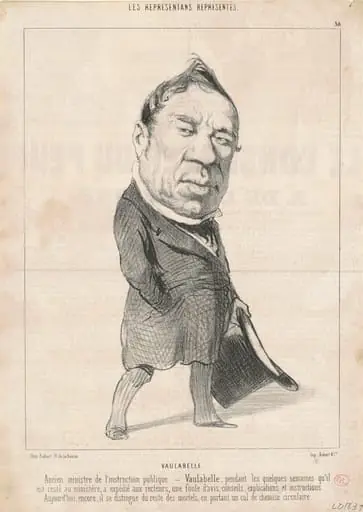
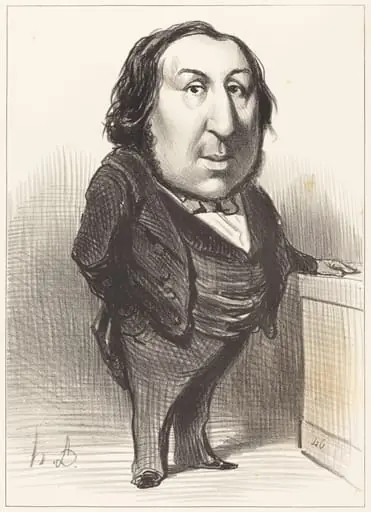
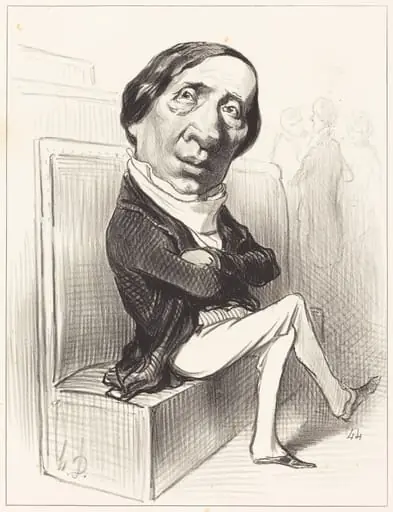
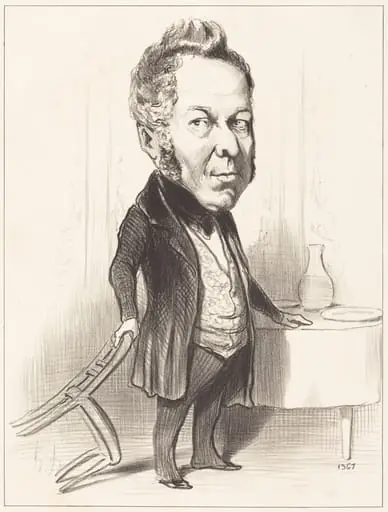
J.-B. Gustave de Laboulie is an ink print by the Romanticist artist Honoré Daumier. It dates from 1849 and is held in the collection of the National Gallery of Art.
About this work
Overview
Gustave de Laboulie, a French magistrate and political figure.
This 1849 lithograph by Honoré Daumier depicts J.-B. Gustave de Laboulie, a French magistrate and political figure. Created during a period of intense political upheaval, the print belongs to Daumier’s extensive body of satirical works produced for periodicals like *Le Charivari*. It exemplifies his use of printmaking to capture and critique public personalities, employing the accessibility of lithography to reach a broad audience with pointed visual commentary.
Subject & Meaning
The subject, J.-B. Gustave de Laboulie, was a known conservative magistrate whose judicial role placed him at the center of political tensions. Daumier renders him with rigid posture, crossed arms, and exaggerated facial features—prominent nose, thick brows—to suggest inflexibility and authority. The image does not merely caricature but interrogates the weight of institutional power, framing the individual as a symbol of entrenched legal order during a time of republican challenge.
Technique & Style
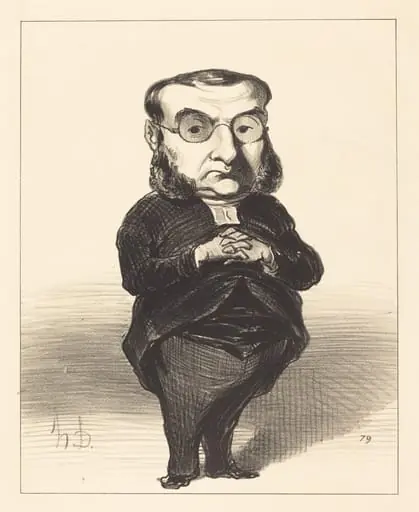
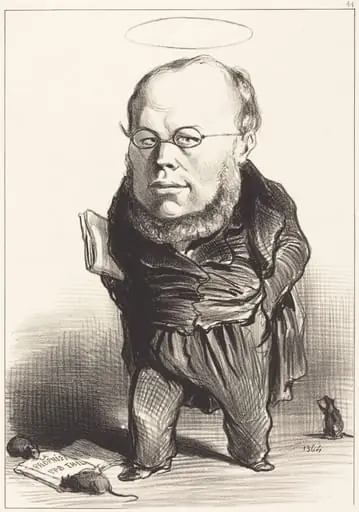
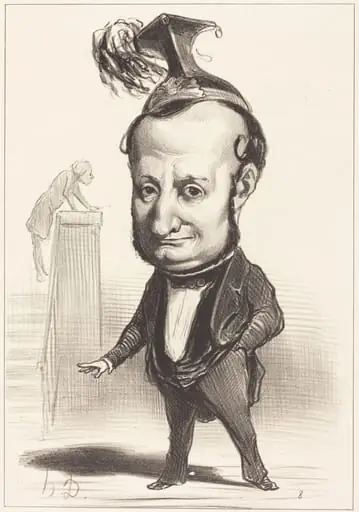
Daumier employed lithography to achieve rapid, expressive results, using bold, fluid lines and stark contrasts of black and white. The rough, energetic strokes define texture in fabric and skin without fine detail, emphasizing gesture over realism. Facial features are amplified for psychological effect, a hallmark of his caricatural approach. The technique allowed for mass reproduction, aligning with the print’s function as public commentary rather than fine art.
History & Provenance
The print was published in 1849, during the early years of the Second Republic, when Daumier was actively contributing to satirical journals. Though specific ownership history is not widely documented, the work entered institutional collections in the 20th century as part of broader efforts to preserve Daumier’s political prints. Its survival reflects its significance as a record of press freedom and visual dissent in 19th-century France.
Context
Daumier’s work emerged amid strict censorship laws and volatile political transitions—from the July Monarchy to the Second Republic. His prints responded to the rise of bourgeois power and the persistence of judicial authority. By targeting figures like Laboulie, he exposed the gap between legal impartiality and political alignment, using caricature as a tool to question legitimacy in a society still grappling with revolution’s aftermath.
Legacy
This lithograph contributes to Daumier’s enduring reputation as a chronicler of French civic life through visual satire. His ability to distill complex social dynamics into single, incisive images influenced later generations of editorial illustrators and political cartoonists. Though created for ephemeral publication, such works now serve as historical documents, revealing how visual culture shaped public perception of authority in modernizing France.
Artist & collection
Artist
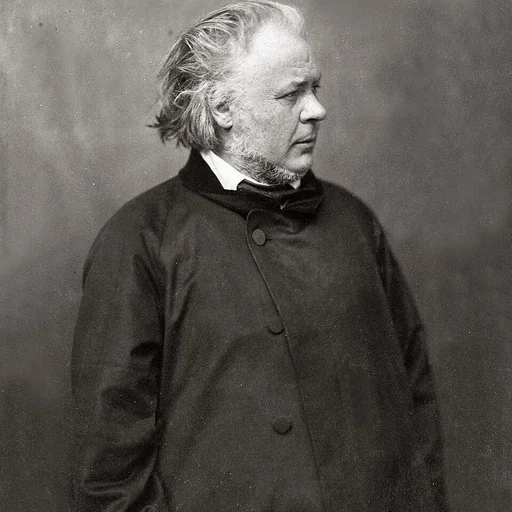
Honoré-Victorin Daumier was a French painter, sculptor, and printmaker, whose many works offer commentary on the social and political life in France, from the Revolution of 1830 to the fall of the Second French Empire in 1870.