Artwork
Par suite de la maladie de la vigne
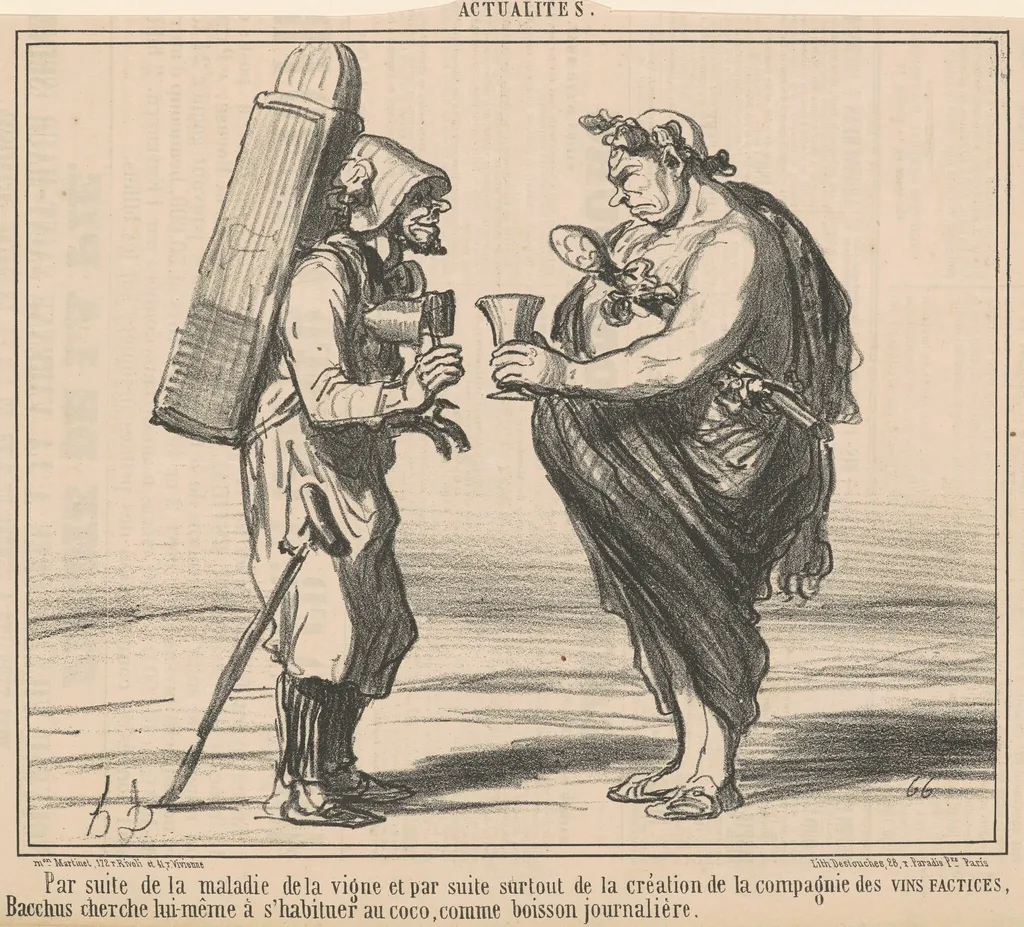
Par suite de la maladie de la vigne is an ink print by the Impressionist artist Honoré Daumier. It dates from 1857 and is held in the collection of the National Gallery of Art.
About this work
This lithograph shows two men in a silly standoff. One is skinny with a tall basket. The other is round and covered in grapes.
Daumier made this in 1857 to mock France’s failing wine industry. The thin man represents bad wine. The grape-covered man stands for ruined crops. It’s sharp humor with a dark edge.
Check out another Daumier, Honoré, to see more of his funny yet pointed prints.
Overview
Created in 1857, this lithograph by Honoré Daumier is part of a series addressing the collapse of France’s vineyards due to disease. Rendered in ink on paper, the work uses the medium’s capacity for rapid reproduction to disseminate social critique. Its concise visual language targets economic hardship through exaggerated figures, typical of Daumier’s approach to public issues.
Subject & Meaning
Their absurd standoff mocks the disconnect between appearance and reality in the wine trade, turning agricultural crisis into darkly comic allegory.
Two figures confront each other: one gaunt, burdened by a tall basket, the other stout and draped in clusters of grapes. The thin man symbolizes the poor quality of wine produced after the blight, while the grape-laden figure represents the ruined harvest. Their absurd standoff mocks the disconnect between appearance and reality in the wine trade, turning agricultural crisis into darkly comic allegory.
Technique & Style
Daumier employed lithography to achieve bold, fluid lines and strong tonal contrasts. His figures are simplified yet expressive, with exaggerated proportions heightening the satire. The lack of background focuses attention on the interaction, a hallmark of his printmaking style. The medium allowed for wide circulation, aligning with his intent to reach a broad, urban audience.
History & Provenance
The print was produced during a period of widespread vineyard devastation in France, triggered by fungal infection in the 1850s. Daumier created it for publication in a periodical, likely as part of a series commenting on rural and economic distress. Its original context was journalistic, not gallery-bound, and it circulated among middle-class readers familiar with the crisis.
Context
France’s wine industry faced collapse as phylloxera spread through vineyards, threatening livelihoods and national identity. Daumier’s work responds to this crisis not with lamentation but with irony, reflecting the public’s frustration and the press’s role in shaping opinion. His prints often mirrored contemporary debates, blending humor with the gravity of social decay.
Legacy
This lithograph exemplifies Daumier’s influence on political cartooning and modern visual satire. By transforming agricultural disaster into a visual joke, he demonstrated how art could critique power and failure without direct polemic. His approach paved the way for later generations of illustrators who used caricature to engage with public life.
Artist & collection
Artist
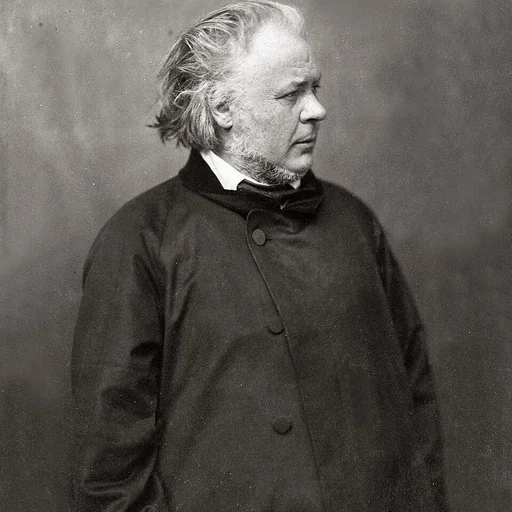
Honoré-Victorin Daumier was a French painter, sculptor, and printmaker, whose many works offer commentary on the social and political life in France, from the Revolution of 1830 to the fall of the Second French Empire in 1870.









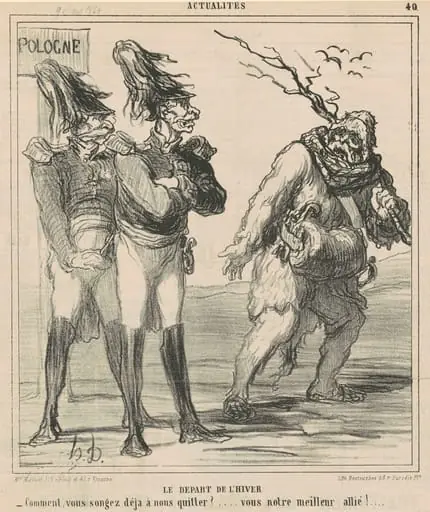 Le départ de l'hiver
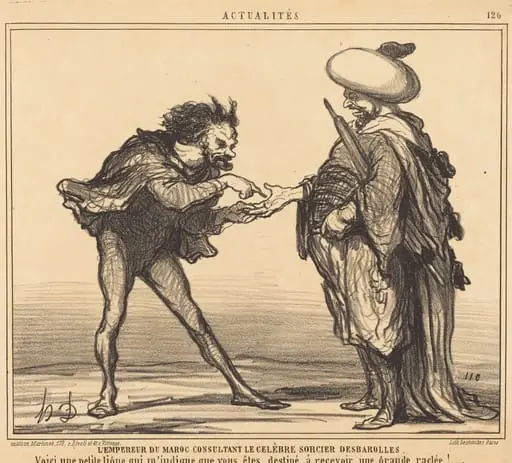 L'Empereur du Maroc consultant... Desbarolles
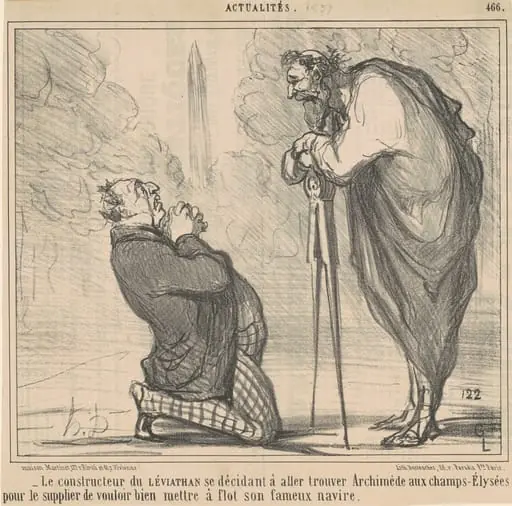 Le constructeur du Léviathan se décidant ...
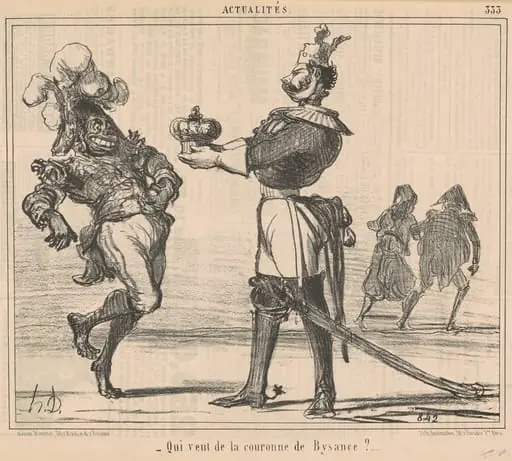 Qui veut de la couronne de Bysance?
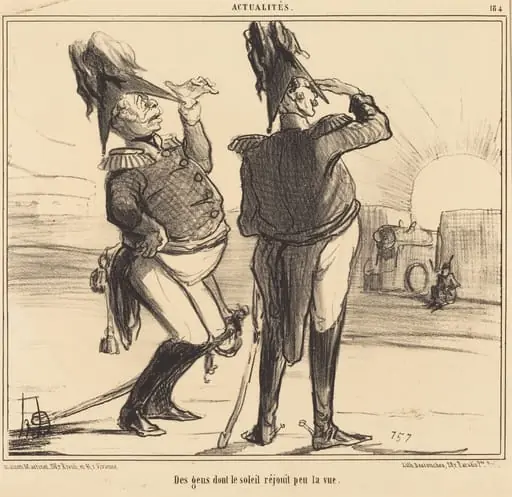 Des gens dont le soleil réjouit peu la vue
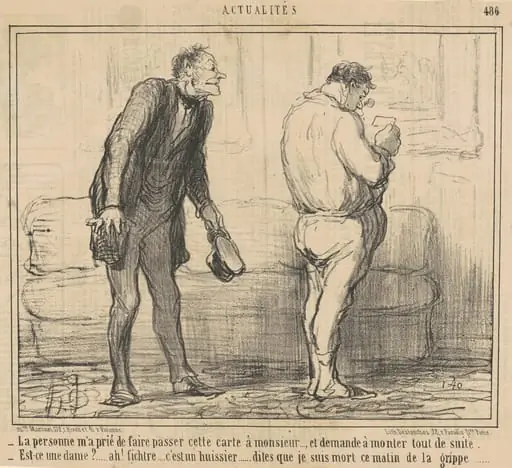 La personne ... demande a monter tout de suite ...
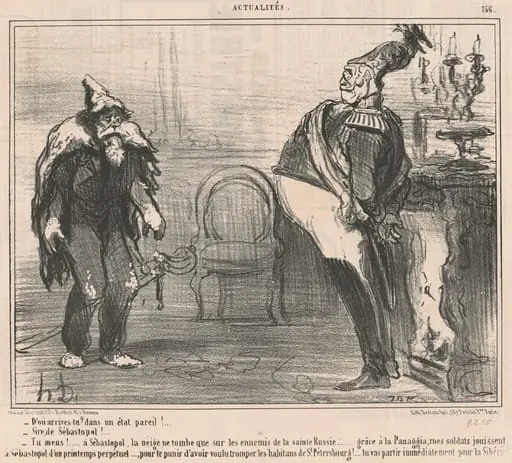 D'ou arrives-tu?
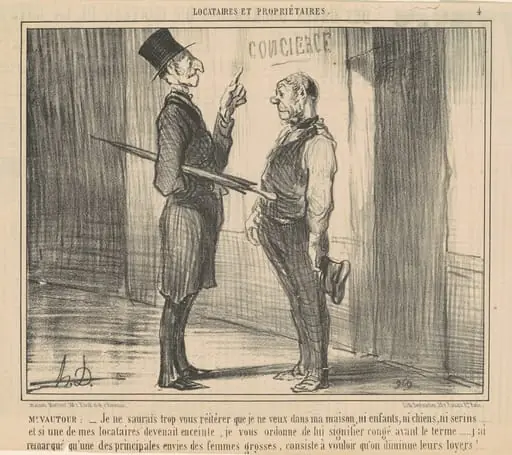 M. Vautour: Je ne saurais trop ...
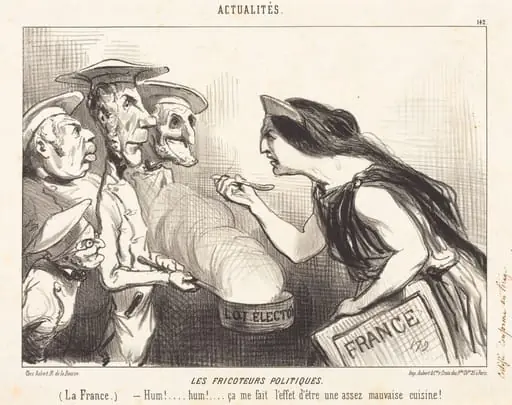 Les Fricoteurs politiques
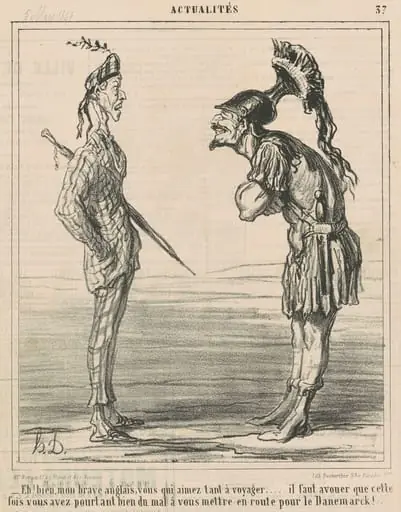 Eh bien! Mon brave anglais ...